
The men who shaped the EURO finals, from 1960 to 2024
The European Championship has never offered equal opportunity. Lev Yashin could win its first edition in two finals matches; Cristiano Ronaldo made 30 appearances across six tournaments. Michel Platini needed five games to set a scoring mark that stood alone for 37 years. A serious ranking must judge what each man did with the tournament available, not reward those born after expansion.
Our countdown covers the senior men’s UEFA European Championship final tournaments from 1960 through 2024. Qualifying performances provide context but earn no ranking credit. Peak finals-tournament influence carries the greatest weight, followed by repeat excellence, decisive knockout work, tactical responsibility, leadership and the quality of opposition. Goals, appearances, awards and medals are evidence, not an automatic order.
Different roles leave different traces. A goalkeeper can govern a final without scoring; a midfielder may create the conditions for somebody else’s decisive touch. Team success matters because tournament football is played to advance and win, but it is not treated as an individual statistic. Nor does a great club career repair a modest EURO record.
The four-team events of 1960 to 1976 demand proportion. Reaching the finals then meant entering at the semi-final, so two exceptional matches could comprise a championship. Later players faced longer routes and more varied opponents, although 24 teams also create extra fixtures and a route for some third-placed sides. The ranking adjusts for opportunity while asking the footballing question: who controlled matches, changed a nation’s possibilities and built the strongest body of work on this stage?
Our rankings at a glance
| Rank | Player | Country or team | Central reason |
|---|---|---|---|
| 1 | Michel Platini | France | record nine goals in a single finals tournament |
| 2 | Cristiano Ronaldo | Portugal | record 30 appearances and 14 goals across six editions |
| 3 | Andrés Iniesta | Spain | UEFA Player of the Tournament in 2012 |
| 4 | Franz Beckenbauer | West Germany | Team of the Tournament at both editions |
| 5 | Xavi | Spain | UEFA Player of the Tournament in 2008 |
| 6 | Zinedine Zidane | France | five finals goals |
| 7 | Marco van Basten | Netherlands | Team of the Tournament in 1988 and 1992 |
| 8 | Iker Casillas | Spain | the only man to captain two EURO-winning teams |
| 9 | Lev Yashin | Soviet Union | Team of the Tournament at both editions |
| 10 | Sergio Ramos | Spain | Team of the Tournament in 2012 |
| 11 | Antoine Griezmann | France | seven finals goals |
| 12 | Matthias Sammer | Germany | 1996 champion and UEFA Player of the Tournament |
| 13 | Peter Schmeichel | Denmark | played at four final tournaments from 1988 to 2000 |
| 14 | Fernando Torres | Spain | scorer in both finals and EURO 2012 Golden Boot winner |
| 15 | Gerd Müller | West Germany | 1972 champion and finals top scorer with four goals in two matches |
| 16 | Ruud Gullit | Netherlands | 1988 champion and 1992 semi-finalist |
| 17 | Dino Zoff | Italy | Team of the Tournament at both editions |
| 18 | Gianluigi Buffon | Italy | 17 finals appearances from 2004 to 2016 |
| 19 | Luis Suárez Miramontes | Spain | Team of the Tournament |
| 20 | Andrea Pirlo | Italy | three man-of-the-match awards at EURO 2012 |
| 21 | Luka Modrić | Croatia | 16 finals appearances and goals in four editions from 2008 to 2024 |
| 22 | Paolo Maldini | Italy | three Teams of the Tournament |
| 23 | Pavel Nedvěd | Czech Republic | 1996 runner-up and 2004 semi-final captain |
| 24 | Luís Figo | Portugal | Team of the Tournament in both editions |
| 25 | Giorgio Chiellini | Italy | 17 finals appearances |
| 26 | Antonín Panenka | Czechoslovakia | scorer of the defining final penalty |
| 27 | Dragan Džajić | Yugoslavia | Team of the Tournament in 1968 and 1976 |
| 28 | David Villa | Spain | 2008 champion and tournament top scorer with four goals |
| 29 | Alan Shearer | England | seven finals goals |
| 30 | Theodoros Zagorakis | Greece | UEFA Player of the Tournament |
Rank 30: Theodoros Zagorakis
EURO context: Greece; central midfielder and captain; 2004 champion; UEFA Player of the Tournament
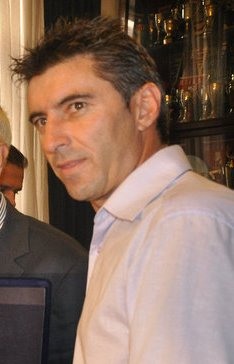
Zagorakis made a defensive tournament feel active rather than merely resistant. From the right of Greece’s compact midfield, and often from its deepest line in possession, he closed passing lanes, arrived at loose balls and carried play away from pressure.
Otto Rehhagel’s champions ceded territory by design, but their captain prevented that territory becoming panic. His decisions joined a narrow defence to the breaks that gave Greece relief.
He played every minute of EURO 2004, leading a side that beat hosts Portugal twice and eliminated holders France and the Czech Republic. UEFA’s technical observers named him Player of the Tournament even though he neither scored nor supplied the event’s most memorable pass. That award captured work which totals miss: tempo management, duels, positional discipline and an ability to keep a team emotionally level while every knockout match invited disbelief.
Number 30 recognises the authority of one perfect championship without pretending it was a long EURO career. Alan Shearer at 29 combined an equally concentrated peak with seven finals goals across two editions and carried England’s attack in more varied game states. Zagorakis had the medal and the organising role; Shearer had the greater repeatable power to change the score. Greece’s captain opens the list because no famous wider career is allowed to push his six-match masterpiece out of it.
Rank 29: Alan Shearer
EURO context: England; centre-forward; 1996 semi-finalist and Golden Boot winner; seven finals goals
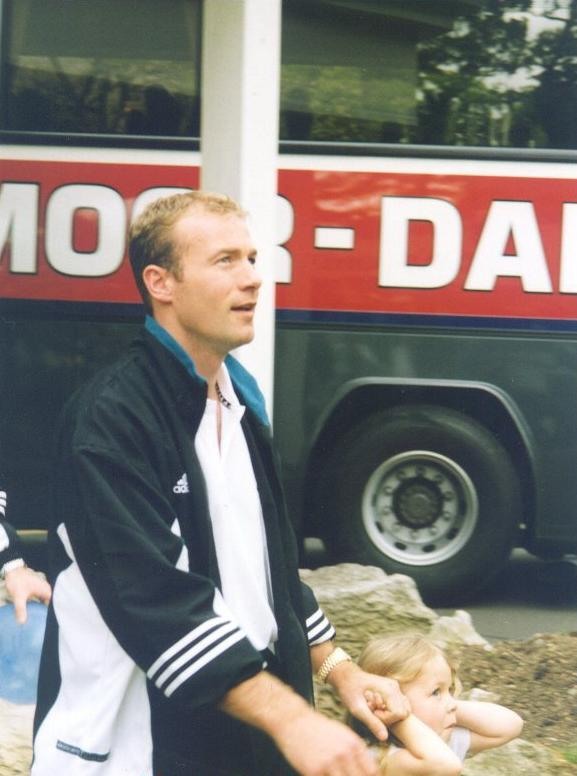
Shearer gave EURO ’96 a centre-forward around whom England could simplify any attack. He occupied both centre-backs, attacked the first cross and struck early enough that a goalkeeper rarely had time to set. Terry Venables could use fluid midfield rotations because the final movement remained fixed: Shearer would be in the penalty area, ready to turn a half-created situation into a shot.
He entered the home tournament after 12 England matches without a goal, then scored five times: against Switzerland, Scotland and Germany, plus twice in the 4-1 defeat of the Netherlands. He converted in the shoot-outs against Spain and Germany too, though those kicks do not enter official scoring totals. Two more goals as captain at EURO 2000 took him to seven. Only Cristiano Ronaldo and Michel Platini had more through 2024; Antoine Griezmann, Álvaro Morata and Harry Kane matched him. Zagorakis owns the medal; Shearer takes 29 because his best tournament was structurally central to an adventurous semi-finalist and he returned to score at a second edition. Villa had fewer finals goals, yet his movement across the front line gave Spain more tactical possibilities and his four goals launched a title-winning transformation, enough for 28. Shearer was the more forceful penalty-box reference; Villa’s peak was slightly more varied and ended a deeper national wait.
Rank 28: David Villa
EURO context: Spain; mobile centre-forward; 2008 champion and tournament top scorer with four goals
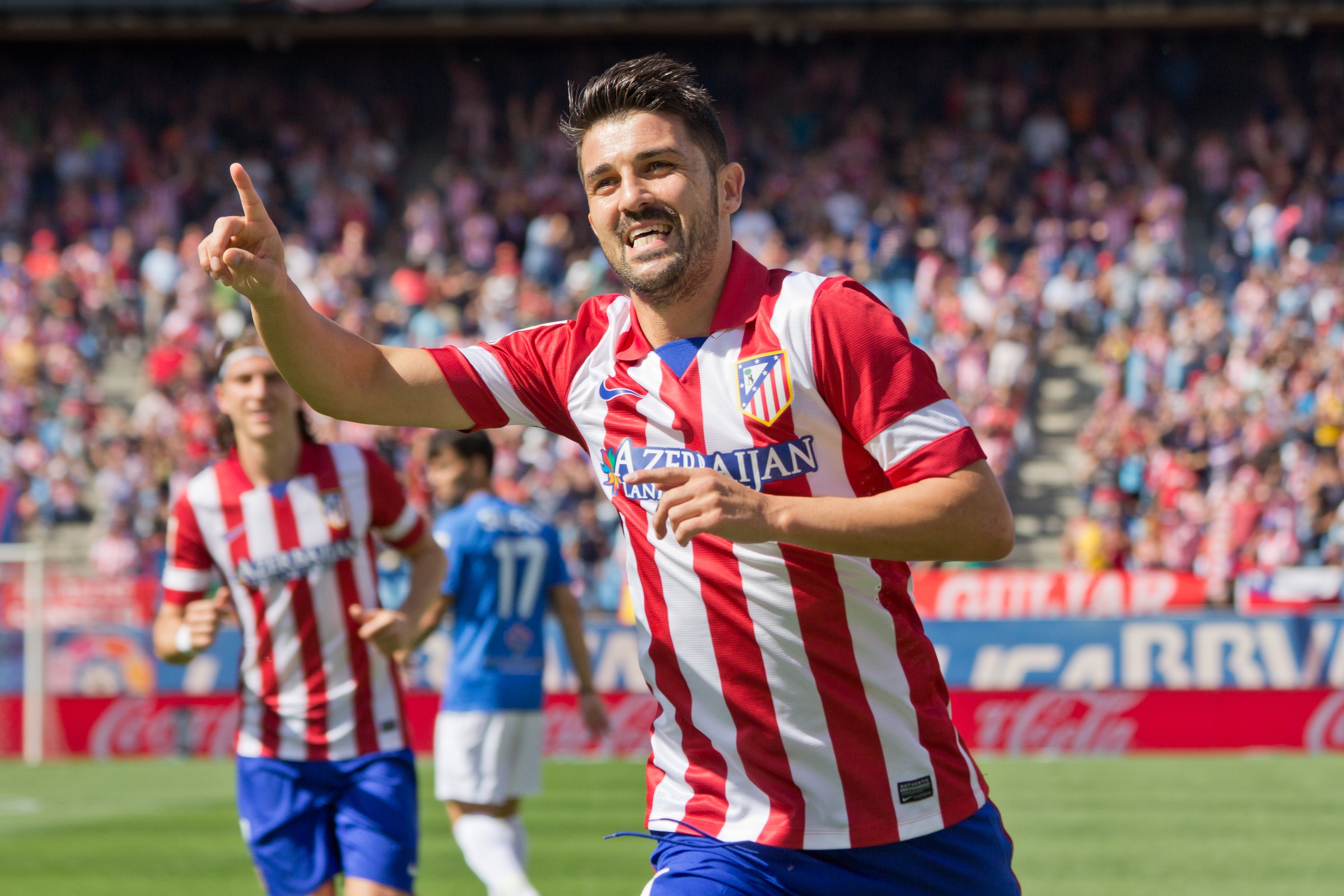
Villa stretched Spain at the moment their midfield threatened to become too fond of the ball. Starting centrally or drifting left, he ran behind the outside centre-back, opened an inside lane for Andrés Iniesta and could finish with either foot before possession settled. Spain’s eventual strikerless evolution should not obscure the value of a forward who made their first championship side both patient and vertical.
His hat-trick against Russia in the opening match of EURO 2008 announced the change. A stoppage-time winner against Sweden secured the group, making four goals and the tournament scoring prize. A thigh injury suffered in the semi-final ruled him out of the final, so Fernando Torres supplied the decisive finish at Vienna. Villa still belonged to UEFA’s Team of the Tournament and had done most to ensure Spain reached that night.
Villa goes above Shearer because his runs and combinations altered more than the score during a championship that changed modern international football. Dragan Džajić at 27 did not win the trophy, but he drove Yugoslavia to the 1968 final, scored in the semi-final and final, then returned eight years later. Villa’s title peak was cleaner; Džajić’s influence survived two radically different finals opportunities and carried a less dominant side.
Rank 27: Dragan Džajić
EURO context: Yugoslavia; left winger; 1968 runner-up and top scorer; Team of the Tournament in 1968 and 1976
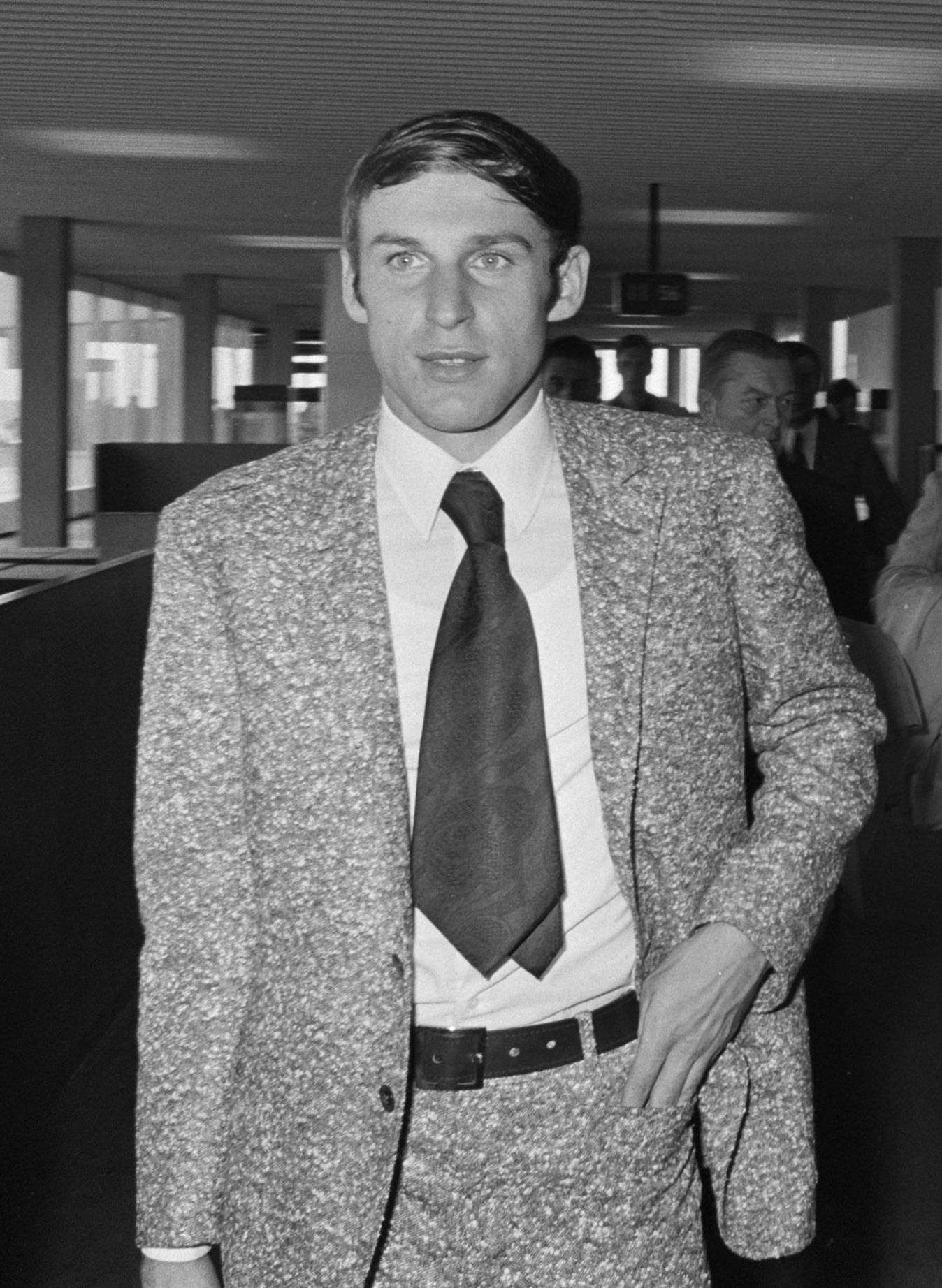
Džajić played from the wing but treated the penalty area as a destination, not somebody else’s territory. His balance invited the full-back to commit, his left foot could cross without a preliminary touch, and his acceleration turned a controlled possession into a direct attack. In the compressed early finals, one winger capable of creating and finishing was enough to determine an entire campaign.
At EURO 1968 he scored the semi-final winner against world champions England, lifting the ball over Gordon Banks, then put Yugoslavia ahead against Italy in the final. The hosts equalised late and won a replay two days later, leaving Džajić as top scorer with two. He returned as captain in 1976, scored again and made a second Team of the Tournament. His four goals all came in knockout matches because every match in those editions was one.
Villa’s title peak yields one place to Džajić’s repeat elite performance across an eight-year divide and unusually heavy creative burden for his nation. Panenka produced fewer dominant minutes, but midfield control, a 1976 title and the penalty that created a piece of football vocabulary lift him to 26. Džajić was the fuller attacker; Panenka combined authorship of a title with an enduring change in how the sport imagines pressure.
Rank 26: Antonín Panenka
EURO context: Czechoslovakia; creative midfielder; 1976 champion and 1980 third-place finisher; scorer of the defining final penalty
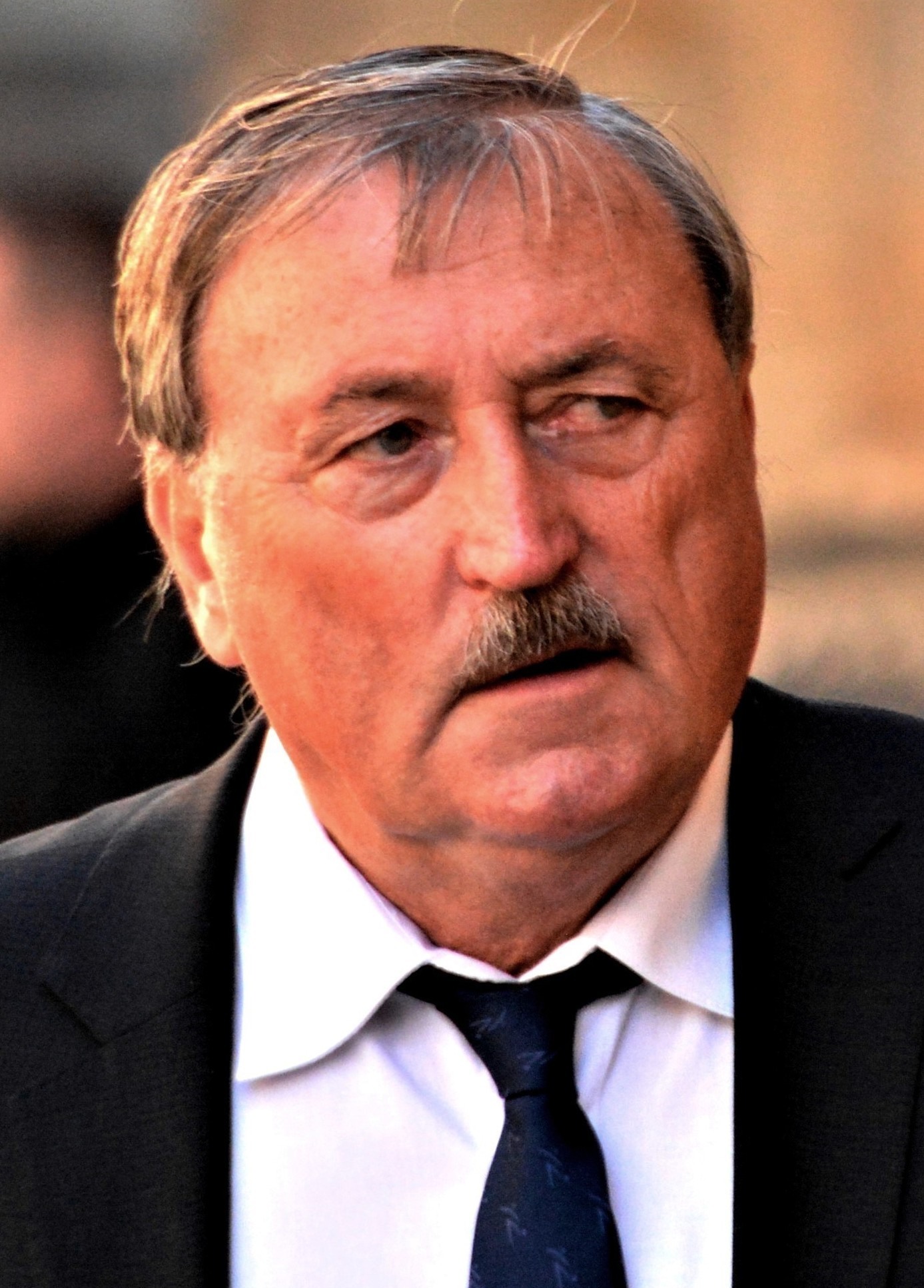
Reducing Panenka to a chipped penalty misses the player who earned the right to attempt it. He operated between midfield and attack with an upright calm, receiving in crowded areas and delaying the pass until a defender moved. Czechoslovakia’s 1976 side could counter quickly, but Panenka also gave it enough composure to survive long matches against the Netherlands and West Germany.
Both games at those finals went to extra time. In the final shoot-out, Uli Hoeneß missed before Panenka floated the decisive kick down the centre as Sepp Maier dived away. It was calculation disguised as impudence, practised rather than improvised. Four years later he curled in a free-kick against Greece and converted again in the third-place shoot-out, helping his country leave another finals with a medal.
The Džajić-Panenka split rewards technical direction joined to the act that completed a championship, with 1980 adding substance to Panenka’s case.
Chiellini has no comparable creative signature, but defending two finals campaigns nine years apart and captaining Italy to the 2020 title puts him 25th. Panenka owns the more singular moment; Chiellini presents the broader tournament body and the greater repeat responsibility.
Rank 25: Giorgio Chiellini
EURO context: Italy; centre-back and captain; 2012 runner-up and EURO 2020 champion; 17 finals appearances
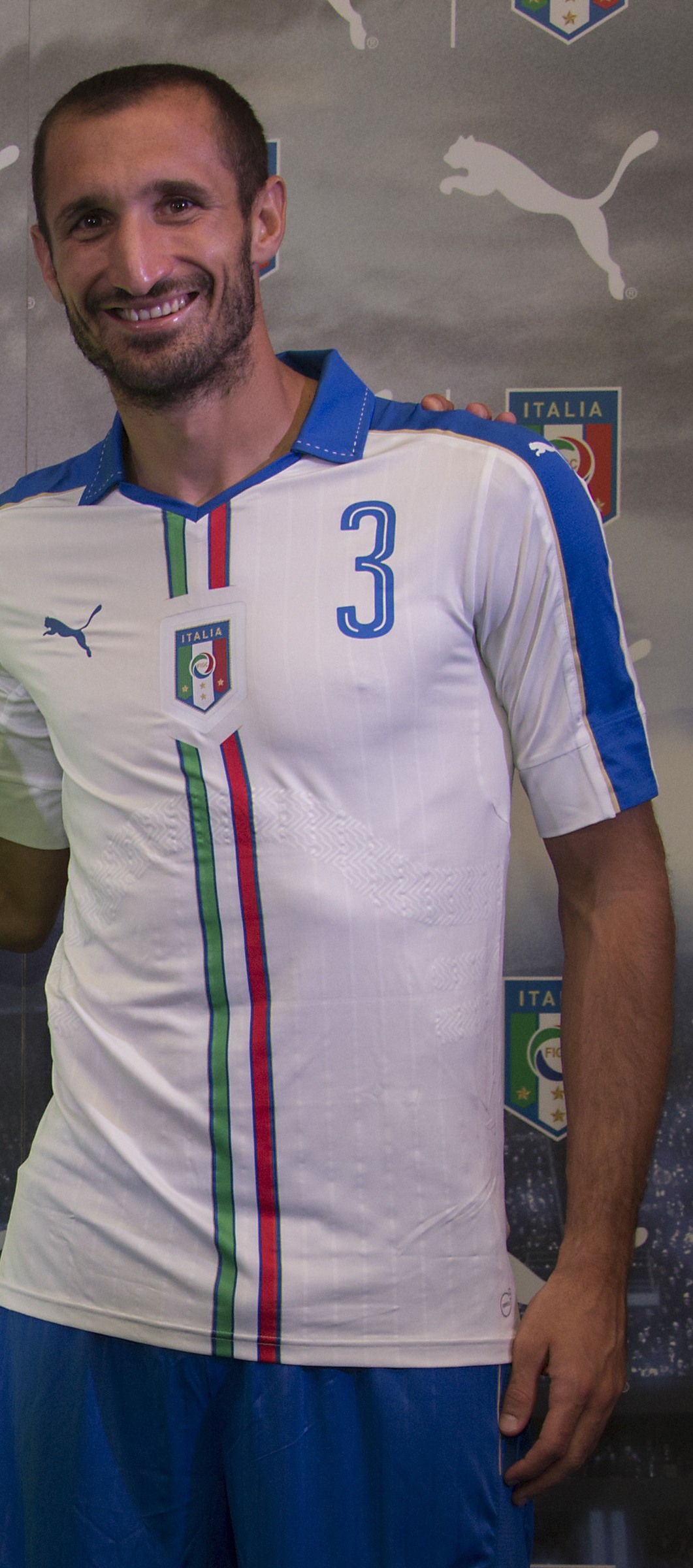
Chiellini defended the duel without losing sight of the match. He could follow a striker into contact, protect the left channel when Italy’s wing-back advanced and turn a clearance into territory with the same uncompromising action. The visible grappling was only the surface. His real value lay in recognising when an opponent wanted to receive, then making the desired pass feel unsafe before it was played.
Italy reached the 2012 final with Chiellini in a shifting back three and four, although injury limited him in the decisive defeat by Spain. At EURO 2020, aged 36, he returned from a group-stage muscle problem to captain the last four matches, including the Wembley final. Italy conceded four goals in seven games, survived extra time against Austria, Spain and England, and held their nerve in two shoot-outs. Chiellini moves above Panenka because an older captain’s defensive authority underpinned a seven-match title after an earlier run to the final. Luís Figo at 24 never became champion, yet he drove Portugal through three tournaments, supplying width, carrying and leadership from 1996 to the 2004 final. Chiellini’s crowning summer was more complete; Figo’s excellence covered more attacking contexts and a longer unbroken span.
Rank 24: Luís Figo
EURO context: Portugal; winger and captain; semi-finalist in 2000 and runner-up in 2004; Team of the Tournament in both editions
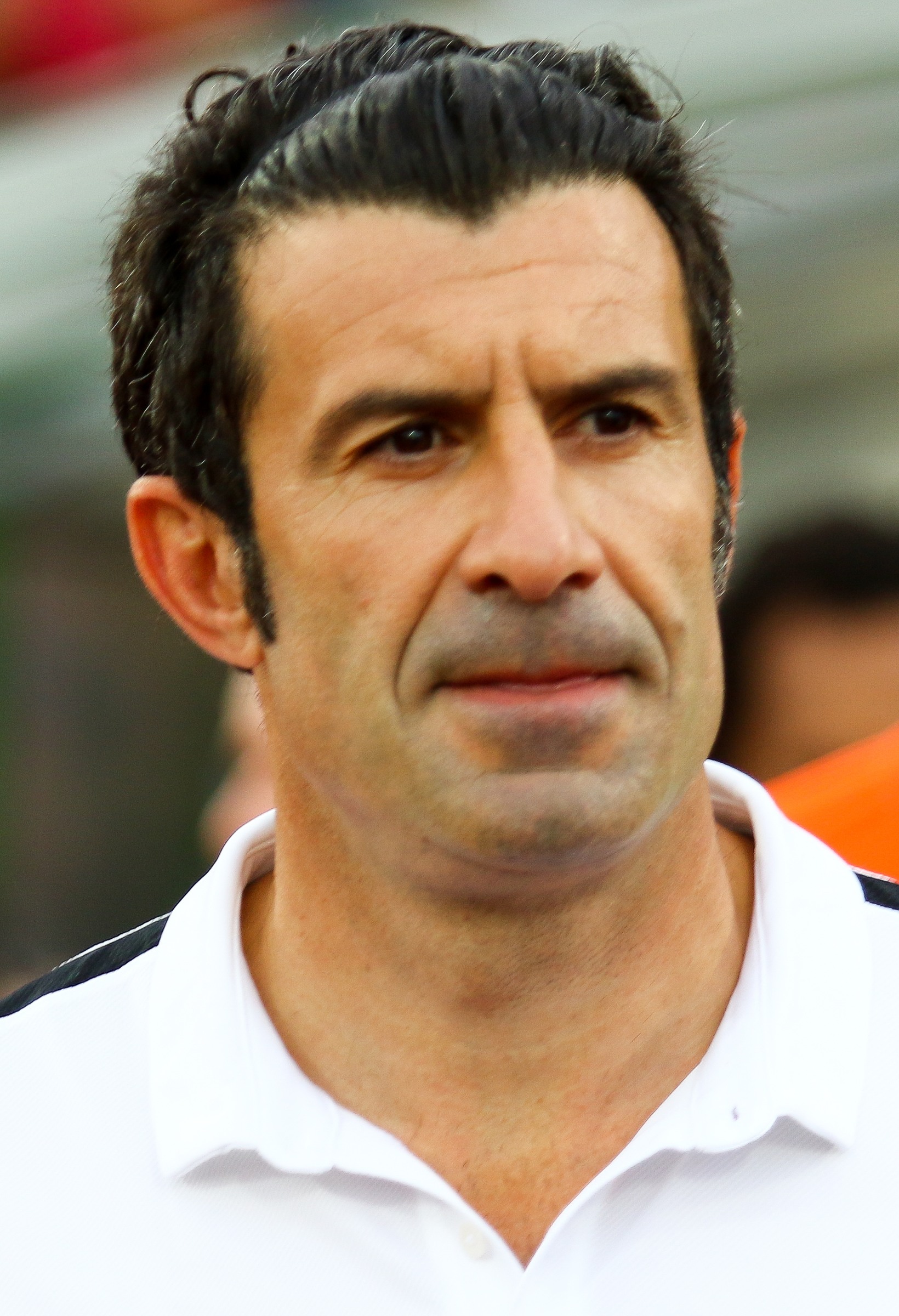
Figo could begin wide and finish an attack almost anywhere. He beat the first defender through changes of pace rather than tricks for their own sake, crossed with either shape and moved inside to combine with Rui Costa. Portugal’s gifted turn-of-the-century midfield needed somebody to carry possession out of pressure and towards consequence. Figo was its reliable bridge.
He helped Portugal reach the EURO 2000 semi-final, scoring the long-range equaliser that began a comeback from 2-0 down against England. Four years later he captained the hosts through an opening defeat, assisted the winner against Spain and was named man of the match in the semi-final victory over the Netherlands. Greece denied him in the final, but Team of the Tournament selections in 2000 and 2004 sit alongside a strong quarter-final run in 1996.
Chiellini’s championship captaincy yields to three editions in which Figo carried the attacking initiative rather than specialising inside one phase, although the missing title caps him at 24. Nedvěd had a shorter finals career but reached the final in 1996 and drove the outstanding Czech side of 2004 until injury removed him from the semi-final, taking 23rd. Figo’s range was longer; Nedvěd’s best tournament gave his team an even greater all-action force.
Rank 23: Pavel Nedvěd
EURO context: Czech Republic; left-sided and central midfielder; 1996 runner-up and 2004 semi-final captain
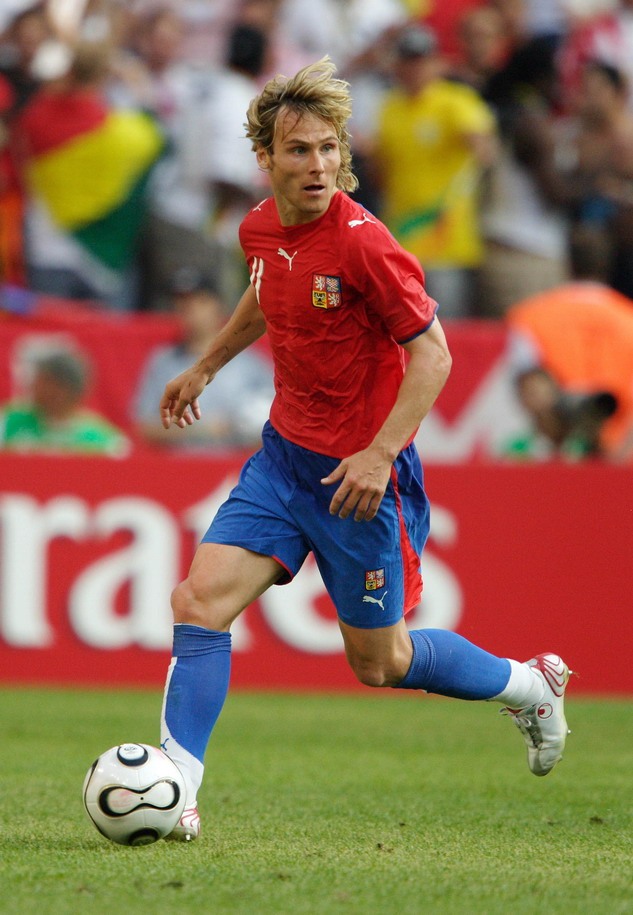
Nedvěd made a nominal flank position feel like an extra central midfielder and a second forward at once. He ran beyond the ball, pressed back towards it and could strike from distance when a compact defence denied the next pass. That repeated movement gave the Czech Republic a way to connect its neat creators with the penalty area without sacrificing midfield pressure.
At EURO ’96, the 23-year-old scored against Italy and helped a new national side reach the final. By 2004 he was the captain and Ballon d’Or holder, driving a team that won all three group matches, eliminated Denmark and looked capable of taking the title. A knee injury forced him off after 40 minutes of the semi-final against Greece. The Czechs lost to a silver goal in extra time, a cruel demonstration of how much rhythm and personality had gone with him.
Figo’s longer finals career is narrowly passed by Nedvěd’s greater two-way responsibility across two deep runs and the central force he supplied in 2004. Maldini never won the EURO either, but three UEFA Teams of the Tournament and elite defending from 1988 to the 2000 final make 22nd the stronger total claim. Nedvěd’s peak was more visibly propulsive; Maldini’s technical consistency endured for twelve years.
Rank 22: Paolo Maldini
EURO context: Italy; left-back and centre-back; semi-finalist in 1988, runner-up in 2000; three Teams of the Tournament
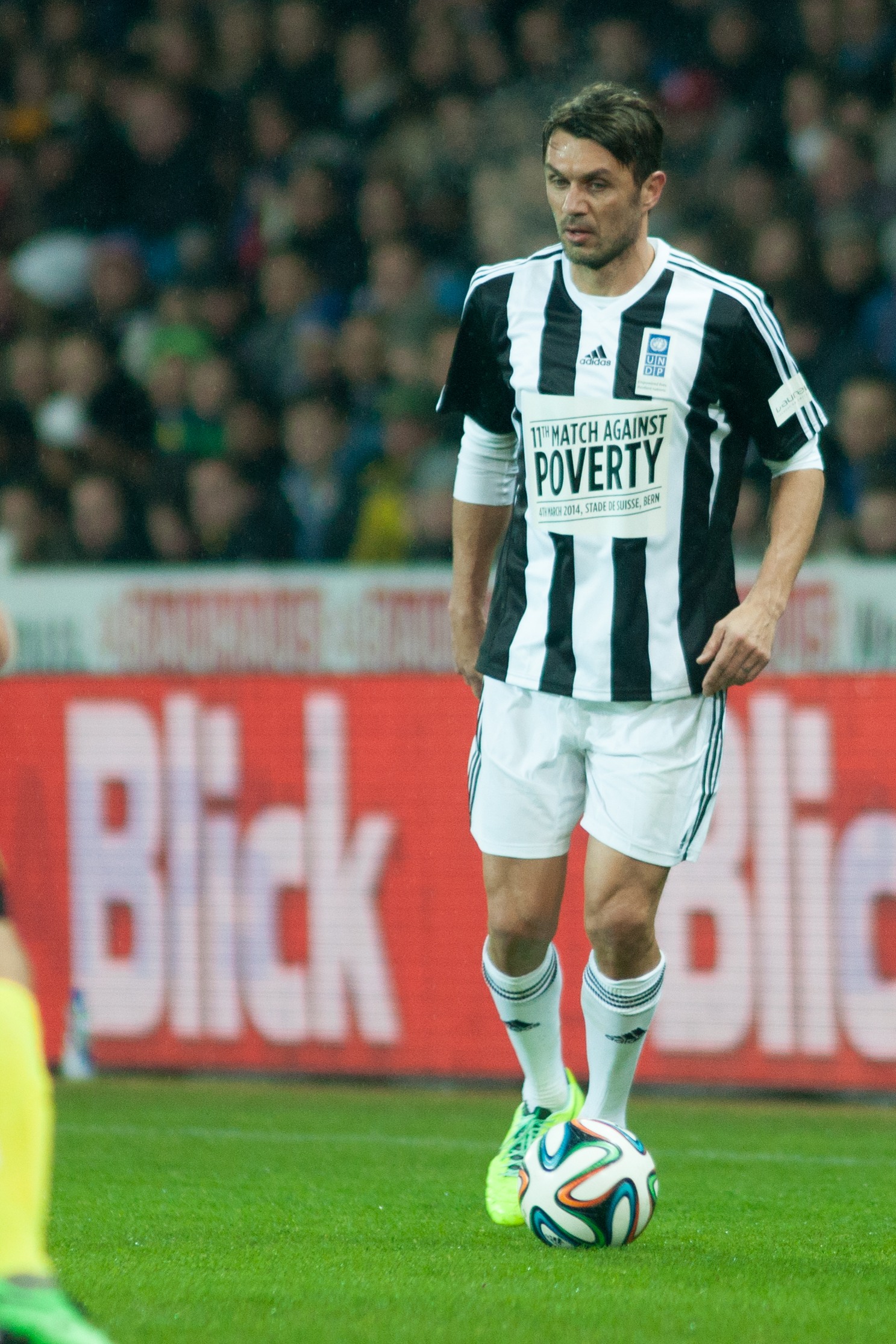
Maldini defended space before it became a duel. As a young left-back he matched wingers for speed and advanced without disturbing Italy’s shape; later, from centre-back, he judged the angle of cover and made recovery look like anticipation. His restraint is important in tournament football. He did not need repeated interventions to demonstrate command because his starting position removed passes from the attacker’s choices.
He entered EURO 1988 aged 19, played every minute of Italy’s run to the semi-finals and made UEFA’s Team of the Tournament. He was selected again in 1996 despite Italy’s group exit, then a third time as captain of the 2000 finalists.
That side conceded twice in six matches before France’s stoppage-time equaliser and golden goal overturned the final. Three selections in three different tactical eras are an extraordinary record without a winner’s medal.
Maldini ranks above Nedvěd because his excellence survived a move of position, several national-team cycles and the full span from teenage emergence to captaincy. Luka Modrić at 21 lacks Maldini’s deep knockout runs, yet scored across four editions and remained Croatia’s technical centre over 16 finals appearances. Maldini went further; Modrić carried a smaller nation’s EURO identity for longer and through more changes in his own role.
Rank 21: Luka Modrić
EURO context: Croatia; central midfielder and captain; 16 finals appearances and goals in four editions from 2008 to 2024
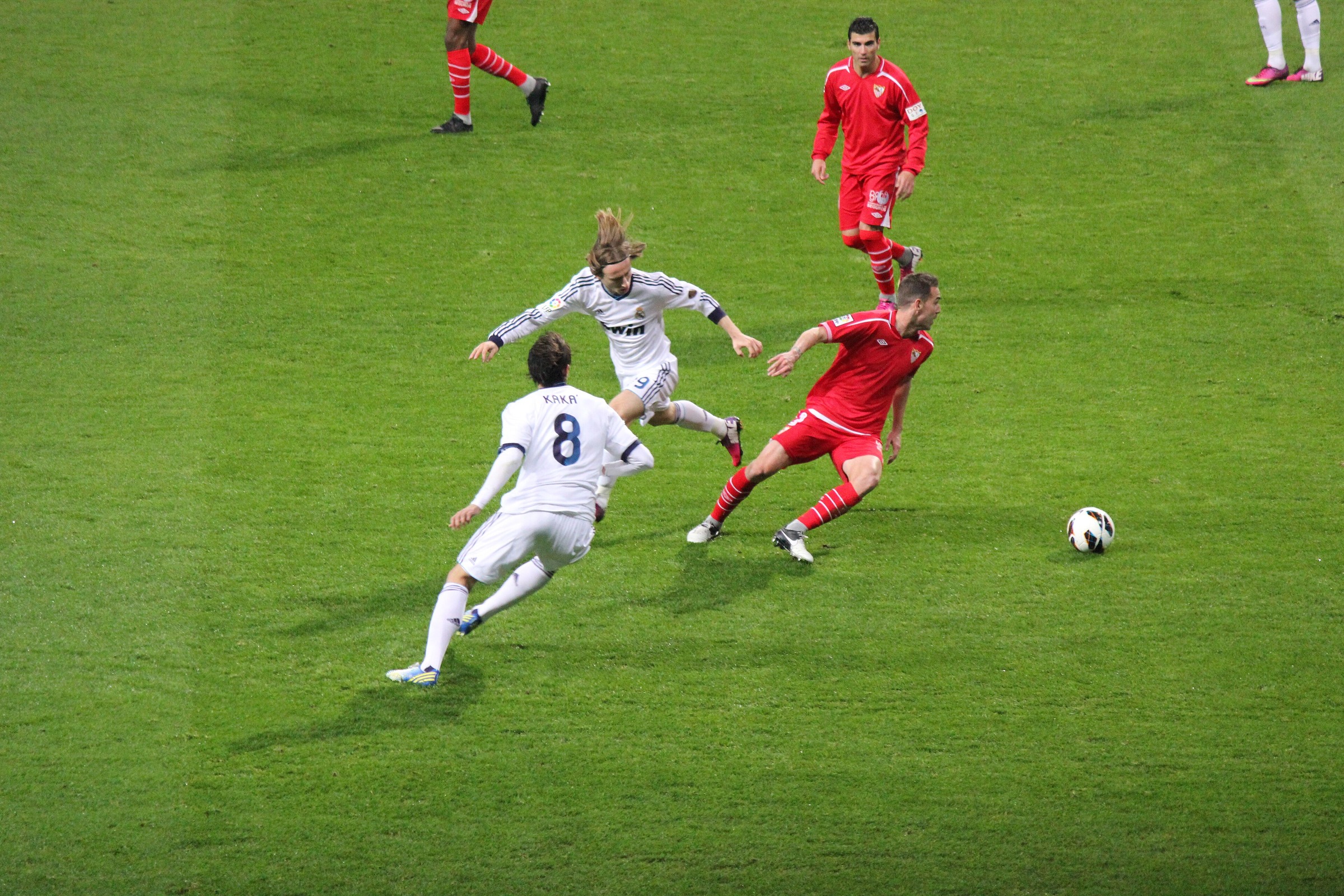
Modrić gave Croatia an exit wherever pressure arrived. Early in his career he accelerated through midfield and entered the box; later he dropped beside the centre-backs, used the outside of his right foot to escape a press and decided which wing would receive the next advantage. The role changed because his physical range changed, but the obligation did not. Croatia asked him to make the match intelligible.
He scored the winning penalty against Austria in his first EURO match in 2008 and helped a vibrant side reach the quarter-finals, where Turkey equalised at the end of extra time and won the shoot-out. He later scored superbly against Turkey in 2016 and Scotland in 2020. At EURO 2024 his goal against Italy, seconds after a penalty was saved, made him the competition’s oldest scorer at 38 years and 289 days. A late equaliser eliminated Croatia, preserving the note of EURO frustration.
Maldini’s greater team progress is outweighed by a fraction by Modrić’s four scoring editions and sustained responsibility for every possession phase. Pirlo then turns similar control into a final, three official man-of-the-match awards and one of the stage’s defining shoot-out actions, taking 20th. Modrić’s long arc is broader; Pirlo’s peak was more concentrated and consequential.
Rank 20: Andrea Pirlo
EURO context: Italy; deep playmaker; 2012 runner-up; three man-of-the-match awards at EURO 2012
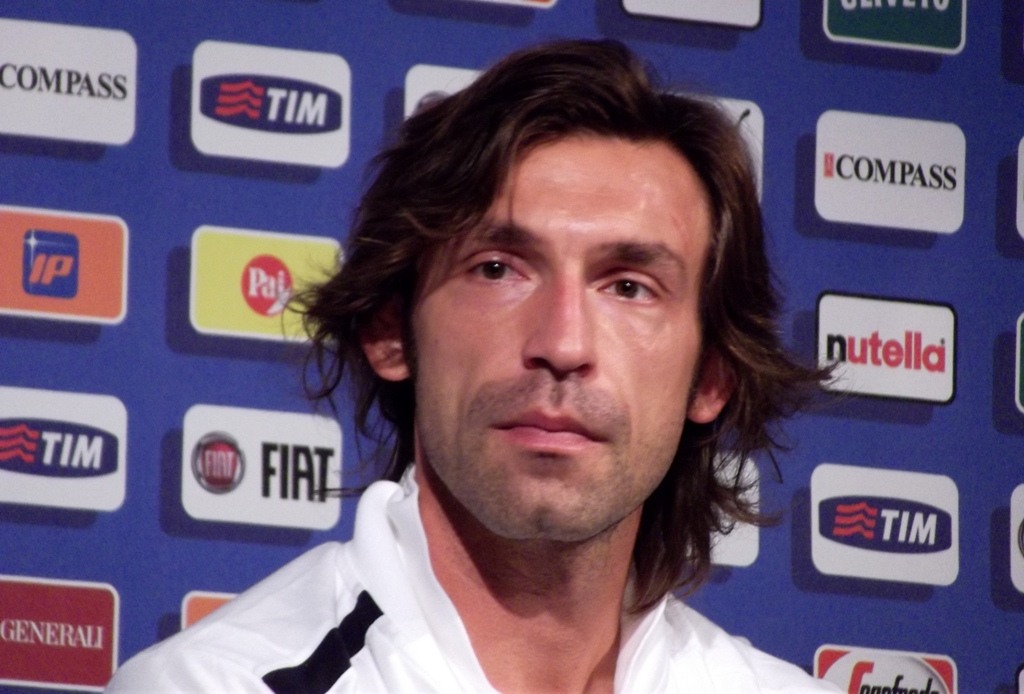
Pirlo did not merely pass from deep; he altered the speed at which a defence had to think. He invited pressure close enough to release a team-mate, switched play before the far side could settle and disguised vertical balls inside the shape of a safe pass. Italy’s 2012 midfield had runners and technicians, but Pirlo determined whether their possession became rest, bait or attack. He assisted Antonio Di Natale against Spain, scored a free-kick against Croatia and then governed the quarter-final with England, completing 131 passes before floating his shoot-out penalty down the middle. The kick borrowed Panenka’s idea but served a different match: Italy had just missed, England led, and Pirlo restored emotional balance as well as scoring. He was man of the match against Croatia, England and Germany, whose midfield Italy bypassed in a superb semi-final.
Pirlo’s control produced a deeper, more authoritative single run than Modrić’s and survived four distinct knockout pressures before Spain overwhelmed Italy in the final. Suárez had only two finals matches available in 1964, but conducting both while delivering Spain’s only senior men’s international title for 44 years puts him 19th. Pirlo has the larger canvas; Suárez achieved the more complete championship with no wasted movement.
Rank 19: Luis Suárez Miramontes
EURO context: Spain; inside-forward and midfield conductor; 1964 champion; Team of the Tournament
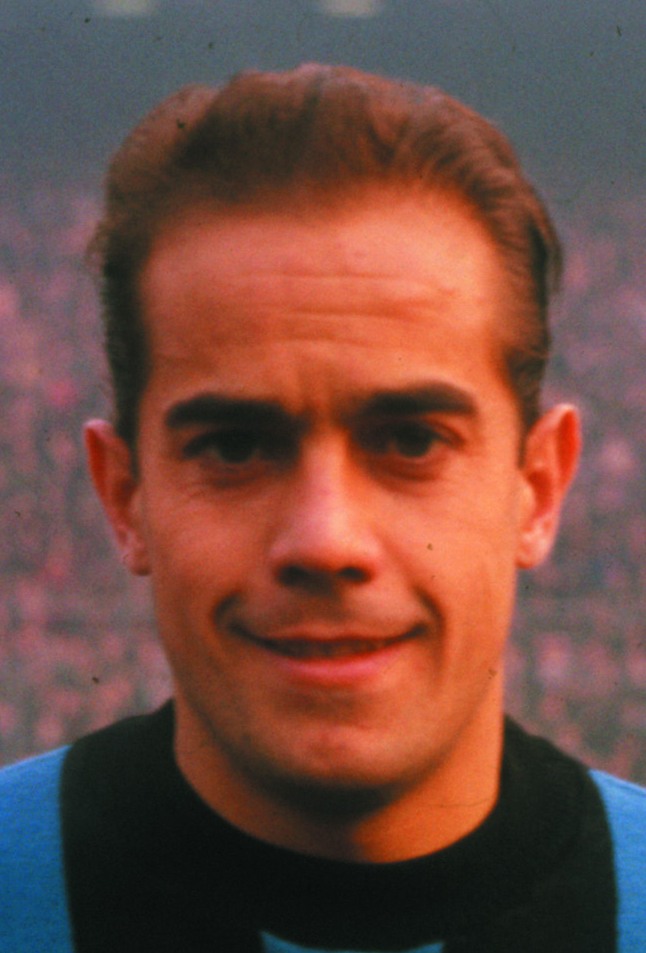
Suárez brought the authority of Europe’s reigning Ballon d’Or-era master to a Spanish side playing under the weight of a home finals. Nominally an inside-forward, he dropped to receive, changed the point of attack with long diagonals and supplied the final pass when defenders stepped towards him. His command was not sterile. Spain’s width and movement gained meaning because he could find them at the correct instant.
The 1964 finals offered only a semi-final and final. Suárez pulled the strings as Spain survived Hungary in extra time, then controlled the final against the Soviet Union. His early cross from the right led to Jesús María Pereda’s opening goal, and his pass out to Pereda began the move for Marcelino’s winner. UEFA’s account identifies Suárez as the outstanding player of the match, and he made the Team of the Tournament.
Suárez is above Pirlo because, adjusted for the two-match format, he dictated every stage of a championship and supplied creation in both victories. Gianluigi Buffon at 18 never won the EURO, but his 17 appearances include a final, two further quarter-finals and goalkeeping leadership across four editions. Suárez’s peak is purer; Buffon’s repeated excellence against changing opponents makes the total body fractionally stronger.
Rank 18: Gianluigi Buffon
EURO context: Italy; goalkeeper and captain; 2012 runner-up; 17 finals appearances from 2004 to 2016
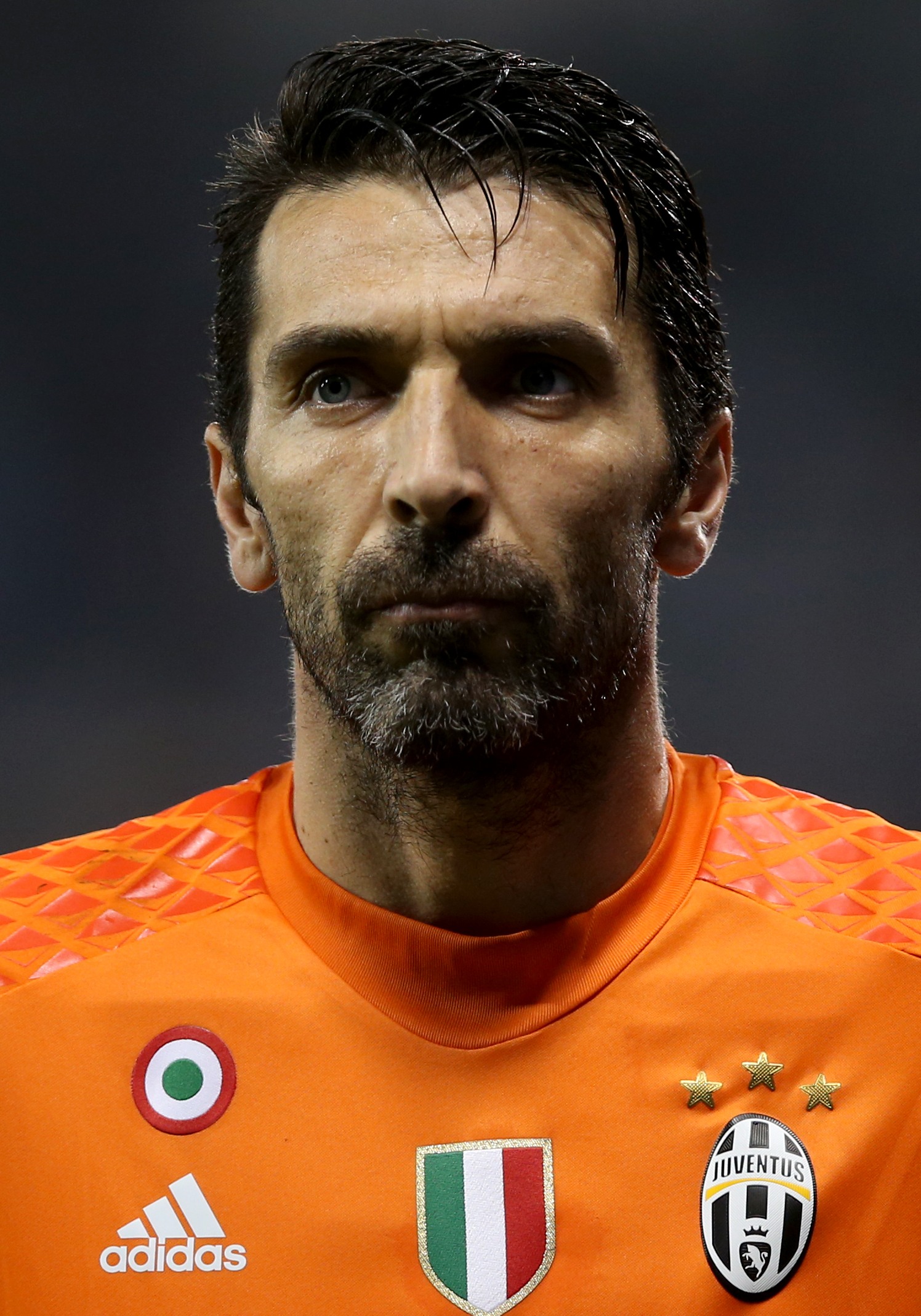
Buffon made the penalty area feel governed. He held a high starting position behind Italy’s defenders, attacked crosses with reach and called the next movement before a shot existed.
His athletic saves lasted unusually long, but the deeper EURO value was control: a back line could change personnel and shape while the same voice organised distances behind it.
In 2008 he saved Adrian Mutu’s penalty to keep Italy alive in the group, then held Spain scoreless through 120 minutes before losing the quarter-final shoot-out. Four years later he stopped Ashley Cole’s kick as Italy eliminated England and captained the side to the final. At EURO 2016 he conceded once in four matches, celebrating a tactical victory over Spain before Germany finally beat Italy on penalties. Injury had denied him the 2000 tournament in which Italy also reached the final.
Suárez’s complete but two-match championship yields to Buffon’s four editions of high-level responsibility and the interventions that repeatedly extended knockout campaigns. Zoff has a smaller statistical body, but the 1968 title and a return 12 years later to concede only once as Italy finished fourth lift him to 17. Buffon sustained the role for longer; Zoff combines comparable authority with the medal Buffon could never secure.
Rank 17: Dino Zoff
EURO context: Italy; goalkeeper; 1968 champion and 1980 fourth-place finisher; Team of the Tournament at both editions
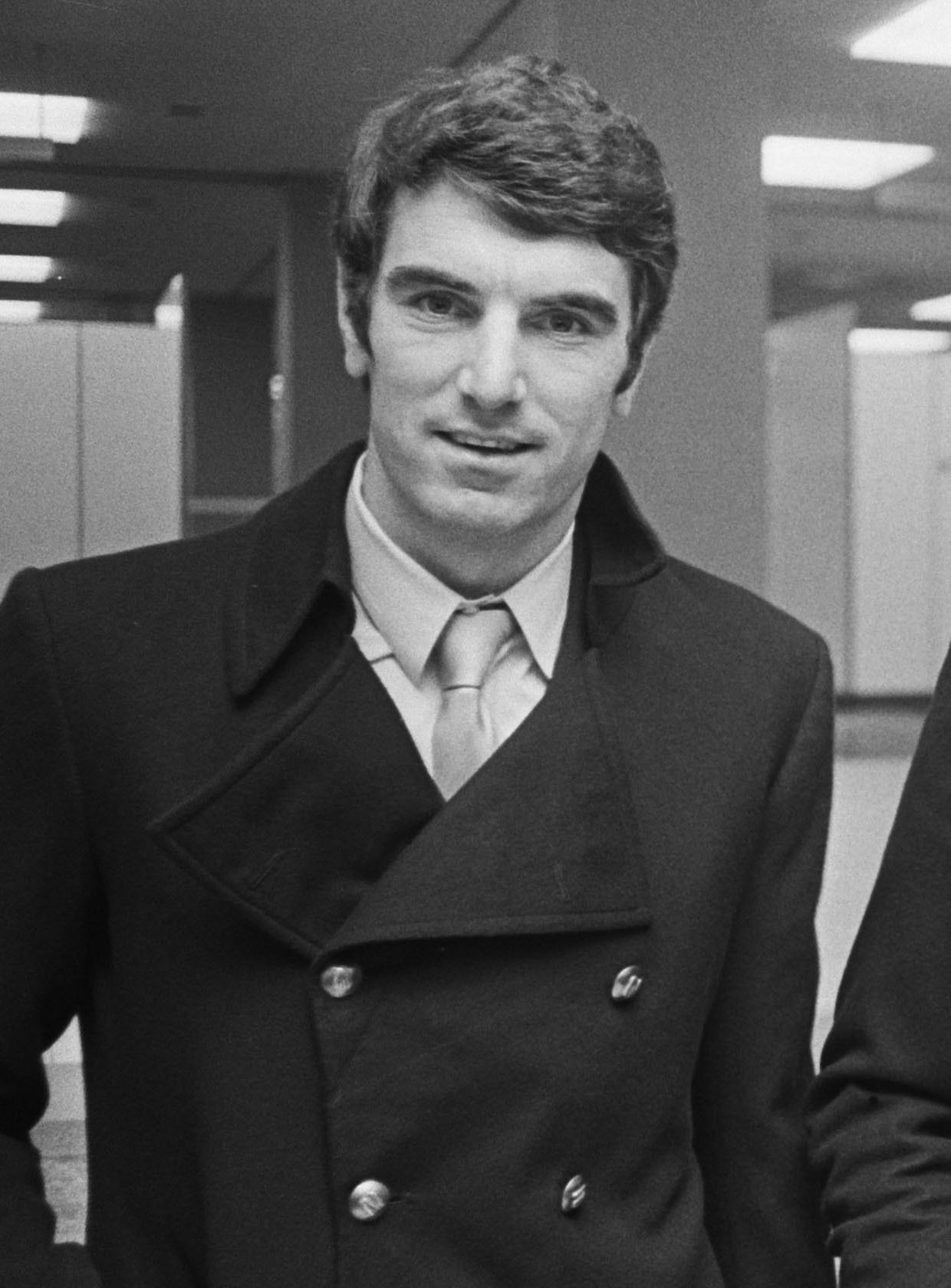
Zoff’s economy was a form of pressure on the opposition. He set early, caught when a punch would create a second problem and treated routine actions as a way to drain excitement from an attack. Italy trusted his positioning enough to defend narrow and wait. The goalkeeper rarely supplied theatre, which is precisely why his teams could live inside low-scoring matches without feeling events escape them.
Zoff’s first senior caps came during Italy’s 1968 European Championship run. He shut out the Soviet Union in the semi-final, conceded once in the first final against Yugoslavia and then kept a clean sheet as Italy won the replay 2-0. At EURO 1980, aged 38 and captain, he shut out Spain, England and Belgium in the group before conceding his only goal of the tournament in the third-place match. UEFA selected him in both tournament teams.
Buffon’s longevity is not quite enough to overtake Zoff’s title and second near-perfect defensive tournament. Gullit has less EURO longevity again, but captaincy of the Netherlands’ only senior men’s title, a final goal and attacks shaped from several positions carry him to 16. Zoff controlled risk; Gullit imposed a physical and creative problem no opponent solved in 1988.
Rank 16: Ruud Gullit
EURO context: Netherlands; attacking midfielder and captain; 1988 champion and 1992 semi-finalist
Gullit made positional labels inadequate. He could receive as a midfielder, carry like a winger, occupy a centre-back and arrive as a striker. That mobility did not dissolve the Netherlands’ structure because his power also protected the ball while team-mates moved around him. Opponents had to decide whether to follow him and open a lane, or hold their line and let him gather momentum. At EURO 1988 he captained the Dutch after an opening loss to the Soviet Union, helping the side regain balance before a tense semi-final victory over West Germany. In the final he opened the scoring with a forceful header, later lifting the trophy after Marco van Basten’s celebrated second. Gullit returned in 1992 as the Netherlands reached another semi-final, playing a more connective role in a team built increasingly around Dennis Bergkamp.
Gullit ranks above Zoff because his 1988 influence reached chance creation, pressing, ball progression and the decisive final action while carrying the captaincy. Gerd Müller at 15 played only two EURO finals matches, but scored twice in each and turned West Germany’s dominance into the 1972 title. Gullit offered more phases and a second tournament; Müller’s unsurpassed conversion of every available knockout stage wins the adjacent argument.
Rank 15: Gerd Müller
EURO context: West Germany; centre-forward; 1972 champion and finals top scorer with four goals in two matches
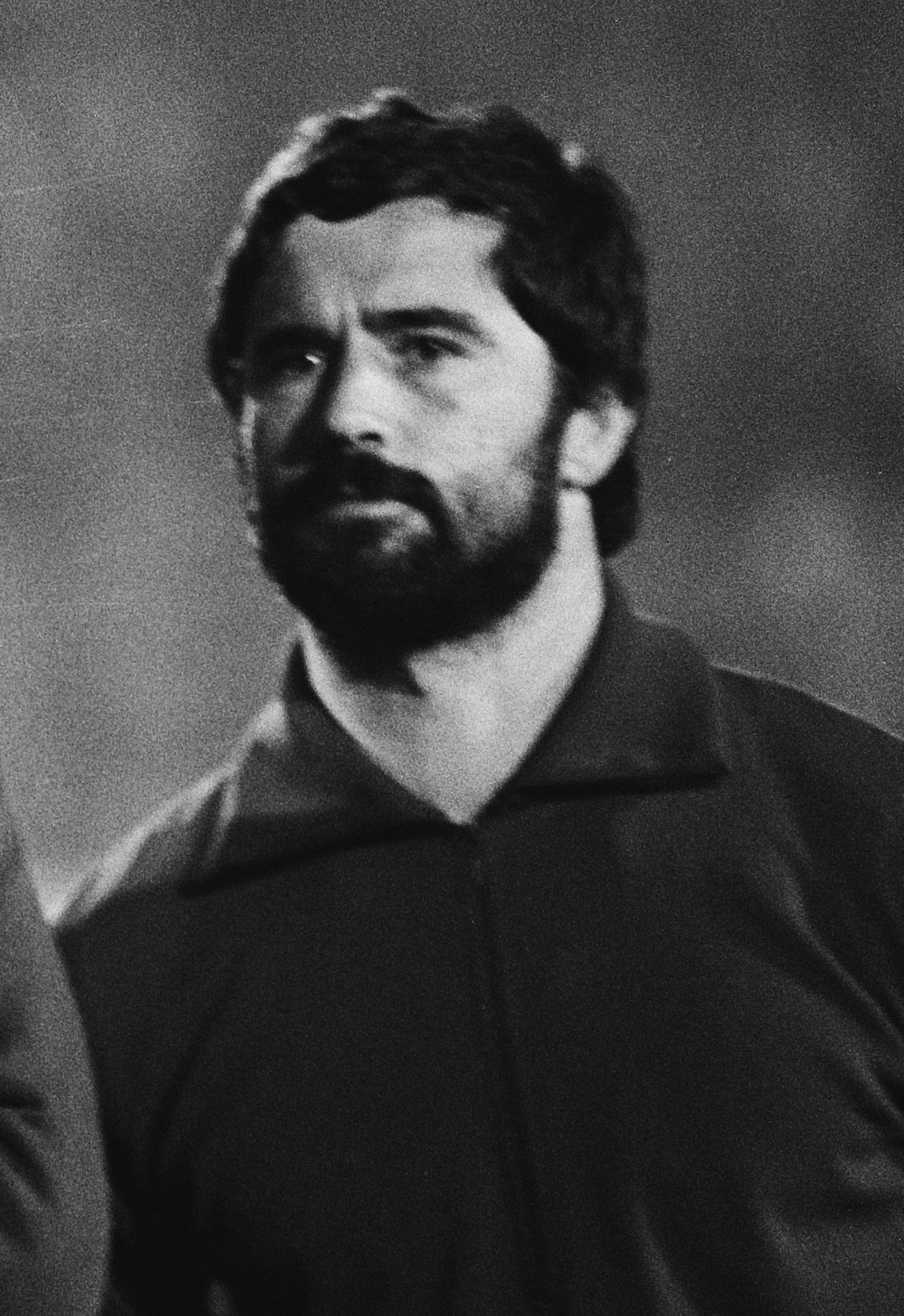
Müller found goals in spaces that appeared already occupied. He stayed low, adjusted his feet faster than defenders could turn and struck with almost no backlift. West Germany’s great 1972 side could circulate through Franz Beckenbauer and Günter Netzer, but its dominance became irreversible because Müller turned loose touches and narrow shooting angles into finishes.
The four-team finals gave him two appearances. He scored both goals in the 2-1 semi-final victory over hosts Belgium, first after drifting off the defensive line and then from close range. In the final he scored twice more as West Germany beat the Soviet Union 3-0. Four goals in two knockout matches remains a uniquely compressed return, and UEFA selected him in the Team of the Tournament.
Gullit’s broader all-phase influence yields to the most complete conversion of limited EURO opportunity: Müller’s two matches, two braces and one title. Torres was less dominant within any single tournament, yet goals in the 2008 and 2012 finals and the latter edition’s Golden Boot lift him to 14. Müller perfected one short event; Torres supplied decisive depth across consecutive championships and changed both trophy matches.
Rank 14: Fernando Torres
EURO context: Spain; centre-forward; 2008 and 2012 champion; scorer in both finals and EURO 2012 Golden Boot winner
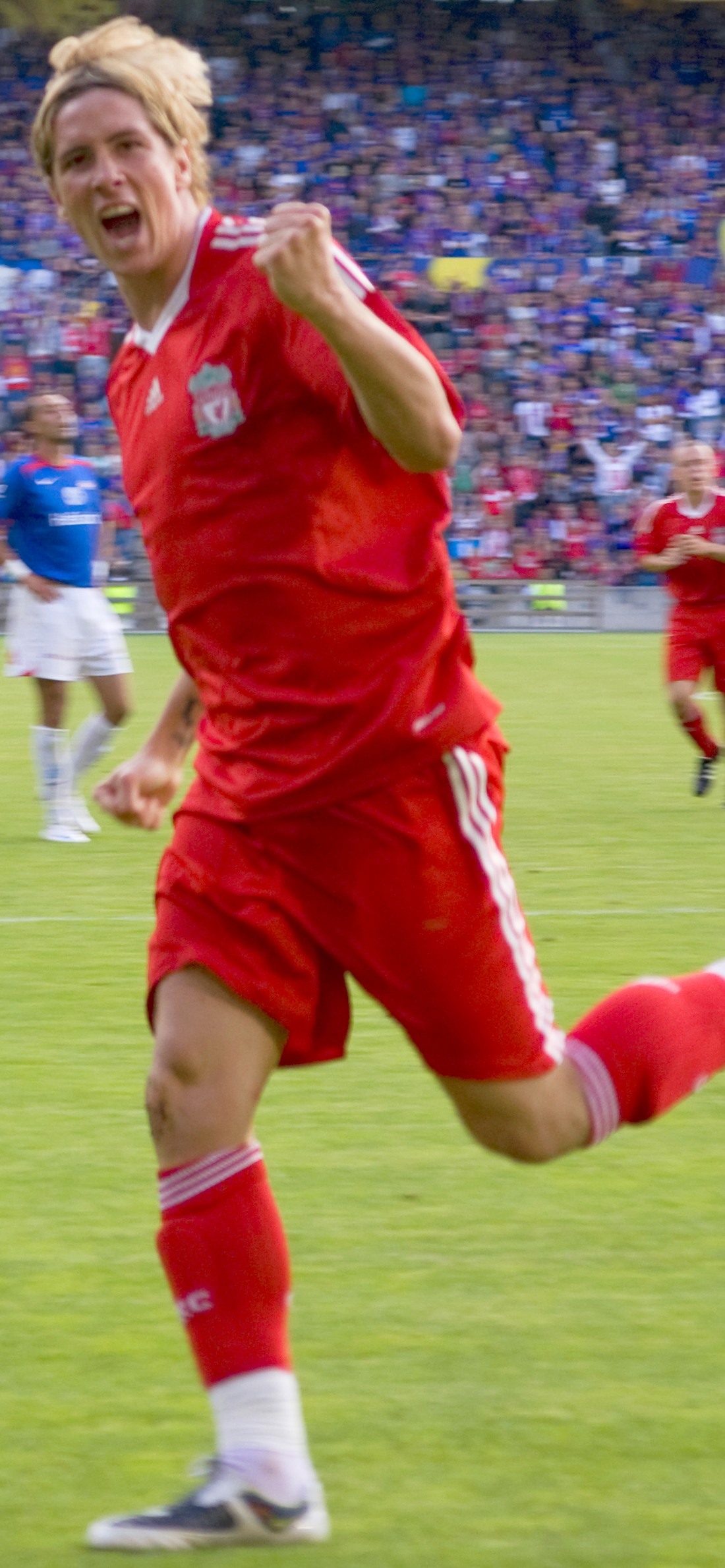
Torres offered Spain the direct run their passing threatened to conceal. He started on the centre-back’s shoulder, curved into the channel and made a midfielder’s early pass worthwhile. His movement also stretched the defensive line away from David Villa or the arriving creators. Even when touches were sparse, the possibility of his speed prevented opponents squeezing Spain’s possession without consequence.
In the EURO 2008 final he accelerated between Philipp Lahm and Jens Lehmann to score the only goal, ending Spain’s 44-year wait for a major title. Four years later he was often a substitute, yet scored three times in 189 minutes. His late goal and assist against Italy in the final earned the Golden Boot through UEFA’s tie-breaking criteria and made him the first player to score in two EURO finals.
Müller’s perfect two-game event gives way to Torres’s decisive actions across two championships, first as the starting spearhead and then as a devastating reserve.
Schmeichel contributed no goal, but the saves that turned Denmark’s improbable 1992 invitation into a title put him one place beyond Torres. Torres delivered the cleanest finishing moments; Schmeichel repeatedly prevented elimination when his side could not control the match.
Rank 13: Peter Schmeichel
EURO context: Denmark; goalkeeper; 1992 champion; played at four final tournaments from 1988 to 2000
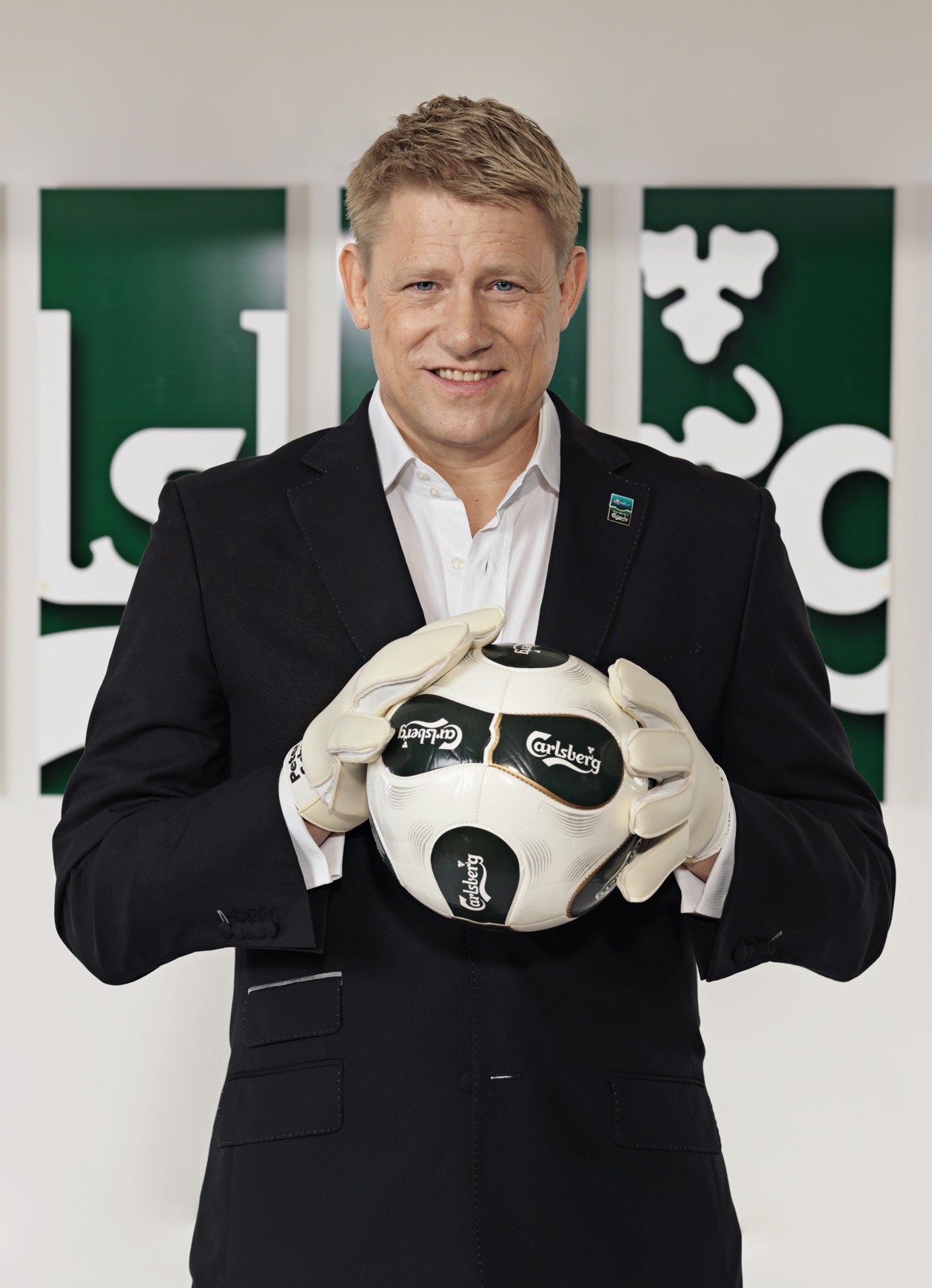
Schmeichel defended beyond the goal line. His starting position narrowed through-balls, his spread made close-range chances feel smaller and his throws could begin a counter before the opponent recovered its shape. Denmark needed all of those qualities in 1992, when a late call-up left little preparation time and several matches required the goalkeeper to absorb pressure without allowing belief to break.
He made vital stops throughout the group, then saved Marco van Basten’s penalty in the semi-final shoot-out against the defending champions. In the final, Germany dominated territory and Schmeichel denied Jürgen Klinsmann, Stefan Reuter and others as Denmark won 2-0. UEFA’s retrospective account credits three outstanding final saves. He also played at the 1988, 1996 and 2000 finals, though none approached that peak.
Schmeichel goes above Torres because Denmark’s title depended on a sequence of interventions rather than two isolated, however historic, finishes. Matthias Sammer at 12 gave Germany’s 1996 winners a similarly foundational influence from sweeper, then added two goals and the official Player of the Tournament award. Schmeichel produced the greater upset; Sammer controlled more phases of a championship favourite’s play.
Rank 12: Matthias Sammer
EURO context: Germany; libero and midfielder; 1996 champion and UEFA Player of the Tournament
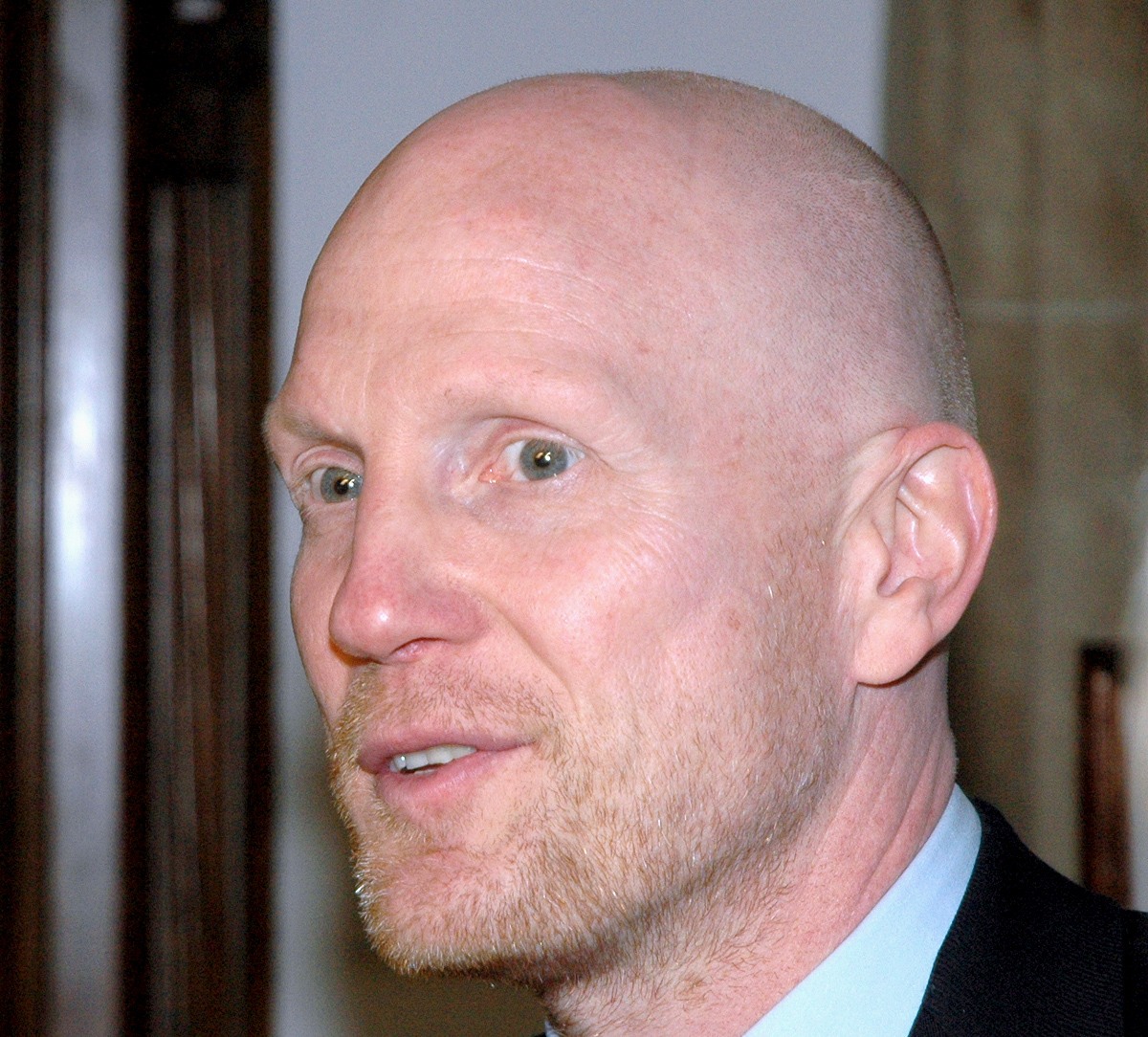
Sammer revived the libero as an attacking role. Starting behind the markers, he stepped into midfield with the ball, closed forward when it was lost and appeared in the penalty area without abandoning Germany’s protection. His judgement allowed Berti Vogts to change personnel and shape through an injury-hit tournament while retaining one player who could connect every line. At EURO ’96 he scored against Russia in the group and the quarter-final winner against Croatia. In the latter match he began the decisive move from deep, continued his run and finished after a one-two. Germany then survived England on penalties and beat the Czech Republic through Oliver Bierhoff’s golden goal. UEFA named Sammer Player of the Tournament and placed him in the official selection as the defining figure of the champions.
Schmeichel’s miracle title settles just below a player whose defensive reading, progression and scoring gave Germany a solution in every phase across six matches. Griezmann lost the 2016 final, but six goals, two assists and the most explosive attacking tournament of the expanded era take him to 11. Sammer’s championship is the stronger complete outcome; Griezmann’s individual attacking peak was higher.
Rank 11: Antoine Griezmann
EURO context: France; second striker and attacking midfielder; 2016 runner-up and Player of the Tournament; seven finals goals
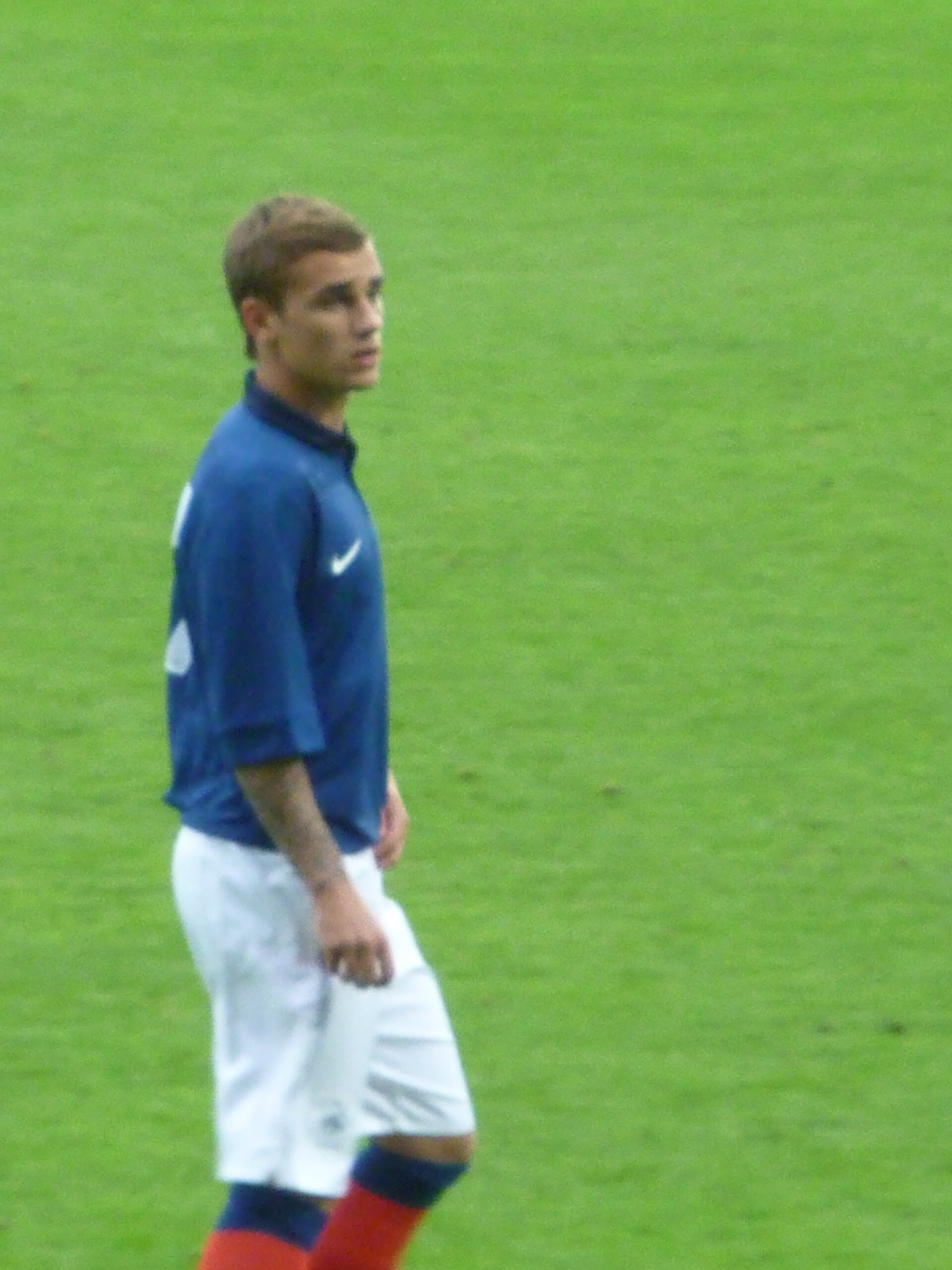
Griezmann turned between the lines before the next defender could arrive. He could run beyond Olivier Giroud, combine underneath him or drop towards midfield and release a wide player, which made France less predictable than a team built around one target striker. His pressing and recovery runs also allowed Didier Deschamps to use a front two without abandoning the compactness that carried France through knockout matches.
At EURO 2016 he scored six goals and supplied two assists. He changed the last-16 tie against the Republic of Ireland with two goals in four minutes, struck against Iceland, then scored both goals as France eliminated world champions Germany. UEFA named him Player of the Tournament and awarded the Golden Boot. He scored again at EURO 2020, taking his finals total to seven, but neither that campaign nor a subdued 2024 matched the home peak.
Six goals plus creation across a seven-match run give Griezmann more direct match-winning influence than Sammer, despite the defeat by Portugal in the final. Ramos scored none at a EURO, yet two titles while moving from right-back to centre-back and first place in UEFA’s 2012 performance index open the top ten. Griezmann’s peak was brighter; Ramos’s repeat control at the decisive end of consecutive championships gives him the superior overall record.
Rank 10: Sergio Ramos
EURO context: Spain; right-back and centre-back; 2008 and 2012 champion; Team of the Tournament in 2012
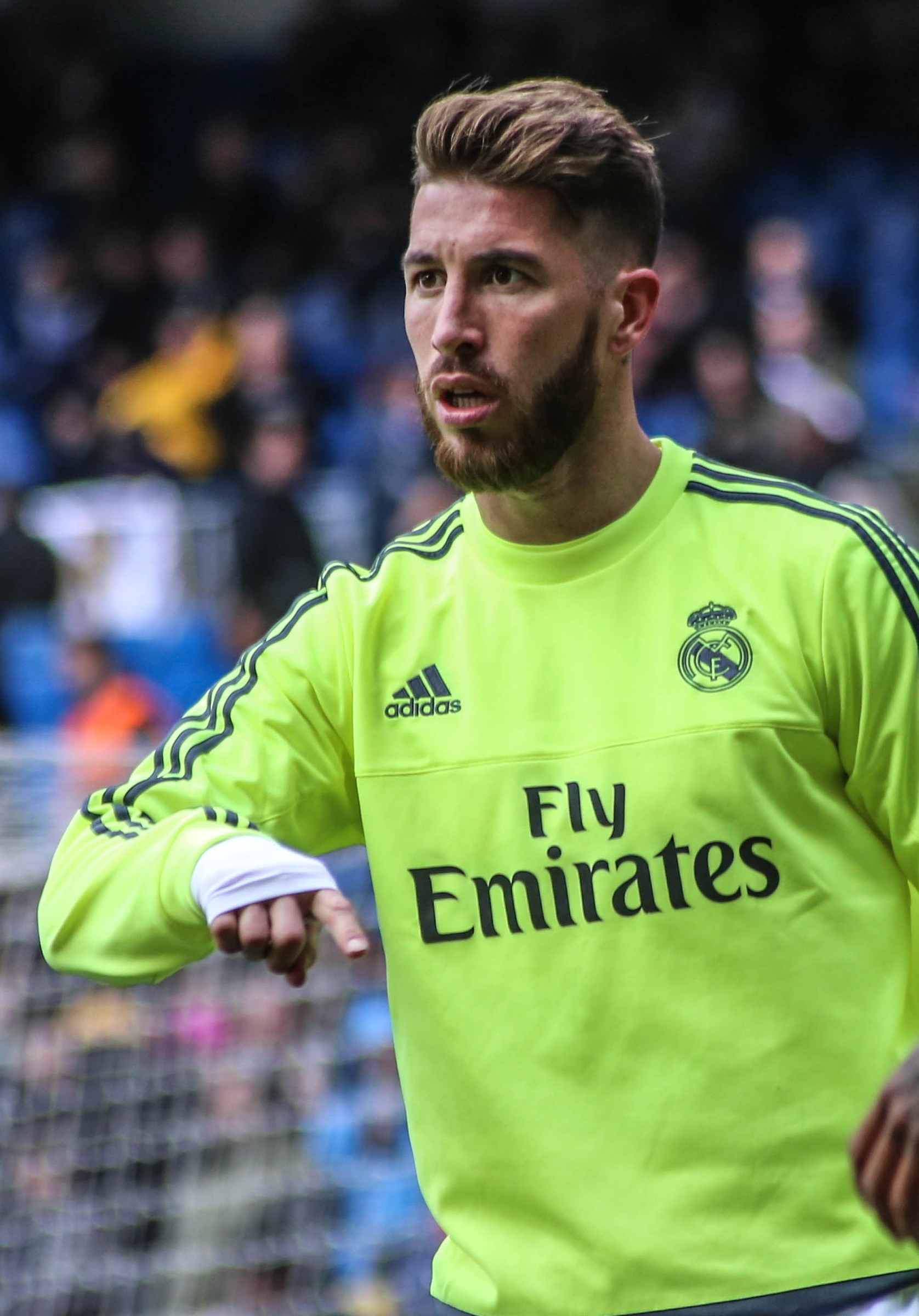
Ramos gave Spain aggression without surrendering recovery. At right-back in 2008 he overlapped to widen a narrow midfield, drove into tackles and still had the speed to repair space behind him. Four years later he was a centre-back, stepping into strikers and passing through the first line. The positional change mirrored Spain’s evolution from brilliant challengers into a side expected to control every match.
Spain did not concede in any of their six knockout matches across the two title runs. Ramos helped subdue Italy, Russia and Germany in 2008, then France, Portugal and Italy in 2012. Against Portugal he also converted a delicately chipped shoot-out penalty, four months after a high-profile miss for Real Madrid in Europe. UEFA’s performance index rated him the leading player at EURO 2012, when Spain conceded once in six games.
Ramos ranks above Griezmann because he mastered two positions across consecutive championships and made domination defensively sustainable. Lev Yashin at nine played only four finals matches, yet was decisive in winning 1960 and returning to the final in 1964, when the tournament offered no group-stage accumulation. Ramos has the deeper sequence; Yashin’s saves bore a greater share of a less controlling team’s survival.
Rank 9: Lev Yashin
EURO context: Soviet Union; goalkeeper; 1960 champion and 1964 runner-up; Team of the Tournament at both editions
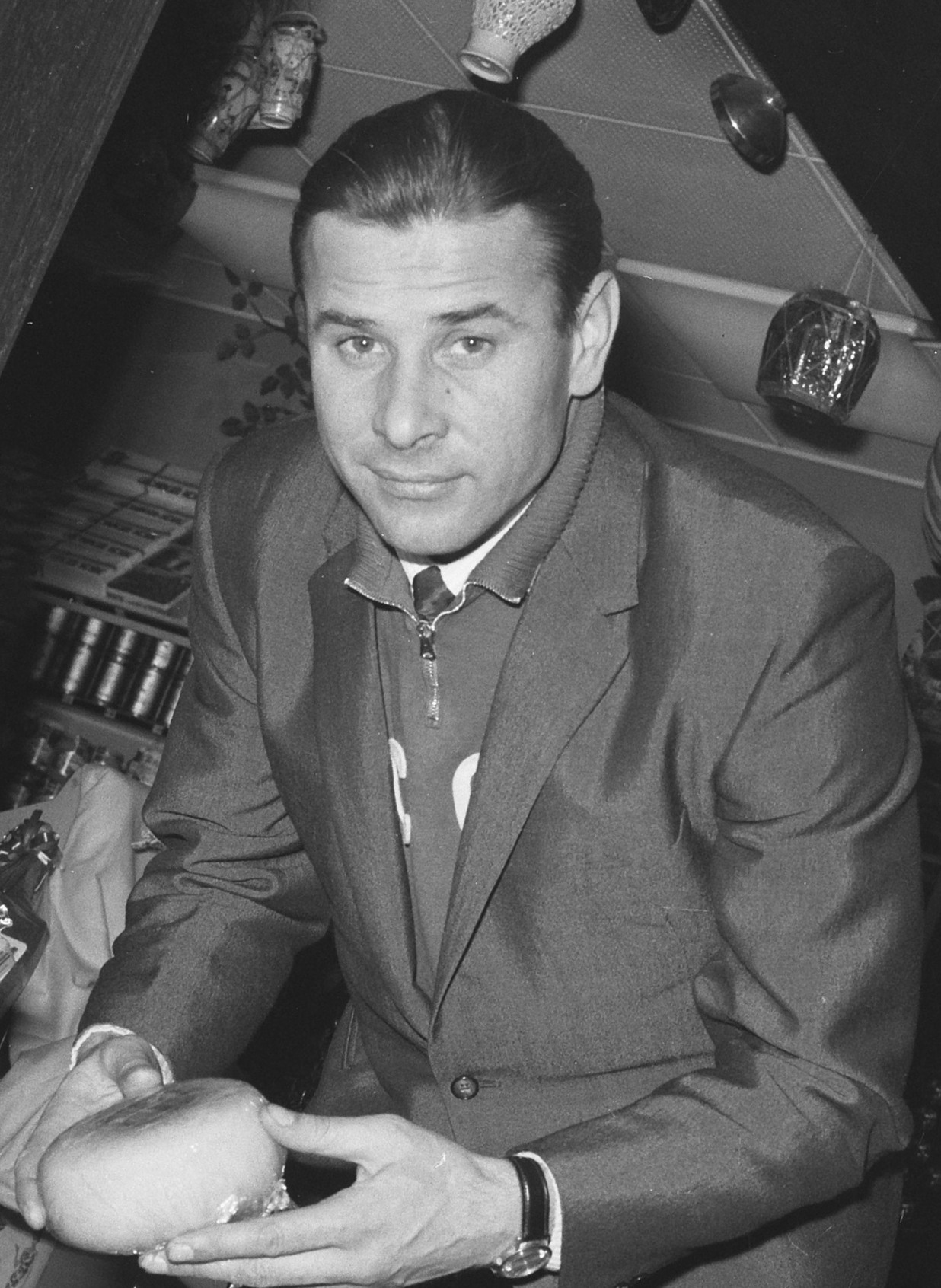
Yashin treated goalkeeping as command rather than reaction. He left his line to gather through-balls, punched through traffic and launched attacks with long throws, expanding the position’s geography before such behaviour became standard.
His black shirt and athleticism made the image famous. At the EURO, the substance was a goalkeeper repeatedly winning the most dangerous moments of close knockout matches.
The inaugural finals in 1960 comprised two games. Yashin protected a 3-0 semi-final win over Czechoslovakia, then made crucial saves as the Soviet Union came from behind to beat Yugoslavia 2-1 after extra time. Four years later he shut out Denmark in another semi-final before Spain beat the holders late in Madrid. Selection in the Team of the Tournament at both editions reflects complete finals participation, not reputation imported from elsewhere.
Ramos’s repeat titles yield to Yashin as the central match-saver in one championship and one final from every opportunity the early format allowed. Casillas earns eighth through a comparable goalkeeping peak across twice as many winning campaigns, including two penalty saves that changed Spain’s history. Yashin pioneered the authority; Casillas repeated it under the longer, less forgiving burden of consecutive tournaments.
Rank 8: Iker Casillas
EURO context: Spain; goalkeeper and captain; 2008 and 2012 champion; the only man to captain two EURO-winning teams
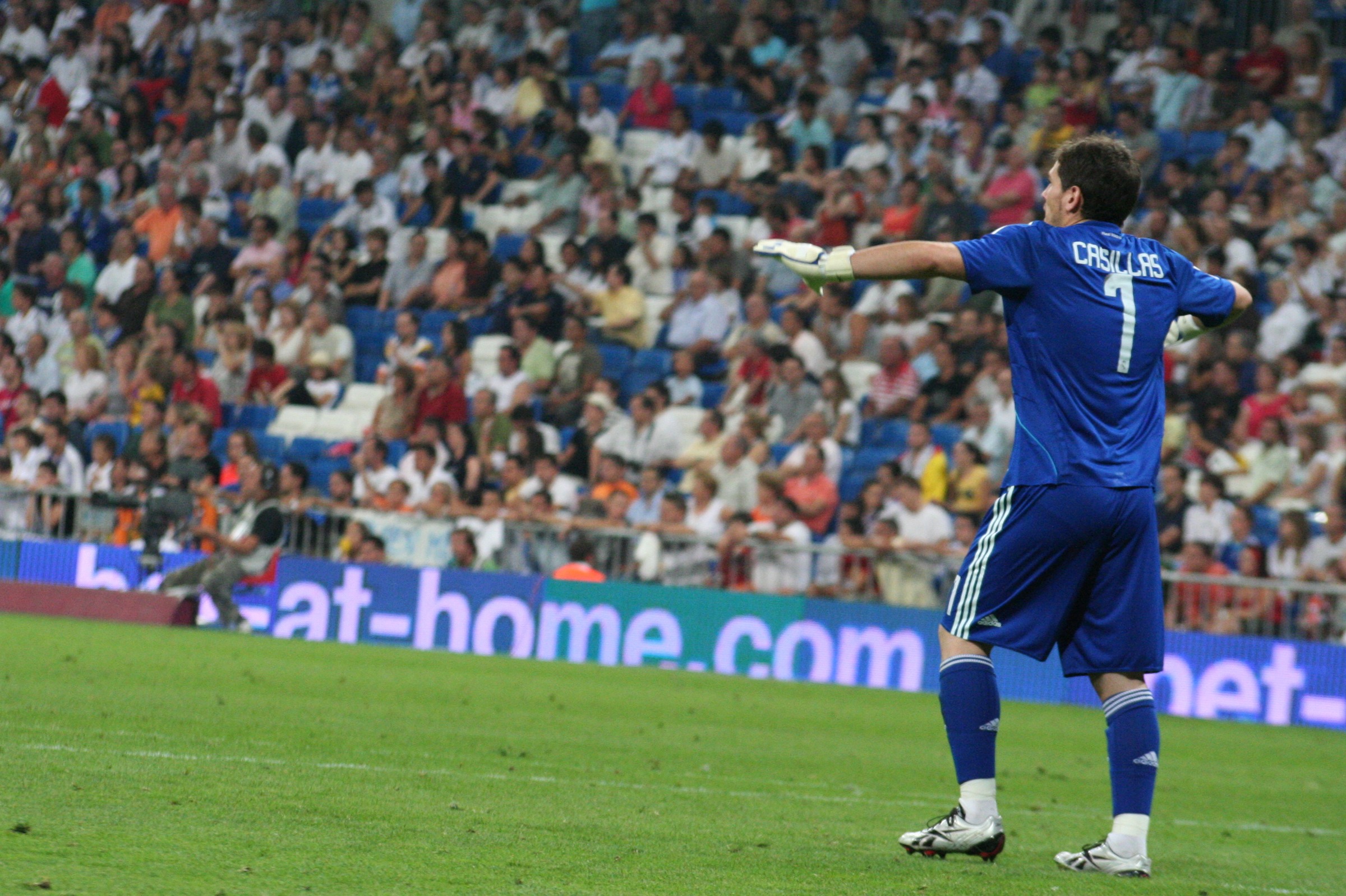
Casillas could appear quiet because Spain protected the ball, but quiet goalkeeping in a dominant team has its own difficulty. He maintained a position high enough to support the defence, then produced a fast, technically clean save after long inactive spells. His calm in shoot-outs mattered too. The captain did not perform serenity; he gave a technically ambitious side proof that one transition need not undo an hour of control.
In the 2008 quarter-final against Italy, Casillas saved penalties from Daniele De Rossi and Antonio Di Natale as Spain ended a history of tournament failure. He then kept clean sheets in the semi-final and final. Spain conceded once at EURO 2012 and none in the knockout rounds, with Casillas recording his 100th international victory in the 4-0 final. He became the first player to lead two EURO-winning sides.
Yashin set the standard; Casillas takes the higher place by joining a decisive shoot-out and six consecutive knockout clean sheets to two complete championship runs. Van Basten has only one winning tournament, but a hat-trick, semi-final winner and perhaps the greatest final finish among its five goals carry him to seventh. Casillas removed the possibility of defeat; Van Basten created a succession of victories that did not exist until he touched the ball.
Rank 7: Marco van Basten
EURO context: Netherlands; centre-forward; 1988 champion and top scorer with five goals; Team of the Tournament in 1988 and 1992
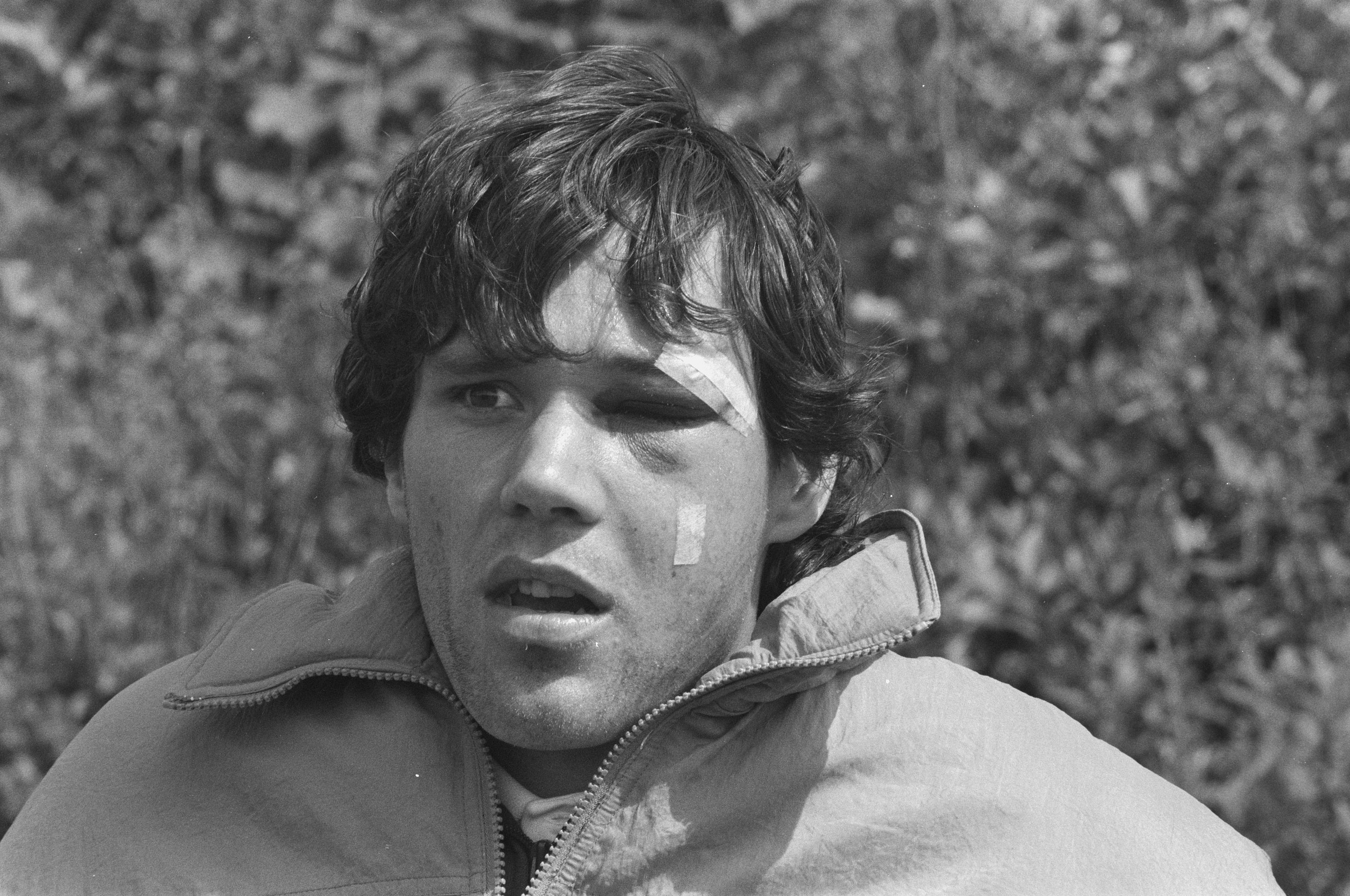
Van Basten could lead the line without remaining on it. He dropped to combine, spun behind when a defender followed and had the balance to finish while his body was moving away from the obvious shooting angle. The Netherlands began EURO 1988 with him on the bench and lost to the Soviet Union. Once restored, he changed both the attack’s geometry and the tournament.
He scored a hat-trick against England, volleyed the late semi-final winner against hosts West Germany and then met Arnold Mühren’s cross from an angle that appeared to permit only a return ball. His volley over Rinat Dasayev sealed the final and remains the event’s defining goal. Five strikes earned the scoring title. Four years later he helped the holders reach another semi-final but missed the decisive shoot-out kick against Denmark. Van Basten goes above Casillas because his 1988 campaign contains decisive attacking work at every level: group survival, historic semi-final and final. Zinedine Zidane at six did not match five goals in one edition, but controlled the 2000 champions from midfield and returned to decide matches in 2004. Van Basten has the sharper perfect peak; Zidane created a larger, more varied finals body across three tournaments.
Rank 6: Zinedine Zidane
EURO context: France; attacking midfielder; 2000 champion and UEFA Player of the Tournament; five finals goals
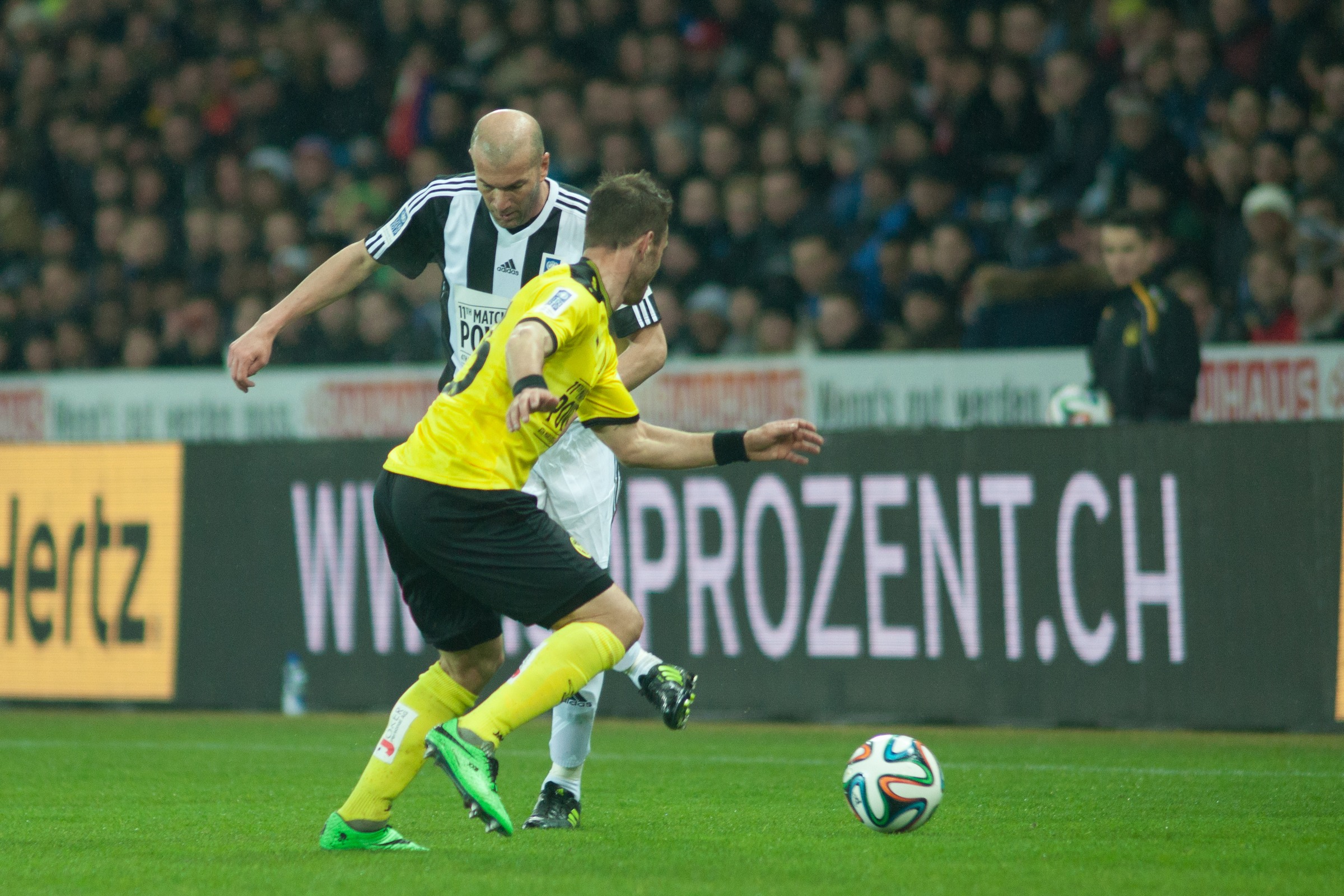
Zidane made pressure useful. He received with an opponent near enough to be turned, used his first touch to change the direction of the whole move and then carried at the defender released by that turn. France’s 2000 side possessed power and depth in every line, but Zidane gave it imagination in the central spaces where a tournament knockout match is most resistant to plans.
At EURO 2000 he scored a precise free-kick against Spain in the quarter-final and the golden-goal penalty against Portugal in the semi-final, while the quality of his passing and ball retention made him UEFA’s Player of the Tournament. France needed late rescue in the final, but their finest football before it flowed through him. In 2004 he scored twice in stoppage time to overturn England, then added another goal against Switzerland. His 1996 contribution was quieter as France reached the semi-finals.
Van Basten’s 1988 masterpiece stops below a player whose influence extended from progression and chance creation to decisive scoring across more editions. Xavi supplied fewer spectacular interventions, but serving as the tactical metronome of both the 2008 and 2012 winners and directly creating goals in both finals earns fifth. Zidane could seize a match; Xavi repeatedly determined the conditions under which it was played.
Rank 5: Xavi
EURO context: Spain; central midfielder; 2008 and 2012 champion; UEFA Player of the Tournament in 2008
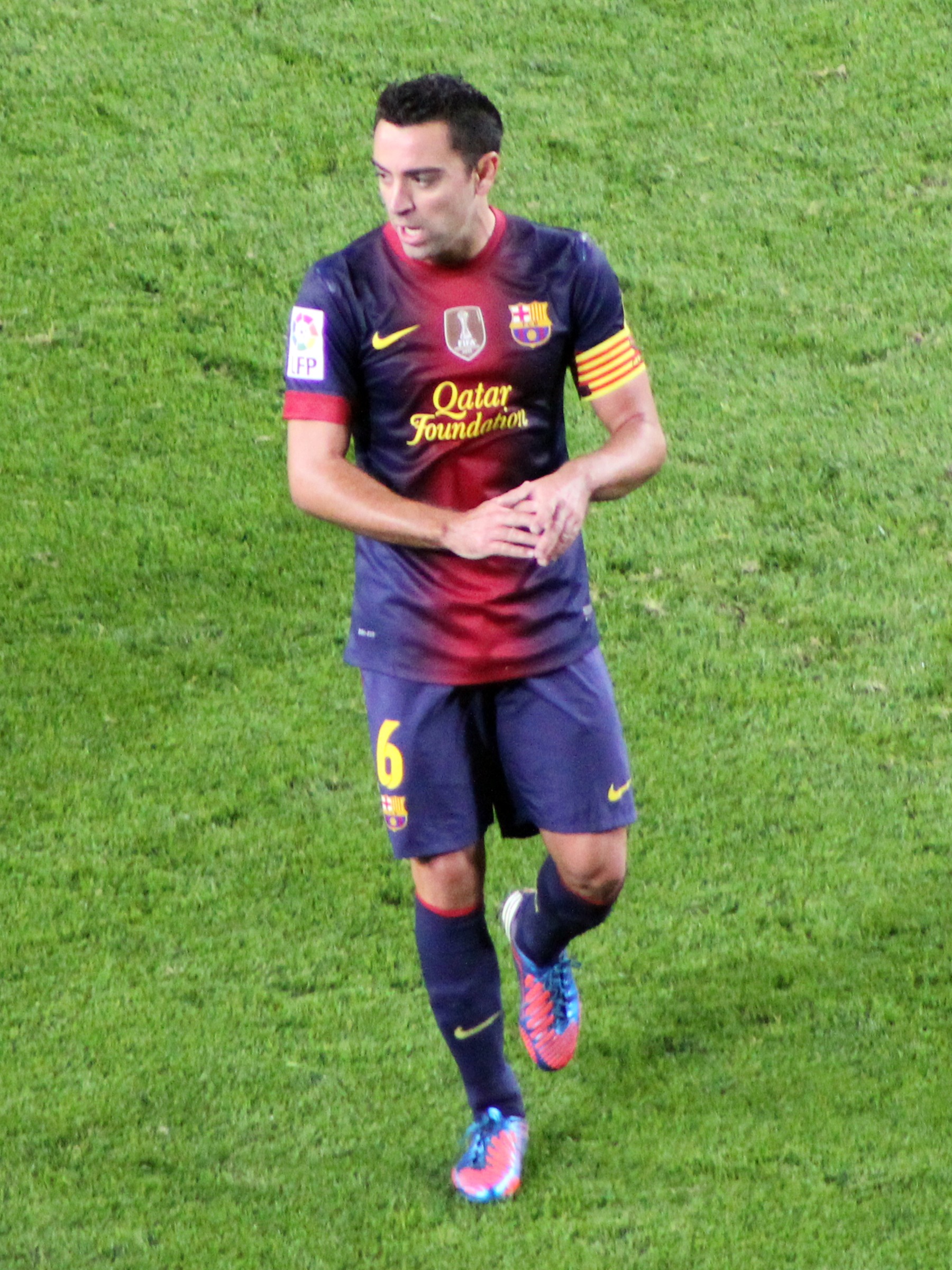
Xavi turned possession into territorial control through the direction of each pass. He received on the half-turn, found the free man before the press closed and moved again to keep the next option alive. The ball did not circulate for decoration. By making opponents shift once more than they wanted, he created the instant when Spain could pass through rather than around them.
UEFA named him Player of the Tournament at EURO 2008. He scored the semi-final opener against Russia and released Fernando Torres for the winning goal in the final, actions that gave consequence to his control. Four years later, after a less dominant group stage, Xavi was outstanding in the final against Italy and assisted goals for Jordi Alba and Torres. He became the midfield reference of the first side to defend the European title.
Zidane’s capacity to seize a match is narrowly passed by Xavi’s structural indispensability to two champions and final-third actions in both trophy matches. Beckenbauer also made the position of a whole team possible, and captaincy of West Germany from libero to the 1972 title and 1976 final carries him into fourth. Xavi has the longer winning sequence; Beckenbauer fused defending, build-up and leadership with even greater responsibility for the team’s shape.
Rank 4: Franz Beckenbauer
EURO context: West Germany; libero and captain; 1972 champion and 1976 runner-up; Team of the Tournament at both editions
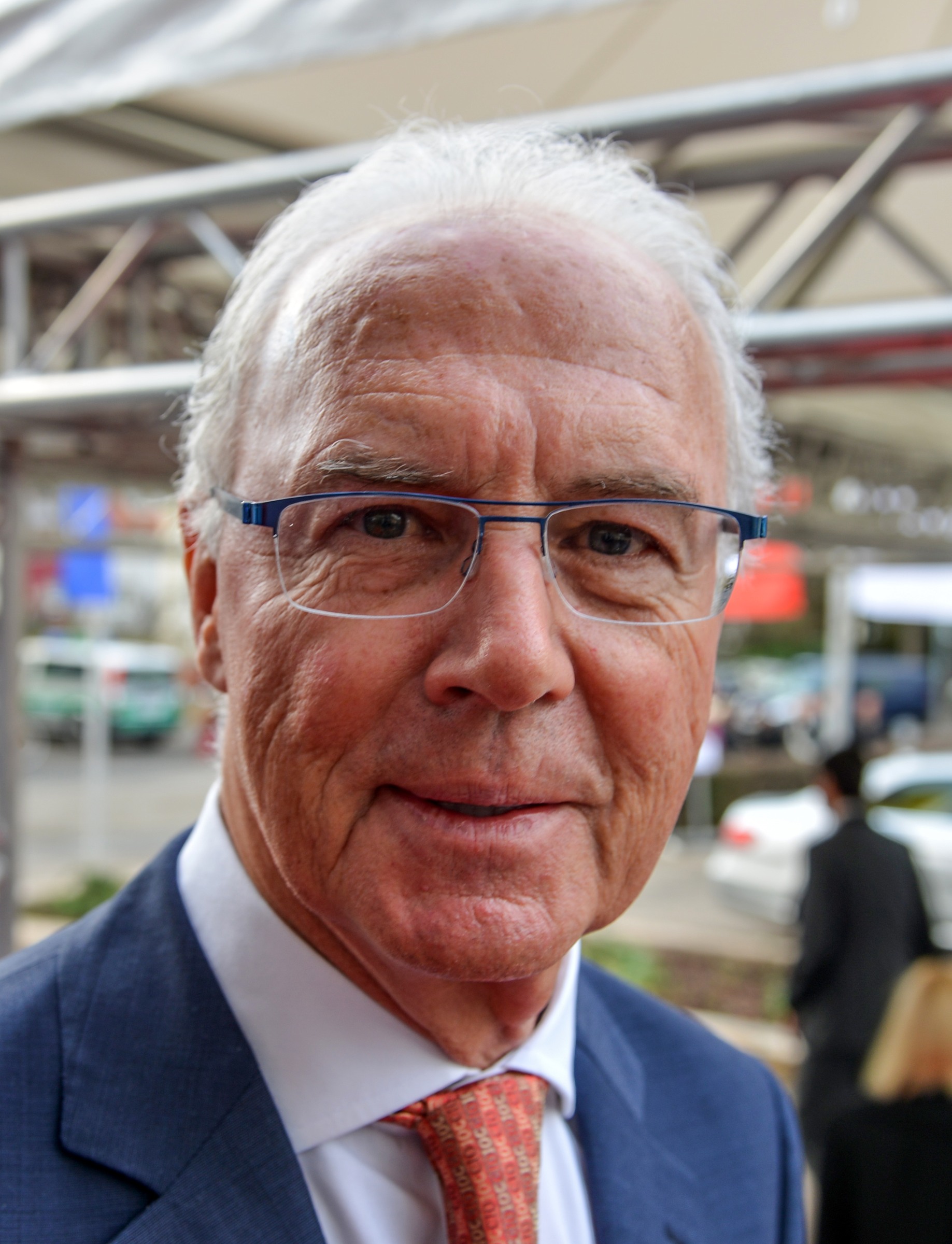
Beckenbauer transformed the spare defender from insurance into initiative. He read danger behind the markers, then carried forward or passed through midfield before the opponent could reset. West Germany could attack with numbers because their captain chose when to become an extra midfielder and when to remain the final cover. Elegance was not an alternative to defensive rigour; it was how he made control economical.
In 1972 he led perhaps the most accomplished team of the early EURO era. West Germany beat hosts Belgium 2-1 and the Soviet Union 3-0, with Beckenbauer directing both matches from the back while Günter Netzer and Gerd Müller decided them farther forward.
Four years later he captained another run to the final, his 100th international appearance, before Czechoslovakia won on penalties. UEFA selected him in both tournament teams.
Beckenbauer ranks above Xavi because every phase of two finals campaigns passed through his reading, from last-defender coverage to first construction and captaincy. Andrés Iniesta at three shared Xavi’s two titles but supplied the more elusive final-third carrying, was central in 2008 and became Player of the Tournament in 2012. Beckenbauer organised the whole; Iniesta broke the last resistance often enough to edge a close comparison between different kinds of control.
Rank 3: Andrés Iniesta
EURO context: Spain; attacking midfielder; 2008 and 2012 champion; UEFA Player of the Tournament in 2012
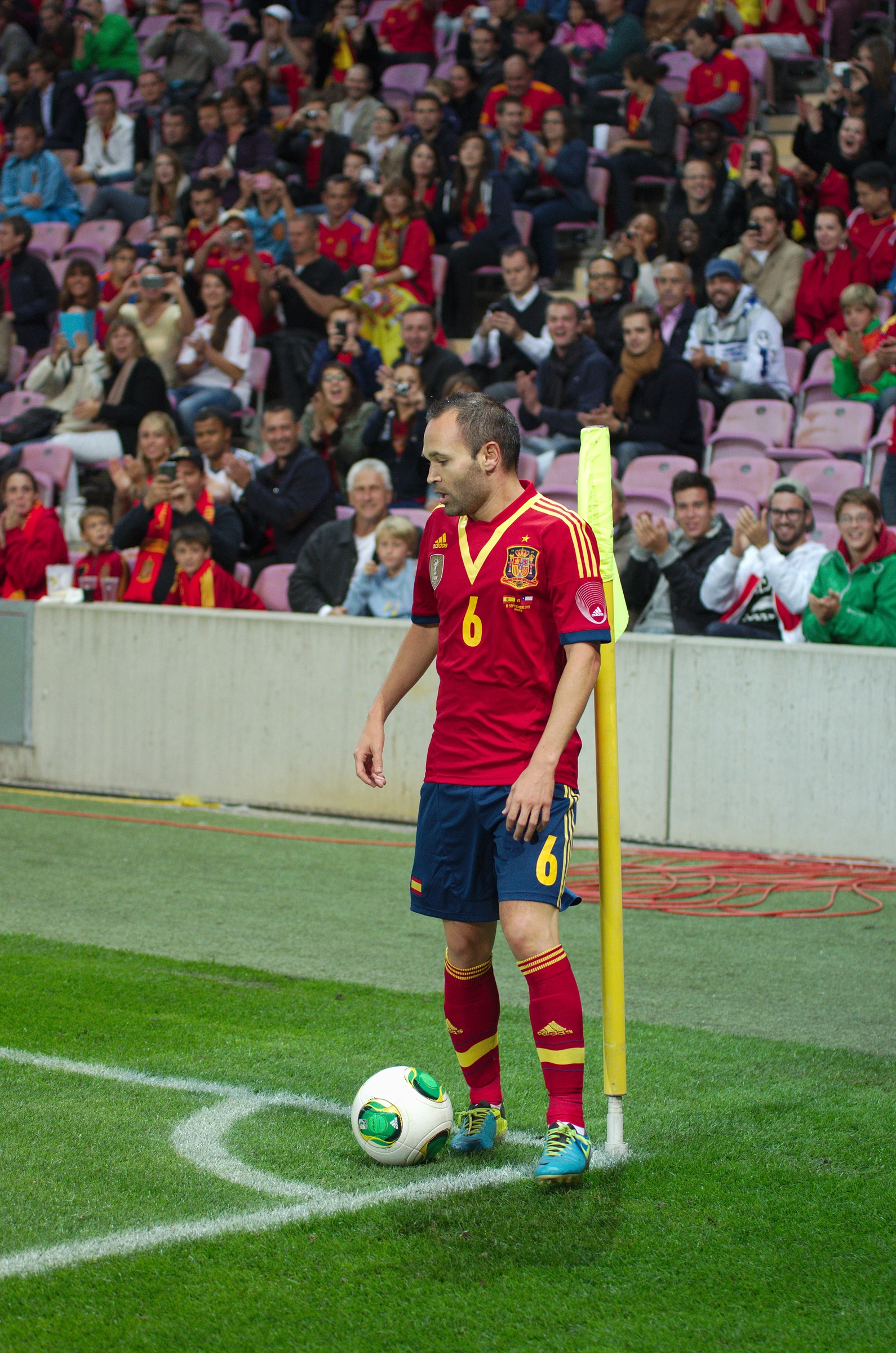
Iniesta entered the space a defence believed it had closed. His first touch took the ball away from contact, his second carried it towards the next line, and the apparently safe pass often arrived only after he had forced an opponent to abandon position. Spain possessed other great passers. Iniesta was the one most able to turn possession under pressure into an attack facing the goal.
He was instrumental in 2008, combining from the left and creating David Villa’s second goal in the opening win over Russia before earning a place in the Team of the Tournament. At EURO 2012 he played all six games, received three official man-of-the-match awards including the final and was named Player of the Tournament despite recording no goal. That apparent contradiction explains his value: he carried, combined and destabilised until another player’s final action became possible.
Beckenbauer has the title and final; Iniesta passes him as a creative pressure point in two champion teams and the outstanding individual of a successful defence. Ronaldo has a less complete winning final, but 30 appearances, 14 goals, six editions and decisive work from 2004 to 2020 create the largest EURO career and take second. Iniesta reached the higher collective standard; Ronaldo sustained a larger individual burden for far longer.
Rank 2: Cristiano Ronaldo
EURO context: Portugal; forward and captain; 2016 champion and 2004 runner-up; record 30 appearances and 14 goals across six editions
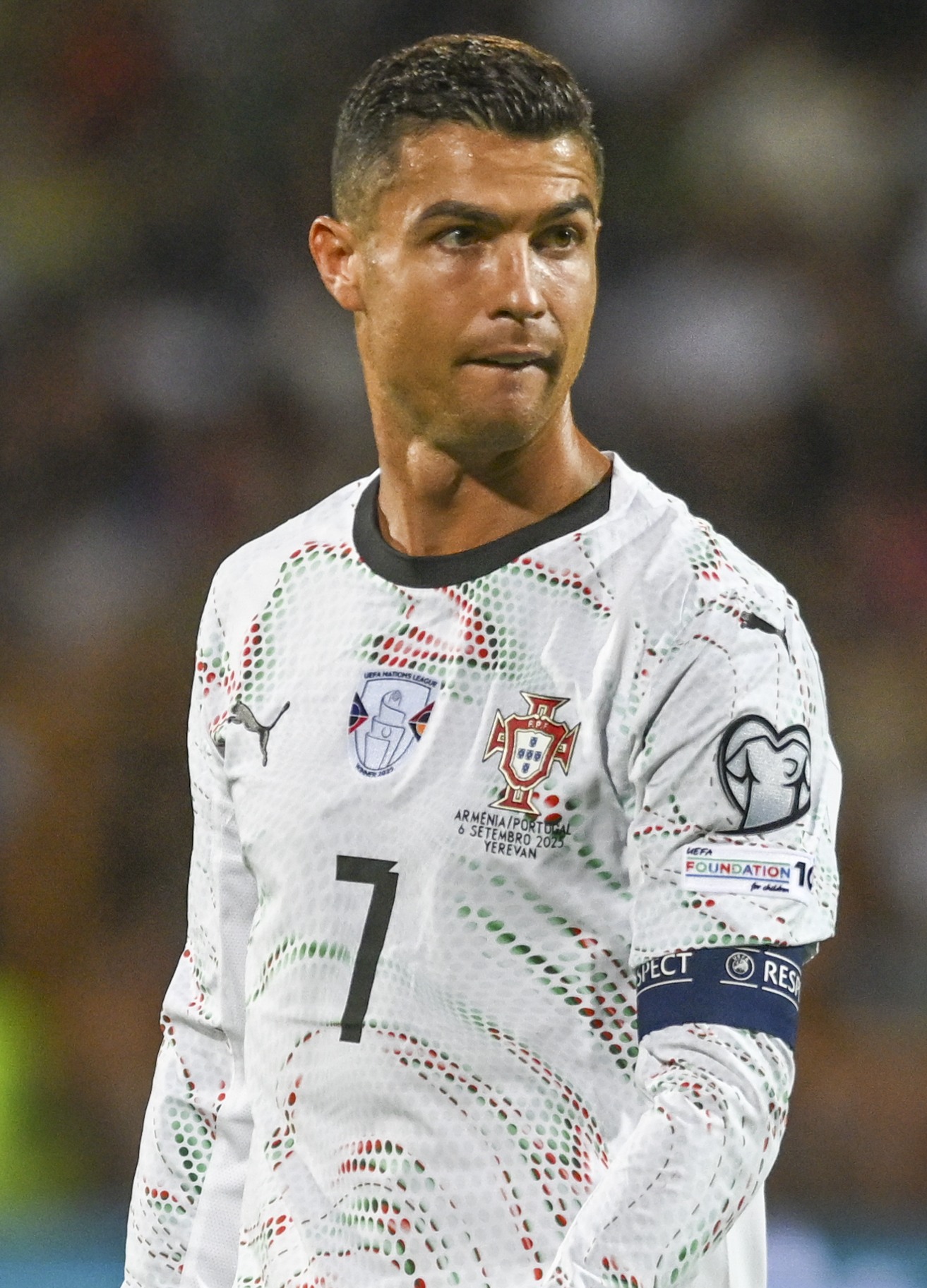
Ronaldo’s EURO career contains several different forwards. In 2004 he was a winger attacking from the right, crossing and carrying as a host nation reached the final. By 2012 he was an explosive left-sided scorer whose runs destroyed the Netherlands and the Czech Republic. In 2016 he moved between wing and centre-forward, then by 2020 operated primarily as the attack’s finishing point. The tournament did not merely witness his longevity. It documented his reinvention. He scored at five editions and played at six, both records, reaching 30 appearances and 14 goals. His three goals in 2012 took Portugal to a semi-final lost on penalties. Four years later, after two goals against Hungary, he scored and assisted against Wales before injury removed him 25 minutes into the final. Portugal won without him on the pitch, but not without the work that got them there. Five goals at EURO 2020 then took him beyond Michel Platini’s all-time total; 2024 added appearances but no goal.
Iniesta’s two champion teams stop just below a player who carried elite scoring, chance creation and national expectation across more EURO cycles than anyone. Ronaldo remains second because the list values the force of a tournament at least as much as accumulated reach. Platini scored nine times in five matches, in every match, while captaining France to the title. Ronaldo owns the competition’s greatest career volume; Platini produced its most complete act of individual command.
Rank 1: Michel Platini
EURO context: France; attacking midfielder and captain; 1984 champion; record nine goals in a single finals tournament
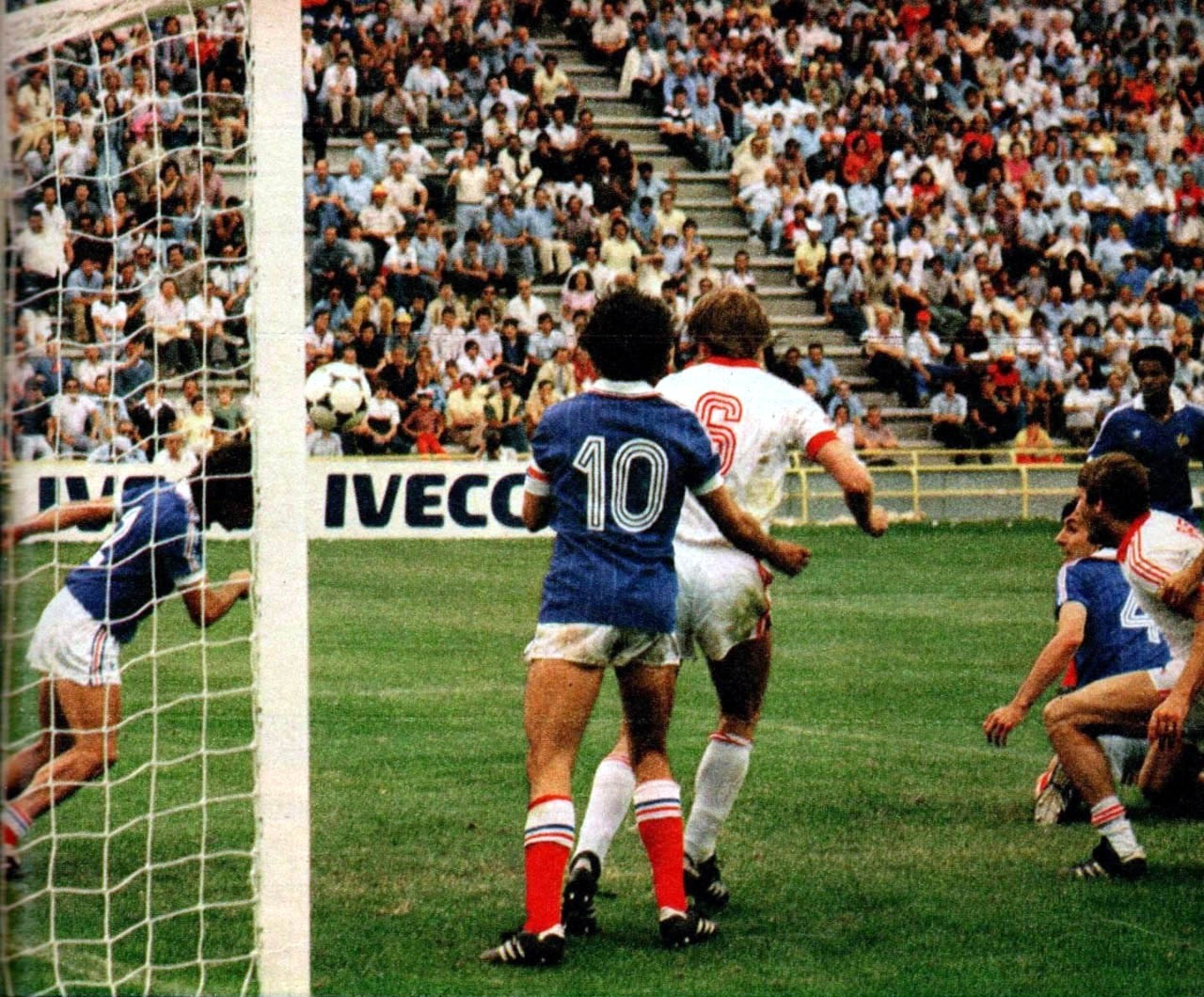
Platini did not play like a midfielder trying to become a striker. He remained the organiser, dropping to set the direction of an attack, then arrived in the penalty area after defenders had followed the first movement. His technique opened several scoring routes: timed headers, either-foot finishes, free-kicks and late runs. France’s carré magique offered sophisticated support, but its captain connected the combinations to the scoreboard.
At EURO 1984 he scored in all five matches. The sequence began with the winner against Denmark, continued with perfect hat-tricks against Belgium and Yugoslavia, and reached its peak with the 119th-minute winner in a 3-2 semi-final against Portugal. In the final his free-kick slipped under Luis Arconada before Bruno Bellone secured a 2-0 victory over Spain. Platini supplied nine of France’s 14 goals while leading the host nation to its first major trophy.
Number one rests on more than a rate that expanded tournaments have not reproduced. Platini decided five different games in five different states: a tight opener, two group demonstrations, an exhausting semi-final and a tense final. Ronaldo’s 14 goals and six editions constitute an unmatched lifetime of EURO achievement, but his influence was distributed and his title concluded from the touchline. Platini owned an entire championship from first goal to trophy. No player has made the European Championship more completely his own.
The hardest omissions
The four-team era creates brutal choices. Viktor Ponedelnik scored the inaugural final’s extra-time winner and Valentin Ivanov scored in both Soviet matches, but Yashin’s goalkeeping authority better represents the 1960 champions. Dieter Müller scored four goals in two 1976 appearances, including a semi-final hat-trick as a substitute, yet Germany lost the final and Gerd Müller’s equivalent total finished a title. Oliver Bierhoff’s two goals won the 1996 final; Sammer was Germany’s tournament-long structure.
Karel Poborský and Milan Baroš made exceptional Czech runs, while Thierry Henry, Cesc Fàbregas, Bastian Schweinsteiger, Toni Kroos, Pepe, Leonardo Bonucci and Gianluigi Donnarumma all have credible claims. Harry Kane’s knockout scoring and Rodri’s 2024 Player of the Tournament award may strengthen further in future retrospectives. None was omitted for lacking quality. The line at 30 reflects the combination this ranking demands: a great EURO peak, enough finals substance for the opportunity available and an influence that can be separated from the fame of the player’s wider career.
A tournament, not a career award
Our rankings change if club football or World Cups enter the calculation, which is why they do not. It also changes if raw appearances settle every dispute, which would make the enlarged modern competition its own reward. The EURO’s history is richer than either shortcut. Its greatest performers include a nine-goal attacking midfielder, captains who controlled space from defence, goalkeepers who carried underdogs and creators whose finest work occurred before assists were recorded consistently.
Platini leads because his 1984 championship combines production, authorship and the final outcome without a weak match. Ronaldo follows because nobody else built so much across so many versions of the tournament. Between them and Zagorakis lies the full argument of the EURO: brilliance can endure for two decades or arrive in six startling games, but it must change what a nation can do when the finals begin.



.jpg)
.jpg)
.jpg)


.jpg)
_(cropped).jpg)


.jpg)


.jpg)


.jpg)