
The players who did the most to define England’s league from 1992/93 to 2025/26
The Premier League created a distinct competitive history in the annals of football. Shearer’s Blackburn peak, Cantona’s arrival and Henry’s left-channel attacks belong here; work outside the competition does not. World Cup, Champions League or pre-1992 First Division achievement can clarify ability, not earn a place.
Our rankings ask who performed most brilliantly and consequentially in Premier League matches from 1992/93 through 2025/26. Peak carries the greatest weight, followed by sustained excellence, title-race influence, tactical responsibility, adaptability and attributable team effect. Goals, assists, clean sheets, appearances and medals are evidence only with definitions and context.
Positions leave different records. A centre-forward changes the score; a holding midfielder decides where play occurs; a centre-back makes aggression possible; a goalkeeper can prevent danger before a save. The order compares excellence within role before overall effect, without making defenders compete through goals or treating medals as individual statistics.
Longevity matters only when minutes contain authority. Giggs receives credit for helping changing United teams win, not remaining registered. Haaland enters after four campaigns because three Golden Boots, a 36-goal record season and two title-winning campaigns are complete. Active careers receive no future credit. Our scope is senior men’s football. Statistics use Premier League records unless stated, with 42-match seasons identified where relevant.
Our rankings at a glance
| Rank | Player | Country or team | Central reason |
|---|---|---|---|
| 1 | Thierry Henry | Arsenal | 175 goals, 74 assists and two titles |
| 2 | Kevin De Bruyne | Chelsea and Manchester City | six titles and 119 assists |
| 3 | Mohamed Salah | Chelsea and Liverpool | 193 goals, 94 assists and two titles by the cut-off |
| 4 | Alan Shearer | Blackburn Rovers and Newcastle United | record 260 goals and three Golden Boots |
| 5 | Wayne Rooney | Everton and Manchester United | 208 goals, 103 assists and five titles |
| 6 | Roy Keane | Nottingham Forest and Manchester United | seven titles, four as captain |
| 7 | Patrick Vieira | Arsenal and Manchester City | three Arsenal titles and 2000/01 Player of the Season |
| 8 | Frank Lampard | West Ham United, Chelsea and Manchester City | 177 goals, 102 assists and three titles |
| 9 | Sergio Agüero | Manchester City | 184 goals and five titles |
| 10 | John Terry | Chelsea | five titles, 214 clean sheets and 41 goals |
| 11 | Ryan Giggs | Manchester United | record 13 titles and 162 assists |
| 12 | Paul Scholes | Manchester United | 11 titles, 107 goals and 55 assists |
| 13 | Steven Gerrard | Liverpool | 504 appearances, 120 goals and 92 assists |
| 14 | Dennis Bergkamp | Arsenal | three titles, 87 goals and 94 assists |
| 15 | Eric Cantona | Leeds United and Manchester United | four titles with United |
| 16 | Harry Kane | Tottenham Hotspur | 213 goals, three Golden Boots and one Playmaker award |
| 17 | Peter Schmeichel | Manchester United, Aston Villa and Manchester City | five titles and 1995/96 Player of the Season |
| 18 | David Silva | Manchester City | four titles, 60 goals and 93 assists |
| 19 | Rio Ferdinand | West Ham United, Leeds United, Manchester United and Queens Park Rangers | six titles |
| 20 | Cristiano Ronaldo | Manchester United | three titles and two Player of the Season awards |
| 21 | Virgil van Dijk | Southampton and Liverpool | two titles and 2018/19 Player of the Season |
| 22 | Ashley Cole | Arsenal and Chelsea | three titles and 147 clean sheets |
| 23 | Petr Čech | Chelsea and Arsenal | four titles, four Golden Gloves and 202 clean sheets |
| 24 | Didier Drogba | Chelsea | four titles and two Golden Boots |
| 25 | Vincent Kompany | Manchester City | four titles and 2011/12 Player of the Season |
| 26 | Nemanja Vidić | Manchester United | five titles and two Player of the Season awards |
| 27 | David Beckham | Manchester United | six titles, 62 goals and 80 assists |
| 28 | Eden Hazard | Chelsea | two titles and the 2014/15 Player of the Season award |
| 29 | N’Golo Kanté | Leicester City and Chelsea | consecutive titles with different clubs |
| 30 | Erling Haaland | Manchester City | two titles and three Golden Boots by the 2025/26 cut-off |
Rank 30: Erling Haaland
Premier League context: Centre-forward; Manchester City; 2022 onward; two titles and three Golden Boots by the 2025/26 cut-off

Haaland forces a defence to protect the goal before it can think about the ball. He pins one centre-back, attacks the other’s blind side and finishes before the goalkeeper sets.
Manchester City already controlled territory when he joined. He turned that control into a different fear: a cross, transition or imperfect through-ball could become a chance because he reached it first.
The 36 league goals of 2022/23 established a 38-match-season record. He followed with 27 in 2023/24 and 2025/26, winning a third Golden Boot in four seasons. A quieter 2024/25 and two titleless campaigns prevent that explosion becoming an uninterrupted reign. The completed production is still too large for a list rewarding peak effect to omit.
Number 30 is deliberately cautious. Haaland’s finishing peak exceeds that of several players above him, but the ranking asks for a broader Premier League body: adaptation to adversity, influence across different team cycles and more than four seasons of evidence. N’Golo Kanté at 29 transformed two champions with opposite tactical needs and has the stronger completed range. Haaland is the likeliest player here to make his current place look temporary.
Rank 29: N’Golo Kanté
Premier League context: Ball-winning central midfielder; Leicester City and Chelsea; 2015 to 2023; consecutive titles with different clubs

Kanté’s range mattered because he reached the next important place early enough to keep his team moving forward. At Leicester he protected direct attacks by recovering second balls and closing the centre after losses. At Chelsea he carried and combined more, giving Conte’s back three a midfielder who could extinguish danger then escape the first challenge.
He played all but one league match in Leicester’s 2015/16 title and moved to Chelsea to win again immediately. The Premier League named him Player of the Season in 2016/17, when his reading and stamina helped a new system settle after a difficult start. Two titles can look modest beside the dynasties above, but winning them in successive seasons for different clubs reveals individual transferability rather than passive membership of one dominant squad.
The choice over Haaland turns on completed range: Kanté solved more phases for two champions built in contrasting ways. The next line is drawn in Hazard’s favour at 28. Chelsea built possession and chance creation around his carrying for seven seasons, while Kanté’s later availability became intermittent. One reduced the attacks his side faced; the other created attacks that did not otherwise exist.
Rank 28: Eden Hazard
Premier League context: Left winger and roaming creator; Chelsea; 2012 to 2019; two titles and the 2014/15 Player of the Season award

Hazard could receive with a full-back tight and still make that pressure useful. He rolled from contact, carried diagonally towards a centre-back and forced a second opponent to leave somebody else. Mourinho gave him transition space, Conte placed runners beyond him and Sarri asked him to create from slower possession. His dribble altered the defensive assignment for Chelsea’s whole left side. Across 245 appearances he scored 85 goals and supplied 54 assists. The 2014/15 title brought 14 goals, nine assists and the season award; in 2018/19 he reached 16 and 15. His poor 2015/16 is a real interruption. Yet no contemporary combined 50 goals and 50 assists while matching his completed-dribble volume.
Hazard’s seven-season attacking burden is enough to keep him ahead of Kanté, giving Chelsea an entire method rather than an exceptional solution within one. At 27, Beckham trades some one-on-one invention for six title campaigns, repeatable creation from wide areas and a larger role in a sustained dynasty. Hazard could decide a match no team-mate could unlock. Beckham helped determine the terms on which hundreds of matches were played.
Rank 27: David Beckham
Premier League context: Right midfielder; Manchester United; 1995 to 2003; six titles, 62 goals and 80 assists

Beckham stretched the pitch without beating the full-back. He found the crossing angle early, shaped the ball behind defenders and rewarded runs from distances where most wide players recycled.
His stamina completed the role. Neville could overlap because Beckham worked back inside him, and United could switch right knowing one touch might create a chance.
He produced 80 assists in 265 appearances and scored 18 direct free-kicks, still the competition record at the cut-off. Six titles across eight full seasons place the output inside one of the league’s defining teams, particularly the 1998/99 side and the three consecutive champions from 1998/99 to 2000/01. Celebrity can distort the football in both directions: Beckham was neither a global brand masquerading as a player nor an all-purpose central playmaker. He was an extraordinarily exact right-sided creator.
Beckham ranks above Hazard because elite delivery and work without the ball survived more title races, even though Hazard was the superior dribbler. Nemanja Vidić at 26 contributed less in possession but twice became the league’s Player of the Season from centre-back and anchored five championship defences. The move upward reflects defensive responsibility at the same competitive level, not a claim that crossing is less difficult than marking.
Rank 26: Nemanja Vidić
Premier League context: Centre-back; Manchester United; 2006 to 2014; five titles and two Player of the Season awards
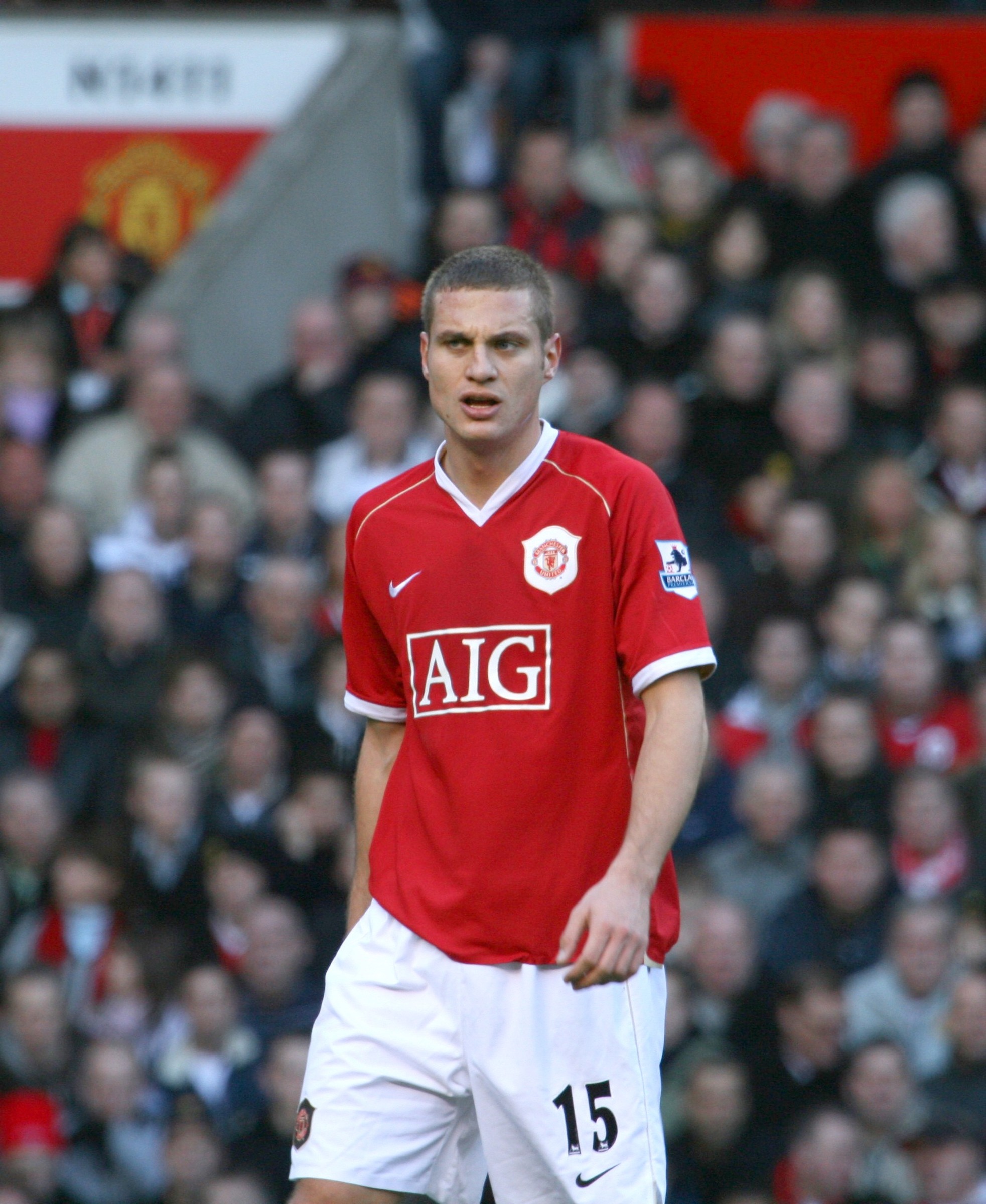
Vidić attacked the ball as though allowing it to bounce were a concession. He stepped into centre-forwards, headed through crowded areas and defended the near post with an appetite that let Rio Ferdinand protect depth and begin play. The aggression created occasional problems against forwards who could drag him into open ground, but United’s best versions used the contrast in the partnership. One defender confronted the danger; the other controlled its consequence.
In 211 league appearances Vidić contributed to 95 clean sheets and won five titles. More revealingly, he remains the only defender to receive the Premier League Player of the Season award twice, in 2008/09 and 2010/11. The second came as captain, with five league goals alongside the penalty-area defending. Injuries shortened the later phase, which is why 211 appearances do not carry him further against players with similar peaks and larger bodies of work.
Against Beckham’s delivery, Vidić’s case prevails through dominance in the area where one error most directly changes a result. Kompany is the next step at 25 despite being available less consistently. His wider historical burden breaks the tie: he captained Manchester City from aspiration to four titles and supplied decisive goals in three separate races. Vidić perfected an established champion; Kompany helped make a new one believable.
Rank 25: Vincent Kompany
Premier League context: Centre-back and captain; Manchester City; 2008 to 2019; four titles and 2011/12 Player of the Season
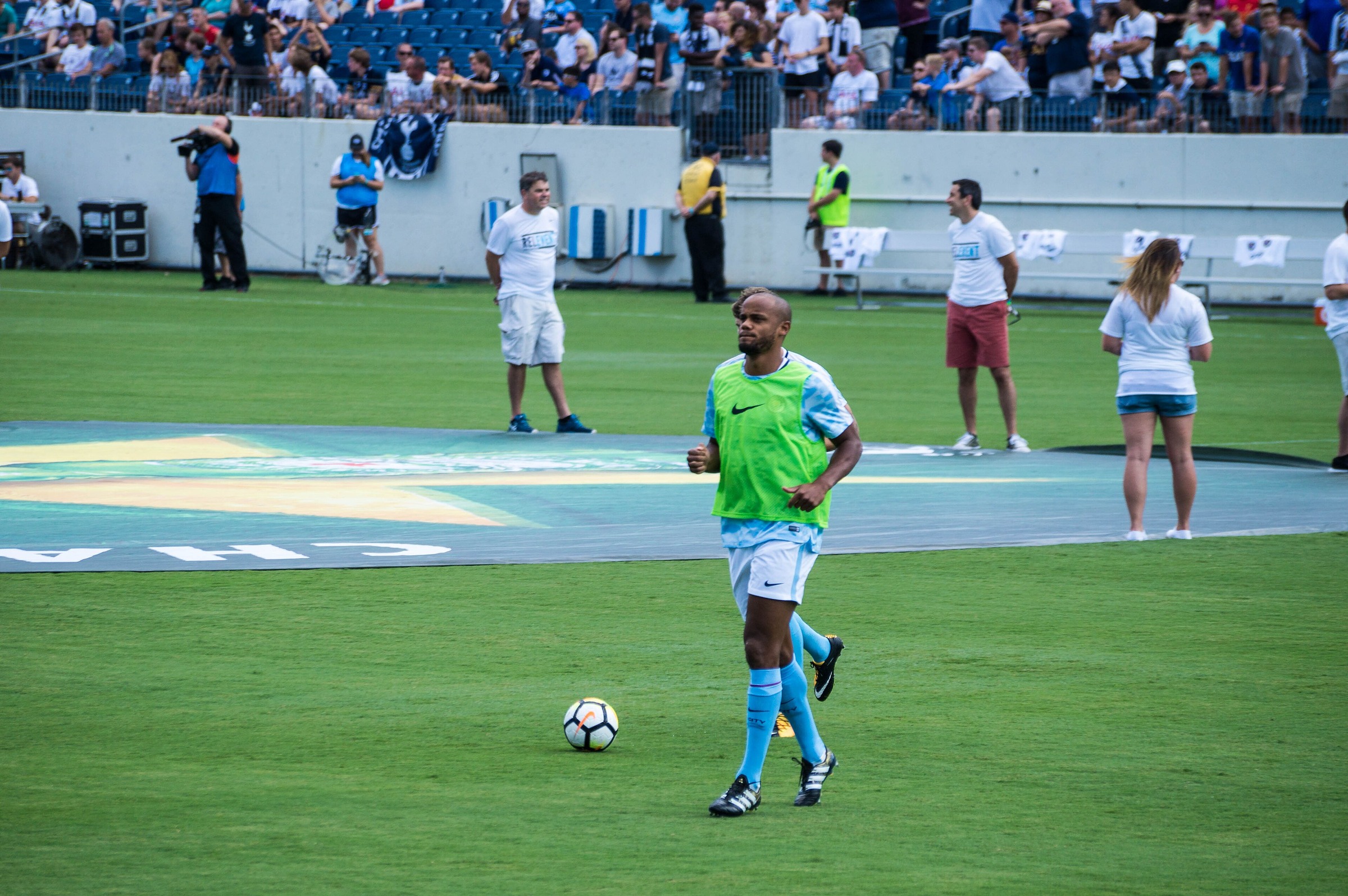
Kompany arrived as a midfielder and became the defender around whom Manchester City’s authority formed. He could step through pressure, match a strong centre-forward and recover across the channel. At his peak he defended forward without making the space behind him reckless, allowing City to remain in the opposition half.
The 2011/12 Player of the Season award accompanied 15 clean sheets and a header against Manchester United that shifted the title race. He later scored on the final day of the 2013/14 win and struck from distance against Leicester in 2019, a goal that kept City ahead of a 97-point Liverpool. Calf and muscle injuries repeatedly interrupted the intervening seasons, so 265 appearances and 94 clean sheets understate the length of his service but accurately describe the missing minutes.
Kompany moves ahead of Vidić because his leadership spans City’s transformation under three title-winning managers. Drogba at 24 lacked the higher strikers’ rate, yet occupying defenders, creating for runners and twice winning the Golden Boot made him Chelsea’s attacking reference. Kompany decided crucial days; Drogba set the match’s physical argument.
Rank 24: Didier Drogba
Premier League context: Centre-forward; Chelsea; 2004 to 2012 and 2014/15; four titles and two Golden Boots
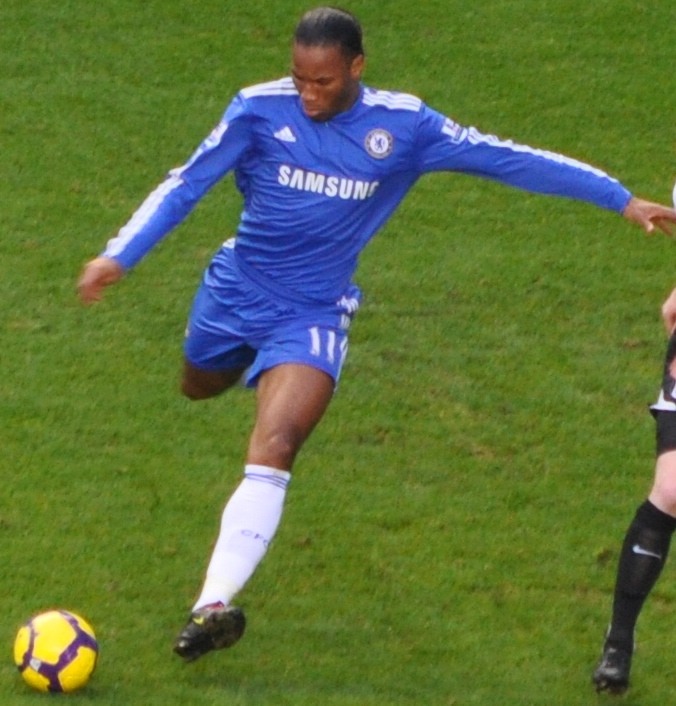
Drogba could make a long pass into an attacking structure. He absorbed the centre-back, brought midfielders towards the second ball and attacked crosses with force, which allowed Chelsea to advance without first establishing neat possession. This was especially valuable under Mourinho, whose best sides could compress a game after gaining territory. Drogba’s strength mattered, but so did the soft lay-off and the curved run that created room for Frank Lampard. He scored 104 goals in 254 league appearances, winning Golden Boots with 20 in 2006/07 and 29 in the title-winning 2009/10 season. The gaps between those peaks explain why raw totals place him below several omitted strikers. Chelsea did not require him to chase every scoring record, however. He contributed to four titles across two spells and repeatedly made elite defenders play a contest that suited his team.
Kompany’s leadership cannot quite outweigh a forward who gave champions a repeatable route through both set defences and direct matches, not merely a collection of famous big-game goals. The narrow separation above Drogba belongs to Čech at 23: greater season-to-season consistency and the competition’s largest goalkeeping clean-sheet record. Drogba could tilt the match-up; Čech removed volatility from it for well over a decade.
Rank 23: Petr Čech
Premier League context: Goalkeeper; Chelsea and Arsenal; 2004 to 2019; four titles, four Golden Gloves and 202 clean sheets
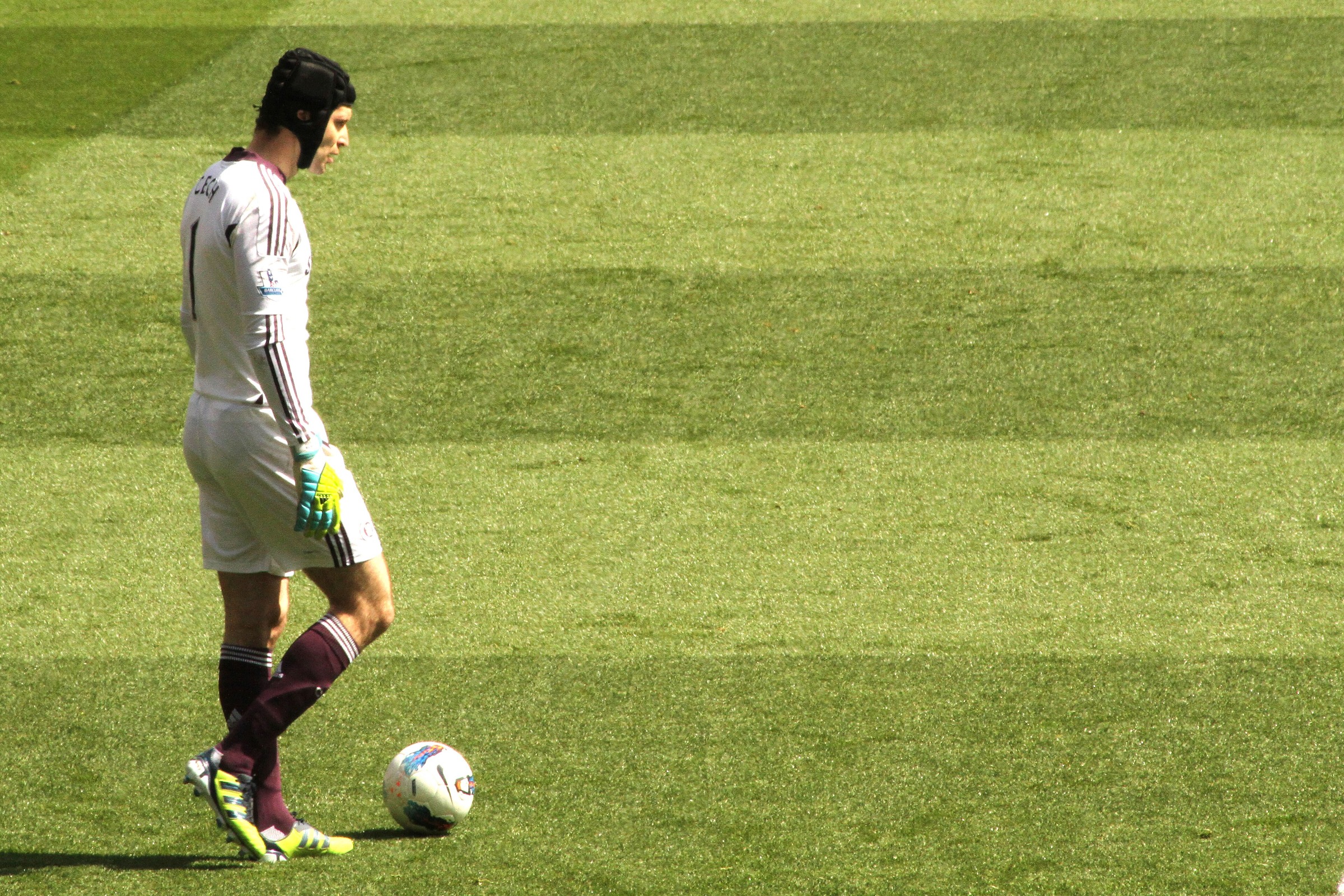
Čech’s first season made elite goalkeeping look administrative. Chelsea conceded 15 league goals, while he kept a record 24 clean sheets in 35 appearances. The defence limited chances, but his starting position, reach and refusal to spill routine shots helped it do so. He communicated across a multinational back line and rarely turned the save after a long quiet period into a second attack.
His 202 clean sheets in 443 appearances remain the Premier League goalkeeper record, and no other keeper had reached 200 by the cut-off. Four titles and four Golden Gloves cover different Chelsea cycles, followed by another sustained spell at Arsenal. The skull fracture suffered in 2006 required a protective helmet on his return; the ranking does not award points for adversity, but the high standard maintained afterwards strengthens the evidence for concentration and technical durability.
Čech is placed above Drogba because his week-to-week control extends across almost twice as many appearances, even allowing for a goalkeeper’s different physical demands. Ashley Cole at 22 offers a still broader outfield case: elite one-against-one defence, width, recovery and title influence for both Arsenal and Chelsea. Čech owns the larger positional record; Cole’s responsibility changed more phases of play.
Rank 22: Ashley Cole
Premier League context: Left-back; Arsenal and Chelsea; 1999 to 2014; three titles and 147 clean sheets
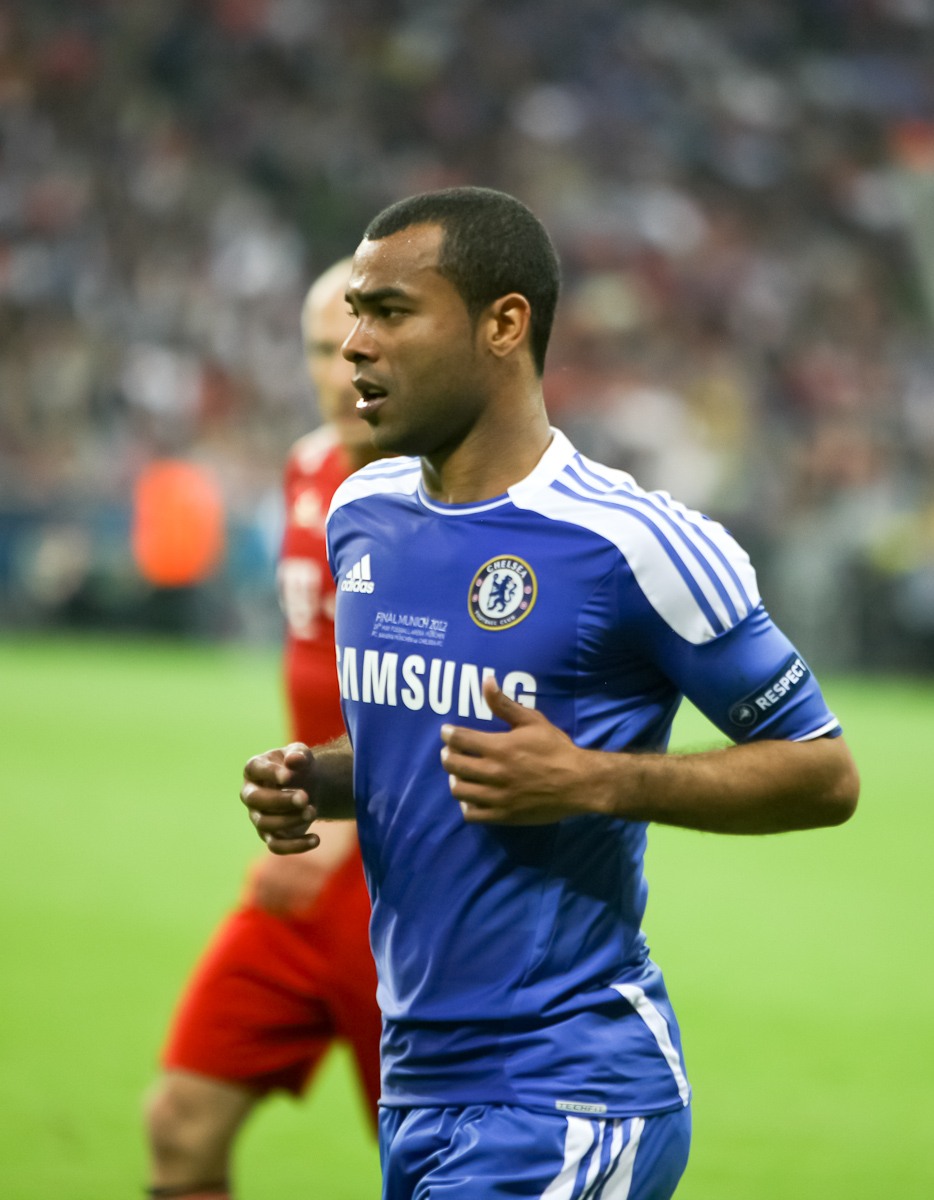
Cole could advance repeatedly without asking the centre-back to accept a permanent emergency. His recovery speed repaired moves after possession was lost, while his low stance and patience made him unusually secure against right wingers who wanted an isolated duel. In attack he overlapped beyond Robert Pires or Hazard, then selected the cut-back rather than crossing simply because he had reached the byline.
He made 385 league appearances, contributed to 147 clean sheets and won titles for both Arsenal and Chelsea. The 2003/04 Invincibles required a full-back who could support a fluid left side without breaking its defensive balance; the 2009/10 champions used his width more directly.
Fifteen goals and 31 assists are useful context, not the foundation. His case rests on performing both halves of the modern full-back role against the league’s best wide attackers.
Čech owns the longer record, but Cole earns 22 because there was no tactical shelter in his job: he had to win the flank and still make the attack larger. Van Dijk then trades longevity for a more powerful single effect on team structure, putting him at 21 after turning Liverpool’s high line from a risk into the basis of two title wins. Cole sustained excellence longer; Van Dijk’s peak changed the ceiling of an entire side.
Rank 21: Virgil van Dijk
Premier League context: Centre-back; Southampton and Liverpool; 2015 onward; two titles and 2018/19 Player of the Season
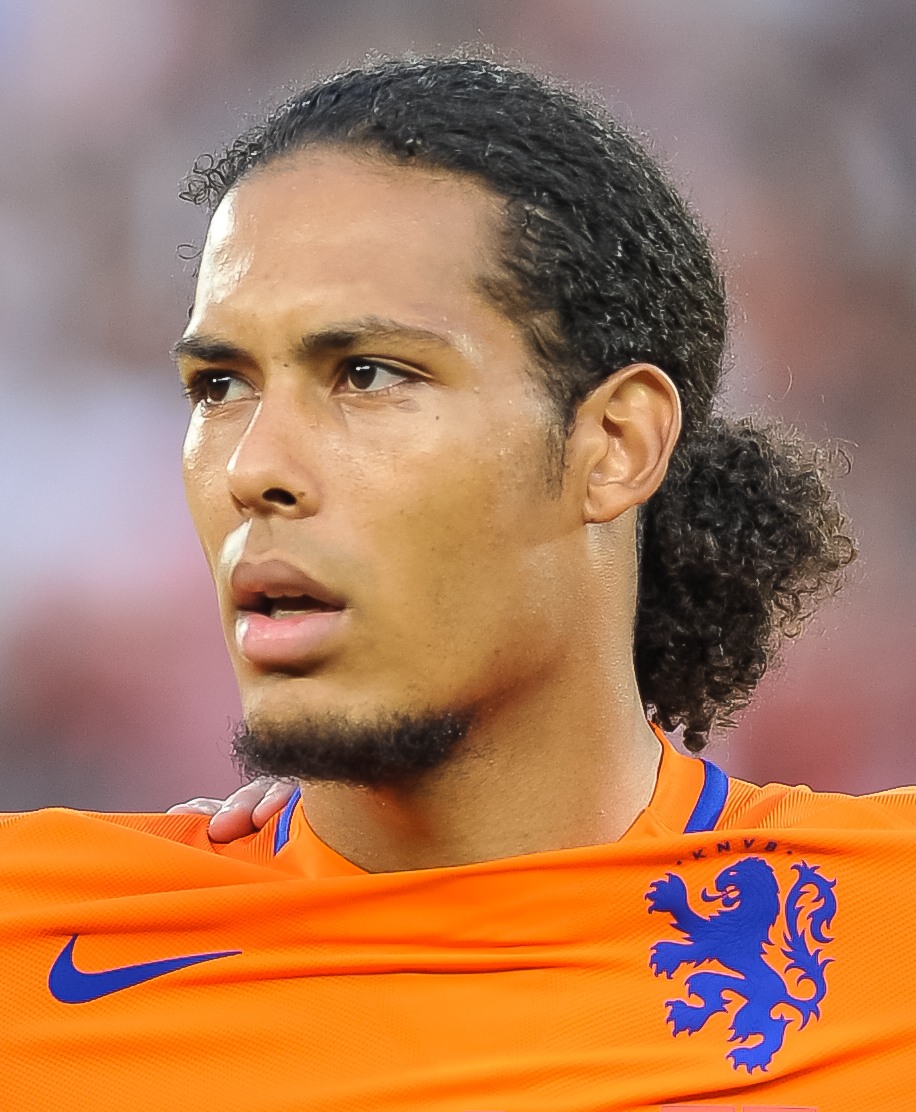
Van Dijk’s finest defending begins with delay. When Liverpool’s press broke, he resisted the anxious step and matched the attacker’s route until recovering team-mates narrowed the possibilities. Pace protected a high line, aerial range ended direct escapes and passing switched the attack before opponents moved across. Klopp could take risks elsewhere without making every loss terminal.
He was Premier League Player of the Season in 2018/19, when Liverpool conceded 22 goals, then anchored the 2019/20 champions and captained the club to another title in 2024/25. A serious knee injury in 2020 interrupted what might have been an even larger prime. By the 2025/26 cut-off his league record stood at 339 appearances across Southampton and Liverpool, with the later title showing that the best work was not confined to one pre-injury campaign.
Van Dijk is above Cole because the central position and the scale of Liverpool’s tactical dependence make his peak more consequential, though Cole owns the stronger longevity case. Cristiano Ronaldo at 20 has a shorter first spell of true Premier League supremacy and a disappointing return, but two consecutive Player of the Season awards and the 31-goal 2007/08 campaign reached a still higher individual summit. That summit decides the next step.
Rank 20: Cristiano Ronaldo
Premier League context: Right winger and centre-forward; Manchester United; 2003 to 2009 and 2021 to 2022; three titles and two Player of the Season awards

Ronaldo’s first United phase showed how a winger could become a scorer without surrendering the dribble. He initially held width, isolated the full-back and took too many touches. By 2006 he attacked the back post like a centre-forward and carried through the inside channel as Rooney and Tevez exchanged positions.
United won three consecutive titles from 2006/07 to 2008/09. Ronaldo was Player of the Season in the first two and scored 31 league goals to take the 2007/08 Golden Boot, then an extraordinary total for a wide attacker. The return brought 19 goals in 40 matches but also exposed reduced pressing and a team unable to organise around his penalty-area focus. Those seasons belong in the record rather than being edited out as an awkward epilogue.
The comparison with Van Dijk rewards Ronaldo’s two-year apex for directly transforming the league’s attacking standard and deciding consecutive championships. Ferdinand, one place higher, never reached the same individual spectacle. He instead offers 20 Premier League seasons, six titles and elite defence from the teenage West Ham years through several United cycles. That sustained, system-enabling authority has the slight edge over Ronaldo’s more concentrated English peak.
Rank 19: Rio Ferdinand
Premier League context: Centre-back; West Ham United, Leeds United, Manchester United and Queens Park Rangers; 1996 to 2015; six titles
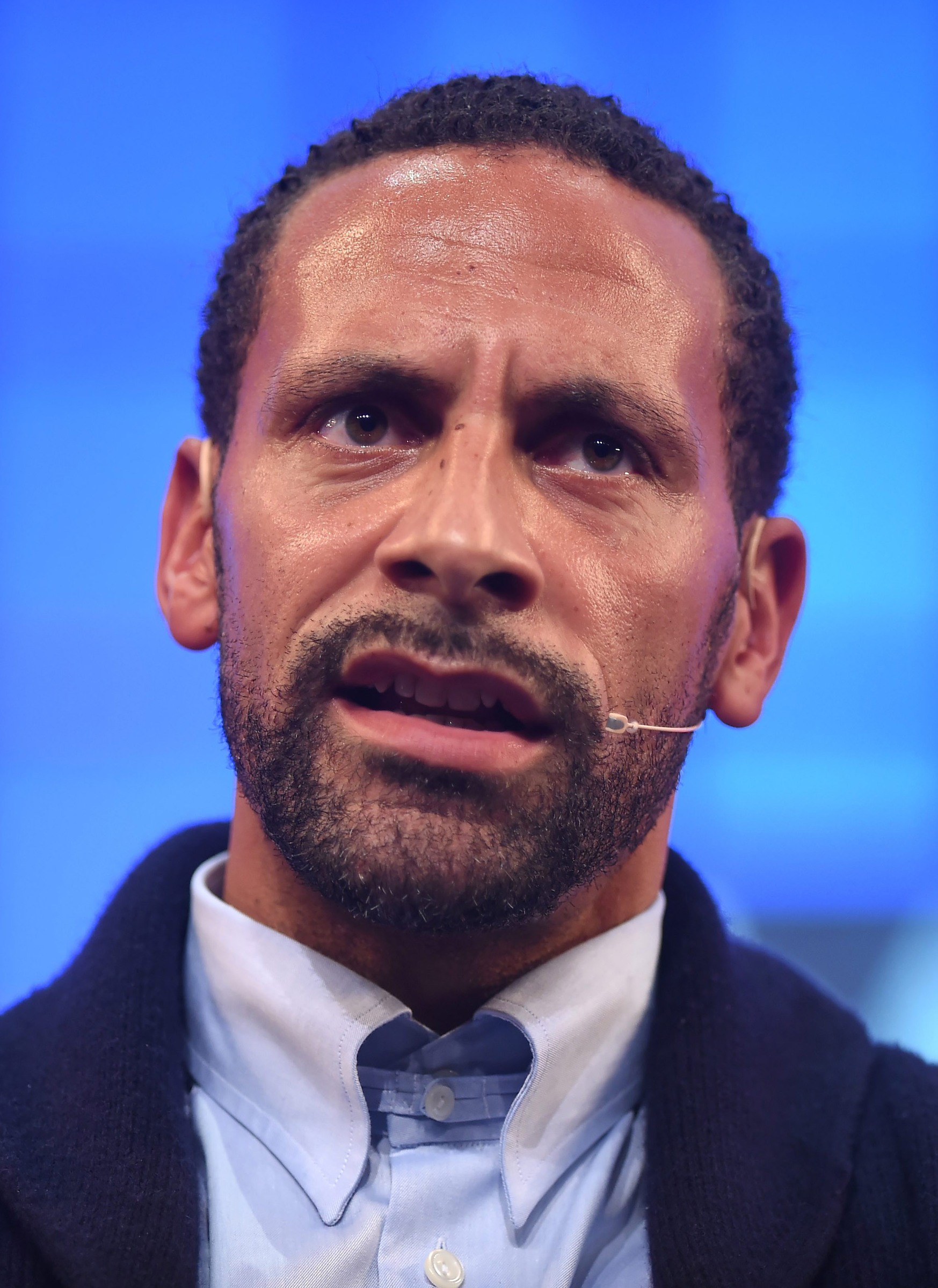
Ferdinand carried the ball out of defence before that description became a recruitment category. His first touch moved away from pressure, his stride drew the midfielder towards him and his pass could reach a forward without asking the team to win a hopeful duel. Pace supplied the insurance. At Leeds and then United, he could defend large spaces because he recovered without immediately committing a foul or clearance.
He made 504 Premier League appearances and contributed to 189 clean sheets. Six titles at Manchester United include the three in succession from 2006/07, when his partnership with Vidić gave the side complementary forms of control. An eight-month suspension for missing a drugs test in 2003 is a serious failure within the league career and removed him from most of the following season. The case remains large enough to survive it, but not to ignore it. Ferdinand’s duration, positional influence and repeated construction of title-winning defences overturn Ronaldo’s more concentrated case. The step to Silva at 18 exchanges last-line risk for the close control and passing that set Manchester City’s attacking identity before and during the Guardiola era. Ferdinand made ambitious football secure; Silva made possession productive. Four different champions learning to find space through Silva settles that neighbouring choice.
Rank 18: David Silva
Premier League context: Attacking and central midfielder; Manchester City; 2010 to 2020; four titles, 60 goals and 93 assists
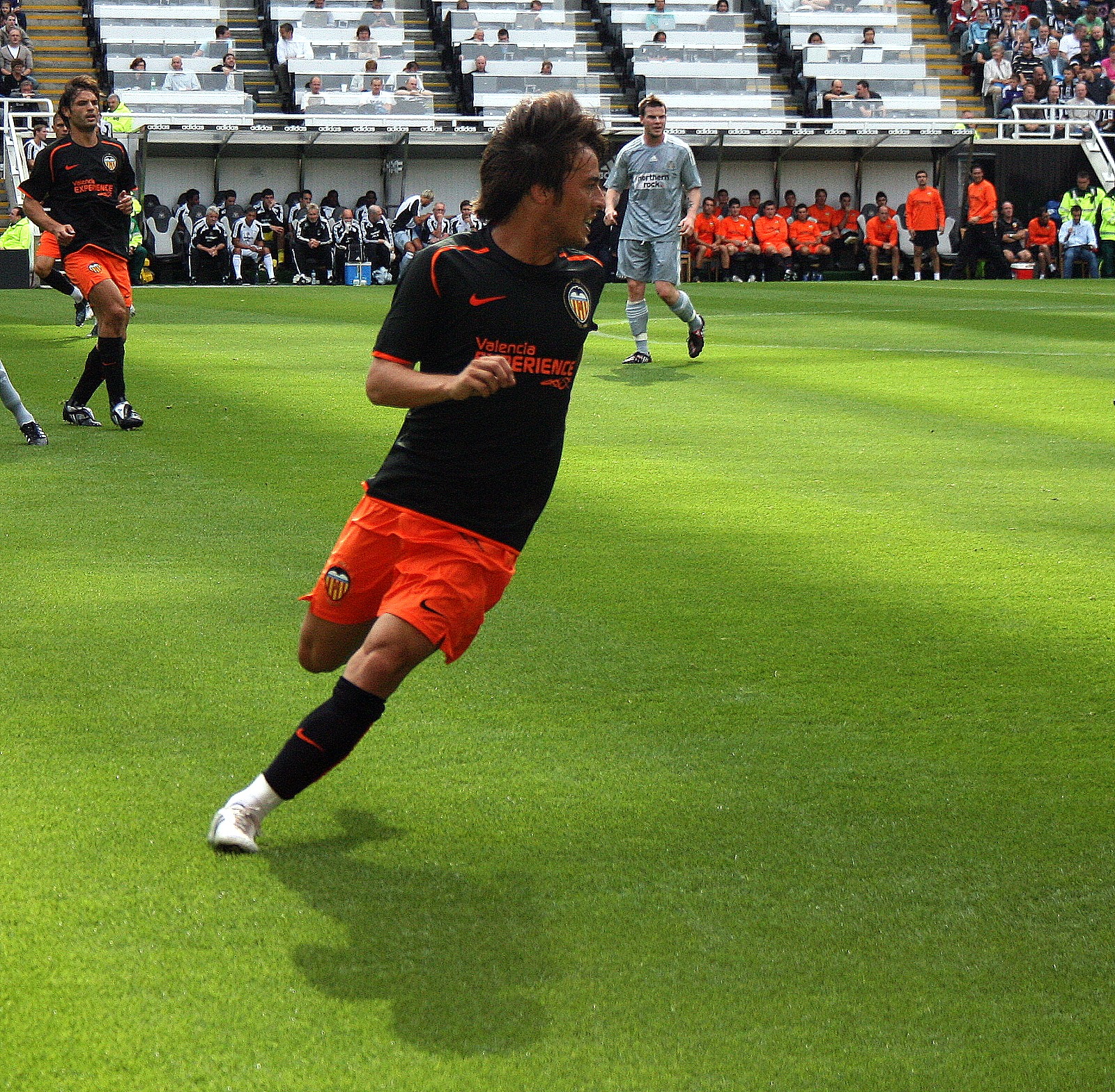
Silva received in spaces that looked occupied because he understood which opponent could not turn quickly enough to reach him. A small adjustment of his body opened the next pass, often into the channel a defender had just abandoned. Under Roberto Mancini he began wide or as a number ten; Manuel Pellegrini gave him freedom between lines; Pep Guardiola moved him into the left-sided number-eight role and demanded still more control.
Across 309 appearances he scored 60 goals and supplied 93 assists. City’s first Premier League title included 15 assists from Silva, and he remained central through four championships across three managerial versions. The numbers do not capture how often he made crowded attacks playable, particularly when opponents conceded territory and asked City to find one precise final angle.
Silva is above Ferdinand because his touch and spatial judgement were the common attacking language of a decade-long change in the league’s balance of power. Peter Schmeichel at 17 has fewer seasons but an equally foundational role in Manchester United’s first five Premier League titles, plus greater positional dominance. Silva manipulated defenders; Schmeichel changed forwards’ decisions before they shot.
Rank 17: Peter Schmeichel
Premier League context: Goalkeeper; Manchester United, Aston Villa and Manchester City; 1992 to 2003; five titles and 1995/96 Player of the Season

Schmeichel made the goal appear occupied. He advanced in one-on-ones with arms and legs spread, forcing the forward to find a finish around a moving wall, and attacked crosses with enough conviction to relieve a defence rather than prolong the phase. His long throw was an attacking action: United’s wide players could receive beyond the first line before opponents had reset after their own corner.
He kept 128 clean sheets in 310 appearances and won five titles in seven United seasons. In 1995/96 he became the first goalkeeper, and remained the only one at the 2025/26 cut-off, to win the league’s Player of the Season award. The later Aston Villa and Manchester City spells did not reproduce that standard, but they broadened the record beyond one dominant defensive unit.
Silva gives way at 17 to a goalkeeper who joined technical innovation to command at the base of the competition’s first dynasty.
Kane owns no title medal, yet 213 goals, three Golden Boots and an evolution into a playmaking striker move him one place beyond Schmeichel on sheer individual volume. Schmeichel’s honours are stronger; Kane’s case asks how much one player can do even when the team never completes the race.
Rank 16: Harry Kane
Premier League context: Centre-forward; Tottenham Hotspur; 2012 to 2023; 213 goals, three Golden Boots and one Playmaker award
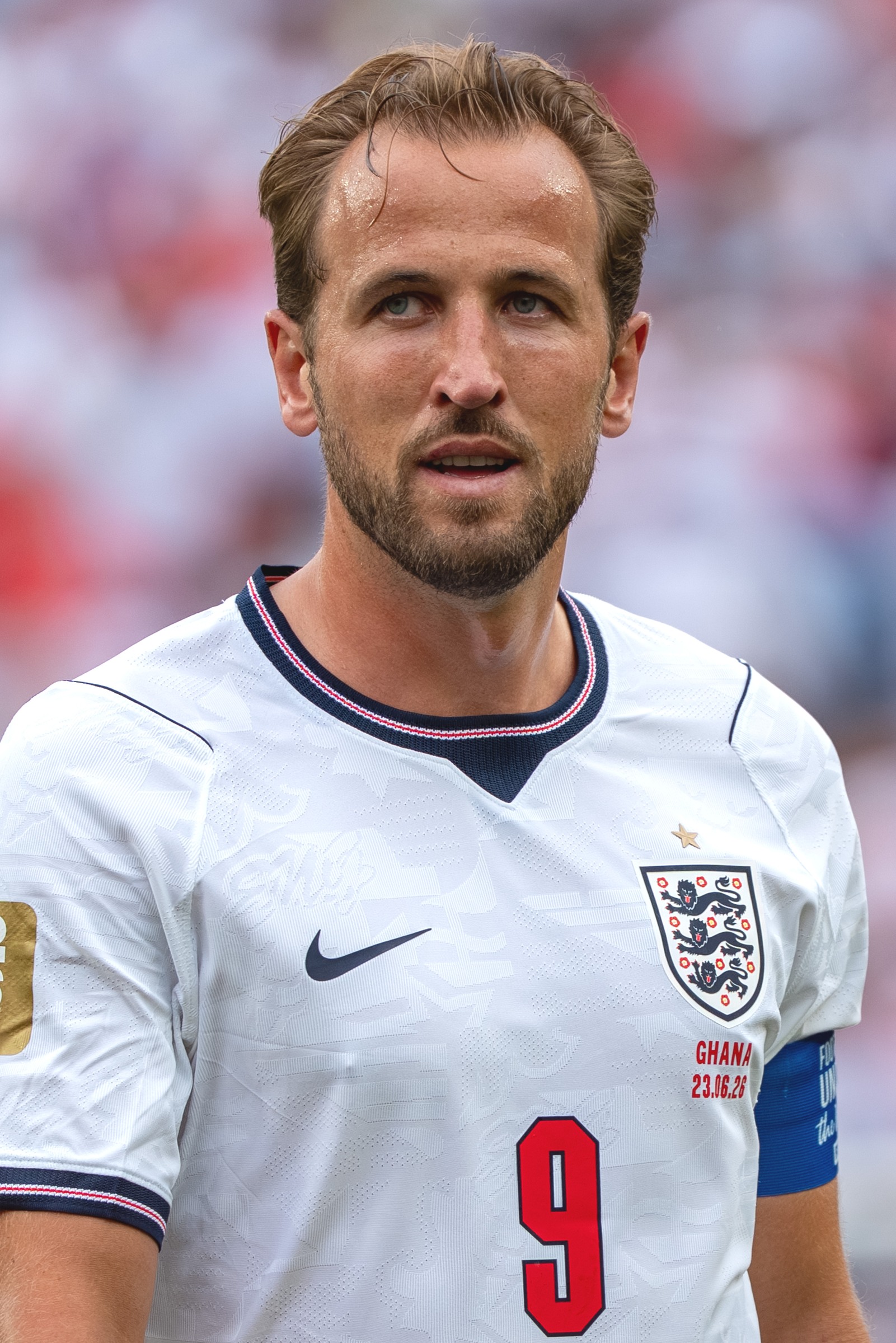
Kane developed from a penalty-box finisher into Tottenham’s first pass on the counterattack. He could hold the centre-back, shoot early with either foot and attack crosses, then drop into midfield and release Son Heung-min beyond the line. The deeper work was not a retreat from scoring. It forced defenders to choose between following him away from goal or allowing one of the league’s best finishers time to turn.
His 213 goals in 320 appearances place him second on the competition’s all-time list, with Golden Boots in 2015/16, 2016/17 and 2020/21. In the last of those seasons he also led the league for assists. Tottenham finished second in 2016/17 and challenged strongly the previous year, but Kane never won the title. That absence is not an automatic disqualification; it is evidence that the decisive team outcome available to most players above never arrived.
Kane is placed above Schmeichel because his sustained individual burden was enormous and measurable across several different Tottenham sides. Eric Cantona at 15 offers barely half the appearances and far fewer goals, but his arrival changed Manchester United from contenders into the competition’s first serial champions. Kane was the better and longer Premier League scorer. Cantona had the greater catalytic consequence.
Rank 15: Eric Cantona
Premier League context: Second striker and attacking reference; Leeds United and Manchester United; 1992 to 1997; four titles with United
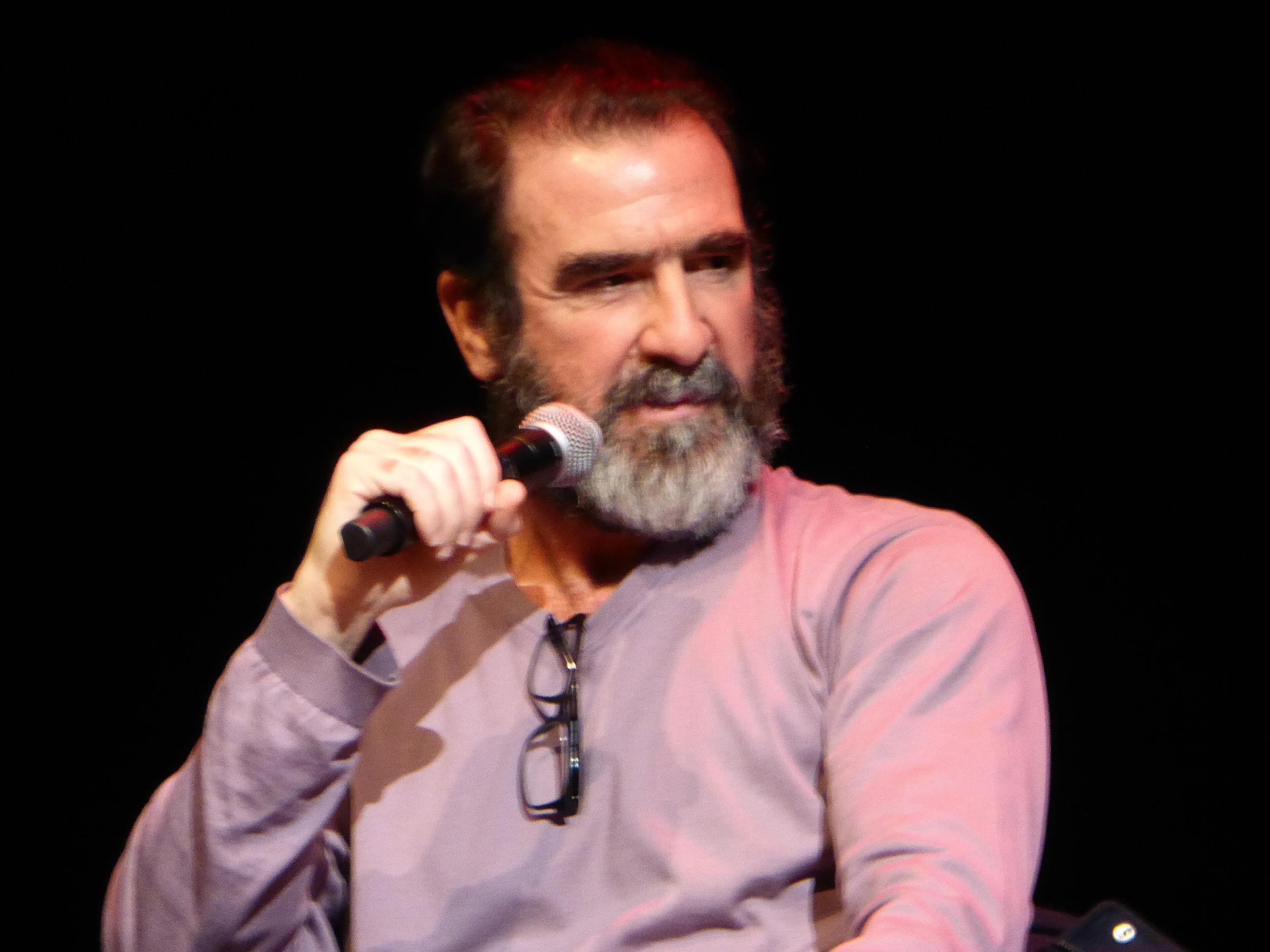
Cantona could receive with his back to goal and make every runner seem earlier. He protected the ball, combined in one touch and delayed until a winger or midfielder passed the defence. The collar and finishes became the image, but his deeper value was positional: he connected a young, quick United team to the penalty area.
United won four of the five Premier League seasons in which he played for them. In 156 appearances across Leeds and United he produced 70 goals and 56 assists, a remarkable combined return for an attacker who also organised others. The 1995 kung-fu kick at Crystal Palace led to a lengthy ban and cannot be repackaged as charisma. United lost that season’s title by one point, making the cost part of his league evaluation. Kane’s extraordinary individual burden stops just below Cantona, the hinge of a new champion and the supplier of decisive passes or goals in tight 1995/96 matches after returning from suspension. Bergkamp, at 14, extended a related form of connective forward play across 315 appearances and three Arsenal titles. Cantona ignited the era; Bergkamp sustained a more intricate influence and helped create the platform on which Henry later became number one.
Rank 14: Dennis Bergkamp
Premier League context: Second striker and creator; Arsenal; 1995 to 2006; three titles, 87 goals and 94 assists

Bergkamp’s first touch often completed the most difficult part of the attack. He received a firm pass with a defender behind him, turned the ball into protected space and immediately saw the runner beyond. Arsenal could play directly to him without becoming a direct team. Ian Wright, Nicolas Anelka and Henry all benefited from a forward who made their movement legible while still threatening the goal himself.
He registered 87 goals and 94 assists in 315 appearances. Three titles span the 1997/98 double, the powerful 2001/02 side and the 2003/04 Invincibles, even as his minutes declined in the final success. His turn and finish at Newcastle in 2002 was voted the league’s best goal from its first 25 years, but the ranking rests on hundreds of less famous controls and passes that moved a defence before the final action.
Bergkamp moves above Cantona because the creative method survived longer, changed partners and remained useful as Arsenal evolved. Steven Gerrard at 13 lacks a title and worked in less consistently dominant teams, yet carried more phases of Liverpool’s football across 504 appearances. Bergkamp refined a great structure. Gerrard was often required to rescue an incomplete one, and that breadth earns the next place.
Rank 13: Steven Gerrard
Premier League context: Central, attacking and right-sided midfielder; Liverpool; 1998 to 2015; 504 appearances, 120 goals and 92 assists
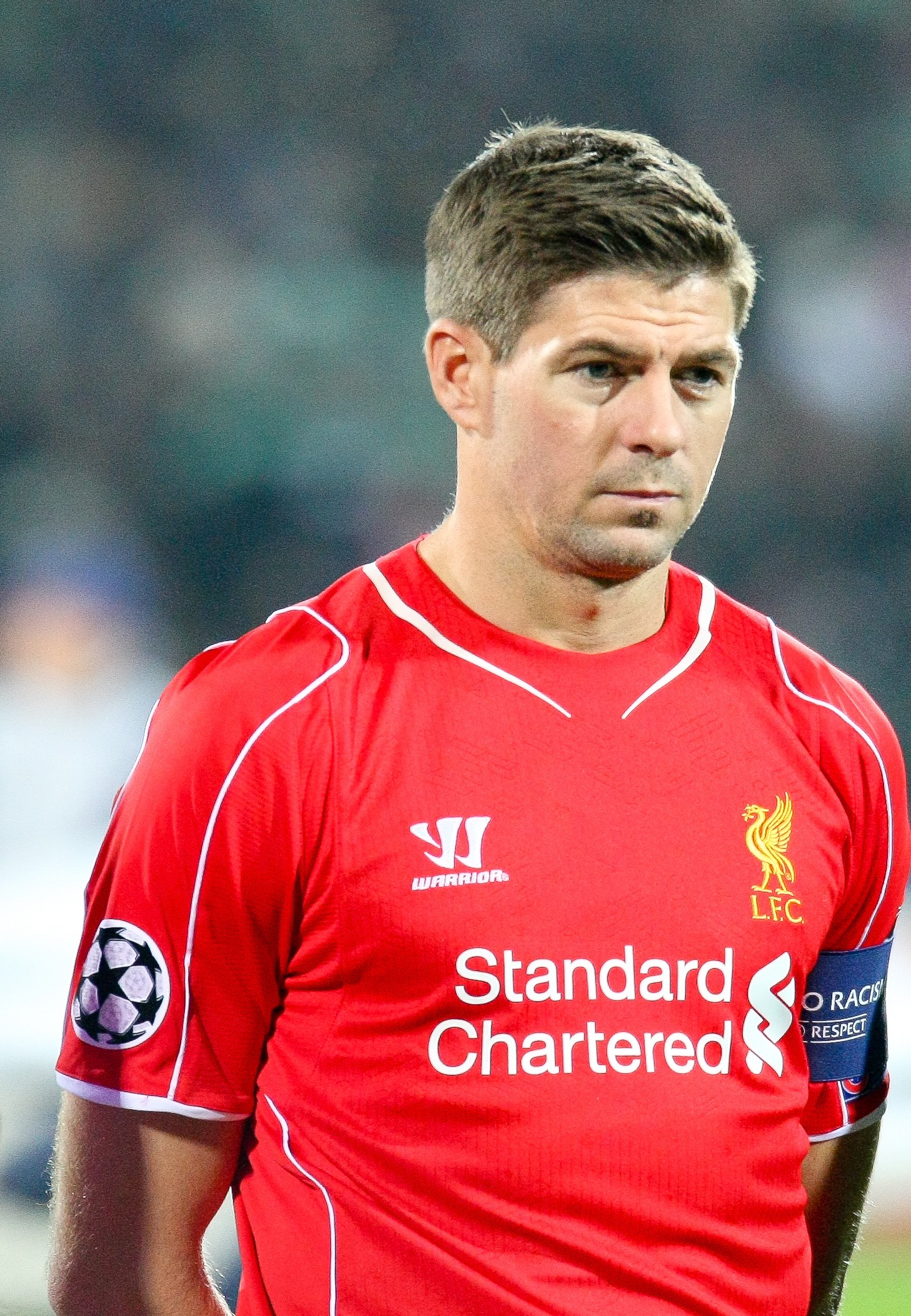
Gerrard could solve a match from whichever area Liverpool had failed to control. He drove from a midfield two, crossed from the right, pressed behind Fernando Torres and later passed from deeper positions. The variety was partly a symptom of instability: managers kept moving their best all-round player towards the team’s largest need. It also demonstrates why reducing him to spectacular long shots misses the case.
He scored 120 goals and provided 92 assists in 504 league appearances, all for Liverpool. The title never came. The 2008/09 and 2013/14 runners-up campaigns contain his best challenges, the latter ending with the slip against Chelsea that has overwhelmed a much larger season in popular memory.
Liverpool’s defensive collapse at Crystal Palace and Manchester City’s 86 points belong to the same outcome; one image should not become a complete causal theory.
The difference from Bergkamp is Gerrard’s responsibility for progression, creation, scoring and leadership over 17 seasons without the same supporting continuity. Scholes takes 12 through a different kind of range, adapting from penalty-area attacker to deep controller across 11 titles. Gerrard offered the wider individual rescue kit. Scholes exerted the more repeatable control inside elite collective football.
Rank 12: Paul Scholes
Premier League context: Attacking then central playmaker; Manchester United; 1994 to 2013; 11 titles, 107 goals and 55 assists

Scholes had two Premier League careers without changing clubs. The younger version arrived late in the box, combined quickly around strikers and scored 14 league goals in 2002/03. The older midfielder played in front of the defence, opened his body to receive and shifted the attack with long passes. He did not merely survive declining speed. He changed the location from which his speed of thought mattered.
His record comprises 499 appearances, 107 goals, 55 assists and 11 titles, second only to Giggs for winners’ medals. The totals are shaped by membership of a dominant club, but Scholes remained functionally important as team-mates and tactical expectations changed. Coming out of retirement in January 2012 and contributing to the following season’s title adds an unusual final chapter, though it should not inflate the prime.
Scholes edges Gerrard because he mastered contrasting midfield responsibilities while helping United solve repeated championship races. Ryan Giggs at 11 owns more titles, appearances and assists, but the comparison is not arithmetic. Giggs began as a devastating touchline winger and became a selective central creator, providing useful rather than ceremonial football into his forties. That combination of peak threat and genuine longevity keeps him one place higher.
Rank 11: Ryan Giggs
Premier League context: Left winger and later central midfielder; Manchester United; 1992 to 2014; record 13 titles and 162 assists
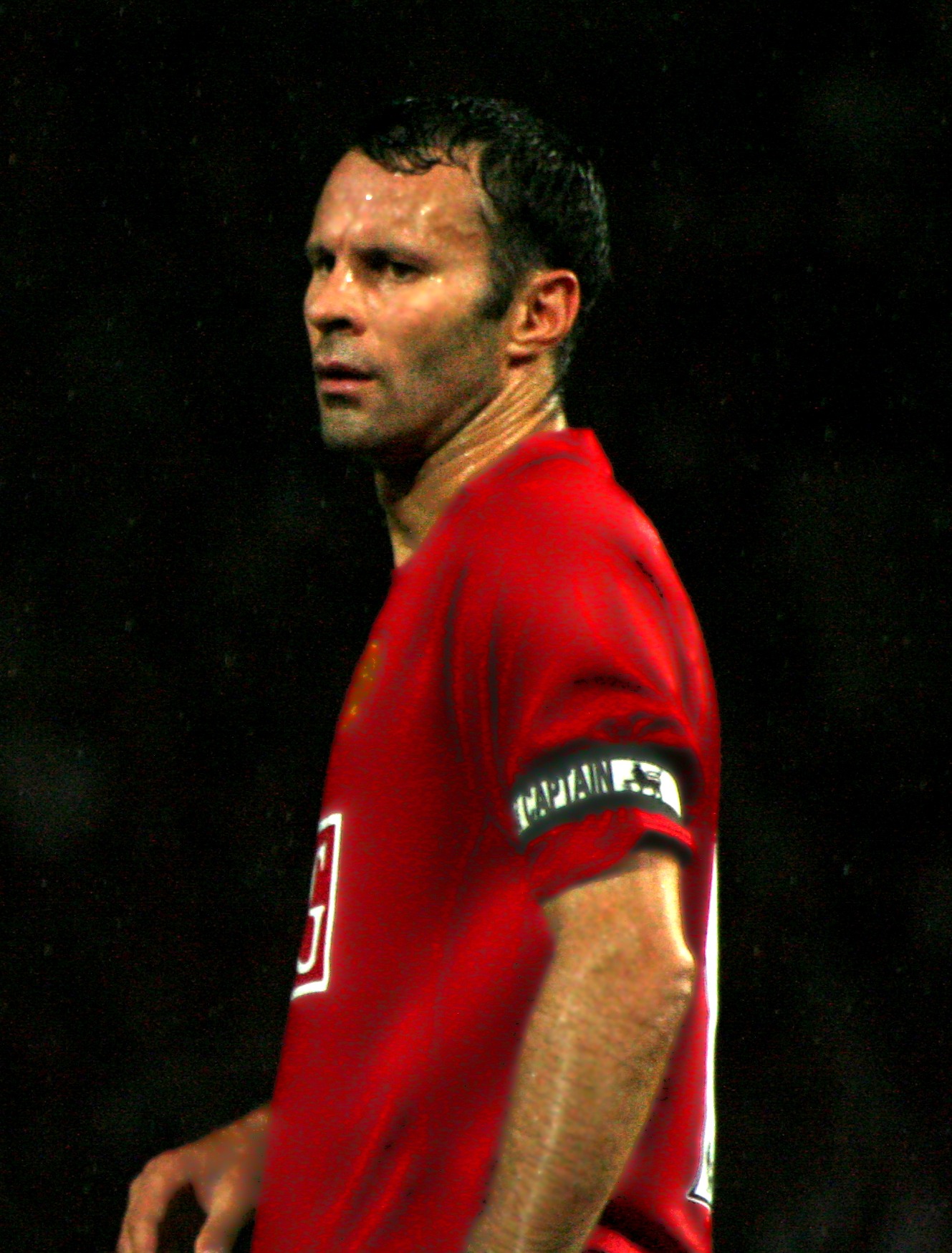
Giggs initially threatened by making the left touchline feel too wide to defend. He received on the move, carried past the full-back and accelerated into the space between defenders. As his burst declined, he shortened his game, selected moments to run and moved into central midfield. The later version could not terrorise a flank for 90 minutes, but he could still recognise when a title match needed one penetrative carry or pass.
No player matches his 13 Premier League winners’ medals or 162 assists. He made 632 appearances and scored 109 goals across all 22 of the competition’s first seasons, contributing to distinct United generations rather than one unchanged core. Longevity statistics can reward mere availability; Giggs resists that objection because he remained capable of decisive contributions rather than merely filling a squad place.
Scholes’s positional reinvention is barely passed by Giggs’s more destabilising early wing peak and later adaptation across a larger span. Terry has fewer titles and appearances, yet the density of his central defensive responsibility and captaincy across all five Chelsea championships opens the top ten. Giggs connects United’s entire era. Terry defined the competitive personality and penalty-area security of the league’s strongest defensive dynasty.
Rank 10: John Terry
Premier League context: Centre-back and captain; Chelsea; 1998 to 2017; five titles, 214 clean sheets and 41 goals

Terry defended the penalty area as a sequence of priorities. He protected the central pass, adjusted to the striker’s movement and then attacked the cross, often throwing his body into the shot only after the structure had narrowed the options. Pace was not his strength, so his partnership with Ricardo Carvalho and later Gary Cahill depended on early reading and communication rather than recovery spectacle. He captained Chelsea in all five of their Premier League title seasons, more championships as captain than any other player. His 214 clean sheets are the most for a defender, while 41 goals are also a positional record. In 2014/15, aged 34, he played every league minute for the champions. Chelsea’s systems and goalkeepers plainly helped those numbers, but Terry was the organiser common to title defences separated by a decade.
The top ten begins with Terry rather than Giggs because consequence, leadership burden and longevity converge unusually strongly at centre-back. Agüero did not control the whole team’s structure, but 184 goals at a historically elite rate and the decisive 2012 finish created a more direct repeated effect on championships, enough for ninth. Terry stopped outcomes; Agüero changed them.
Rank 9: Sergio Agüero
Premier League context: Centre-forward; Manchester City; 2011 to 2021; 184 goals and five titles

Agüero created separation with a short first movement and finished before the defender recovered it. He could receive between centre-backs, turn in a confined area or attack the near post, while his low balance let him survive contact without becoming a fixed target man. City changed from Mancini’s counterattacking champions to Guardiola’s territorial machine; the striker kept finding the same valuable metre inside both.
His 184 goals in 275 appearances made him the league’s highest-scoring overseas player when he left, with the best then-current minutes-per-goal rate among players to reach 20. Twelve hat-tricks remain a record. The stoppage-time goal against Queens Park Rangers in 2012 is the competition’s clearest instant of transformation, but four further title medals stop one moment from swallowing the career. Recurrent injuries are the main reason the total is not larger.
Agüero ranks above Terry because goals at his efficiency were the finishing mechanism of five champions, capped by the league’s most consequential strike. Frank Lampard at eight scored slightly fewer from midfield while also passing 100 assists and helping shape matches before reaching the box. Agüero was the superior pure match-winner. Lampard’s two-way workload, durability and ten-season scoring sequence give him the broader league case.
Rank 8: Frank Lampard
Premier League context: Central and attacking midfielder; West Ham United, Chelsea and Manchester City; 1995 to 2015; 177 goals, 102 assists and three titles
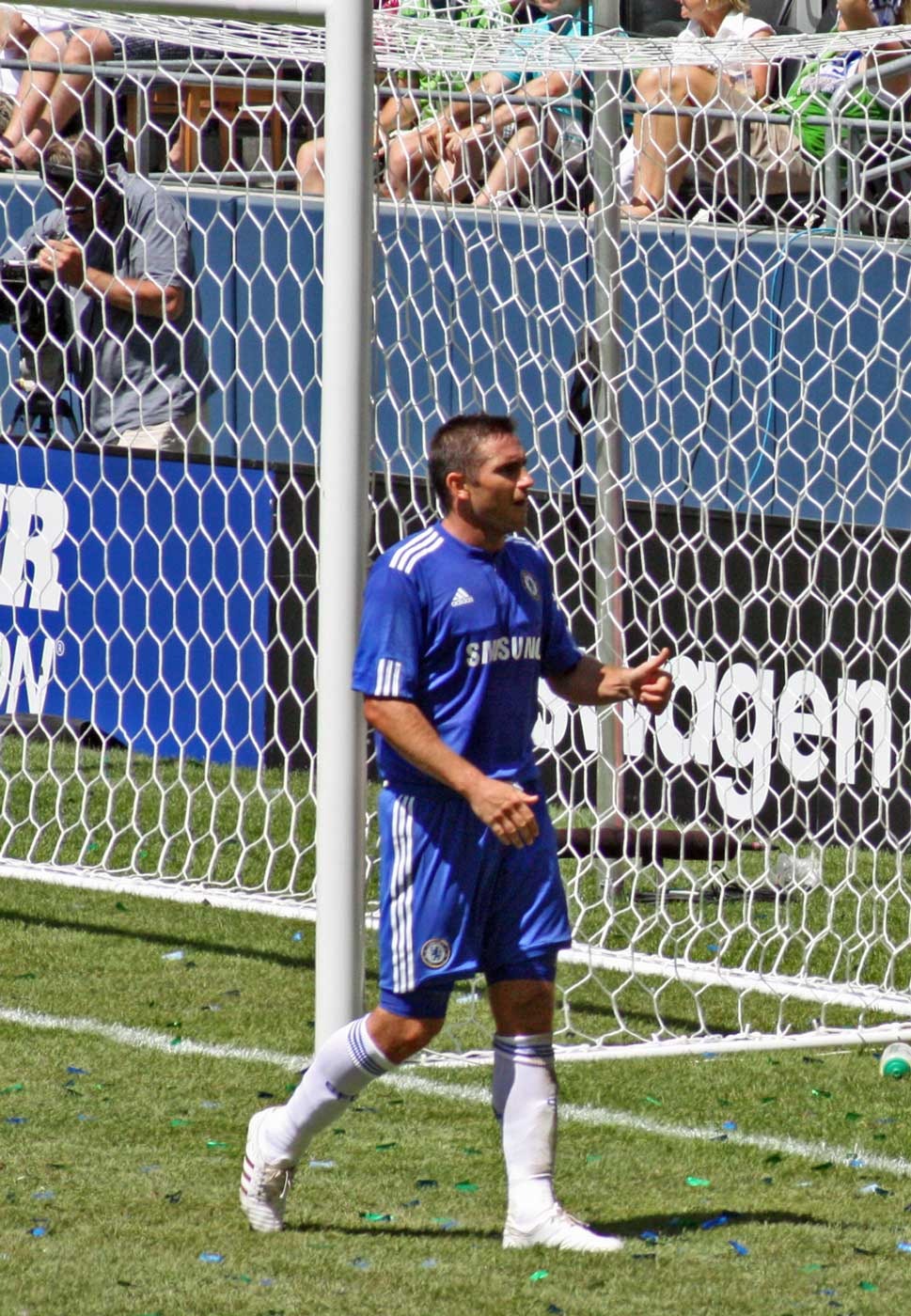
Lampard’s late run was a piece of team structure rather than opportunism detached from midfield. He released the ball, watched the holding player and arrived after the centre-backs had fixed on Drogba. From deeper areas he switched play, pressed second balls and took responsibility for set pieces. The scoring record can obscure the repeatable work that allowed him to enter the box without abandoning the team.
No Premier League midfielder has approached his 177 goals. He also supplied 102 assists, played 609 matches and reached double figures for goals in ten consecutive seasons. Three titles under two Chelsea managers show the production surviving different shapes, while the 2004/05 Player of the Season award recognises his central role in the club’s first Premier League championship. His brief City spell adds little beyond an awkward goal against Chelsea.
Agüero’s finishing mechanism is displaced by a midfielder who paired elite end product with far greater all-phase volume across a much larger sample.
Vieira, seventh despite far fewer goals and assists, made Arsenal’s entire midfield function through peak control of duels, transitions and possession in three title seasons. Lampard supplied more measurable outcomes. Vieira changed what opponents were physically and tactically able to do through the centre.
Rank 7: Patrick Vieira
Premier League context: Central midfielder; Arsenal and Manchester City; 1996 to 2011; three Arsenal titles and 2000/01 Player of the Season
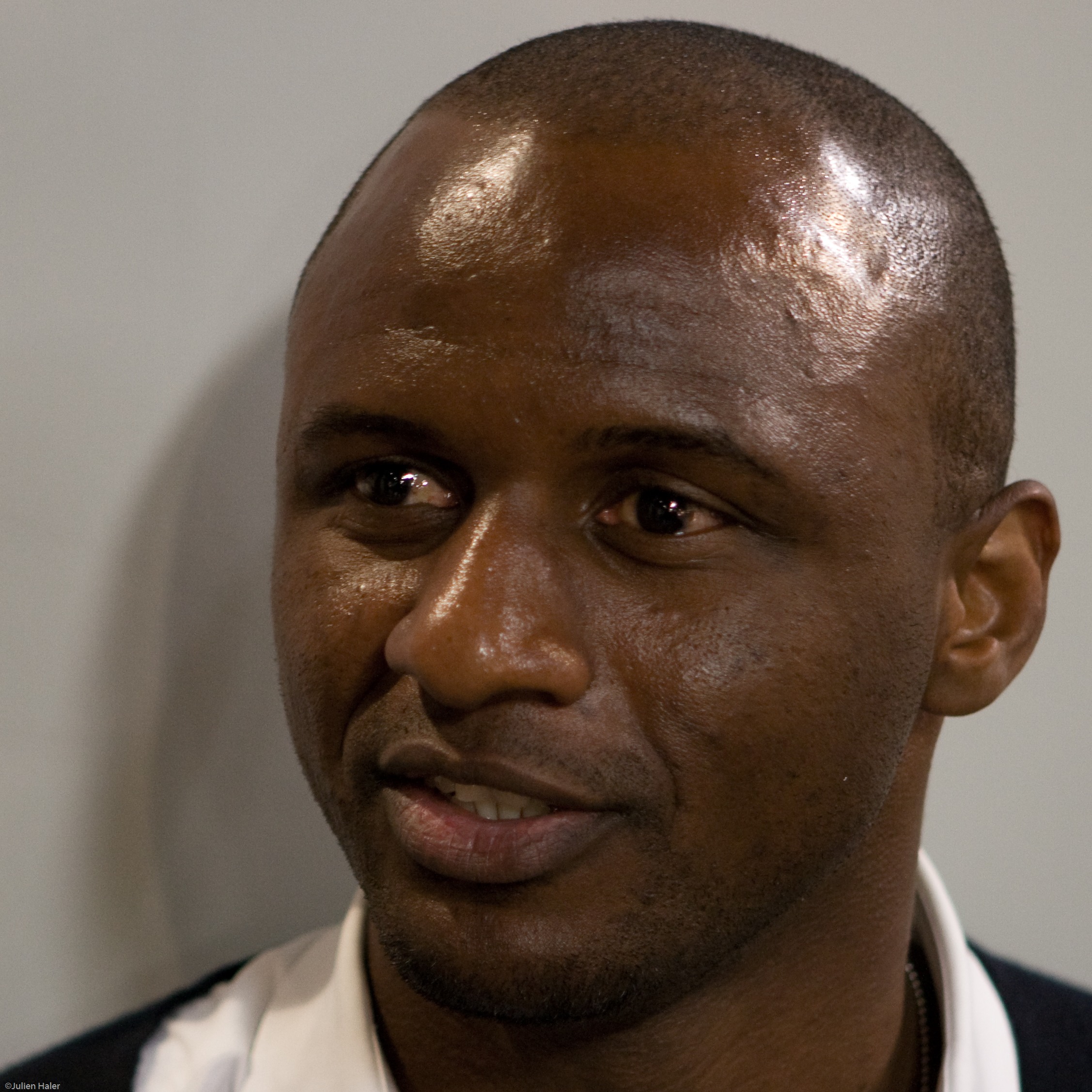
Vieira could win the ball and turn the same action into an attack. His reach crowded the opponent’s first touch, his balance protected possession and his stride carried Arsenal beyond pressure before a pass was required. Calling him a destroyer misses the technique. He could receive with a marker attached, combine around the corner and arrive near the box without leaving the midfield unprotected.
He scored 31 goals and provided 34 assists in 307 appearances, winning three titles and the 2000/01 Player of the Season award. The last Arsenal championship came as captain of the 2003/04 Invincibles, with his final-day goal completing the unbeaten league campaign. Red cards and suspensions were a genuine cost, while the late Manchester City period was supporting work rather than a continuation of the peak.
Vieira ranks above Lampard because his best Arsenal sides depended on his authority in every central contest, not only his final-third contribution. Roy Keane at six offers a less graceful carrying game but seven titles, a longer captaincy and the capacity to set Manchester United’s competitive and positional standards through changing midfields. Vieira could overpower Keane on a given day. Keane sustained the larger dynasty.
Rank 6: Roy Keane
Premier League context: Box-to-box and holding midfielder; Nottingham Forest and Manchester United; 1992 to 2005; seven titles, four as captain
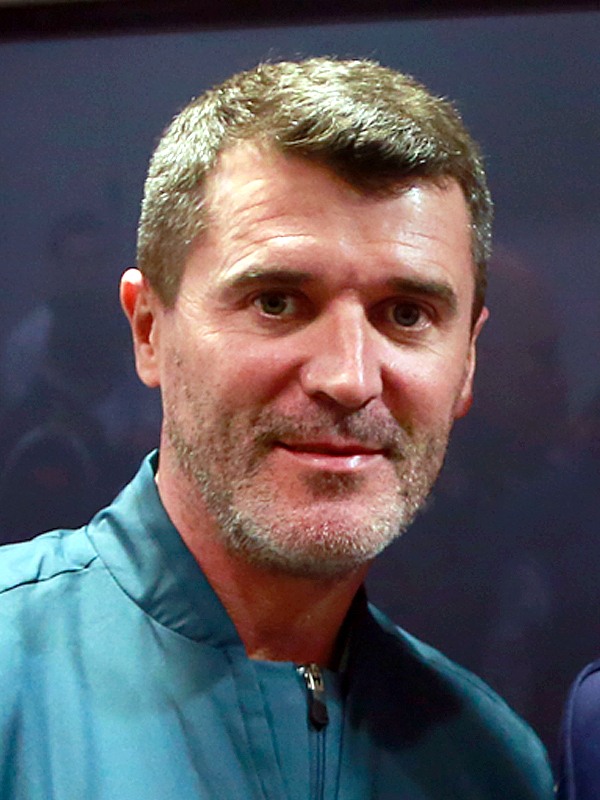
Keane’s aggression was most useful when channelled into decisions. He pressed the receiver, covered the full-back and played forward quickly enough to keep United’s attack moving. The tackles and confrontations became the mythology, but his passing under pressure and understanding of tempo made him more than an enforcer. He could also advance as a box-to-box midfielder before settling into a deeper captain’s role.
He made 366 appearances, won seven titles and captained four of them. United’s 1999/2000 champions lost three league matches after the treble, with Keane named the football writers’ and players’ player of the year even though the Premier League’s own season award did not then go to him. His disciplinary record and the deliberate challenge on Alf-Inge Haaland are serious failures of control, not proof of competitive virtue.
The Vieira-Keane split turns on duration across title teams and Keane’s role as Ferguson’s on-field standard-setter through tactical change. Rooney did not organise a midfield, but elite scoring, creation, pressing and positional sacrifice across five championships carry him into fifth. Keane established what United would accept. Rooney supplied more different solutions once a match began.
Rank 5: Wayne Rooney
Premier League context: Forward, second striker and attacking midfielder; Everton and Manchester United; 2002 to 2018; 208 goals, 103 assists and five titles
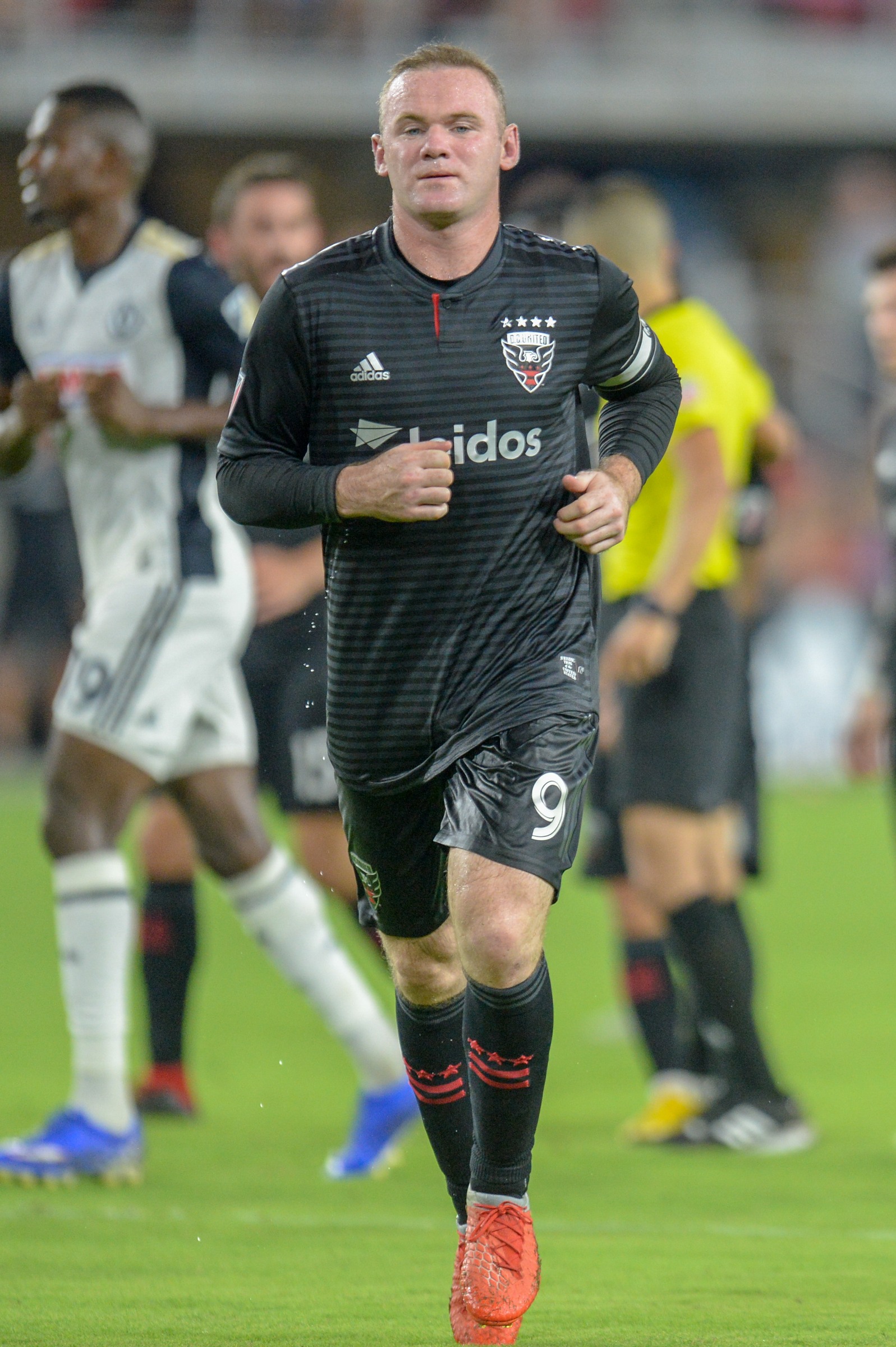
Rooney’s range allowed Manchester United to change the attack without changing personnel. He could lead the line, drop beside midfield, move left to accommodate Ronaldo or press from behind a striker. The violence of his shooting and early physical maturity drew attention, but his most valuable habit was seeing the next team-mate. Many great scorers would not have accepted so much movement away from their best finishing zone.
He scored 208 goals and supplied 103 assists in 491 appearances, one of only three players at the cut-off to exceed 100 in both categories. Five titles include the three in succession from 2006/07, while 26 goals brought the 2009/10 Player of the Season award. His late United seasons were less explosive and the Everton return uneven, but 12 different double-figure scoring campaigns show how long the threat remained. Rooney ranks above Keane because he combined two elite statistical careers, creator and scorer, while performing the tactical work required by several champion attacks. Alan Shearer at four created less for others and won only once, yet his 260 goals and the individual force behind Blackburn’s 1994/95 title provide the stronger centre-forward case. Rooney was more versatile. Shearer was more definitively the league’s attacking reference.
Rank 4: Alan Shearer
Premier League context: Centre-forward; Blackburn Rovers and Newcastle United; 1992 to 2006; record 260 goals and three Golden Boots

Shearer could make a chance from contact. He held off the centre-back, attacked crosses with his whole body and struck with little concern for whether the angle invited a shot. At Blackburn his movement also created space for Chris Sutton; at Newcastle, especially after serious knee injuries reduced his speed, he became more of a fixed reference without losing the ability to finish from distance or in the air.
The record is 260 goals in 441 appearances. He scored 112 in only 138 league matches for Blackburn and reached 30 in three successive 42- or 38-match seasons, winning the 1994/95 title with 34. At Newcastle he added 148 despite later playing in less dominant teams. Penalties contribute to the total, as they should when accurately converted under pressure, but the range of finishes prevents the record being reduced to them.
Rooney’s breadth cannot quite overtake the league’s greatest defined scoring body, especially when Shearer was the central attacking cause of a championship. Salah then reaches third on 193 goals and 94 assists, a second title and four Golden Boots while playing largely from the right. Shearer retains the cumulative record. Salah’s union of wing creation, scoring efficiency and two distinct championship peaks narrowly carries the comparison.
Rank 3: Mohamed Salah
Premier League context: Right forward; Chelsea and Liverpool; 2014 to 2015 and 2017 to 2026; 193 goals, 94 assists and two titles by the cut-off
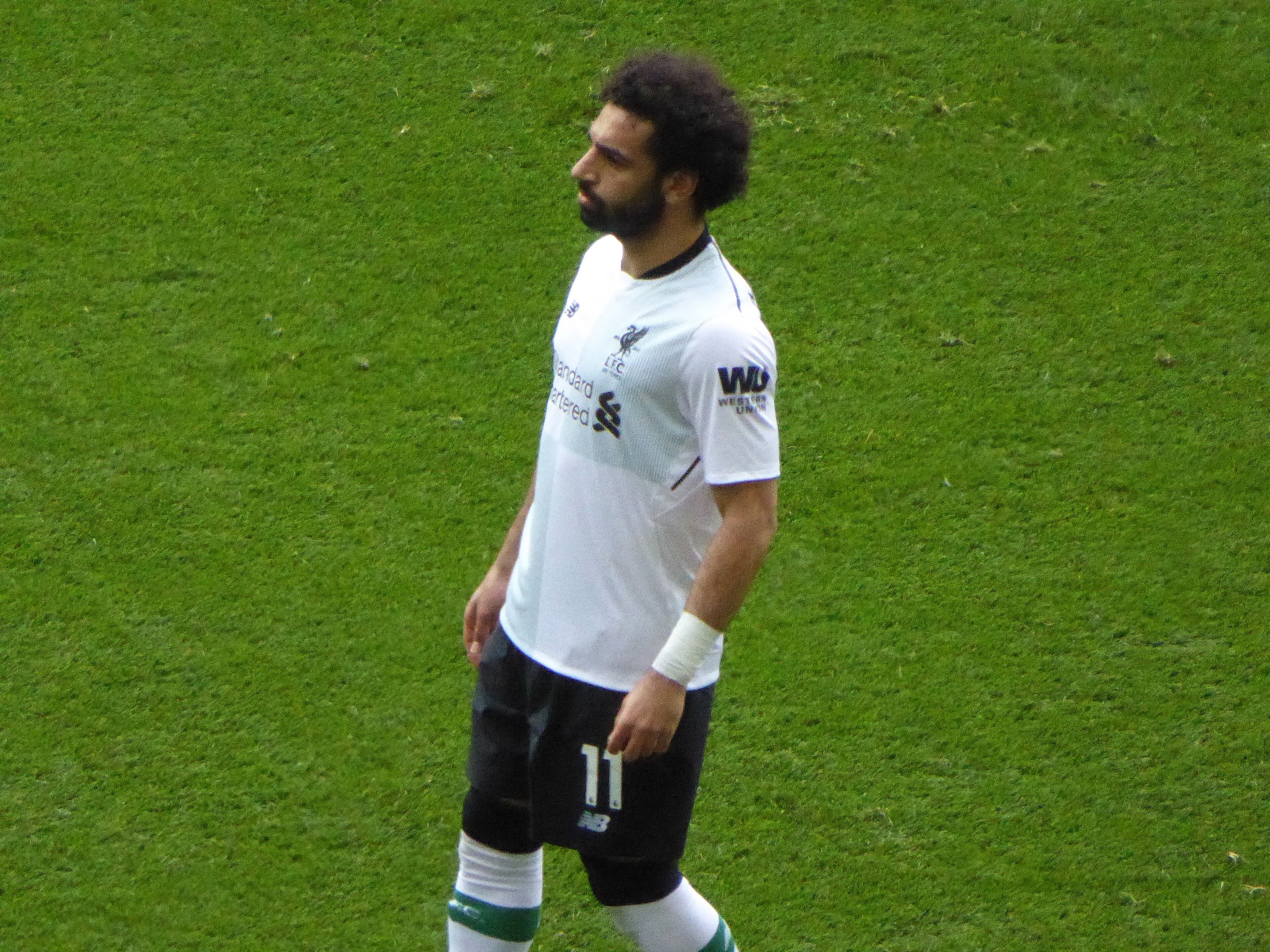
Salah starts wide enough to move the full-back, then attacks the space a centre-forward usually owns. His curved run behind the left side, first touch across the covering defender and early far-corner finish became recognisable without becoming preventable.
As some acceleration faded, he improved with his back to goal and passed more frequently from the inside-right channel, allowing Liverpool to rebuild the attack around a less transition-dependent version.
By the end of 2025/26 he had 193 goals and 94 assists in 328 appearances. Four Golden Boots equal Henry’s record. The 2024/25 title season was his most complete: 29 goals, 18 assists, the Golden Boot, Playmaker and Player of the Season awards, plus a share of the 47-goal-involvement single-season record. His seven goals in 2025/26 were a marked drop, and that decline belongs in the cut-off rather than being hidden behind the previous peak.
Salah moves above Shearer because he paired near-record scoring with elite creation from a wide starting role and was central to both Liverpool championships. Kevin De Bruyne at two scored far less but determined chance quality, tempo and passing routes across six Manchester City titles. Salah supplied the more direct production. De Bruyne influenced a greater share of how his team reached the shot.
Rank 2: Kevin De Bruyne
Premier League context: Attacking and central midfielder; Chelsea and Manchester City; 2013/14 and 2015 to 2025; six titles and 119 assists

De Bruyne passed towards spaces about to become available. From the right half-space he crossed early behind the defence, slid through the inside channel or carried until a marker committed. Power mattered, but so did timing: forwards rarely needed to change stride. Under Guardiola he also pressed, dropped beside the holder and attacked the box when opponents protected the pass.
He ended with 119 assists, second on the all-time list, alongside 72 goals in 288 appearances. Six titles, three Playmaker awards and two Player of the Season prizes place the creation inside sustained dominance. His 20 assists in 2019/20 tied Henry’s record until Fernandes reached 21 in 2025/26; injuries restricted later campaigns. City could still win without him; at their attacking peak, they were more incisive and less predictable when he played.
Salah’s direct production stops one place short of De Bruyne’s influence as principal chance architect across a record four-title sequence and several earlier champion sides. Henry has fewer titles and assists, but takes first because his best five-season run joined playmaker-level creation to scoring comparable with the league’s finest centre-forwards. De Bruyne could design almost any chance. Henry could design it, carry it and finish it himself.
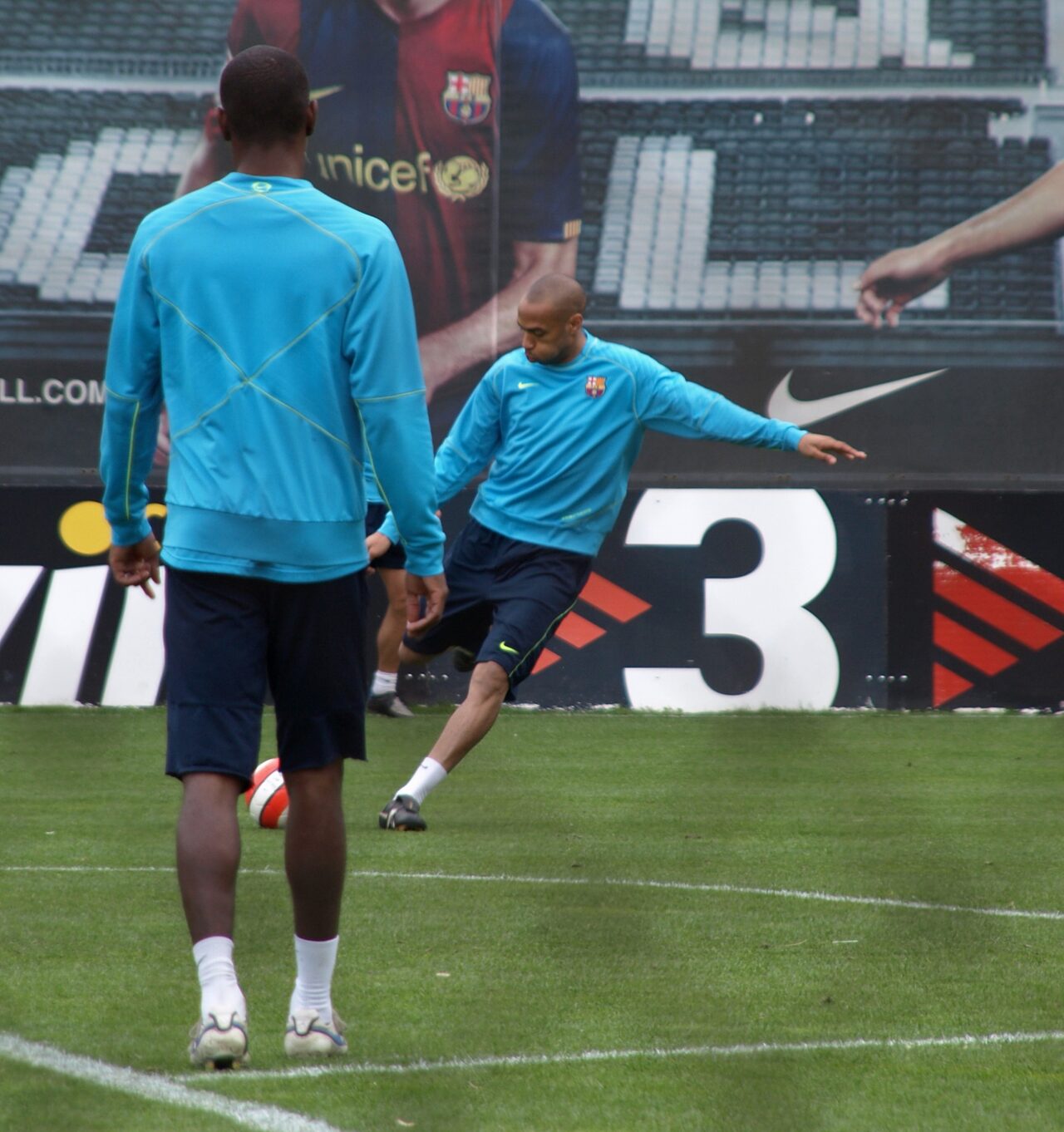
Rank 1: Thierry Henry
Premier League context: Left forward and centre-forward; Arsenal; 1999 to 2007 and a 2012 return; 175 goals, 74 assists and two titles
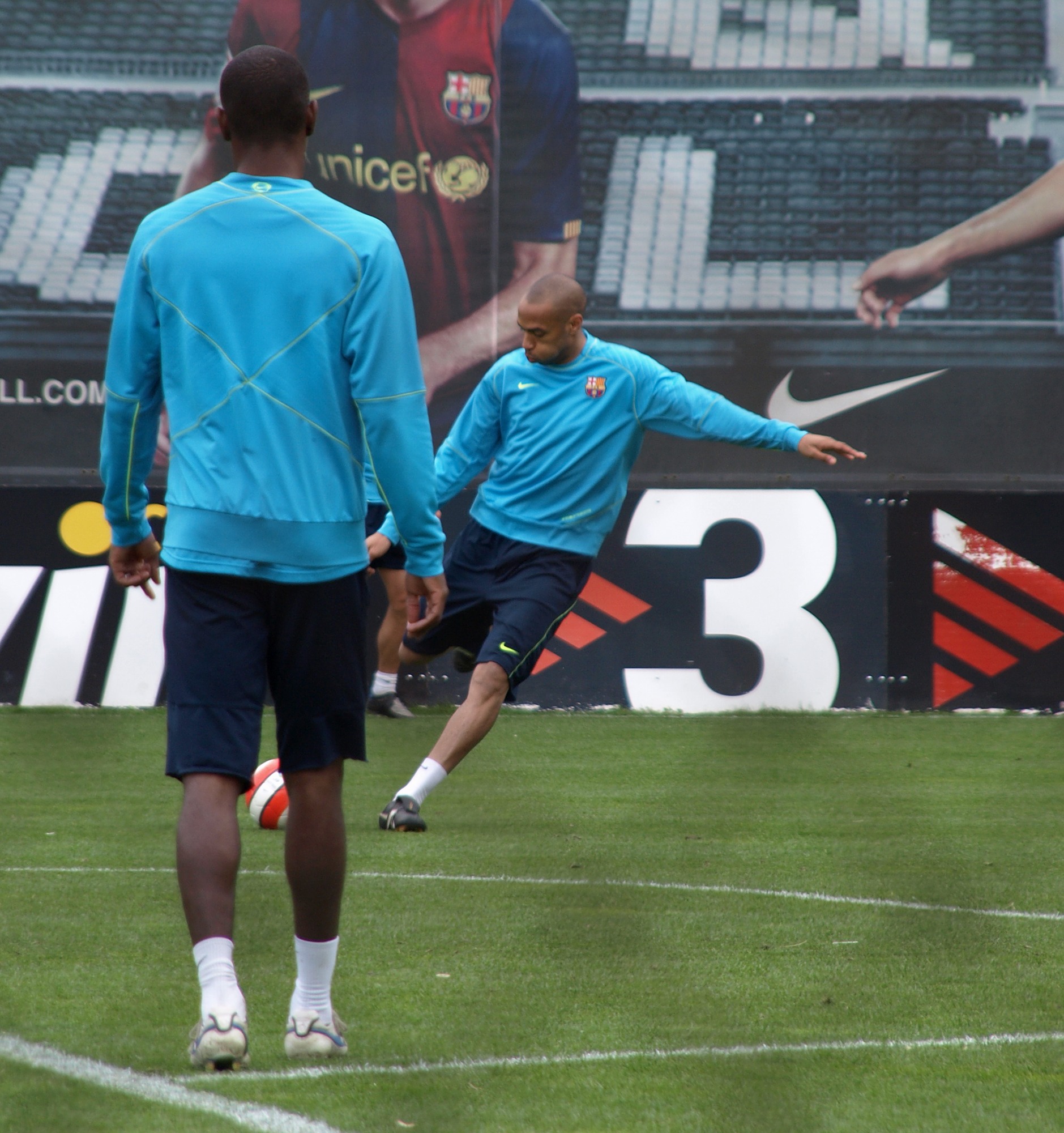
Henry made the left channel his own position. He began away from centre-backs, received on the run and carried diagonally until the far corner opened, yet could pause to release an overlap or square for a runner. Wenger’s conversion of a winger into a forward did not narrow him. It placed finishing after the dribbling and creation he already possessed.
He scored 175 goals and supplied 74 assists in 258 appearances. Four Golden Boots remain the joint record; two Player of the Season awards are also the joint high. In 2002/03 he paired 24 goals with 20 assists, then scored 30 as the 2003/04 champions completed an unbeaten league season. Five consecutive campaigns above 20 goals define a peak that was not dependent on one tactical trick or brief statistical surge. Henry is first because the case survives every neighbouring test. De Bruyne has more titles and assists, Shearer more goals, Salah a longer modern scoring run, Rooney greater positional sacrifice. None combines peak scoring, creation, progression, intimidation and aesthetic control as completely in Premier League matches. Arsenal’s failure to win a third title during his prime is the limit, but cannot outweigh the player who made its hardest attacking responsibilities one coherent role.
The hardest omissions
Given the vast history of the Premier League, naturally there were many exceptional players that we just could not fit into our top 30 rankings. For instance, Bruno Fernandes was in the final cut. His 2025/26 Player of the Season award and record 21 assists strengthened a career already balancing scoring and creation. However, Haaland’s three Golden Boots and Kanté’s direct influence on consecutive champions still carry the lower places. Another elite campaign could change that judgement.
Andrew Cole’s 187 goals, 73 assists and five titles make omission uncomfortable, especially as only one goal was a penalty. Ian Wright, Robin van Persie, Ruud van Nistelrooy and Luis Suárez each offer a top-30 peak. The selected forwards combined such a peak with greater longevity or a separating tactical burden.
Midfield produced the deepest close-call group. Rodri’s four consecutive titles and exceptional 2023/24 control were weighed against roughly half the appearances of the established central midfielders, then a serious knee injury that erased most of 2024/25 and a stop-start recovery in 2025/26. Yaya Touré’s 20-goal 2013/14, Claude Makélélé’s anchoring of Chelsea’s 15-goal defence, Cesc Fàbregas’s 111 assists and Fernandinho all made serious claims. A coherent top 30 does not make the 31st case weak.
Tony Adams, Sol Campbell, Gary Neville, Jaap Stam and Ricardo Carvalho all shaped champions. Adams’s greatest years began before 1992; Stam and Carvalho supplied shorter samples; Neville was vital but less individually transformative than Cole. Their absence reflects the title’s boundary, not a dismissal of their careers.
Final judgement
Thierry Henry leads our rankings because he solved the broadest set of Premier League attacking problems at an unsurpassed peak. He could start the move, surpass a defender, create and finish while exceeding 20 goals in five consecutive seasons. De Bruyne is the finest specialist creator here, Salah the complete modern wide scorer and Shearer the defining centre-forward record.
No single statistic settles this debate. Across tactical periods, the Premier League has rewarded penalty-area control, width, pressure, line-breaking passing, defensive organisation and goalkeeping command. Greatness lies in how completely a player met his responsibilities, and how much more his team could attempt simply because he was there.



.jpg)

.jpg)

.jpg)

.jpg)

.jpg)
.jpg)
.JPG)


.jpg)


.jpg)

.jpg)
_(cropped).jpg)