30 men ranked by how completely they changed the score and the game
A forward must create danger, but danger has taken many forms. Gunnar Nordahl occupied centre-backs and finished from close range. Garrincha stretched the field from the right. Johan Cruyff left the front line to redesign the attack around him. Lionel Messi could do all three within the same phase.
Our rankings include centre-forwards, inside forwards, second strikers and wide attackers whose principal historical work was performed in the attacking line. It does not reward raw goal totals without defining competitions, nor does it assume the modern calendar creates fair comparisons with players who had fewer official fixtures. Finishing, creation, movement, peak level, longevity, major matches, team responsibility and tactical influence are considered within the player’s actual role.
The complete top 30
| Rank | Forward | Country | Why he is here |
|---|---|---|---|
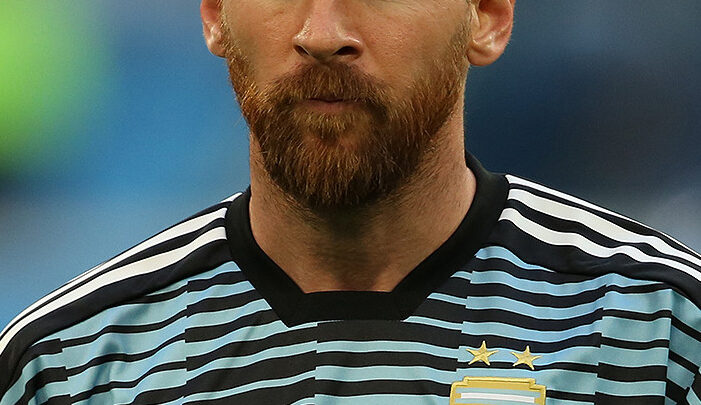
| 1 | Lionel Messi | Argentina | The strongest union of scoring, creation, dribbling and longevity |
| 2 | Pelé | Brazil | Three World Cups and an attacking range far beyond finishing |
| 3 | Cristiano Ronaldo | Portugal | Unmatched elite scoring across leagues and European campaigns |
| 4 | Alfredo Di Stéfano | Argentina and Spain | The organising forward at the heart of five European Cups |
| 5 | Johan Cruyff | Netherlands | A forward whose movement changed team structure |
| 6 | Diego Maradona | Argentina | Supreme ball progression and creation from an advanced role |
| 7 | Ferenc Puskás | Hungary and Spain | Left-footed scoring at historic international and club scale |
| 8 | Garrincha | Brazil | One-on-one wing play that decided two World Cups |
| 9 | Ronaldo | Brazil | The most destructive centre-forward peak of the modern era |
| 10 | Eusébio | Portugal | Power, speed and scoring in Benfica’s greatest period |
| 11 | Gerd Müller | West Germany | Penalty-area movement and conversion stripped to perfection |
| 12 | Romário | Brazil | A master of separation and compact finishing |
| 13 | Kylian Mbappé | France | Twenty-two World Cup goals by 27 and an expanding elite career |
| 14 | George Best | Northern Ireland | Dribbling invention, balance and a dazzling club peak |
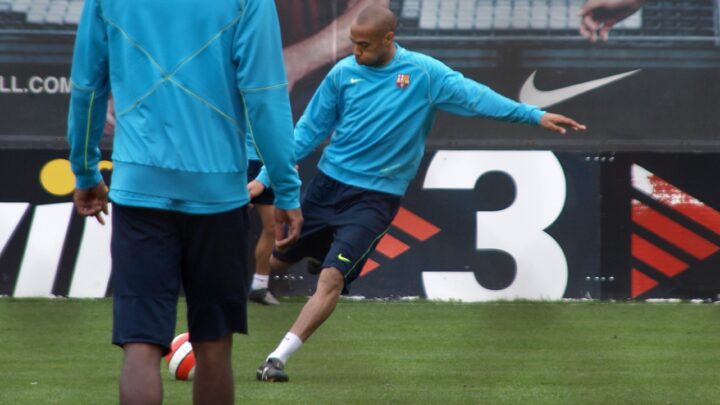
| 15 | Thierry Henry | France | Pace, creation and scoring from the left channel |
| 16 | Marco van Basten | Netherlands | Complete centre-forward technique in a shortened career |
| 17 | Giuseppe Meazza | Italy | The creative scoring leader of two World Cup winners |
| 18 | Ronaldinho | Brazil | Improvisation and playmaking at a brief extraordinary summit |
| 19 | Raymond Kopa | France | Mobile creation and European excellence before the number ten label |
| 20 | Neymar | Brazil | Elite dribbling and production, short of the defining international title |
| 21 | Josef Bican | Austria and Czechoslovakia | Extraordinary defined scoring rates across disrupted competitions |
| 22 | Sándor Kocsis | Hungary | Aerial technique and one of international football’s great strike rates |
| 23 | Robert Lewandowski | Poland | Complete modern number-nine production over more than a decade |
| 24 | Luis Suárez | Uruguay | Movement, invention and abrasive competitive force |
| 25 | Mohamed Salah | Egypt | Repeatable wide-forward scoring at Premier League and European level |
| 26 | Stanley Matthews | England | Longevity and wing craft recognised by the first Ballon d’Or |
| 27 | Hristo Stoichkov | Bulgaria | Direct left-sided aggression for Barcelona and Bulgaria |
| 28 | Gunnar Nordahl | Sweden | Serie A finishing dominance from a powerful centre-forward |
| 29 | Just Fontaine | France | Thirteen goals in six matches at the 1958 World Cup |
| 30 | Miroslav Klose | Germany | Tournament movement and a 16-goal World Cup career |
Rank 30: Miroslav Klose
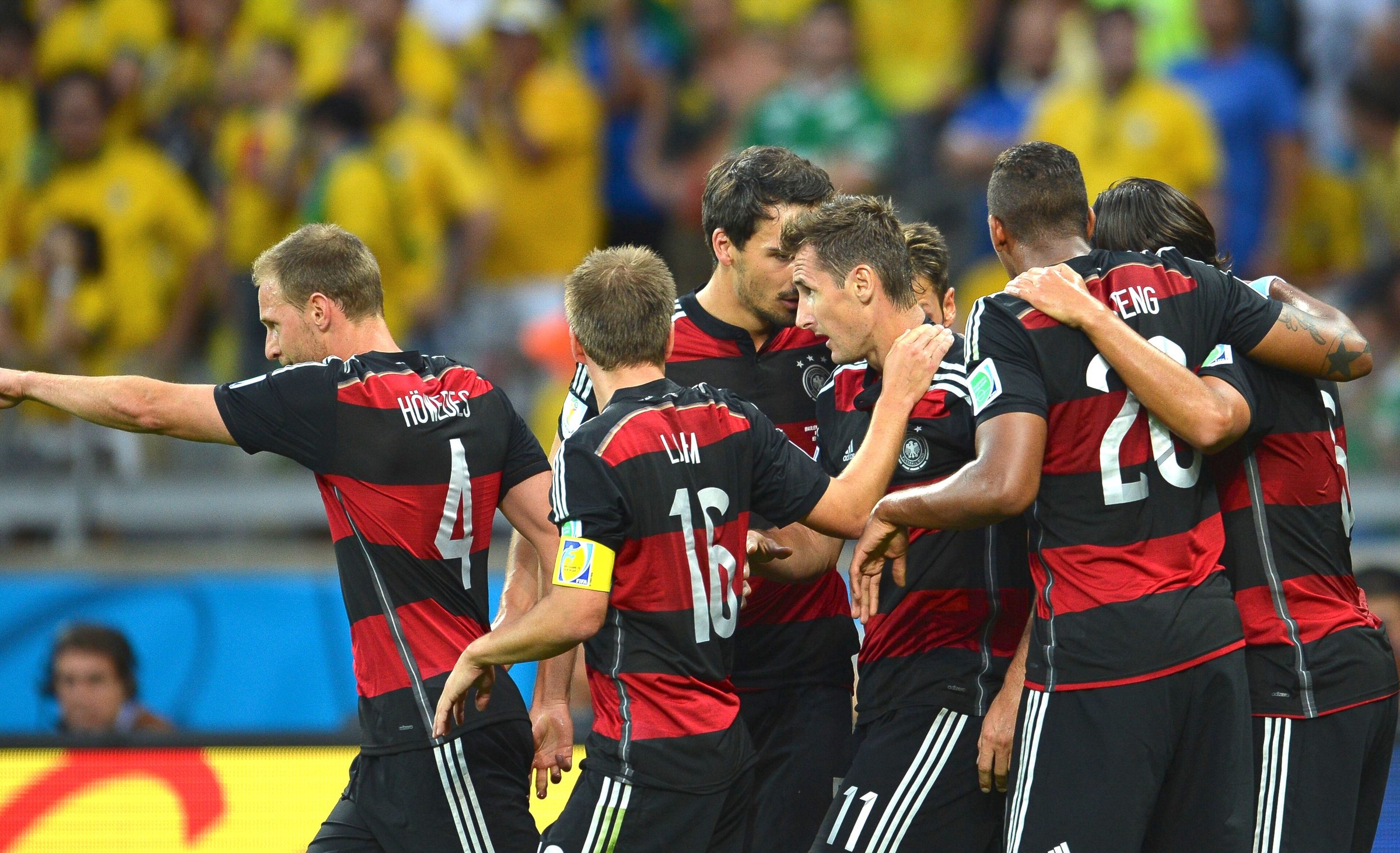
Klose found the blind side of defenders without needing the attack built around him. He adjusted to crosses, attacked rebounds and made near-post runs that created space even when the ball went elsewhere. His 16 goals in 24 World Cup appearances were the competition record from 2014 until 2026, spread across four tournaments rather than concentrated in one group stage.
The club career was good rather than historically dominant. He never won the Champions League and his Bundesliga scoring peaks fall below Lewandowski’s. Germany received the best version of his movement, including the 2014 semi-final goal that took him past Ronaldo’s old record. Klose enters the list because tournament production, team play and longevity reinforce one another. He does not rank higher because his technique and individual club influence were narrower than those of the forwards ahead.
Rank 29: Just Fontaine
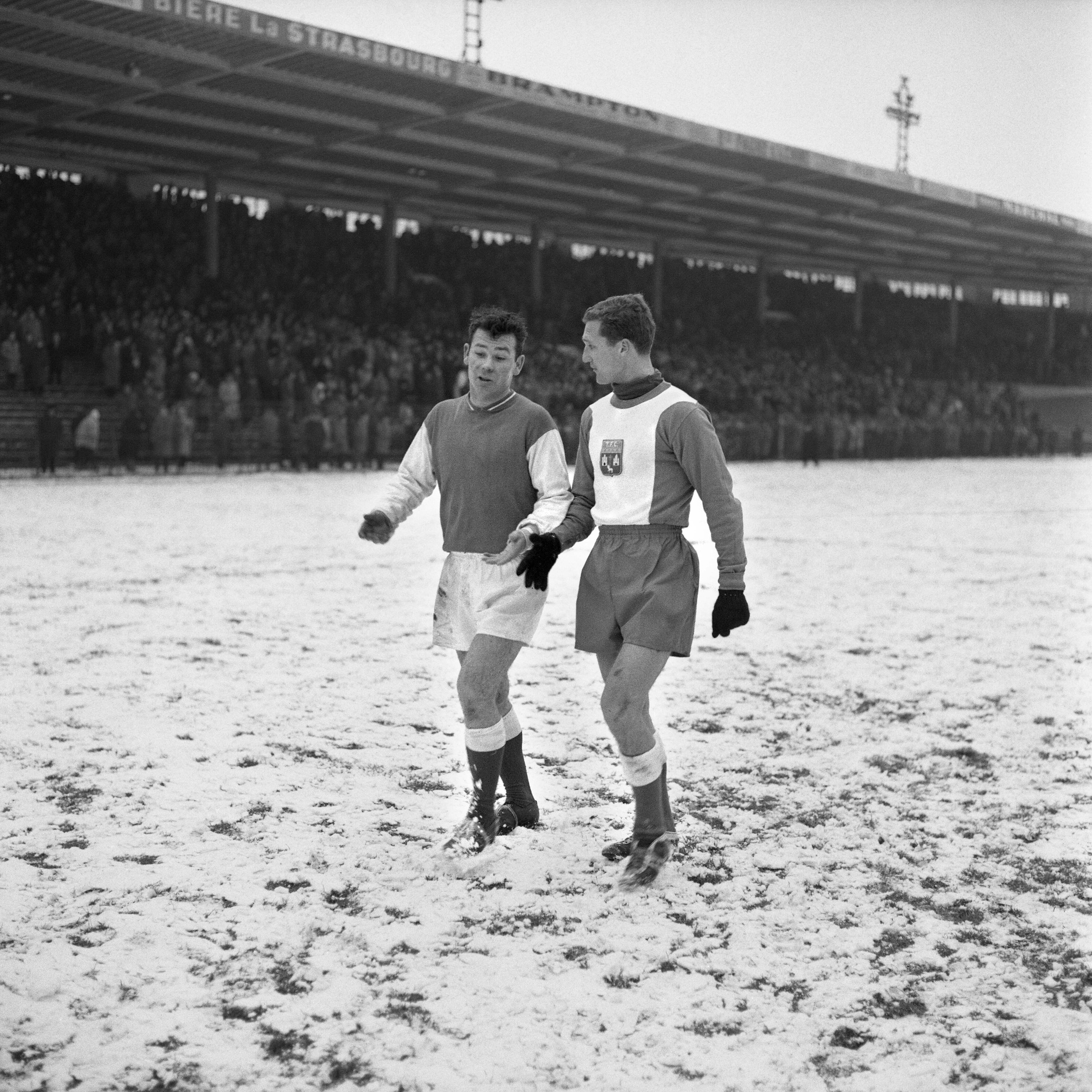
Fontaine’s World Cup record remains astonishing even after the competition expanded. He scored 13 goals in six matches in 1958, using borrowed boots after his own pair split, and finished with four against West Germany in the third-place match. The total was not built only against weak opposition: Northern Ireland, Brazil and the defending champions all faced him.
At Reims he won three French titles and reached the 1959 European Cup final, supplying evidence beyond one Swedish summer. A double leg fracture helped end his playing career at 28, leaving only 21 France caps and 30 international goals. The limited duration keeps him at 29. His finishing was quick, balanced and varied enough that the tournament record should be treated as a concentrated expression of real class, not a statistical accident.
Rank 28: Gunnar Nordahl
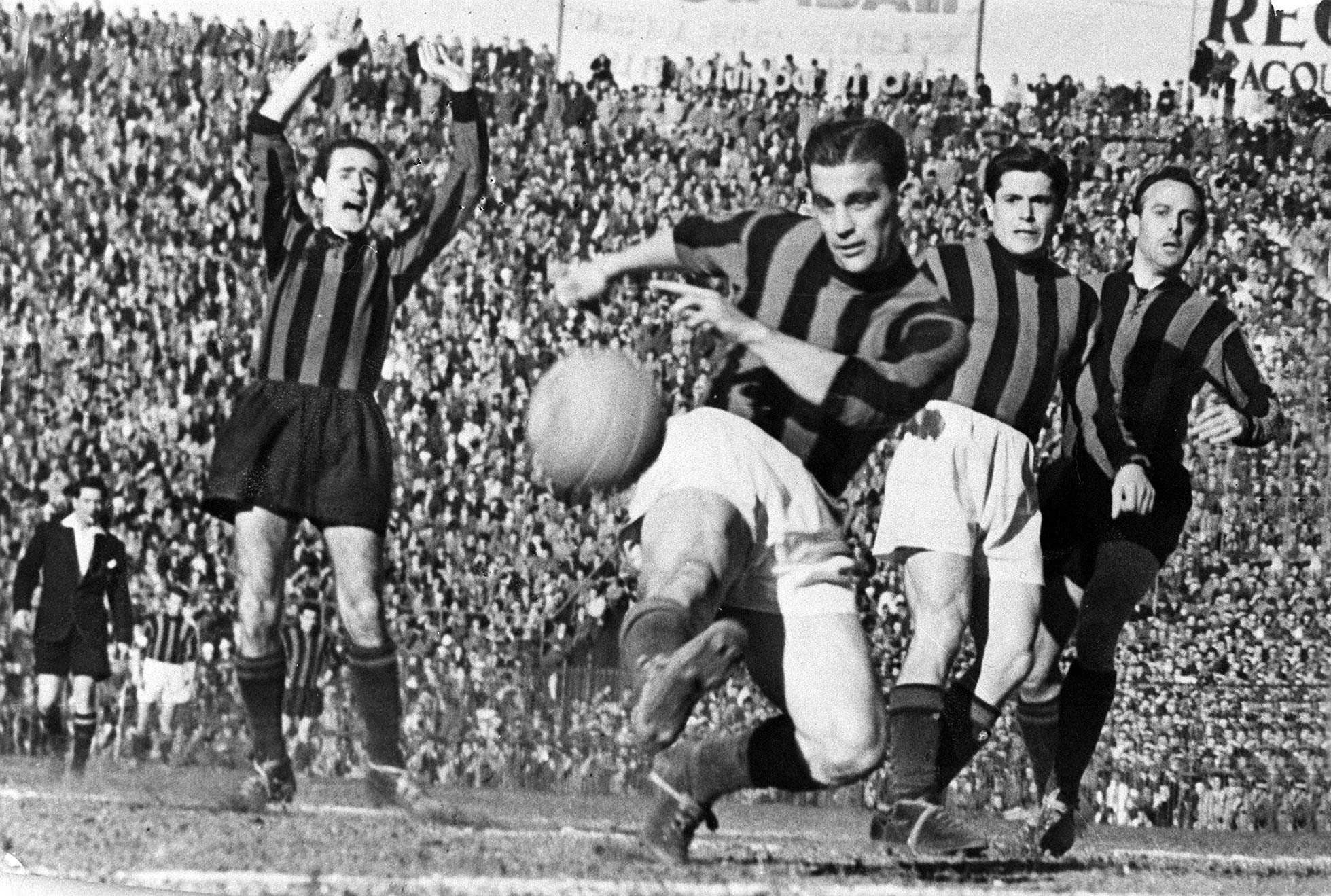
Nordahl used strength to establish position, then finished with much lighter touches than his build implied. For Milan he scored 225 Serie A goals in 291 appearances, winning the capocannoniere award five times. His 35 league goals in 1949/50 stood as the competition’s single-season record for 66 years.
Sweden’s amateur rules curtailed his international career once he moved to Italy, so the 43 goals in 33 caps belong to a brief pre-professional window that included Olympic gold in 1948. He never played at a World Cup or in the European Cup, which restricts direct comparison with the top 20. Within one of Europe’s most defensive leagues, however, Nordahl repeatedly made contact, timing and finishing overpower elaborate marking plans.
Milan’s Gre-No-Li front line did not simply feed a stationary finisher. Nordahl led the line with enough strength to receive under contact and enough awareness to bring Gunnar Gren and Nils Liedholm into play. That team context sharpens his case: the goals were part of a functioning attacking relationship, not isolated accumulation.
Rank 27: Hristo Stoichkov
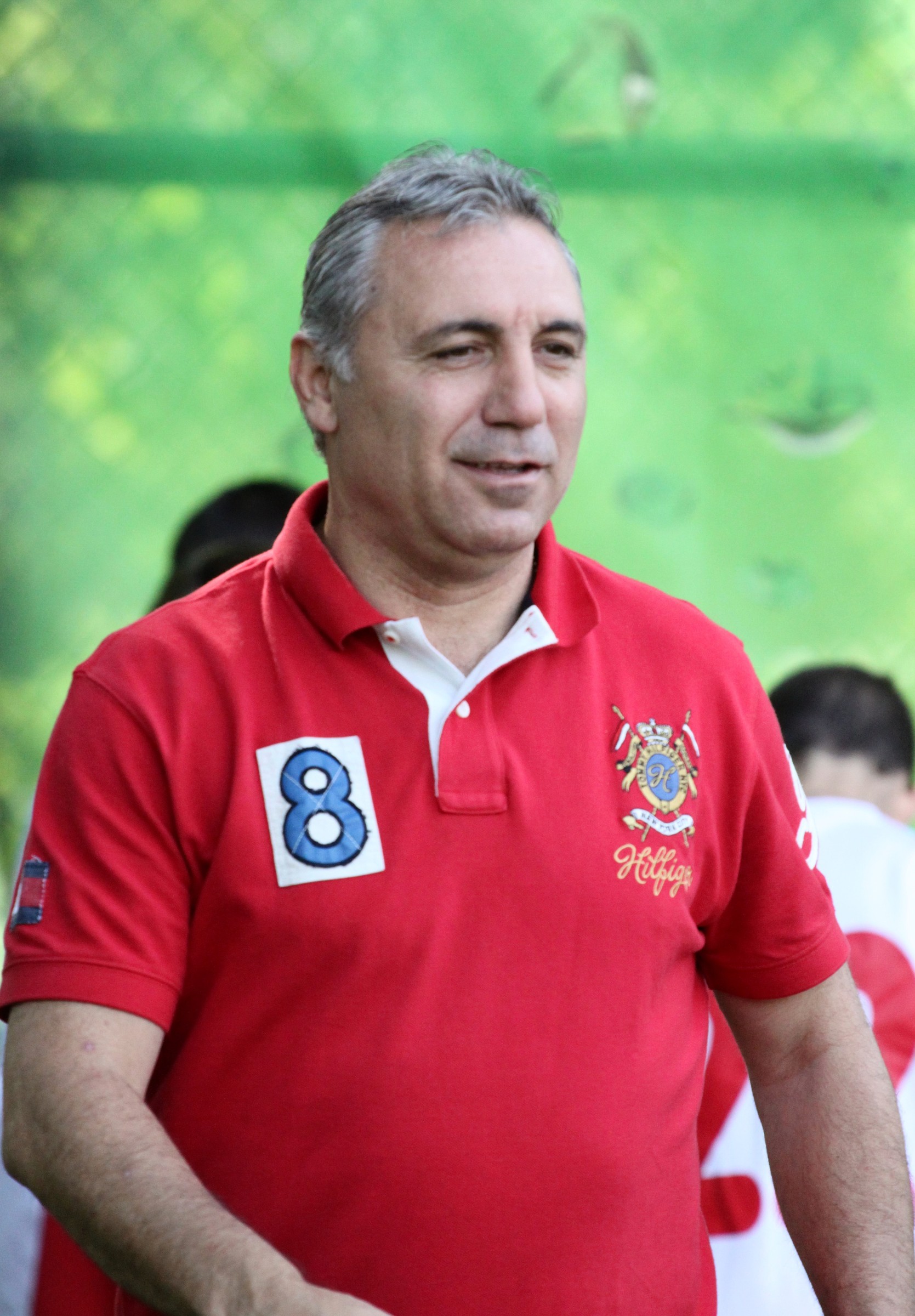
Stoichkov attacked from the left with a forward’s appetite rather than a winger’s patience. His first touch set up the shot, his acceleration punished a high line and his left foot could finish or supply the central striker. Six goals at the 1994 World Cup won the Golden Boot and carried Bulgaria to a semi-final few believed possible.
At Barcelona he gave Johan Cruyff’s Dream Team directness, scoring in the 1992 European Cup run and winning the 1994 Ballon d’Or. Suspensions and conflict sometimes reduced his availability, and his prime did not last as long as Salah’s or Suárez’s. Stoichkov ranks here because the best version altered both club and national history. The temperament was inseparable from the threat, but it could also become a cost.
The 1994 World Cup showed the full attacking burden. Bulgaria needed him to finish, carry counters and supply dead-ball quality, responsibilities rarely concentrated in one forward from a smaller football nation. His left foot made the route predictable in theory, yet the speed and aggression of the action kept it effective.
Rank 26: Stanley Matthews
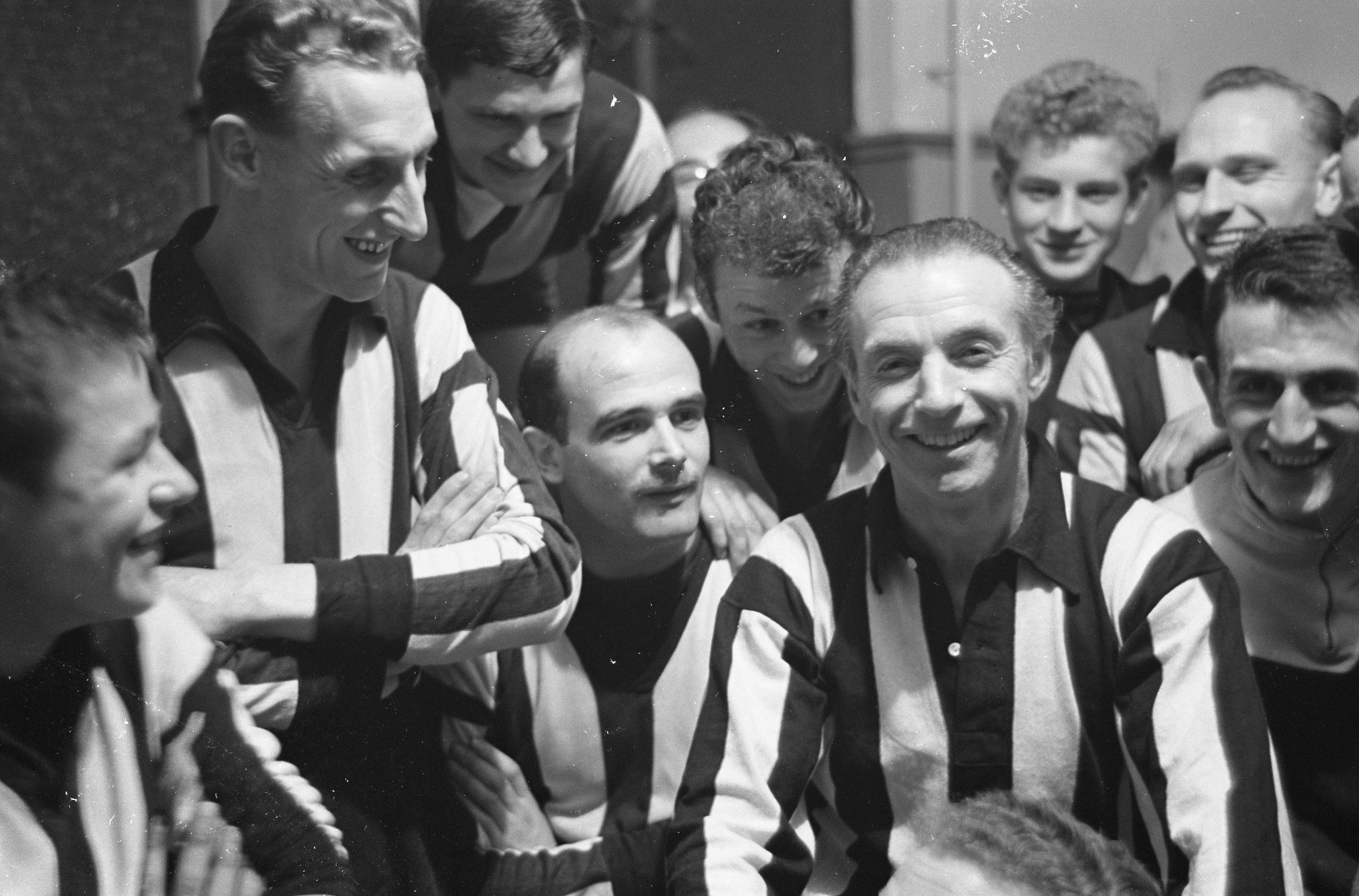
Matthews beat full-backs through pauses, feints and changes of pace rather than a constant sprint. He showed the ball, waited for the defender’s balance to commit and then moved outside. Fifty-four England caps across 23 years demonstrate exceptional longevity in an era with sparse international schedules. In 1956, aged 41, he became the first Ballon d’Or winner.
The 1953 FA Cup final is remembered as the Matthews Final, though Stan Mortensen scored a hat-trick and deserves equal historical space. Matthews’s second-half dribbling still changed the match. His low scoring output was normal for a touchline winger asked to create rather than finish, but it limits comparison with wide forwards who did both. He remains the earliest player here whose one-on-one wing craft can be studied clearly on film.
Film shows how little disguise he required. Matthews slowed almost to a walk, encouraged the full-back to square his stance and then accelerated outside. That repeated duel could tilt an entire defence towards the touchline. The danger came from territorial control and the cross that followed, not from occupying modern scoring positions.
Rank 25: Mohamed Salah
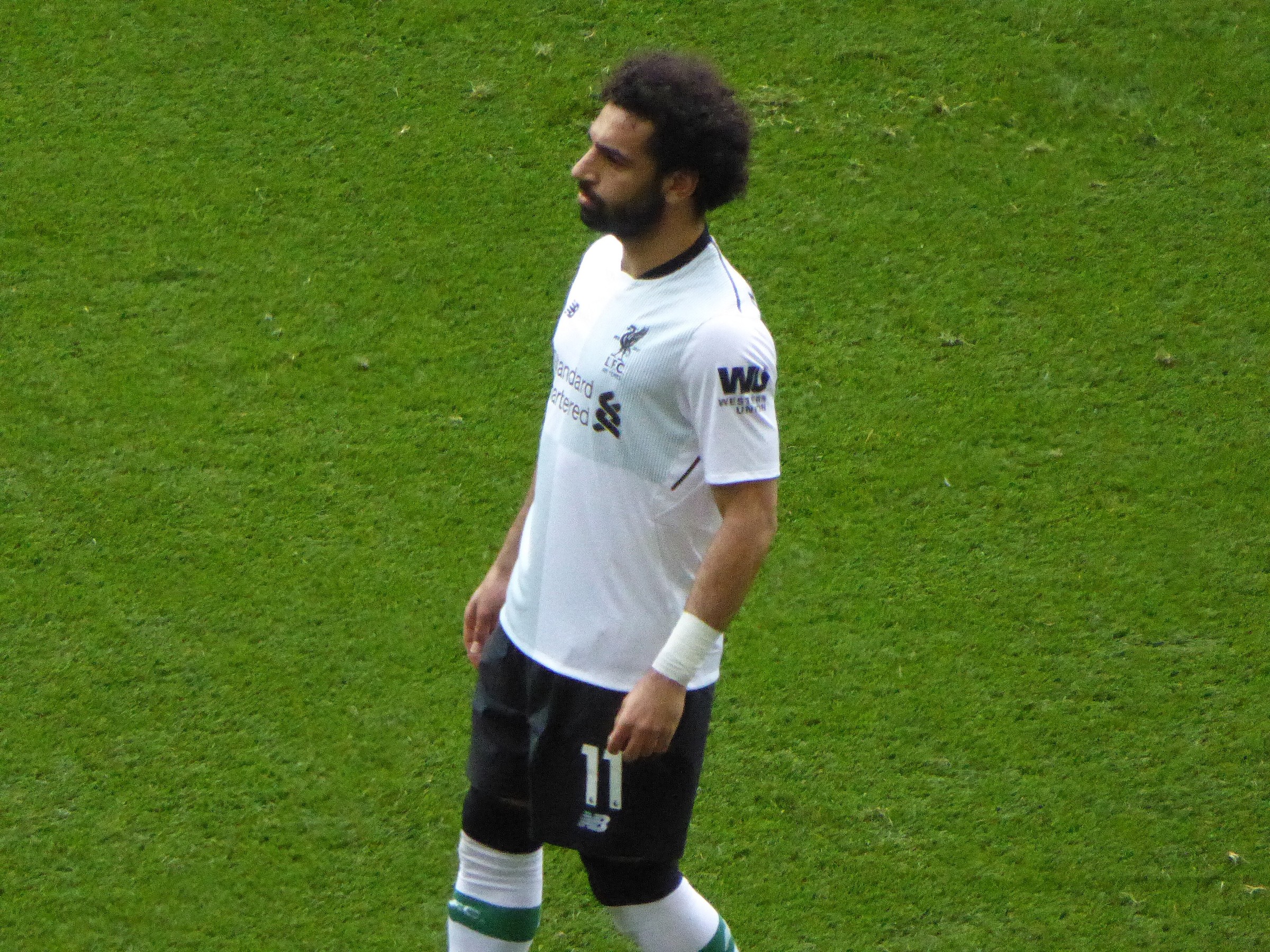
Salah begins wide but finishes like a centre-forward. The curved run behind the left-back, the first touch across the covering defender and the left-footed strike into the far corner became repeatable without becoming easy to stop. His 32 league goals in 2017/18 set a Premier League record for a 38-match season at the time.
Liverpool’s 2019 Champions League and 2020 league title were collective achievements with Salah as the most reliable scorer. He also created through cut-backs and improved his play with his back to goal as pace declined slightly. Egypt’s international record includes two Africa Cup of Nations final defeats and a brief World Cup appearance, so the national case lacks a victorious defining stage. Salah sits above Matthews because he added elite scoring to wing influence across many seasons.
Rank 24: Luis Suárez
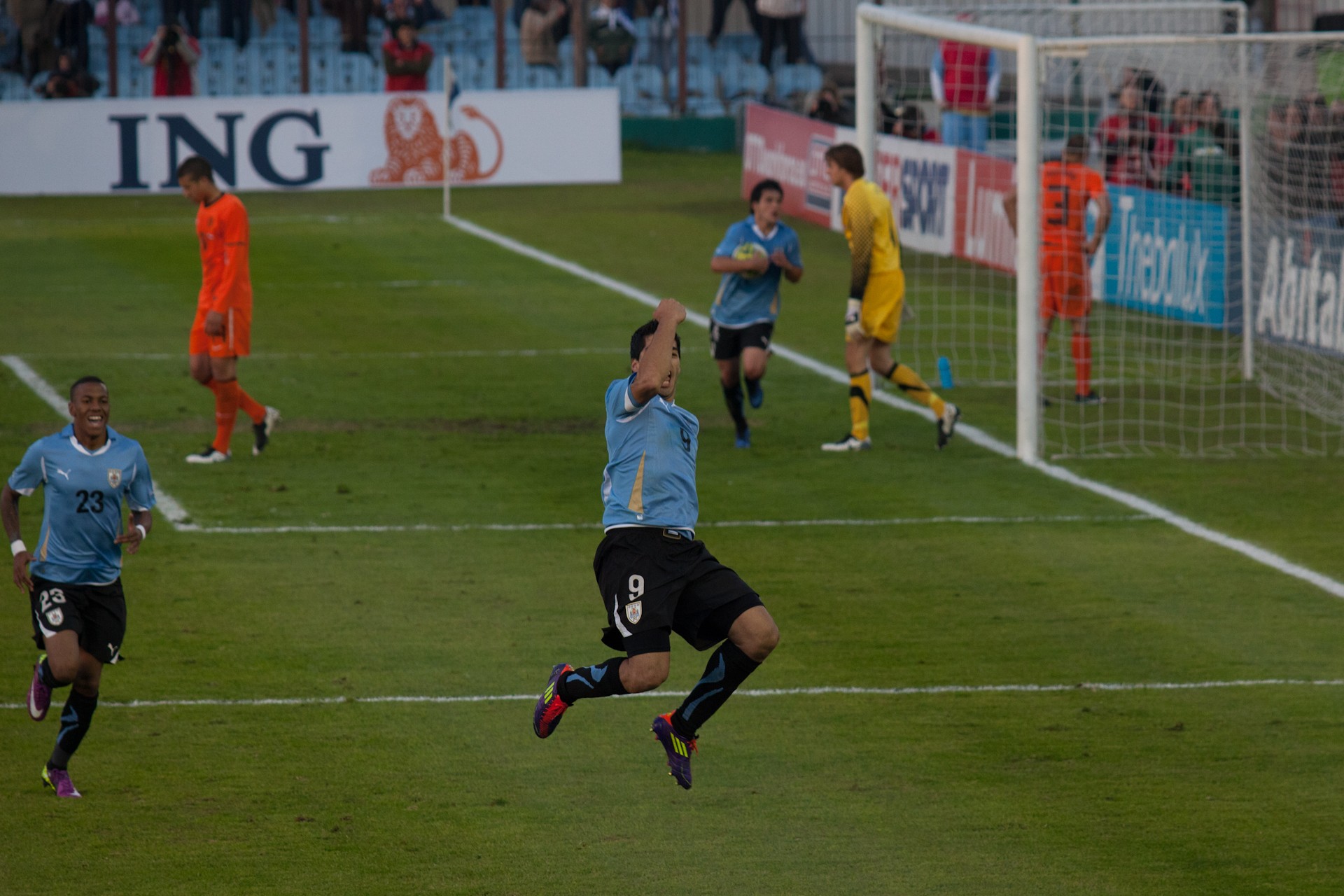
Suárez could invent a finish after the chance appeared to have gone. He struck early, used either foot and fought for position with a volatility that defenders could never treat as background noise. His 31 league goals for Liverpool in 2013/14 came without penalties and nearly carried a defensively vulnerable side to the title.
At Barcelona he adapted to Messi and Neymar, scoring 198 goals in 283 official matches and winning the 2015 Champions League. The career also contains biting incidents, suspensions and the deliberate handball against Ghana in 2010. These were not colourful footnotes; they harmed opponents and teams and must remain in the assessment. Suárez ranks 24 because his technical and competitive level was immense, while conduct and a less decisive World Cup scoring record stop the climb.
Rank 23: Robert Lewandowski
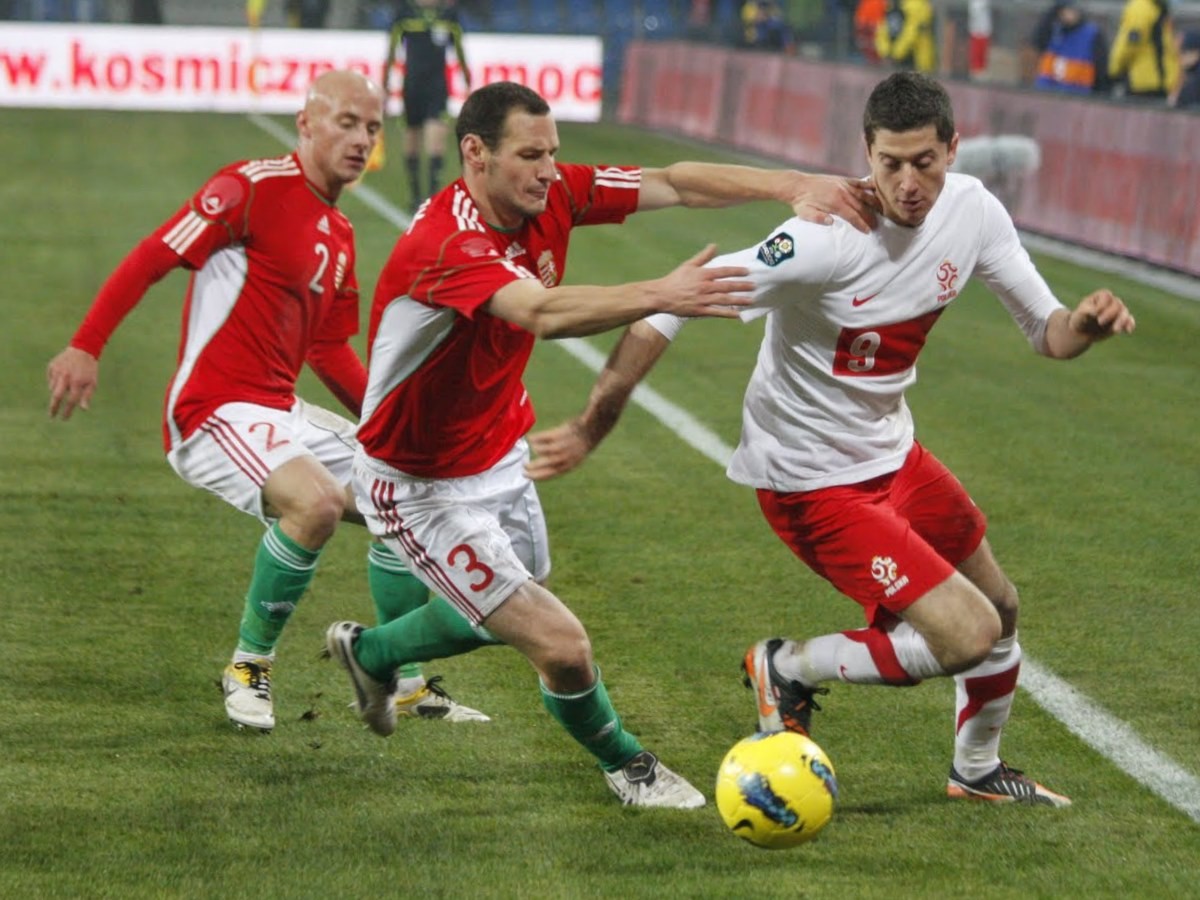
Lewandowski built a complete number-nine game from repeatable details: checking away before the cross, receiving on the back foot, finishing with little backlift and pressing the centre-back’s first touch. He scored 41 Bundesliga goals in 2020/21, breaking Gerd Müller’s 49-year-old single-season record.
The 2020 Champions League completed Bayern’s treble with Lewandowski scoring 15 times in the competition. Poland could not offer equivalent control or chance volume, although he eventually scored at the 2022 World Cup. His ranking reflects more than totals: he remained tactically useful through changes of coach, partner and league. The leading historical forwards created more for others or produced a larger international peak, but few pure strikers have sustained elite mechanics for so long.
His back-to-goal work is the part most likely to disappear behind the totals. Lewandowski could pin a centre-back, return a pass first time and turn towards goal before the defence recovered its shape. Bayern’s wide attackers profited from that platform, which is why his value survived matches in which he did not score.
Rank 22: Sándor Kocsis
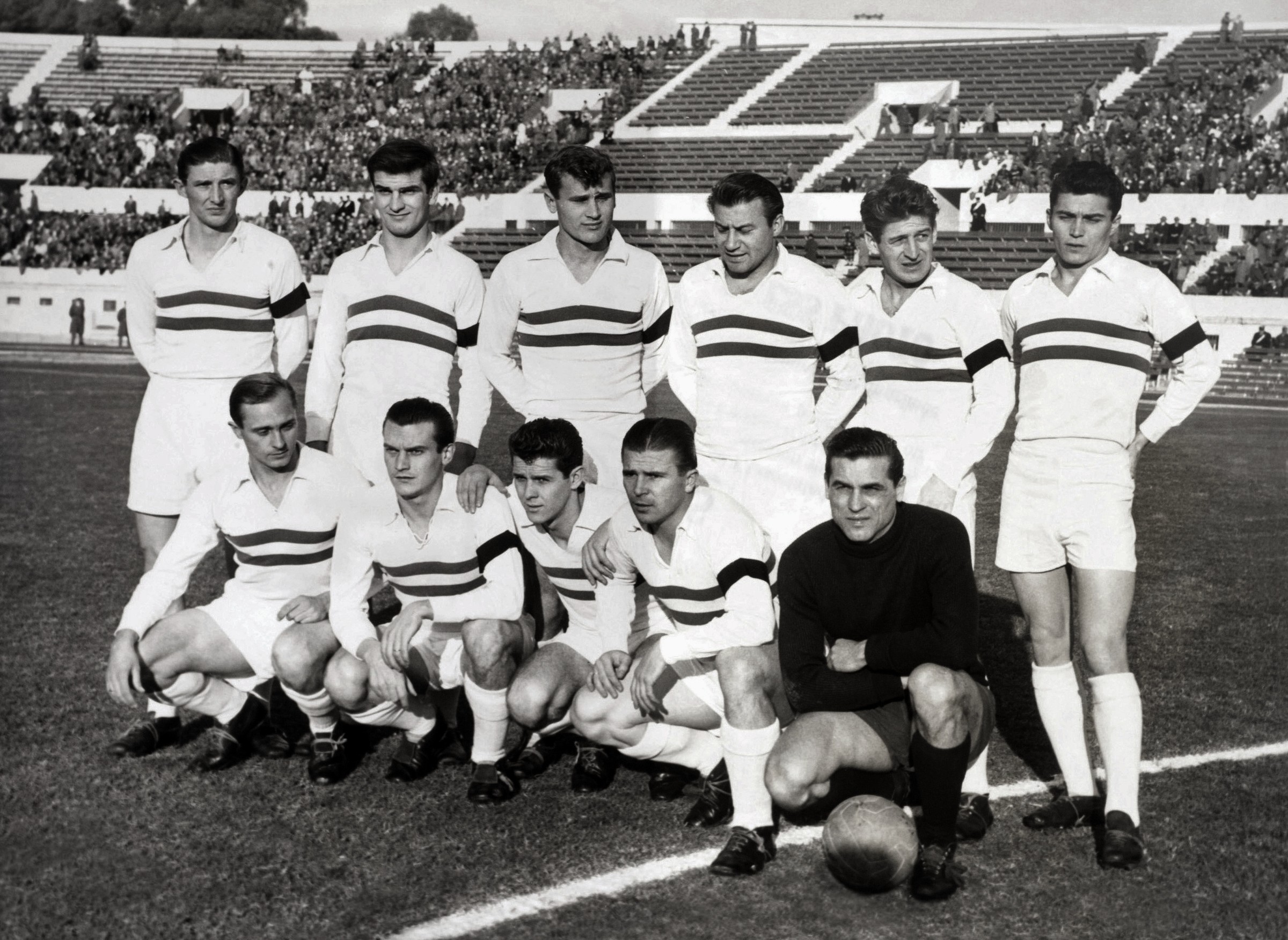
Kocsis headed the ball with the timing of a smaller technical player and the force of a centre-forward. He did not wait beneath crosses; he adjusted his run, hung beyond the defender’s jump and redirected with precision. Eleven goals in five matches at the 1954 World Cup remain the second-highest total in a single edition.
His 75 goals in 68 Hungary caps give a defined international strike rate of 1.10 per match. The defeat to West Germany in the final denied the Mighty Magyars the title their previous form suggested. At Barcelona, after leaving Hungary following the 1956 uprising, Kocsis won domestic honours and reached the 1961 European Cup final. He ranks below Bican because the latter’s club scoring evidence is broader, though Kocsis has the stronger international sample.
Kocsis was exceptional in the air without being built like a conventional target forward. He attacked the ball late, changed the angle of his jump and headed towards spaces the goalkeeper could not cover. Hungary’s movement gave him chances, but his technique converted crosses that were not obviously favourable.
Rank 21: Josef Bican
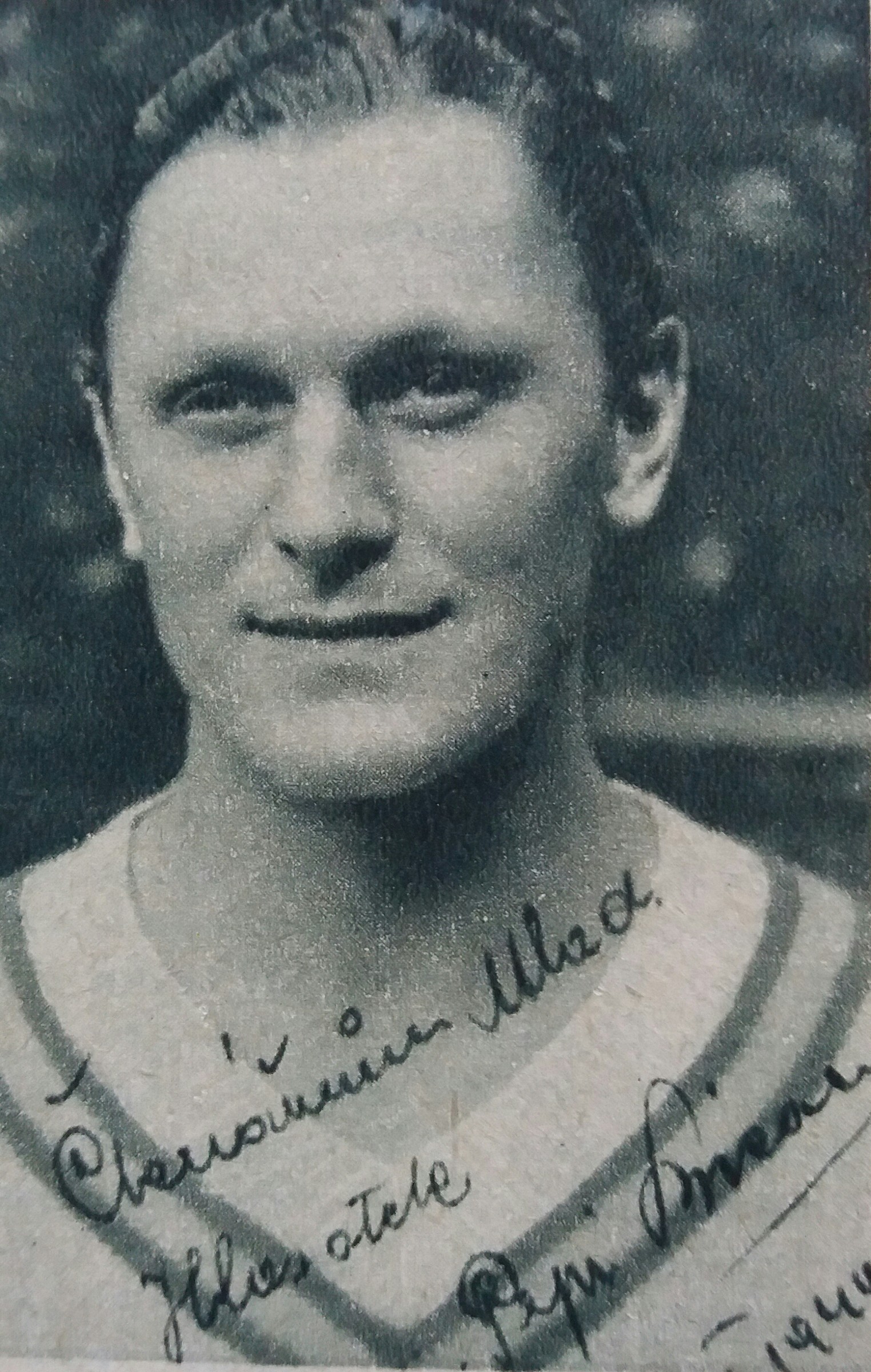
Bican’s career is surrounded by inflated totals that combine official matches, regional competitions and friendlies. A careful ranking does not need them. FIFA records 534 goals in 274 appearances for Slavia Prague, a defined club sample that still produces an extraordinary rate. Contemporary descriptions emphasise sprint speed, two-footed finishing and a capacity to create the shooting angle himself.
War and politics fractured the competitions available to him. He represented Austria at the 1934 World Cup, later played for Czechoslovakia and lost prime international years to the Second World War. That context both explains the absence of a greater tournament record and limits direct evidence against the best teams elsewhere. Bican belongs at 21 because the bounded numbers are too powerful to ignore, but not in the top ten because competition quality and footage remain difficult to test.
Rank 20: Neymar Jr
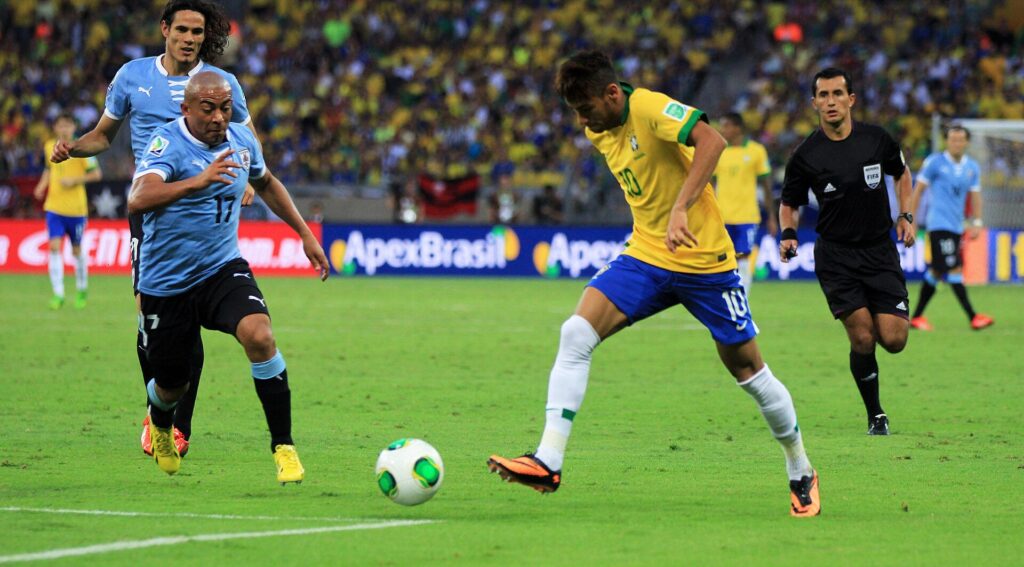 Neymar Jr, playing against Uruguai in Copa das Confederações 2013 / Wikimedia Commons / CC BY 3.0 br. Source and licence record.
Neymar Jr could receive near the touchline, eliminate the first defender and still see the pass created by that dribble. At Santos he carried creative responsibility as a teenager; at Barcelona he adapted to combinations with Messi and Suárez; in Paris he often became the primary playmaker. His 79 goals in 128 Brazil appearances made him the association’s recognised leading men’s scorer under its official count.
The 2015 Champions League, including goals in every knockout round from the quarter-final onward, supplies his strongest club campaign. Olympic gold in 2016 mattered deeply to Brazil, but injury removed him from the 2014 World Cup semi-final and later tournaments ended without a final. Neymar ranks behind Kopa because the Frenchman paired creation with a more influential World Cup and three European Cups. The ability was top-ten calibre; availability, career choices and international resolution were not.
Rank 19: Raymond Kopa
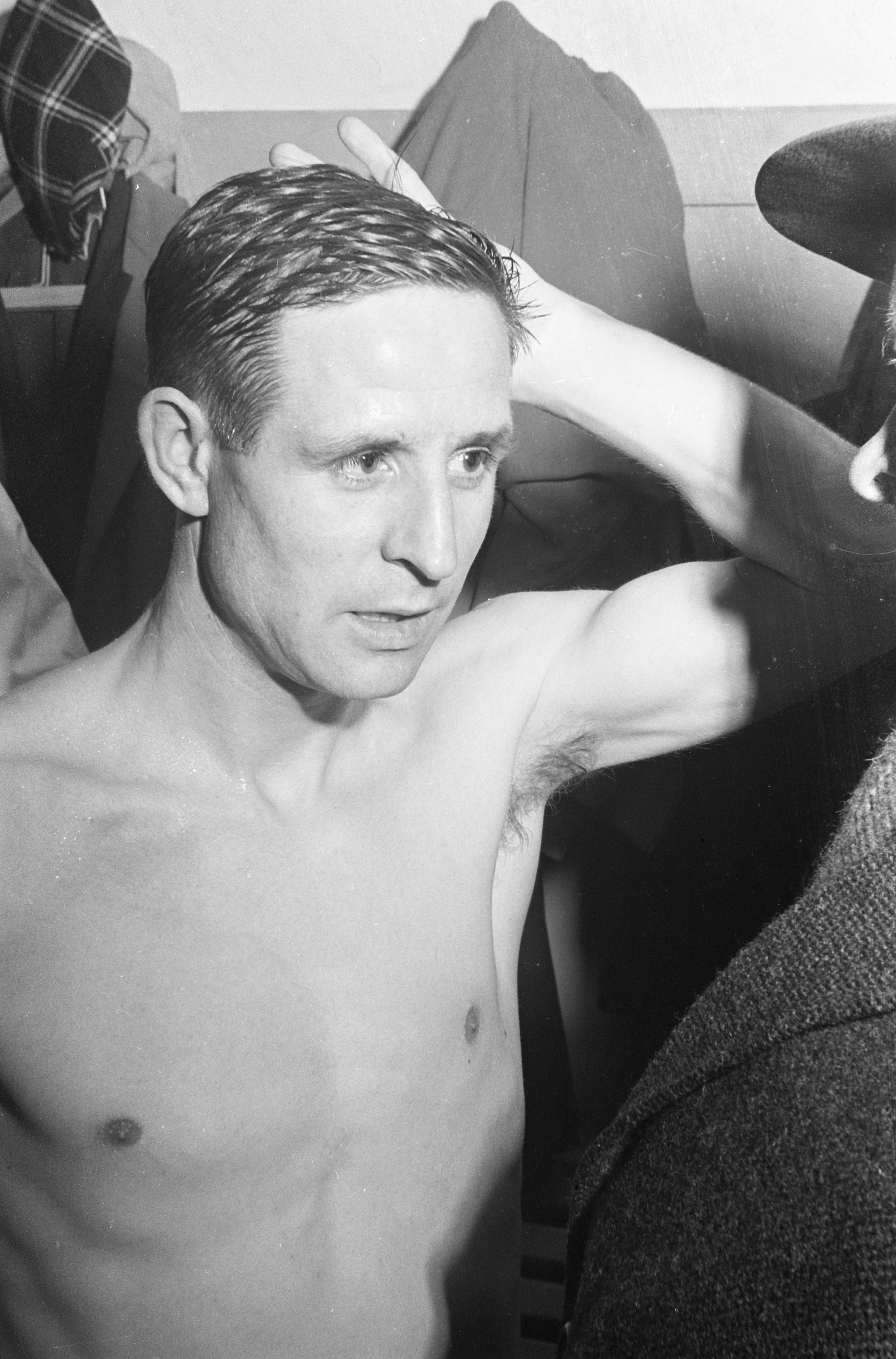
Kopa moved away from central markers, carried through midfield and returned near goal to combine with the striker. The role would later be called a number ten, but in the 1950s it helped dissolve the distinction between forward and creator. He scored 18 times in 45 France appearances and supplied Just Fontaine during the 1958 World Cup run to third place.
Three consecutive European Cups with Real Madrid from 1957 to 1959 and the 1958 Ballon d’Or show that his influence travelled beyond the national side. Di Stéfano remained Madrid’s organising power, which kept Kopa from becoming the team’s sole reference. At Reims he had carried more of that burden. He ranks 19 because technique, mobility and achievement meet cleanly, even if the surviving data cannot describe his chance creation with modern precision.
Kopa’s size shaped rather than restricted his game. He avoided static contests, received on the turn and escaped into the channel between full-back and centre-half. France’s 1958 attack needed that movement beside Fontaine, while Madrid used it to stop opponents fixing all their attention on Di Stéfano.
Rank 18: Ronaldinho
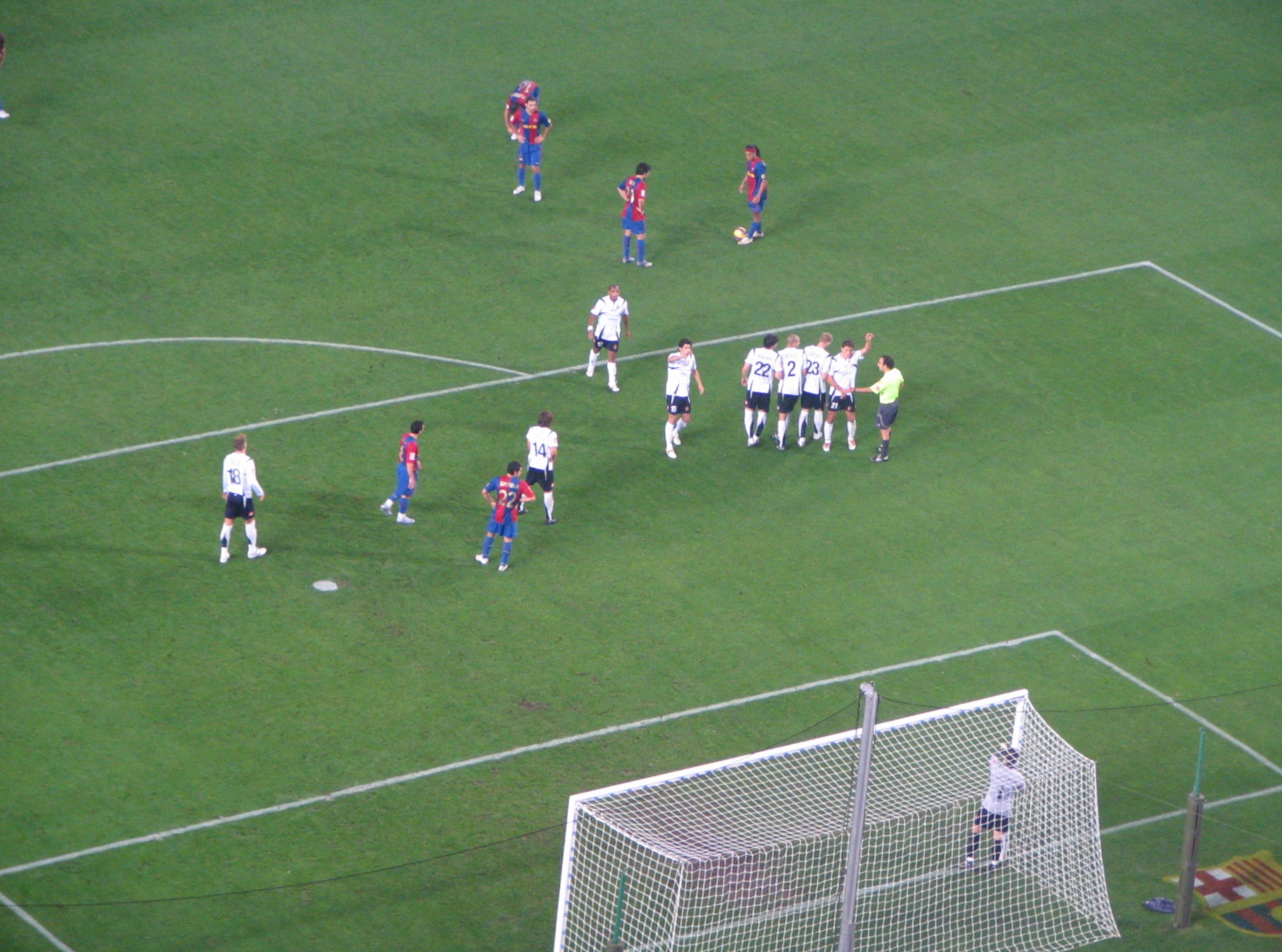
Ronaldinho used disguise as a tactical weapon. The no-look pass moved defenders before the ball; the elastic touch created a new lane; a free kick could be struck under a jumping wall rather than around it. He scored 33 goals in 97 Brazil appearances and contributed to the 2002 World Cup, including the extraordinary free kick against England.
Barcelona’s 2004 to 2006 revival was built around his permission to improvise within Frank Rijkaard’s structure. He won the 2005 Ballon d’Or and the 2006 Champions League, then declined earlier than his talent suggested as conditioning and focus slipped. The Atlético Mineiro Copa Libertadores in 2013 added a valuable late chapter. Ronaldinho ranks below Meazza because his absolute peak was shorter, though at that summit football rarely looked more open to invention.
Rank 17: Giuseppe Meazza
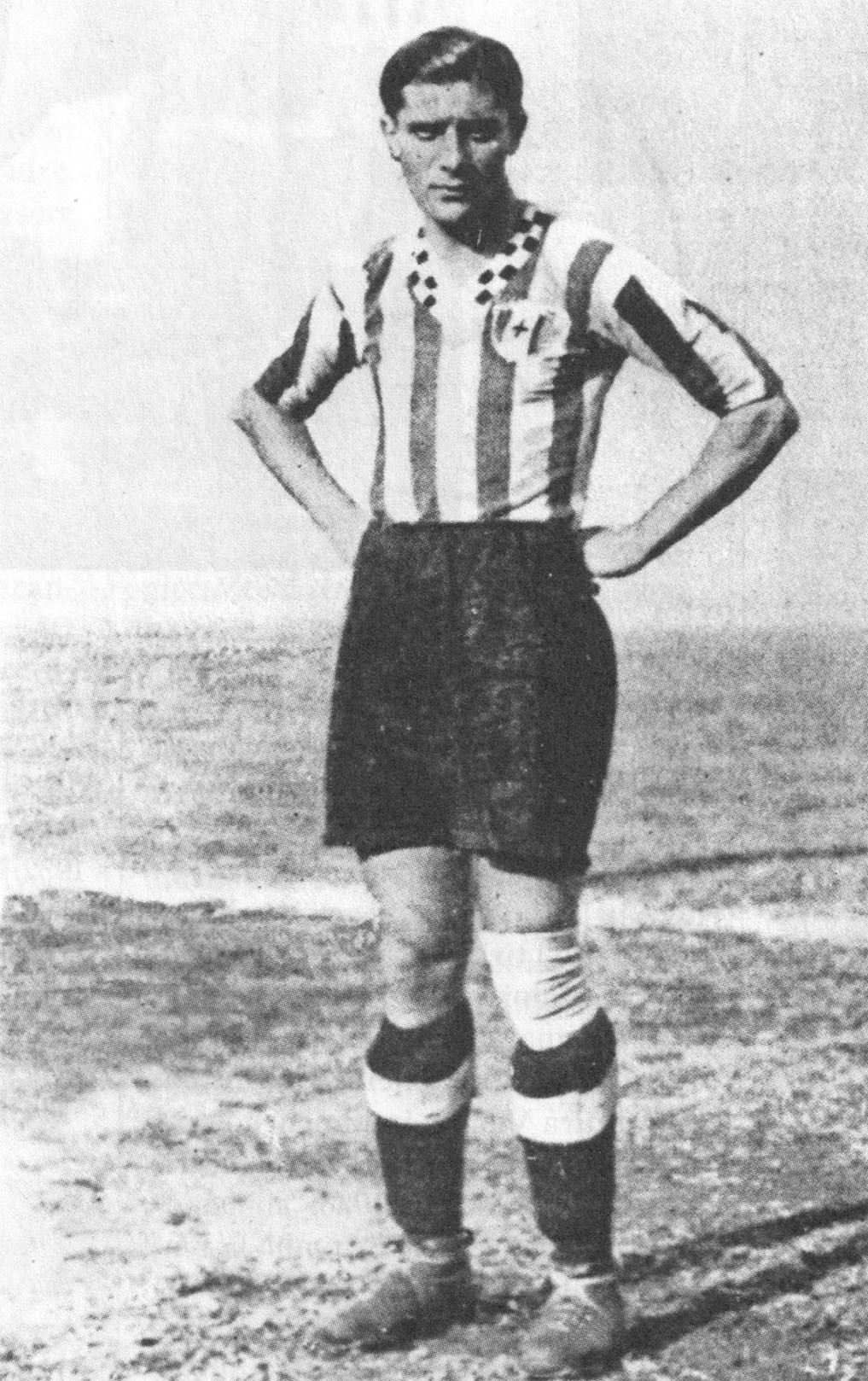
Meazza scored, created and manipulated defenders in an attacking role much broader than the modern penalty-box striker. He finished with 33 goals in 53 Italy appearances and captained the 1938 World Cup winners after starring in the 1934 triumph. In the 1938 semi-final he converted a penalty while holding up torn shorts, a famous episode that should not obscure his technical command.
At Inter he won three Serie A titles and scored 284 official goals, becoming the club’s foundational attacking icon. The 1934 tournament took place under Fascist pressure and benefited from disputed officiating, so historical context must accompany the medals. Meazza’s individual quality is supported by contemporary European testimony and surviving footage, but comparison remains less complete than for post-war forwards. He occupies 17 as a genuinely creative scorer who led rather than merely finished for two champions.
Rank 16: Marco van Basten
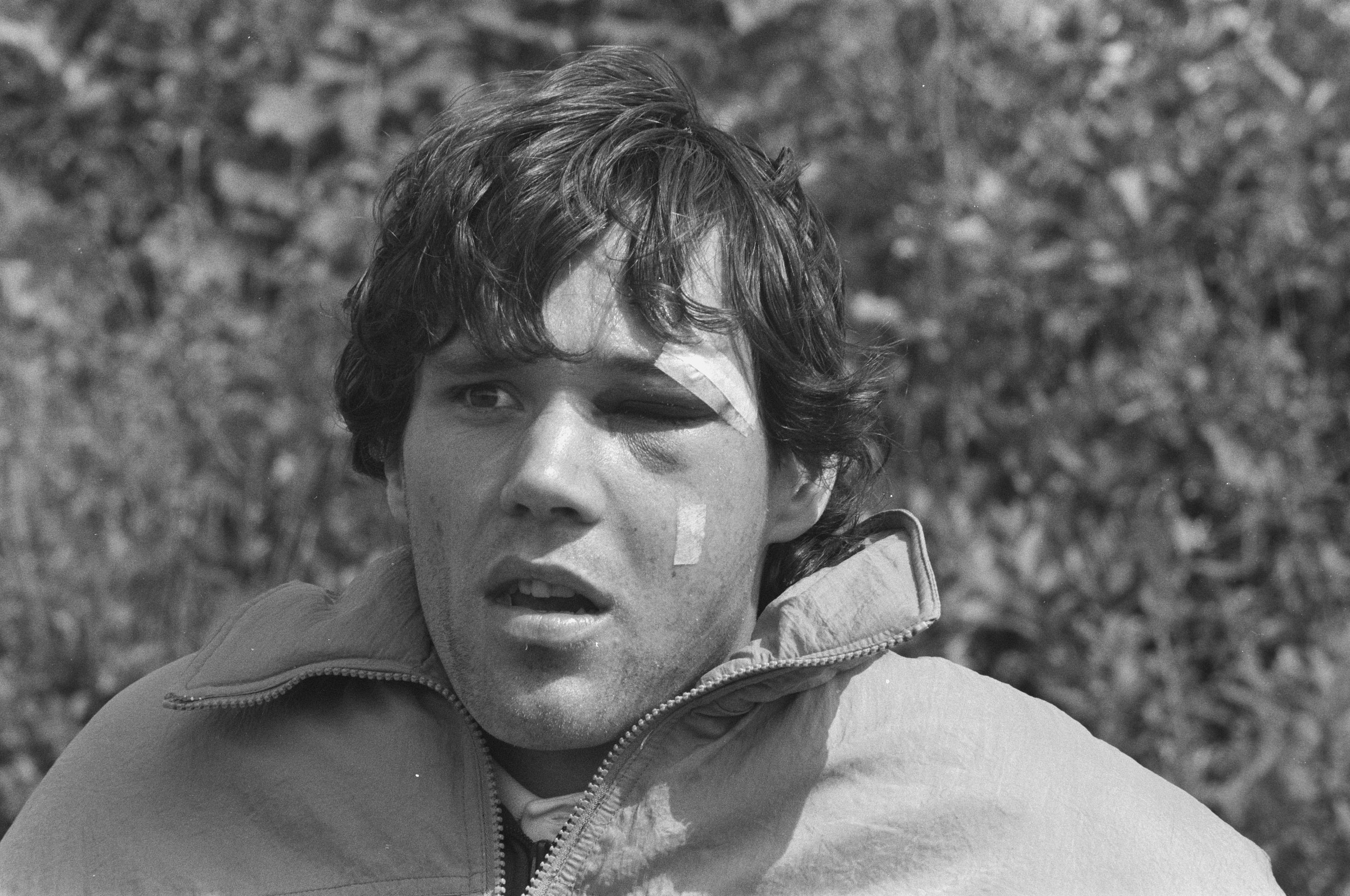
Van Basten could score with the orthodox tools of a centre-forward and with solutions no coaching drill could anticipate. His volley from an acute angle in the Euro 1988 final is the famous example, one of five goals he scored during the tournament. He also linked play cleanly, moved defenders for team-mates and attacked the air with balance rather than brute force.
Three Ballons d’Or and two European Cups with Milan were achieved before ankle damage forced his final match at 28 and retirement at 30. The shortened career is the central ranking problem. His peak belongs near the top ten, but only about six seasons supplied consistent elite evidence. Van Basten still places above Henry because his most complete tournament ended in a title he personally decided.
His movement was as refined as the finishes. Van Basten drifted away from the centre-back, received with his back to goal and then attacked the box after the defence had changed reference points. Sacchi also demanded pressure without the ball, so the elegant striker was part of Milan’s defensive mechanism rather than exempt from it.
Rank 15: Thierry Henry
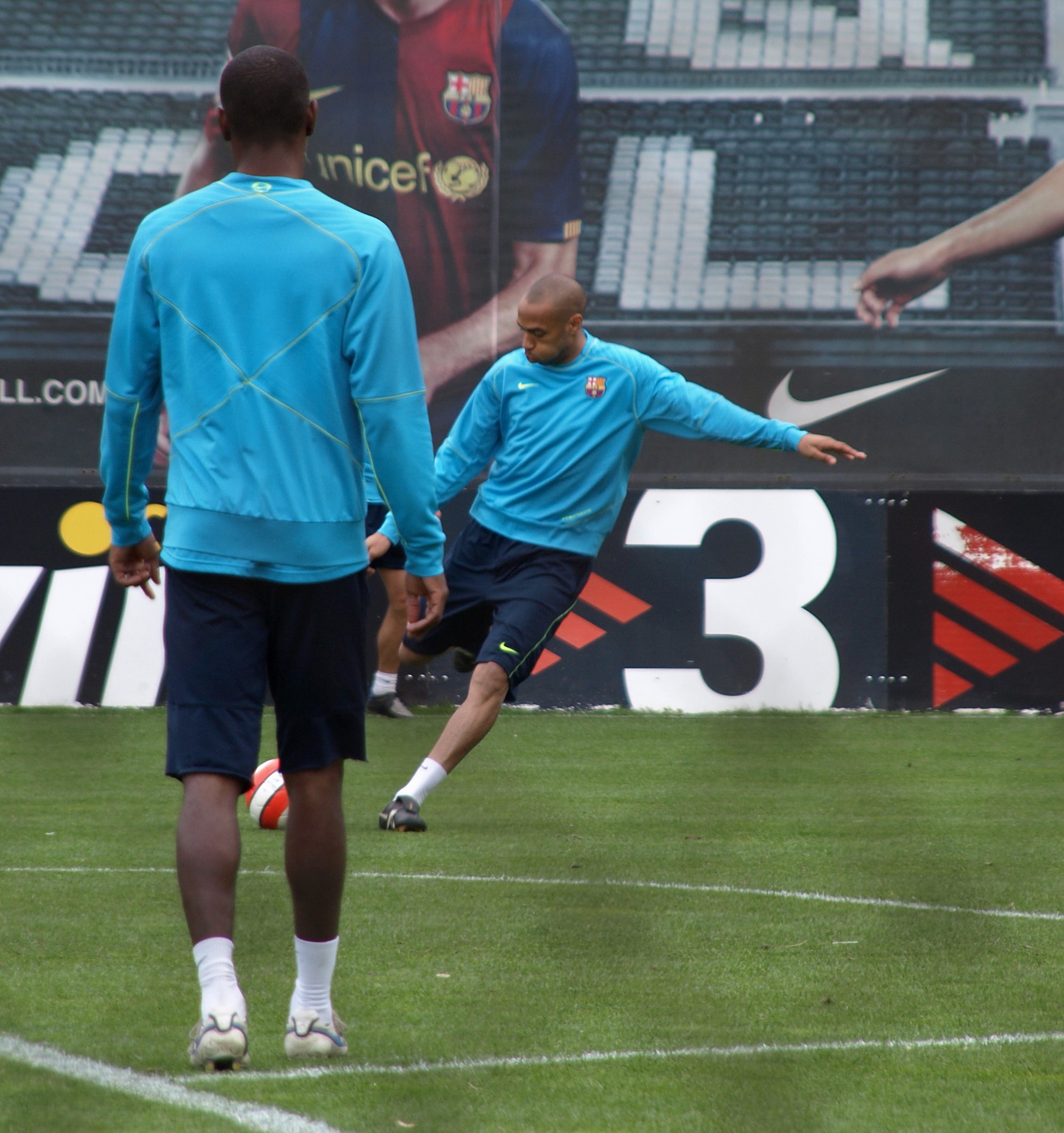
Henry attacked the left channel with the posture of a sprinter and the vision of a playmaker. Defenders protected the route inside, yet he repeatedly opened his body and passed the ball into the far corner. His 175 Premier League goals for Arsenal came alongside 74 assists under the competition’s official definition, a combination that captures far more than finishing.
He was a supporting player in France’s 1998 World Cup win, the team’s top scorer at Euro 2000 and part of Barcelona’s 2009 treble. Major finals were not usually his best individual matches, and the handball against the Republic of Ireland in 2009 damaged his international legacy. Henry ranks 15 because a long league peak combined speed, scoring and creation in a role that later wide forwards adopted almost wholesale.
Rank 14: George Best
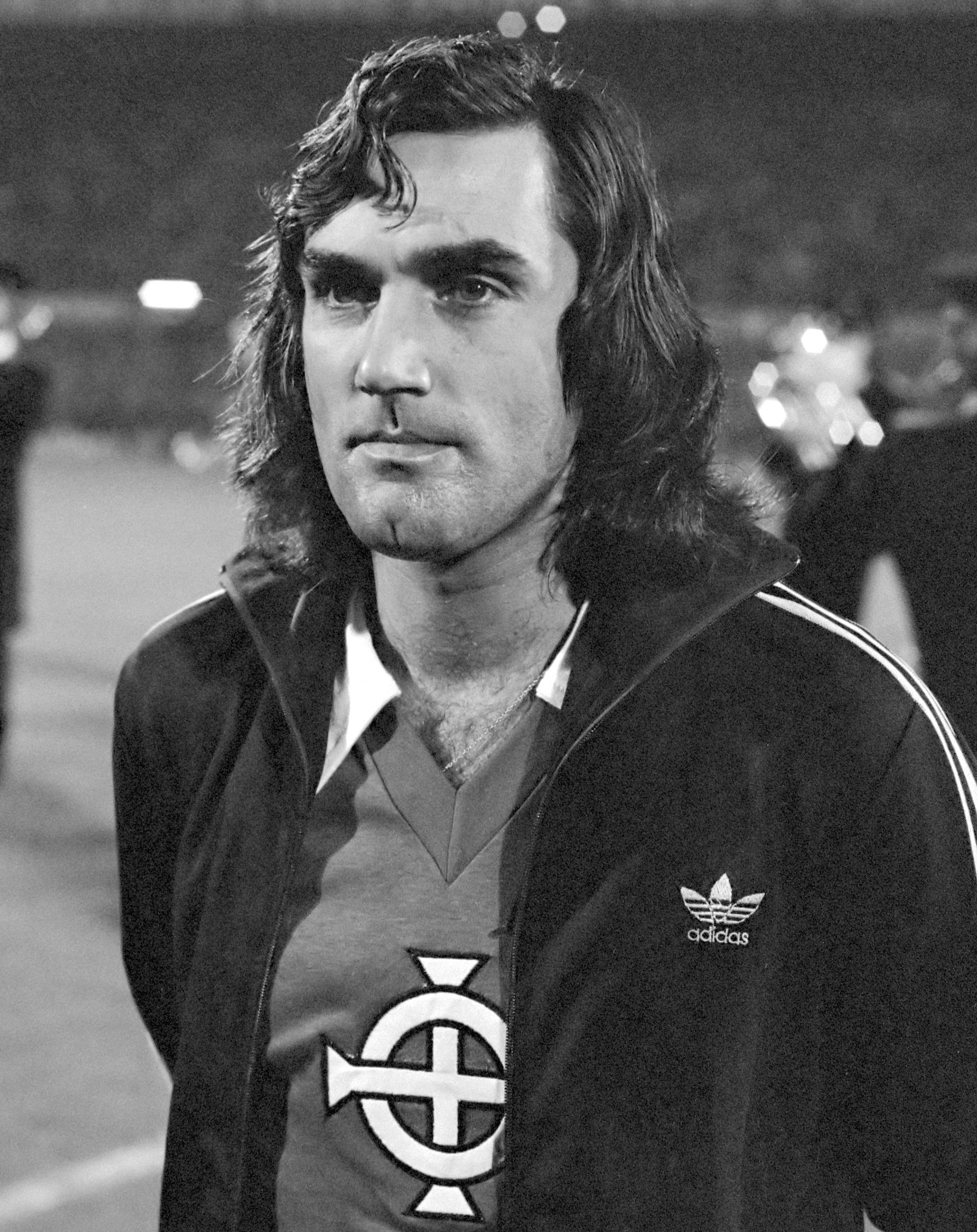
Best dribbled with close control but did not need a crowded sequence of touches. A shift of the hip could send the full-back the wrong way, after which his balance carried him through contact. For Manchester United he scored 179 goals in 470 appearances, winning the 1968 European Cup and Ballon d’Or while still only 22.
Northern Ireland could not place him on a World Cup stage, and alcohol dependency shortened the elite career. Later appearances for numerous clubs should not be confused with the sustained prime of Messi or Cristiano Ronaldo. Best ranks 14 because the 1966 to 1971 evidence is nevertheless extraordinary: decisive European performances, goals from wide areas and creative freedom exercised inside a structured team. He was more than a symbol of lost potential, but the loss still matters to the order.
Rank 13: Kylian Mbappé
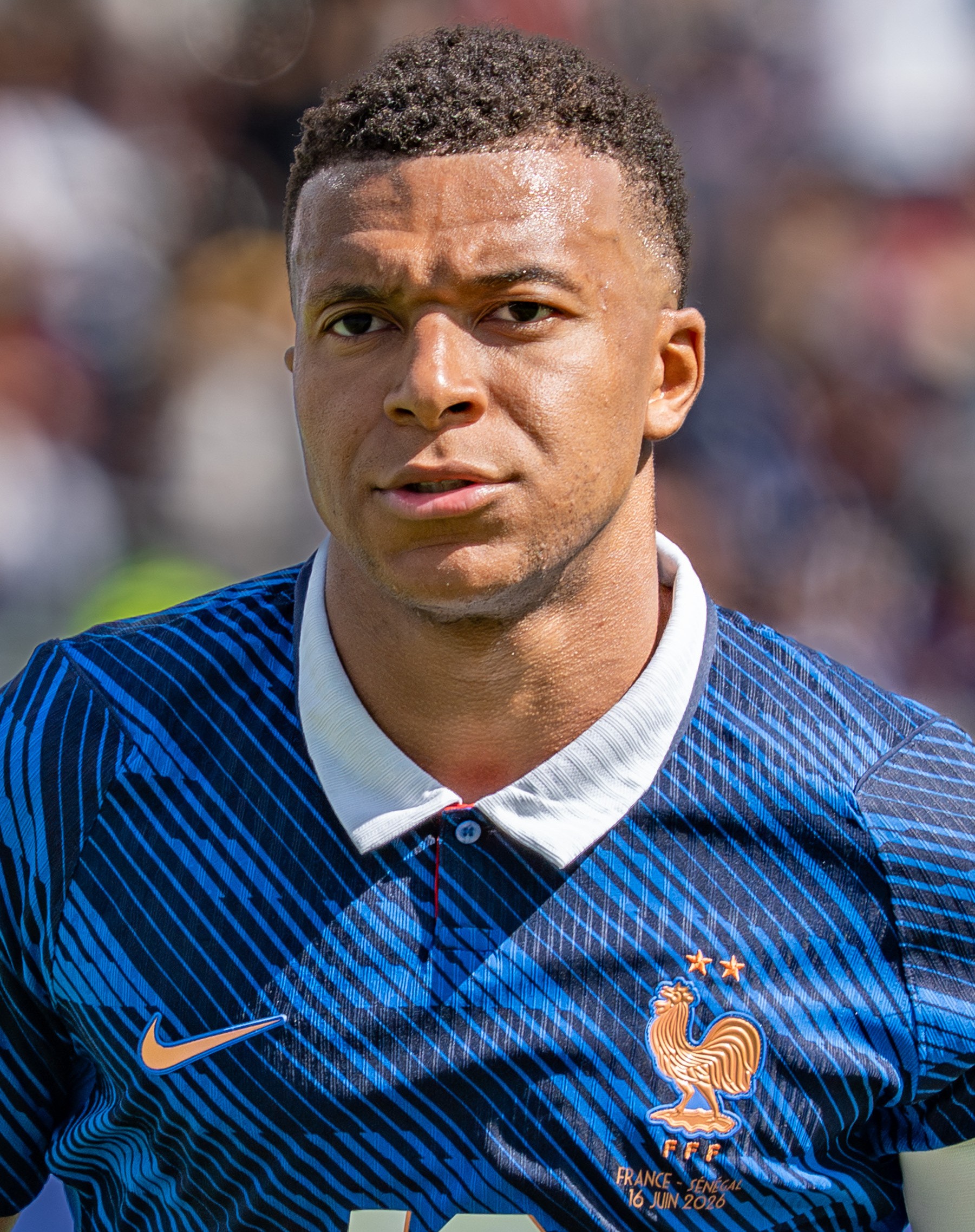
Mbappé’s first steps alter the defender’s starting position before the pass arrives. Give him space and he wins the race; retreat and he can receive, shift the ball and shoot. By the end of the 2026 World Cup he had scored 22 goals in 22 tournament appearances, overtaking every previous record holder at the age of 27.
That total includes a 2018 winner’s medal, a hat-trick in the 2022 final and ten goals in 2026, when France finished fourth. He has also been a prolific domestic scorer in France and Spain. The ranking resists pushing him into the top ten immediately because club creation, longevity and European knockout influence still trail the completed careers above. His World Cup case is already historic, not prospective. If the next phase supplies equivalent Champions League command, 13 will look temporary.
Rank 12: Romário
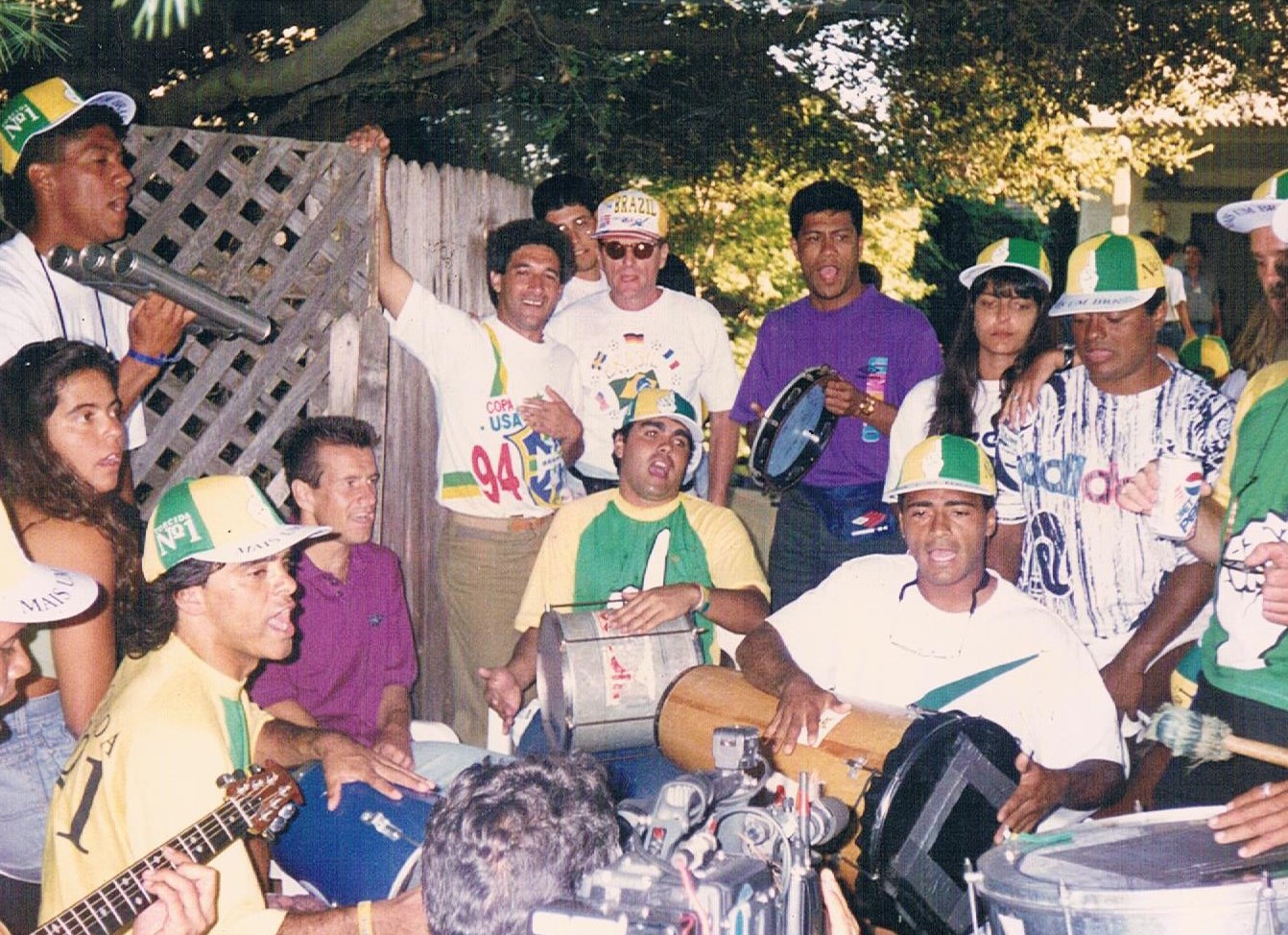
Romário separated from defenders over two metres rather than twenty. He waited on the shoulder, changed direction after the centre-back had committed and finished with toe-pokes, chips or compact side-foot touches. Brazil’s 1994 World Cup was his tournament: five goals in seven matches, the decisive penalty in the semi-final shoot-out and the Golden Ball.
He scored 55 times in 70 Brazil appearances and dominated leagues in the Netherlands, Spain and Brazil. Career totals beyond recognised official matches are disputed because friendlies and regional competitions are counted differently, so they carry no ranking weight here. Romário could detach from team defensive work and moved clubs frequently, limiting the continuity of his European prime. Inside the penalty area, his reading and touch were close to perfect.
The 1994 World Cup partnership with Bebeto demonstrated that economy. Romário could stay quiet through a long defensive phase, then make one short movement across a centre-back and decide the match. The same selectivity that conserved his attack also reduced his contribution when a team needed pressing or sustained combination play.
Rank 11: Gerd Müller
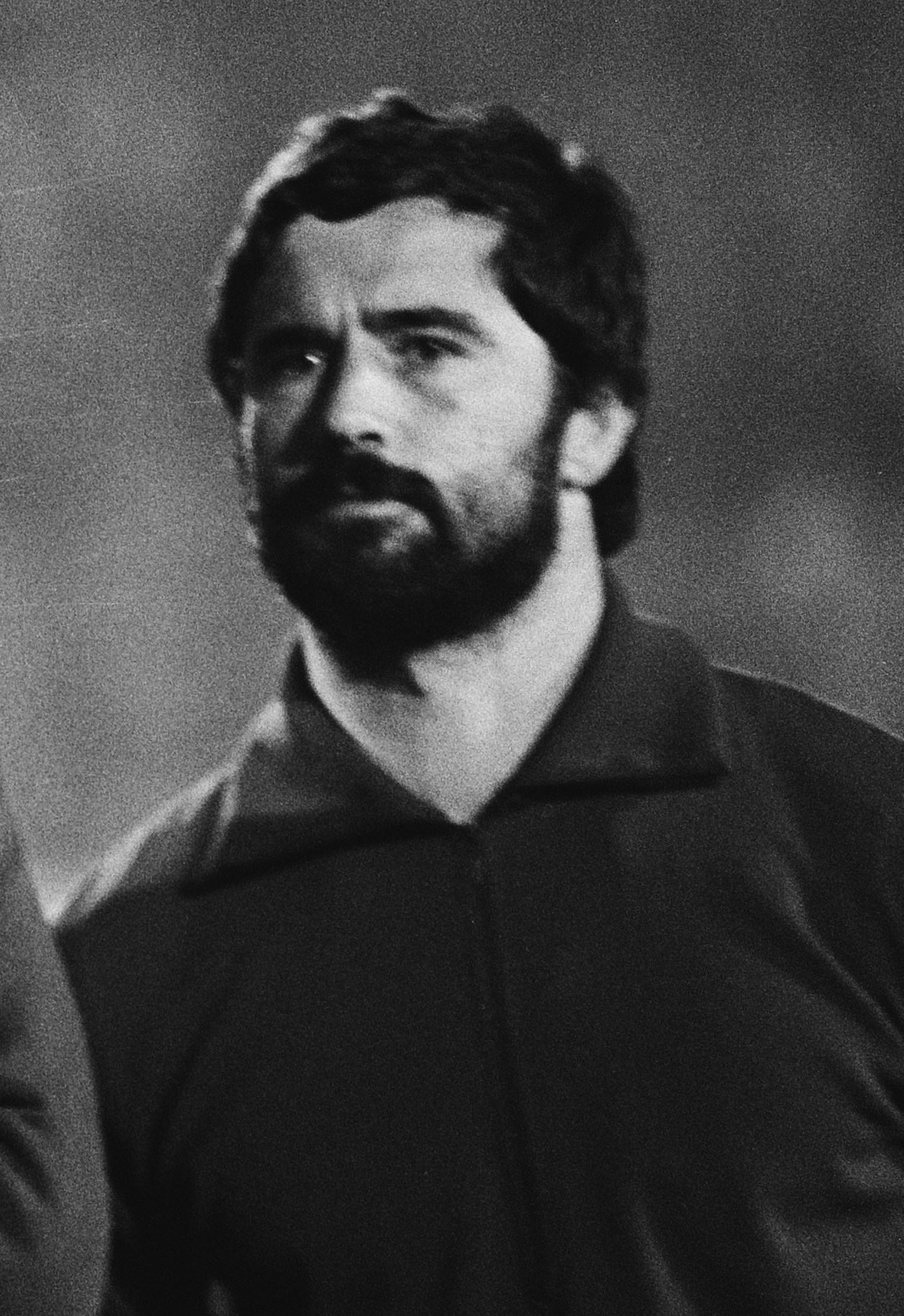
Müller operated amid legs, rebounds and partial sightlines. His low build allowed him to turn quickly, and he struck before a defender could convert recognition into movement. Fourteen goals in 13 World Cup matches produced a rate of 1.08 per game, including the winner in the 1974 final.
For Bayern he scored 365 Bundesliga goals and won three consecutive European Cups. The apparent simplicity was the result of constant adjustment: he moved away from the expected cross, anticipated the second ball and finished while off balance. He offered less creation and ball progression than the top ten, which is why pure scoring does not take him higher. As a penalty-area problem, Müller was the most repeatable and severe of his era.
Müller’s stance often looked untidy because he prepared for several ricochets at once. He could finish with a knee, a toe or a hurried turn because balance was recovered during the action rather than before it. That made conventional marking inadequate: winning the first duel did not end the danger while he remained nearby.
Rank 10: Eusébio
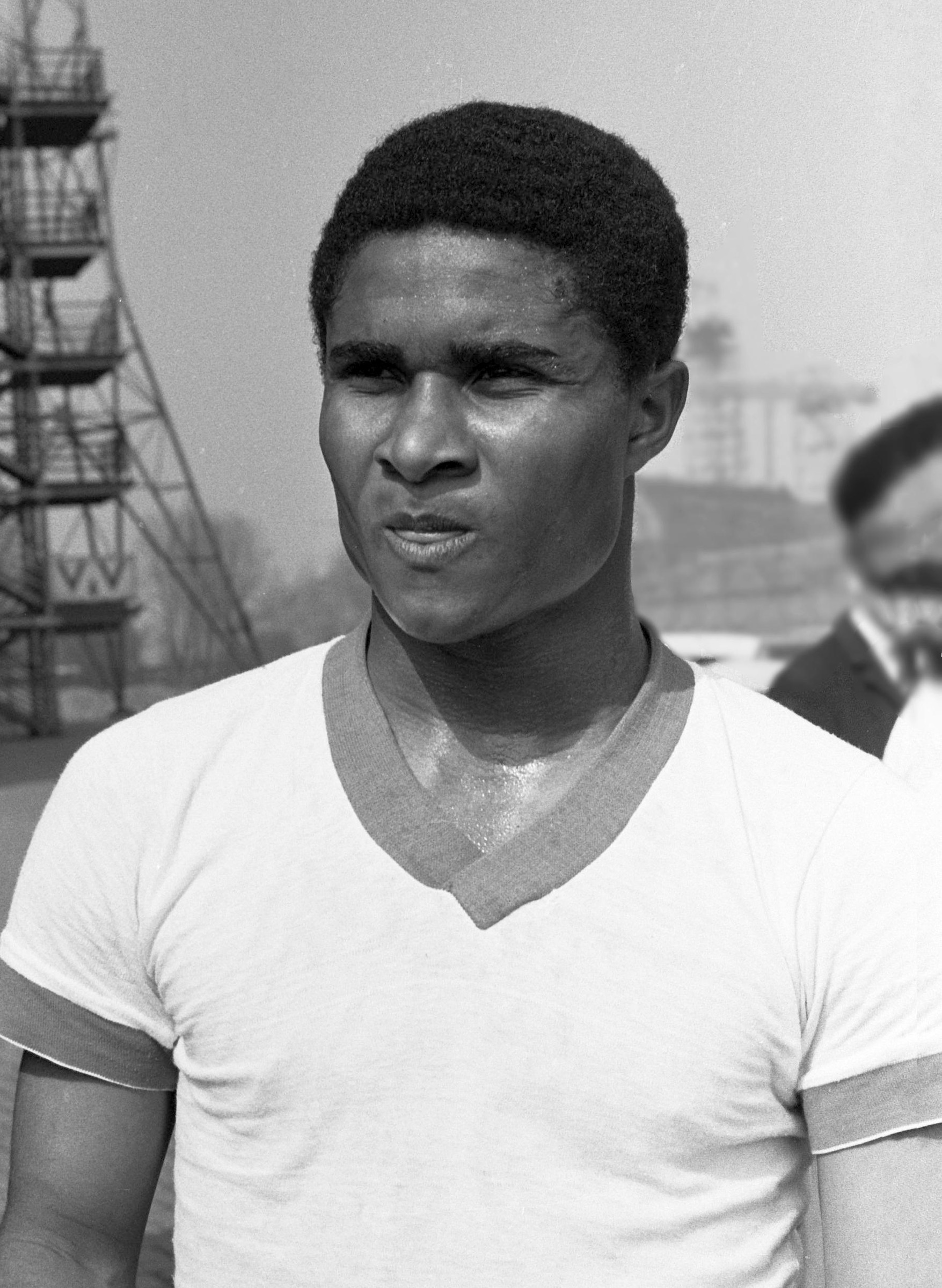
Eusébio ran with long, forceful strides and could shoot accurately before a defence had reset. At the 1966 World Cup he scored nine goals in six matches, four of them in Portugal’s recovery from 3-0 down against North Korea. The volume came with carrying, combination play and responsibility from penalties.
His Benfica record includes 473 goals in 440 matches under FIFA’s defined club figures, the 1962 European Cup and four further appearances in the final. A knee affected later seasons but did not erase more than a decade of production. Eusébio ranks above Müller because he created more of his own chances and operated over a wider attacking area. The leading nine either added greater playmaking or sustained comparable force against a broader set of tactical demands.
Rank 9: Ronaldo
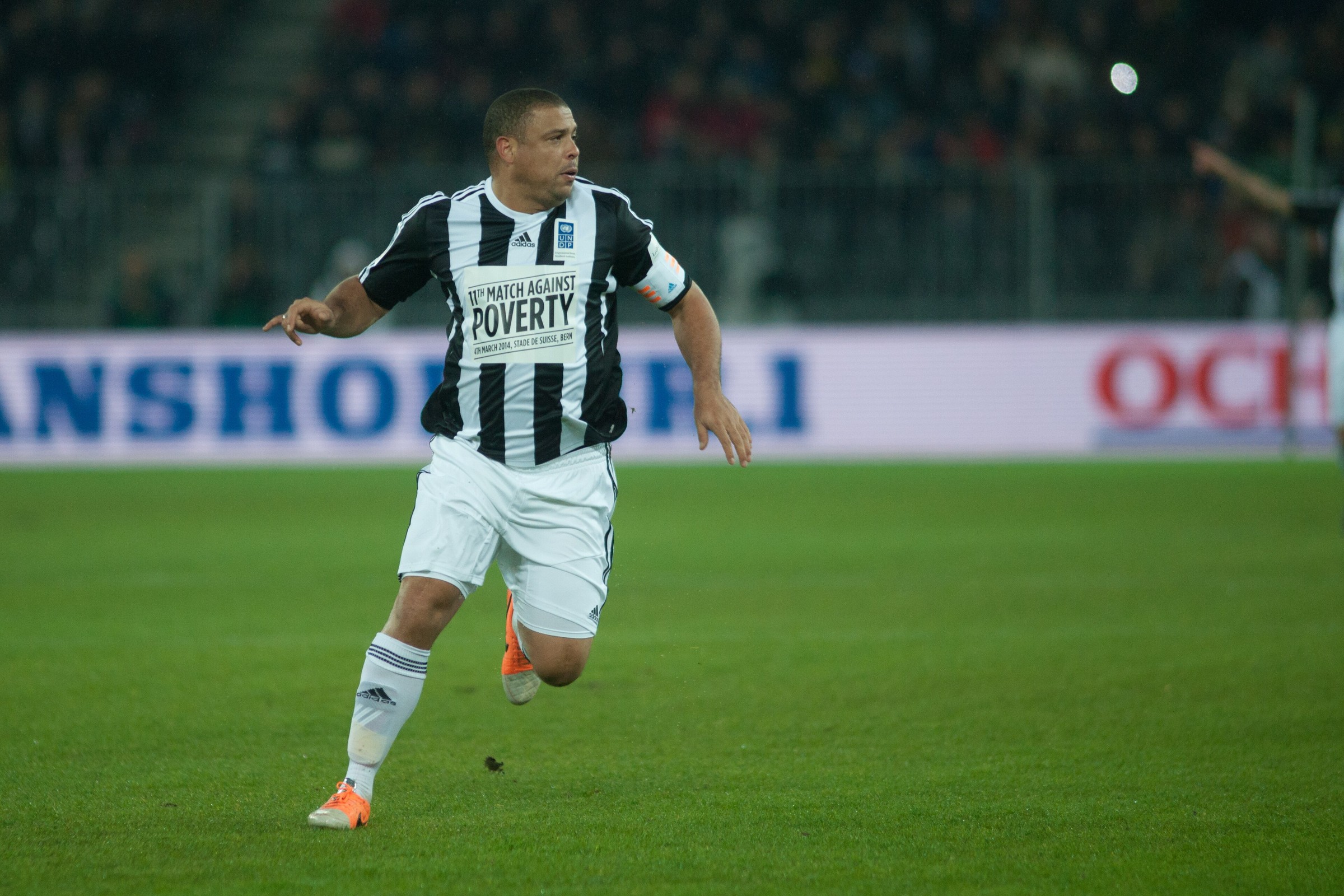
Ronaldo accelerated while controlling the ball closely enough to change direction at full speed. Goalkeepers could not wait because he would round them; defenders could not step because he would be beyond them. Before serious knee injuries, his 1996/97 Barcelona season and first Inter campaign showed a centre-forward peak with almost no physical or technical weakness.
He scored 15 goals in 19 World Cup appearances, eight during Brazil’s 2002 triumph after nearly three years of injury disruption. The 1998 final, when his pre-match convulsion was followed by a subdued defeat, remains a painful counterpoint. Club longevity and European Cup achievement fall below Cristiano Ronaldo’s or Di Stéfano’s. Ronaldo is ninth because the best version may be the most individually destructive striker football has seen, while the complete career contains too many lost seasons for a higher place.
Rank 8: Garrincha
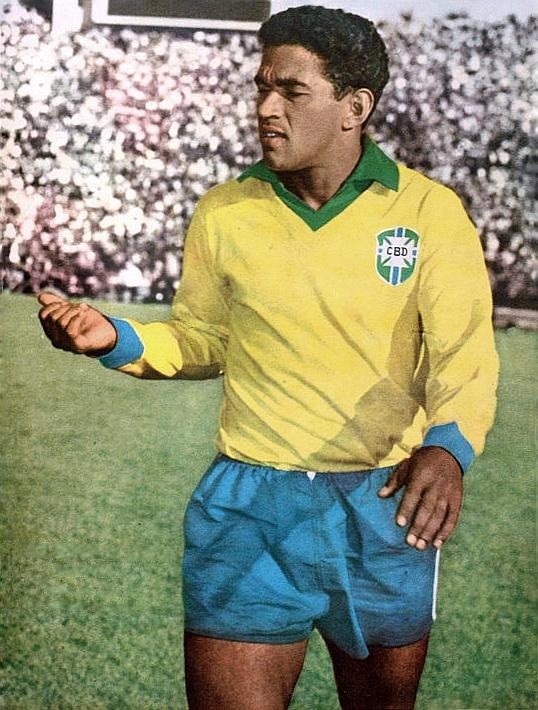
Garrincha’s bowed legs created a rhythm defenders found impossible to copy. He could stop, invite the tackle and accelerate outside, repeating the contest even after the opponent knew the route. He scored five World Cup goals in 12 appearances, but chance creation and territorial damage were the larger contribution.
In 1962, after Pelé’s injury, Garrincha became Brazil’s decisive attacker, scoring four times across the quarter-final and semi-final and sharing the Golden Boot. He had already been central to the 1958 victory. Alcohol, injury and chaotic career management accelerated his decline, while defensive work was minimal. Garrincha still ranks eighth because his wing play changed the shape of the two most important tournaments available to him.
Opponents could send a second defender and still fail to solve the encounter because Garrincha did not need a new destination. Beating the same man outside again was enough to generate the cross or force the cover to abandon the centre. His influence came through repetition made unpredictable by timing.
Rank 7: Ferenc Puskás
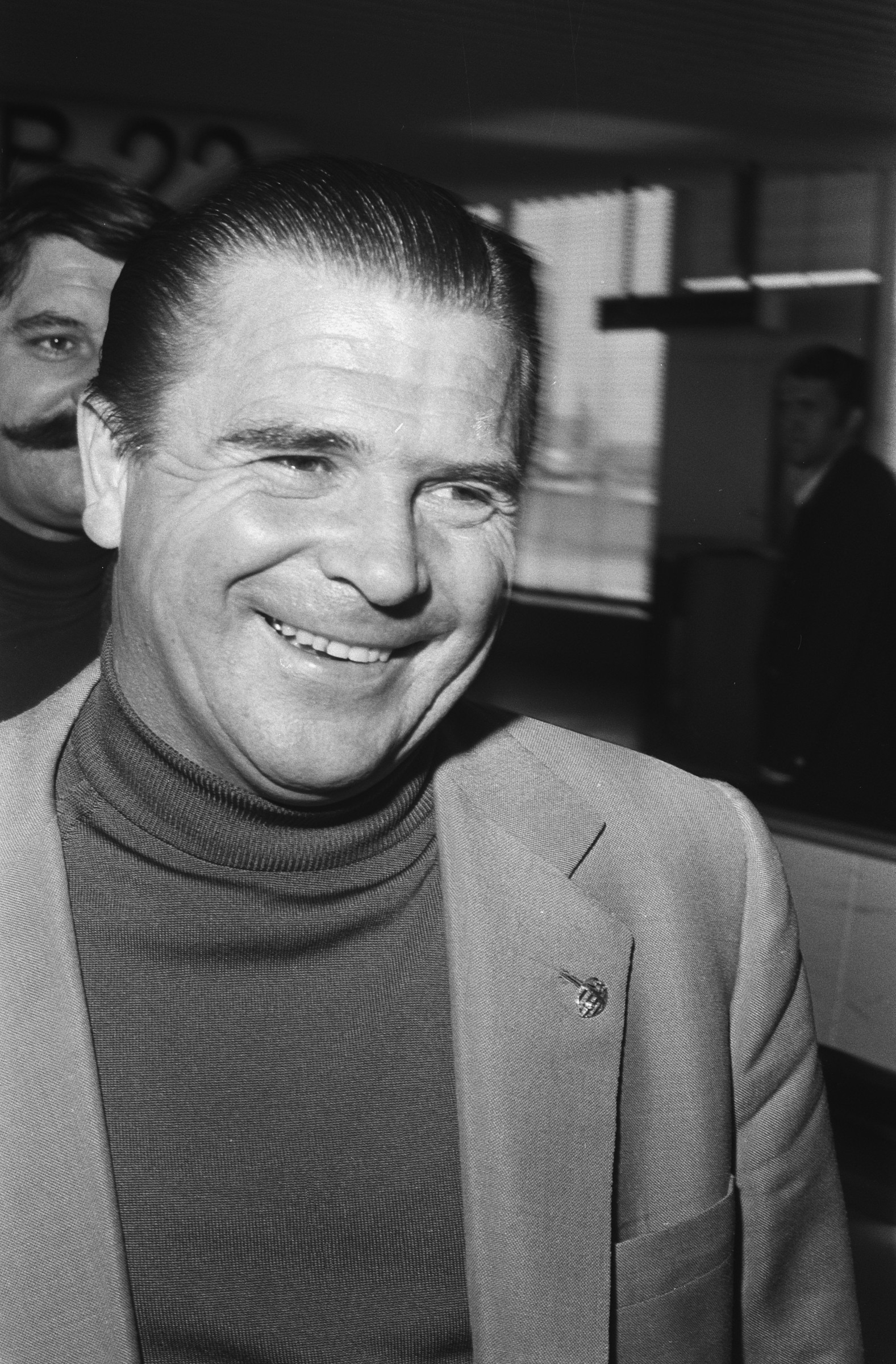
Puskás’s left foot produced power without a long backswing, allowing shots to arrive before goalkeepers set. His 84 goals in 89 Hungary appearances remain one of international football’s great defined records. The 1954 World Cup final was played while he carried an ankle injury, an important condition when judging his reduced influence in the defeat.
After exile following the 1956 Hungarian uprising, he rebuilt his career at Real Madrid and scored four in the 1960 European Cup final. Three European Cups and five Spanish league titles followed despite his arrival in Spain at 31. Puskás was not a touchline winger or constant defender; he was an inside forward whose passing and movement served an overwhelming finishing threat. The six above added a broader structural influence or a still greater major-tournament case.
Rank 6: Diego Maradona
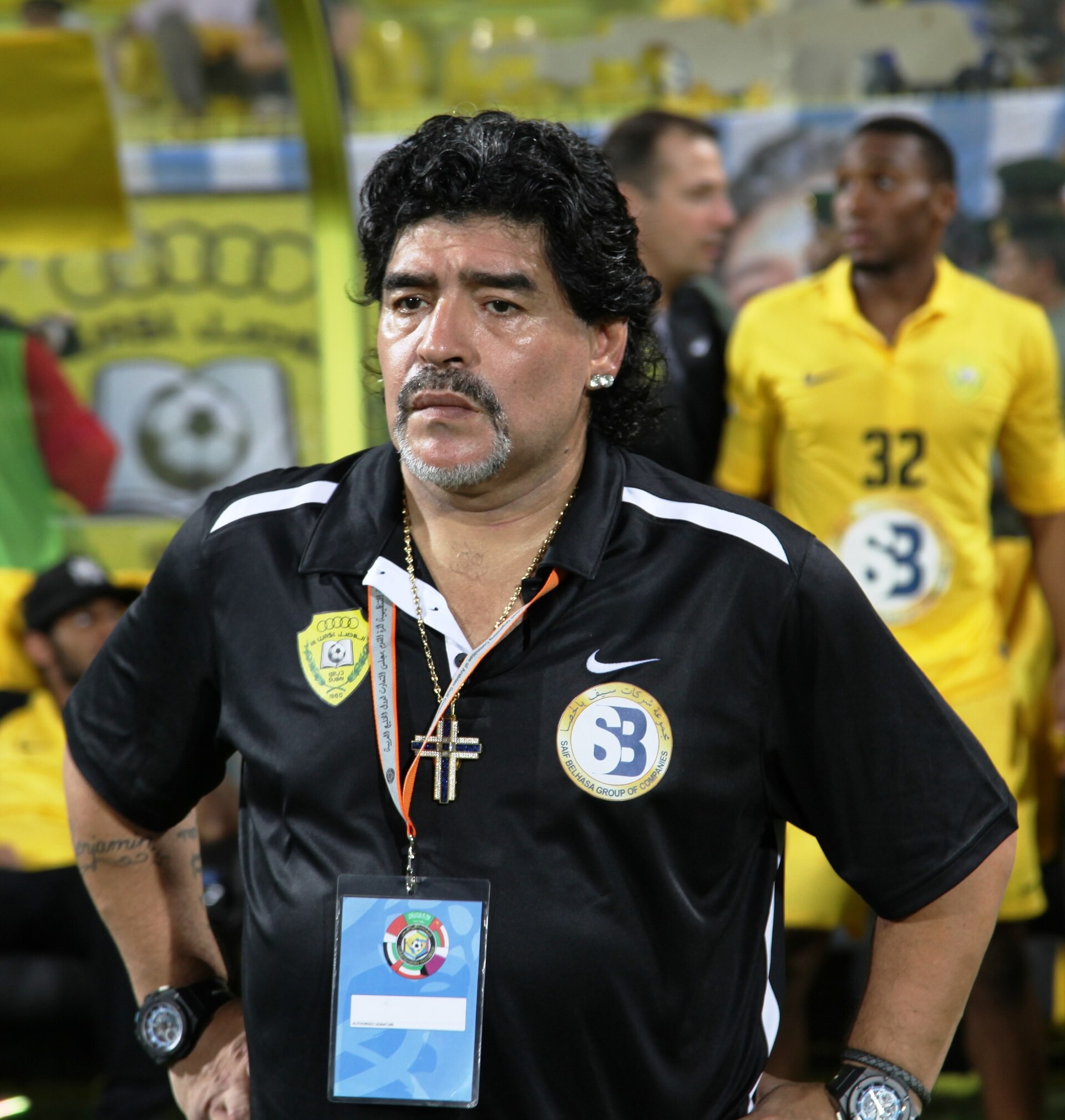
Maradona carried attacks through areas where most players pass to avoid contact. His low balance protected the ball, his left foot changed speed without losing control and his awareness turned the defenders drawn towards him into space for others. He scored eight goals in 21 World Cup appearances, but the five goals and five assists of 1986 better express his command of that tournament.
The quarter-final against England contains both the deliberate handball and the greatest dribble of the World Cup. One was cheating that officials failed to detect; the other was an act of technical and physical genius. At Napoli he led a club without a previous Serie A title to championships in 1987 and 1990. Drug dependency, bans and volatility shortened the peak. Maradona ranks sixth in a forward-specific list because his greatest contribution was creative progression rather than sustained finishing, though his overall-player case is higher.
Rank 5: Johan Cruyff
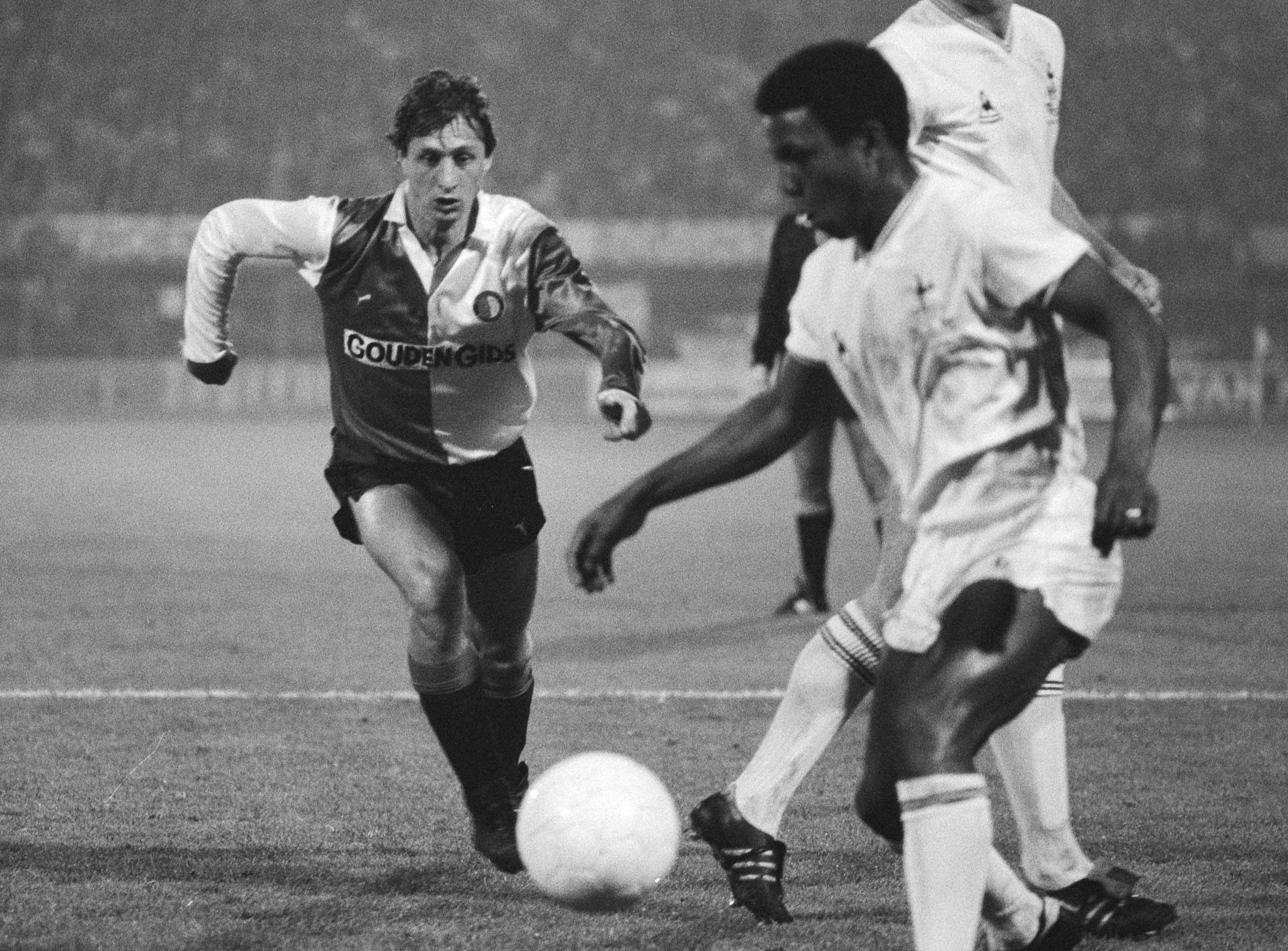
Cruyff moved away from the position printed beside his name and forced team-mates to interpret the vacancy. He could receive deep, accelerate through midfield or appear in the box after a defender had followed someone else. Three Ballons d’Or and three consecutive European Cups with Ajax quantify a period when his movement became the organising principle of a great team.
The Netherlands reached the 1974 World Cup final with Cruyff creating the opening penalty before West Germany had touched the ball. Defeat and his absence from 1978 leave the international honours incomplete. His scoring totals are strong rather than comparable with Müller or Cristiano Ronaldo, but that is the wrong sole measure. Cruyff ranks fifth because he changed what a forward could do to the structure of every other position.
Rank 4: Alfredo Di Stéfano
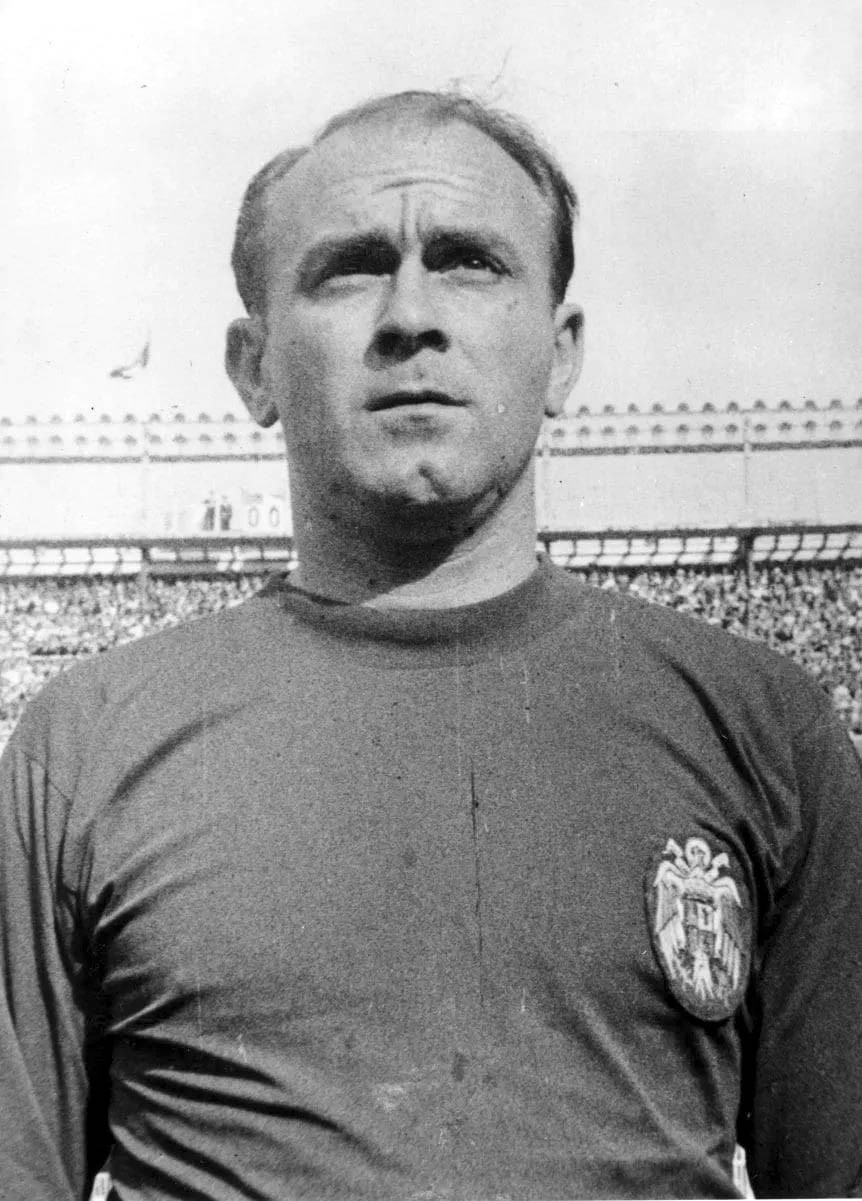
Di Stéfano appeared wherever the match required authority. He dropped beside midfielders to start attacks, pressed defenders, arrived to finish and then organised the next phase. Real Madrid won the first five European Cups, and he scored in every final, including a hat-trick in the 7-3 victory over Eintracht Frankfurt in 1960.
He never played at a World Cup because Argentina withdrew in 1950, Colombia were not admitted in 1954 and Spain failed to qualify in 1958 before injury removed him in 1962. That absence is circumstance, not evidence of failure. Two Ballons d’Or and 308 official Real Madrid goals support the visible influence. Di Stéfano ranks above Cruyff because the same structural command was converted into an unmatched sequence of decisive European results.
The 1960 final reveals why calling him a centre-forward is insufficient. Di Stéfano dropped to help Madrid play through Eintracht Frankfurt’s pressure, arrived to score three times and continued chasing possession after the score had become emphatic. Puskás supplied four goals; Di Stéfano governed the match around them.
Rank 3: Cristiano Ronaldo
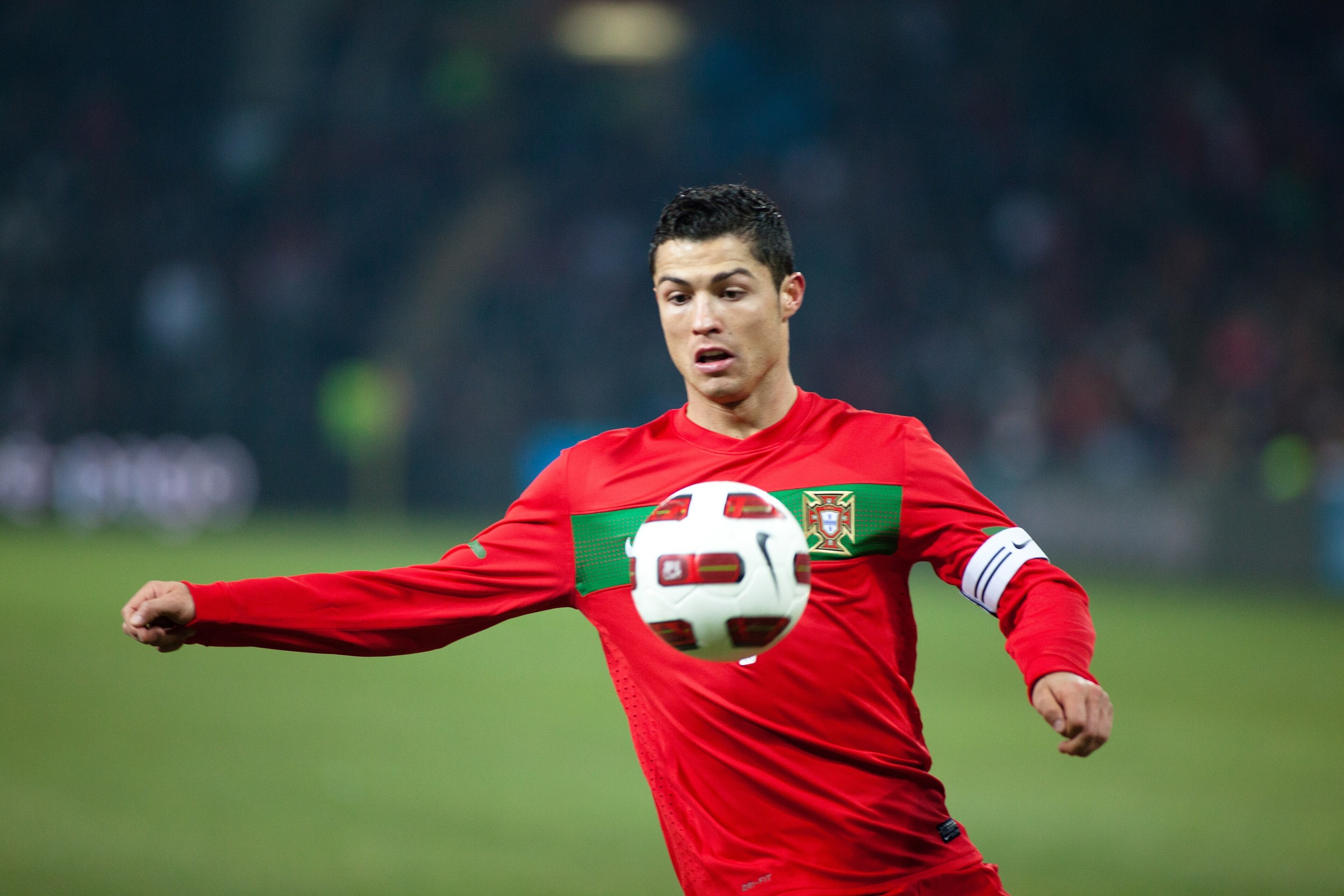
Cristiano Ronaldo rebuilt himself from a dribbling winger into football’s most prolific elite penalty-area attacker. The process preserved speed, added aerial dominance and refined movement towards the back post. FIFA records 140 Champions League goals in 183 appearances, both competition records, with 34 knockout goals during Real Madrid’s four-title run from 2014 to 2018.
Portugal’s Euro 2016 and Nations League success added international trophies, although injury removed him early from the European final and his World Cup knockout record remained limited. His later scoring in Saudi Arabia does not carry the same competitive weight as Madrid or Manchester. Ronaldo places third because the production, longevity and adaptation are historic. Pelé offered more varied creation within a centre-forward role, and Messi combined comparable scoring with a still greater burden as passer and dribbler.
The adaptation deserves to be separated into football decisions rather than treated as longevity alone. Ronaldo reduced low-value touches, moved closer to goal and attacked the far post while defenders watched the ball. His leap and heading converted crosses other forwards could not reach, giving Real Madrid a route through opponents that had closed the ground.
Rank 2: Pelé
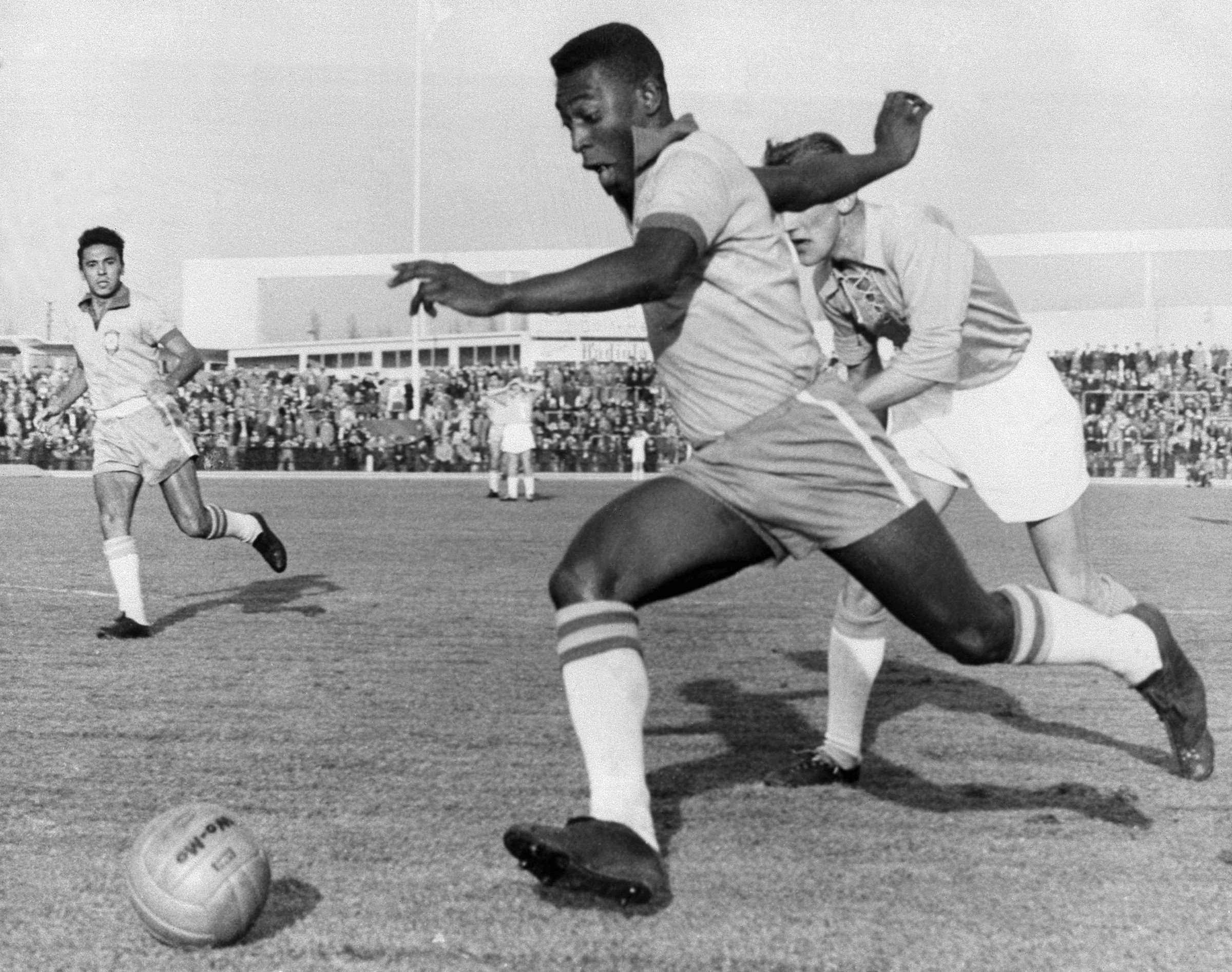
Pelé is often reduced to three World Cup winner’s medals or an argument about career goal totals. The football is richer. He could receive between lines, spring above centre-backs, pass first time and finish with either foot. In 14 World Cup appearances he scored 12 goals, including two in the 1958 final at 17 and the opening goal of the 1970 final.
He was injured during much of Brazil’s 1962 victory and targeted brutally in 1966, so the medals do not represent three equal personal tournaments. The 1970 campaign supplies the mature synthesis: four goals, six recognised assists under FIFA’s retrospective count and constant creation for Jairzinho and Tostão. Santos’s domestic and Copa Libertadores dominance adds a deep club record, even though European league comparison was unavailable. Pelé ranks second because his peak and tournament influence were immense; Messi’s longer top-level evidence and combined scoring-creation volume provide the narrow final edge.
Rank 1: Lionel Messi
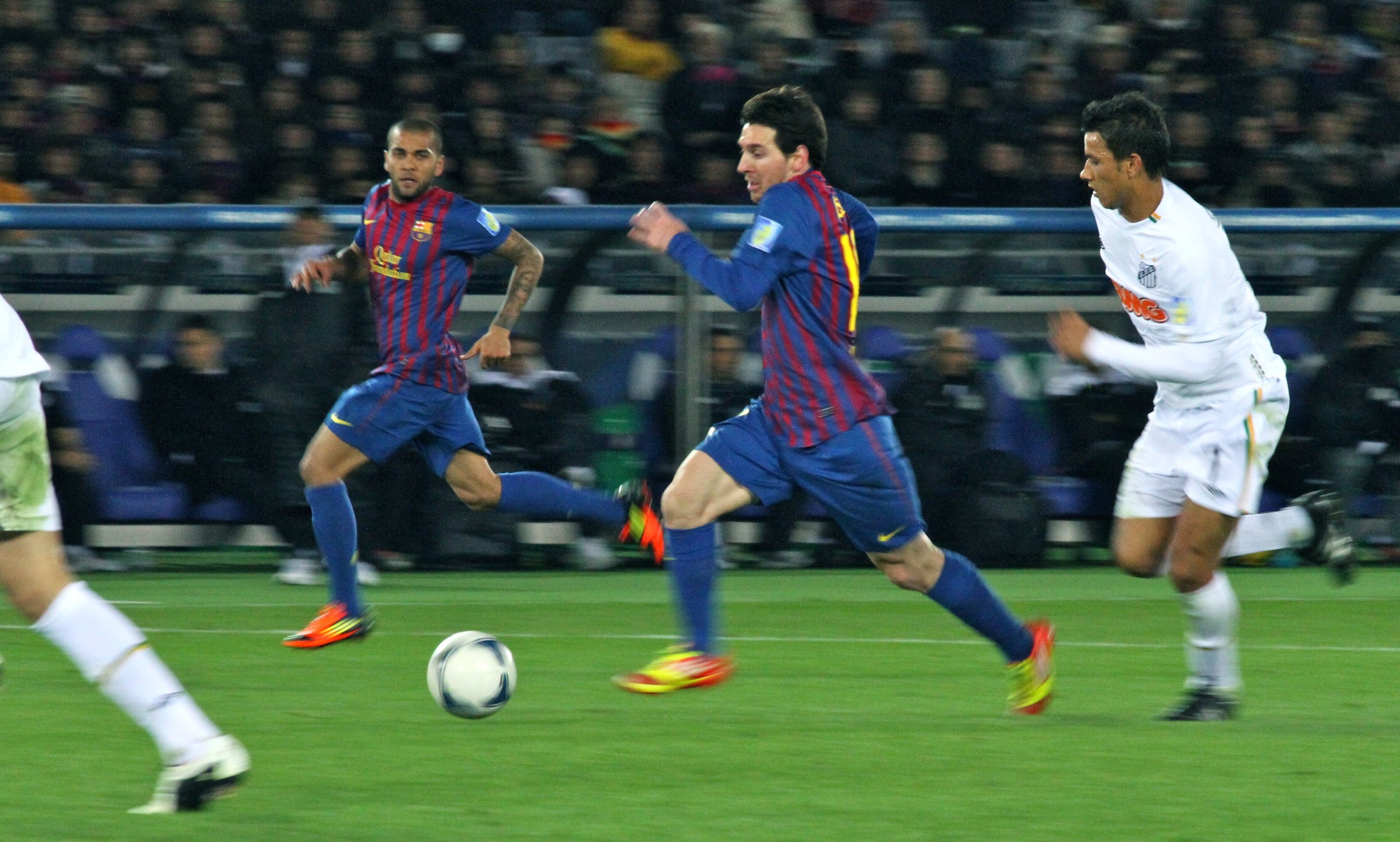
Messi could be the player who began the move, beat its first defender and finished it. As a right forward he drove inside; as a false nine he pulled centre-backs into midfield; as a later playmaker he conserved movement and selected the decisive acceleration. His 672 goals in 778 official Barcelona appearances sit beside chance creation at a level pure scorers do not match.
Internationally, the late resolution became extraordinary. Messi won the 2022 World Cup, returned in 2026 to reach another final and finished the tournament with 21 goals in 34 appearances, one behind Kylian Mbappé’s new record. He also accumulated a World Cup-record 23 match victories. The case is not flawless: several Champions League exits exposed Barcelona’s dependence on him, and his pressing declined. No other forward has joined this duration of elite scoring to equivalent dribbling, passing and control of an attack. That completeness makes Messi number one.
Those left outside the 30
Jimmy Greaves, Uwe Seeler, Jimmy McGrory, Arthur Friedenreich, Leônidas, Rivaldo, Andriy Shevchenko, Karim Benzema, Zlatan Ibrahimović, Wayne Rooney and Erling Haaland all received serious consideration. Haaland’s scoring rate is already exceptional, but this edition of our rankings will wait for a larger body of international and multi-system evidence. Benzema’s late peak and 2022 Ballon d’Or came closest to displacing Klose.
The limits of comparing goals
Official totals depend on competition structures. War, amateur rules, regional leagues and the modern expansion of club and international calendars created radically different opportunities. This ranking uses goals as evidence of what a forward did within a defined setting. It does not treat an unqualified career total as a portable measure of greatness.
Creation changes the value of scoring
Müller and Romário could dominate a ranking designed specifically around penalty-area finishing. The broader forward question also asks who carried the ball into danger, supplied team-mates and altered the defence before the final touch. That is why Cruyff and Maradona place above several players with much larger goal totals. Their movement and passing created the conditions in which an entire attack operated. Messi ranks first because his production does not require choosing between those categories.
A wide forward is not a traditional winger
Matthews began near the touchline and was primarily expected to beat a full-back and deliver. Salah begins on the right but repeatedly finishes attacks between the posts. Garrincha belongs between those models: he held width, yet his dribbling could carry him into scoring positions and decide a tournament. Judging all three by the same goals-per-match threshold would punish the older role and misunderstand the modern one. The ranking instead asks how much danger each created relative to the job he was given.
Tournament football can enlarge or distort a career
Fontaine’s six matches in 1958 are among the strongest concentrated scoring samples in the sport. Klose’s four World Cups provide a different kind of evidence, a repeatable ability to find chances inside short international preparations. Neither record alone proves superiority over a forward who spent a decade deciding league and European campaigns. World Cup performance has substantial weight because the pressure and opposition are exceptional, but it is one component in this article rather than the entire subject.
Active careers are ranked on completed work
Mbappé’s 2026 rise is based on goals already scored, not on an assumption that he will remain healthy or win more trophies. Haaland remains outside because the international and multi-system sample is less complete, despite a scoring rate that could eventually force inclusion. This approach will sometimes appear cautious. It avoids awarding future achievement in advance and makes later updates explainable.