Thirty men who changed what could be expected from the last line of defence
A goalkeeper ranking cannot be settled by counting clean sheets. A shutout belongs partly to the defence, the tactics and the standard of the opposition. Nor can spectacular saves be separated from the decisions that made the save necessary. The best goalkeepers reduce danger before it becomes visible: they choose starting positions, control crosses, direct defenders and decide when a pass is safer than a clearance.
Our rankings ask which men performed the role most brilliantly and most consequentially. Peak level carries the greatest weight, followed by sustained excellence, performance in major matches, command of the position and influence on how goalkeeping developed. Club and international careers both matter. A player is not punished for representing a country with fewer chances to win trophies, and older keepers are judged through the laws, pitches, balls and tactical expectations of their own periods.
The ranking at a glance
| Rank | Goalkeeper | Country | Central reason |
|---|---|---|---|
| 1 | Lev Yashin | Soviet Union | Match-saving range, penalty command and a unique individual standing |
| 2 | Manuel Neuer | Germany | The modern high-line goalkeeper taken to its most complete form |
| 3 | Gianluigi Buffon | Italy | Elite performance across two decades and every kind of defensive context |
| 4 | Gordon Banks | England | Technical purity, reliability and decisive World Cup excellence |
| 5 | Dino Zoff | Italy | Concentration, authority and exceptional late-career performance |
| 6 | Iker Casillas | Spain | Reflex goalkeeping at the centre of an unprecedented international run |
| 7 | Peter Schmeichel | Denmark | A dominant penalty-area presence who changed matches through personality |
| 8 | Sepp Maier | West Germany | Athletic consistency behind club and country dynasties |
| 9 | Ricardo Zamora | Spain | The first genuinely international goalkeeping celebrity |
| 10 | Rinat Dasayev | Soviet Union | Explosive fundamentals and enduring excellence in the 1980s |
| 11 | Oliver Kahn | Germany | An extraordinary competitive peak, crowned by the 2002 World Cup |
| 12 | Gyula Grosics | Hungary | A mobile, constructive goalkeeper decades ahead of convention |
| 13 | Amadeo Carrizo | Argentina | South American innovation in distribution and penalty-area play |
| 14 | José Luis Chilavert | Paraguay | Elite keeping allied to unprecedented set-piece value |
| 15 | Jean-Marie Pfaff | Belgium | Agility and charisma backed by major-tournament substance |
| 16 | Edwin van der Sar | Netherlands | Calm construction, reach and high-level longevity |
| 17 | Petr Čech | Czech Republic | Premier League consistency on a record-setting scale |
| 18 | Walter Zenga | Italy | An almost impregnable international peak |
| 19 | Ubaldo Fillol | Argentina | Brave, elastic goalkeeping in a World Cup-winning side |
| 20 | Pat Jennings | Northern Ireland | Handling quality and longevity across changing football eras |
| 21 | Ladislao Mazurkiewicz | Uruguay | Economy, anticipation and distinction against elite attackers |
| 22 | František Plánička | Czechoslovakia | Courage and technique at the centre of a 1930s power |
| 23 | Peter Shilton | England | Durability, positioning and a huge international body of work |
| 24 | Thomas N’Kono | Cameroon | African trailblazer with a global technical influence |
| 25 | Cláudio Taffarel | Brazil | Big-tournament composure and penalty-area calm |
| 26 | Harald Schumacher | West Germany | Formidable tournament performance, shadowed by Seville |
| 27 | Rogério Ceni | Brazil | A long elite club career plus unmatched scoring contribution |
| 28 | Thibaut Courtois | Belgium | Reach, one-on-one authority and a defining European final |
| 29 | Alisson Becker | Brazil | Complete modern technique and unusually secure decision-making |
| 30 | Keylor Navas | Costa Rica | High-pressure European success and an exceptional 2014 World Cup |
Rank 30: Keylor Navas
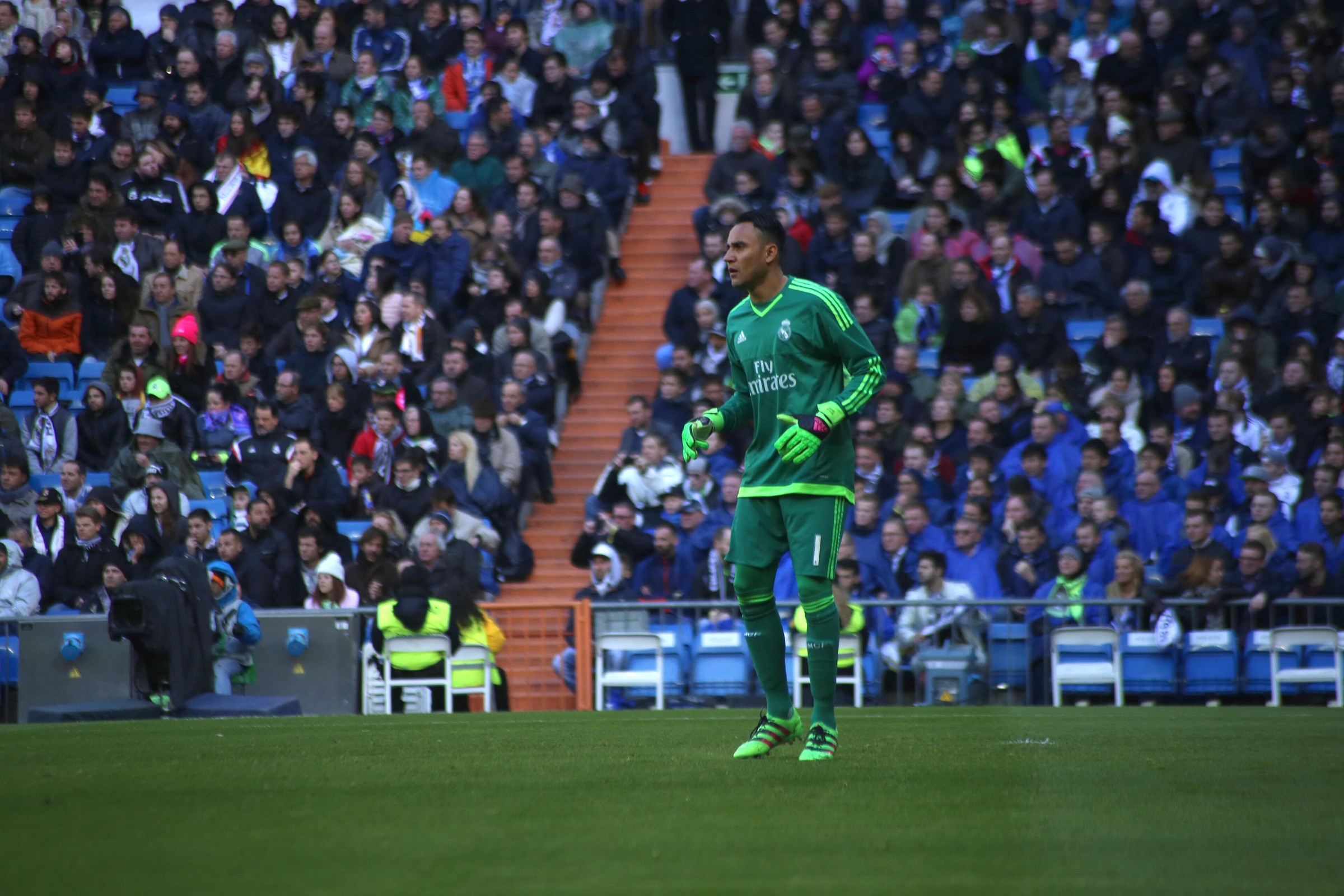
Navas made a reputation-defining leap at the 2014 World Cup. Costa Rica conceded twice in five matches, survived a group containing Uruguay, Italy and England, then reached the quarter-finals. His spring from a compact set position suited emergency saves, yet the more important quality was how rarely his feet became tangled when a forward delayed the shot. The tournament did not create his ability. It made Europe’s largest clubs pay attention to it.
Three successive Champions League triumphs with Real Madrid followed in 2016, 2017 and 2018. Those sides could leave their goalkeeper exposed because their attacking ambition stretched games. Navas answered with speed off his line and a capacity to reset after errors, an underrated trait at a club where every mistake becomes a referendum. He was not as commanding under crosses as the keepers above him, and his distribution did not redirect the position’s development. Number 30 instead recognises sustained performance under extreme scrutiny, with the 2014 World Cup establishing that his club honours were not simply borrowed from a great team.
Rank 29: Alisson Becker
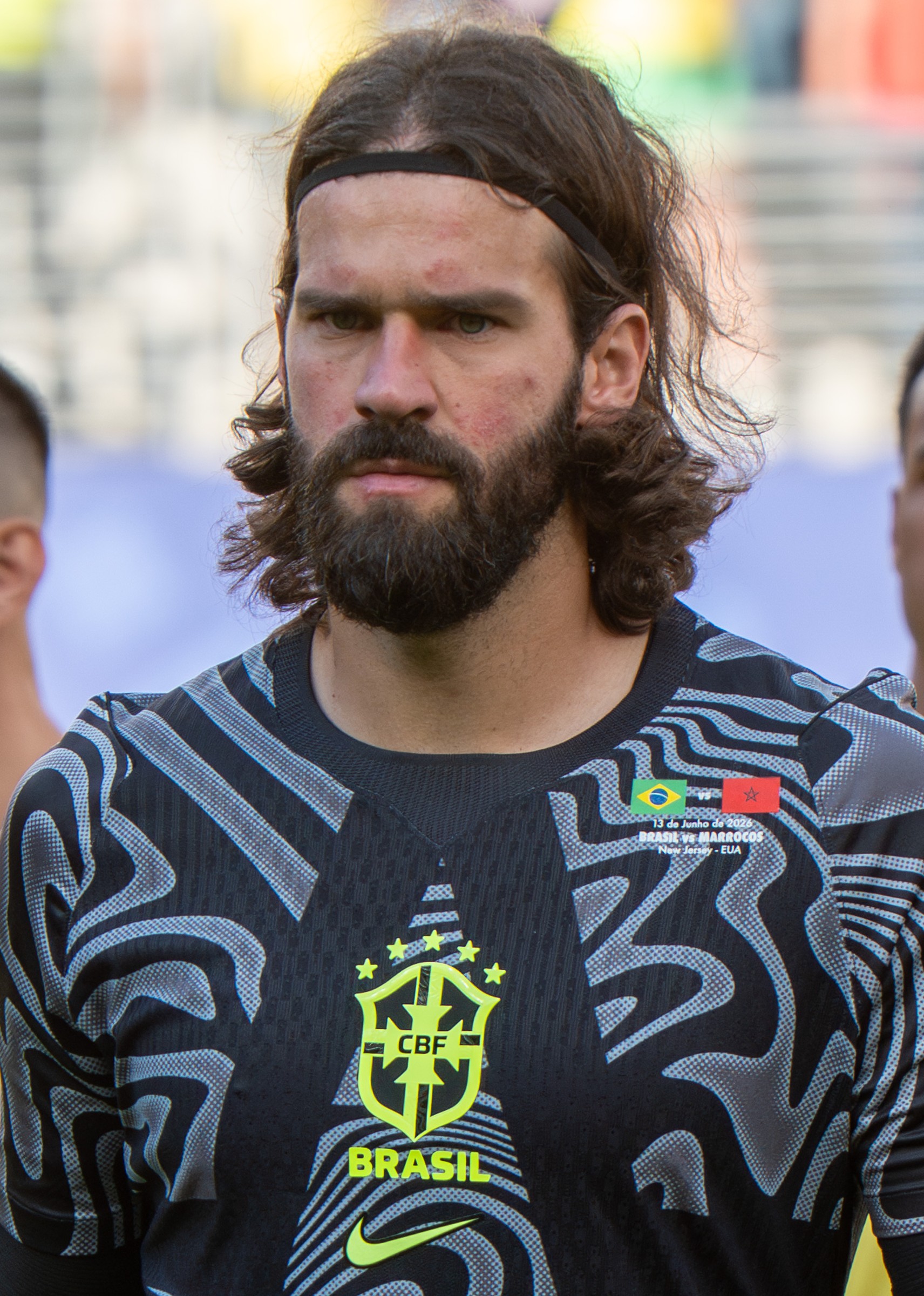
Alisson’s best work often looks uneventful. He waits longer than most in one-on-ones, keeps his shoulders square and forces the attacker to reveal the finish. Liverpool’s aggressive line has repeatedly turned ordinary chances into races towards goal, so his calm has been a tactical requirement rather than an aesthetic bonus. Seven clean sheets in 14 World Cup appearances through 2026 give one defined measure of the same control for Brazil.
With the ball, Alisson can clip a pass over the first press or strike directly into a runner’s path, but he does not chase the identity of a playmaker. Security comes first. That judgement distinguished him during Liverpool’s 2019 Champions League win and 2020 league title, when he supplied both prevention and an escape route from pressure. His ranking remains conservative because the careers above offer a longer completed record or a larger historical footprint. On pure completeness, however, very few goalkeepers have presented fewer obvious points for an opponent to attack.
Rank 28: Thibaut Courtois
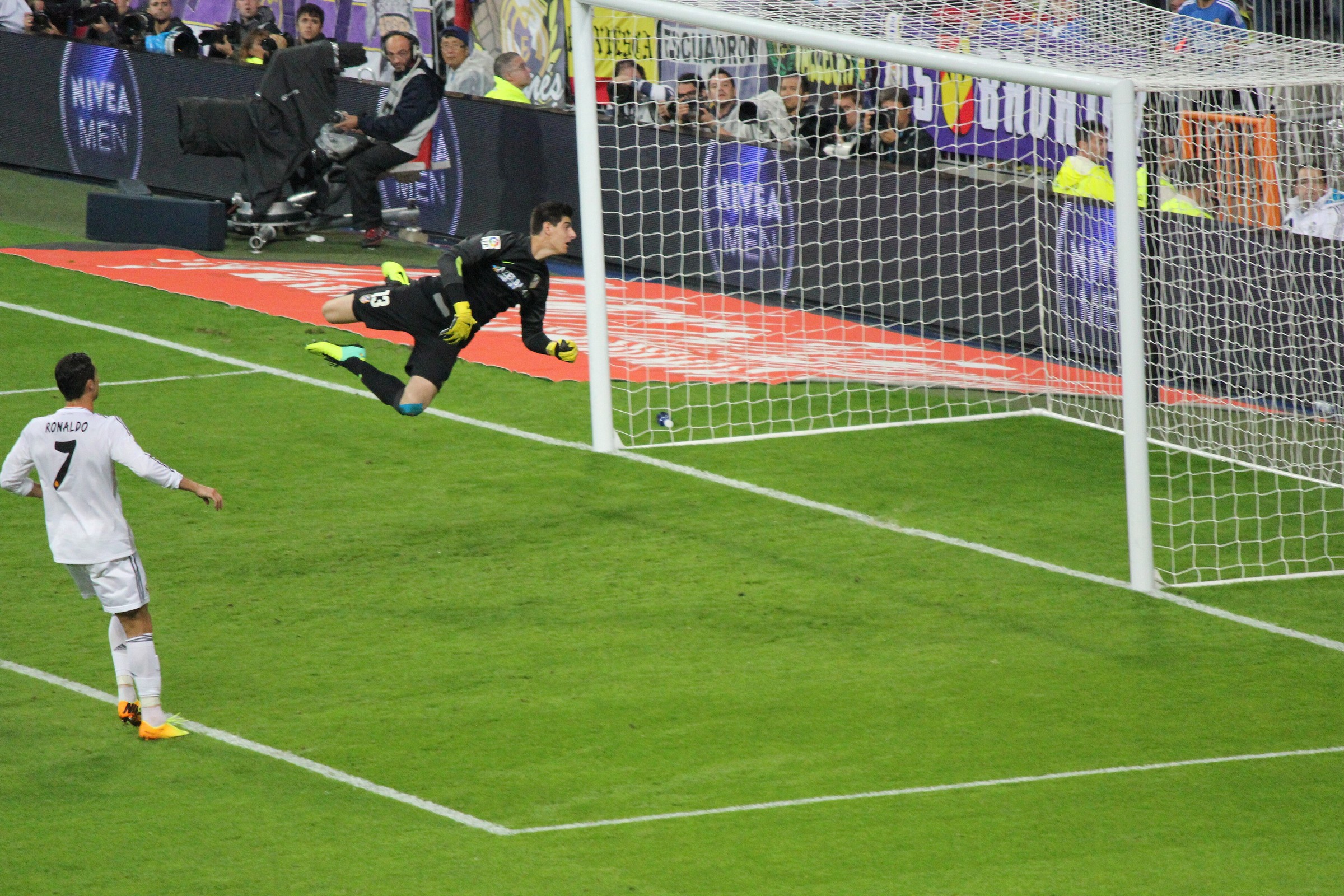
Courtois turns unusual height into practical range without surrendering speed near the ground. His stance is relatively tall, his first movement economical, and his long limbs close spaces that appear open to the shooter. The 2022 Champions League final against Liverpool was the fullest demonstration: repeated interventions of different types, from close reactions to a fingertip diversion of Mohamed Salah’s curling shot, protected Real Madrid’s narrow lead.
At World Cups he has recorded eight clean sheets in 21 appearances, a total that includes Belgium’s third-place run in 2018 and further work in a less settled national side. The statistic matters because it spans changing defences rather than one dominant club system. Courtois has also recovered from a major knee injury without losing his authority in decisive matches. He sits below the historical leaders because parts of his club career have been interrupted and his distribution is functional rather than transformative. As a specialist in making the goal feel smaller, he is already among the outstanding keepers of his century.
Rank 27: Rogério Ceni
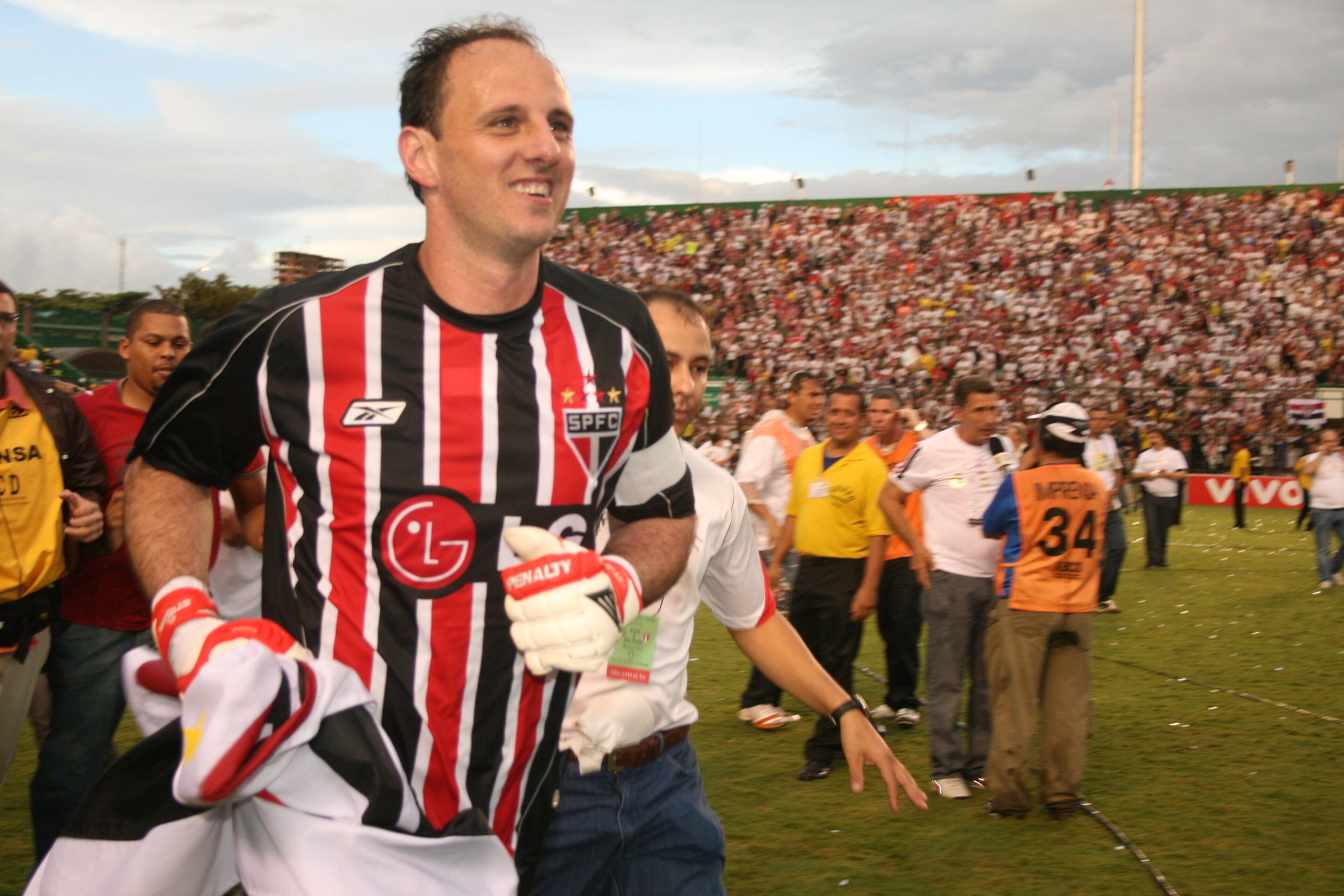
Ceni requires two evaluations at once. He was a serious goalkeeper for a major South American club, strong in his area and durable enough to remain São Paulo’s reference point for a quarter of a century. He was also a set-piece specialist whose 131 official goals altered the arithmetic of matches. Penalties and free kicks were not a novelty act. His technique delivered league and continental points, while creating an extra tactical risk whenever he travelled far from his own goal.
The scoring record can obscure rather than prove his place. Ceni belongs here because the underlying keeping supported victories in the Copa Libertadores and Club World Cup, most notably the 2005 final against Liverpool. He made decisive saves, managed pressure and helped São Paulo defend a one-goal lead against European champions. Internationally he was blocked by Taffarel, Dida and Marcos, so his Brazil record cannot rival the leading candidates. Number 27 reflects a club career of enormous responsibility and a genuinely unique contribution, without mistaking uniqueness for automatic supremacy.
Rank 26: Harald Schumacher
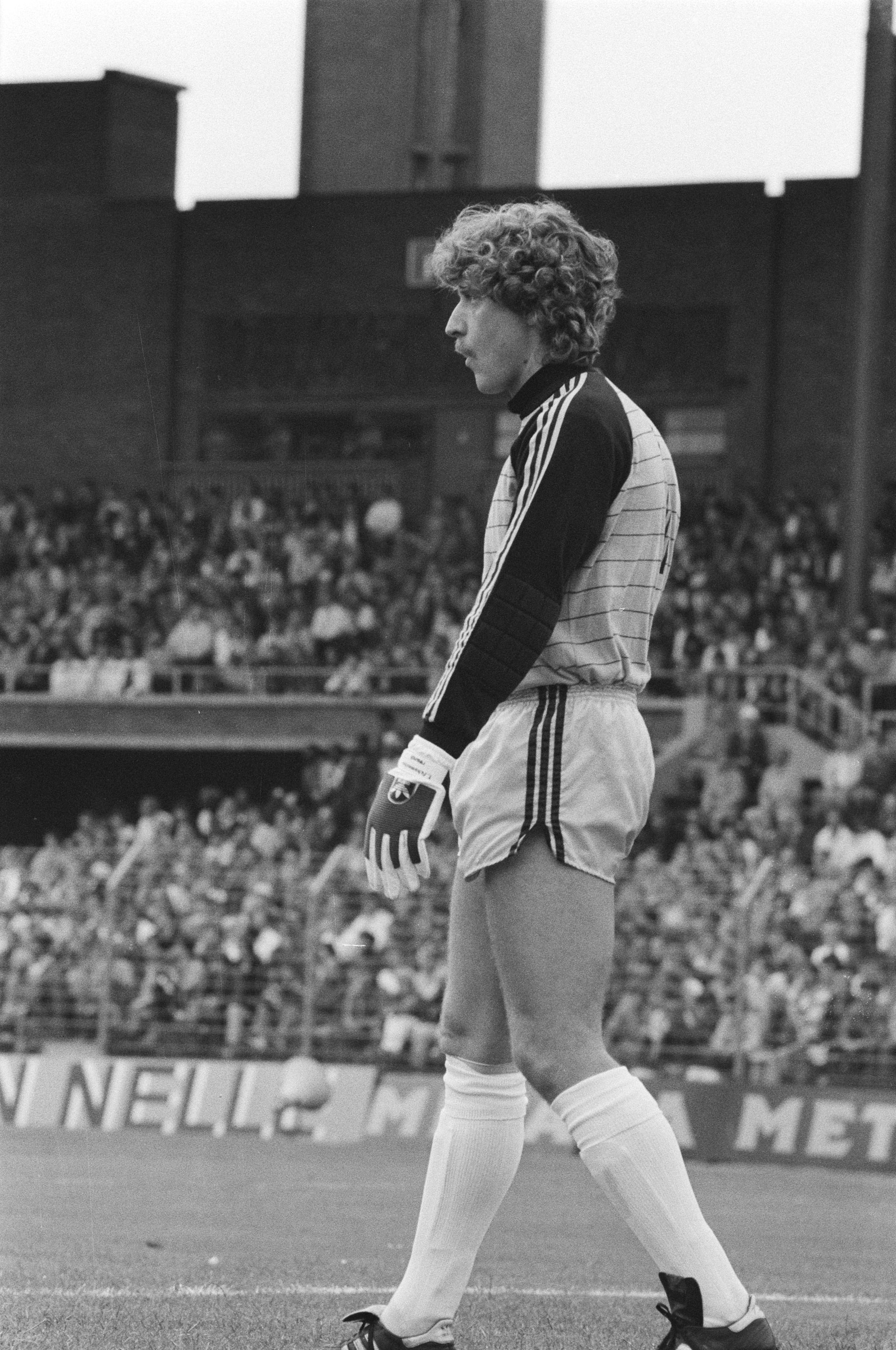
Schumacher was a driving force in West Germany’s runs to the 1982 and 1986 World Cup finals. He attacked crosses, narrowed angles with conviction and possessed the temperament to dominate penalty shoot-outs. Seventy-six senior international appearances show that this was not a brief tournament phenomenon. His footwork could be abrupt, but it generated the power required to cover the goal behind defenders who did not always control space cleanly.
Any ranking has to confront his collision with Patrick Battiston in the 1982 semi-final. The challenge was reckless and should have produced a dismissal; the absence of a foul remains one of the tournament’s great refereeing failures. Acknowledging that episode is not the same as erasing the rest of his work. Schumacher’s technical and competitive level was exceptional, while his public handling of the incident deepened the damage to his reputation. He ranks below Taffarel because the Brazilian’s major-tournament case is cleaner and more composed, but above the modern pair behind him on completed peak and international consequence.
Rank 25: Cláudio Taffarel
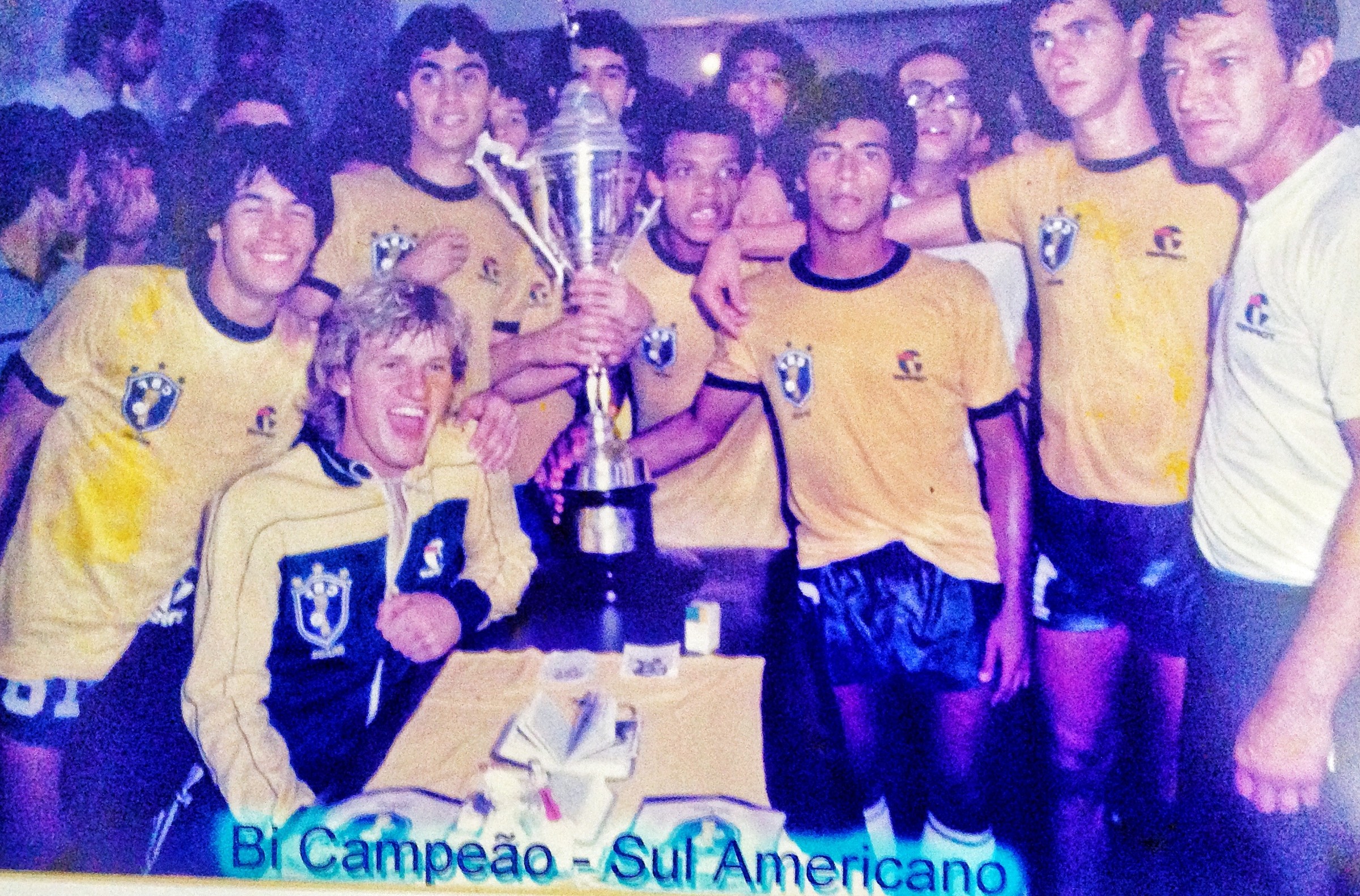
Brazil spent years treating goalkeeping as the position most likely to sabotage its abundance elsewhere. Taffarel changed the emotional temperature. He was balanced, conservative and rarely interested in embellishment, qualities that allowed the attacking players to take risks without sensing panic behind them. Across 18 World Cup appearances he kept eight clean sheets, including five during the 1994 title campaign.
Penalty shoot-outs strengthened the association between Taffarel and Brazilian calm. He saved from Daniele Massaro in the 1994 final shoot-out and then stopped Phillip Cocu and Ronald de Boer in the 1998 semi-final. His club career was less uniformly grand than those of the keepers above, although the 2000 UEFA Cup win with Galatasaray added a major European chapter. He did not expand the technical vocabulary of the role. His achievement was to make difficult international goalkeeping look administratively simple, which was exactly what Brazil required.
Rank 24: Thomas N’Kono
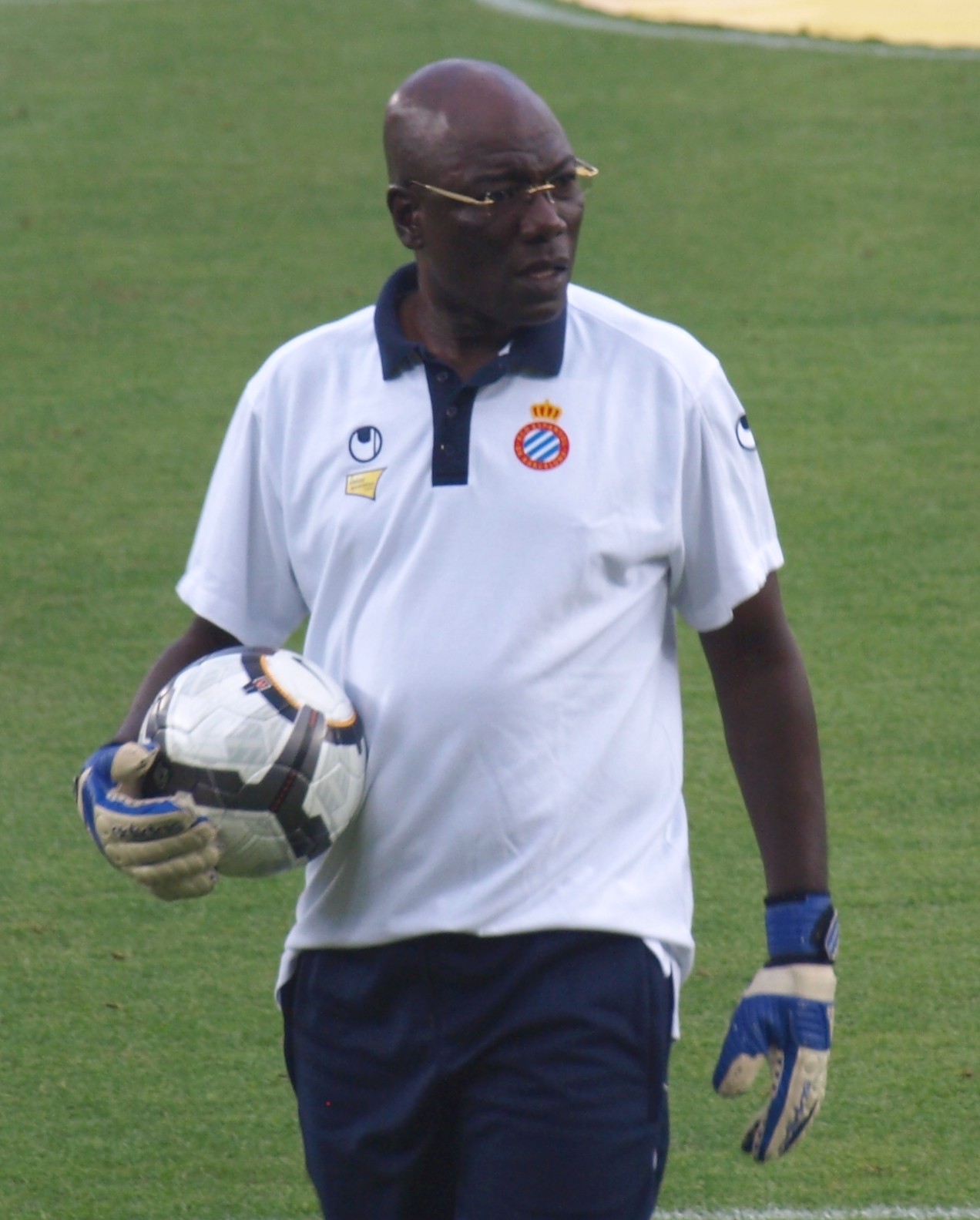
N’Kono played with an upright athleticism that made him appear to cover ground in a single movement. He could spring through traffic for crosses, react at close range and release the ball quickly enough to turn defence into a counterattack. Two African Footballer of the Year awards, in 1979 and 1982, are numerical evidence of a standing that crossed positional boundaries. Goalkeepers seldom won the award, and no African keeper had his international visibility.
Cameroon’s unbeaten 1982 World Cup introduced him to a global audience, while a long career with Espanyol proved he was more than a tournament discovery. Gianluigi Buffon later cited him as the reason he wanted to become a goalkeeper, a line of influence that reaches far beyond Cameroon’s results. N’Kono’s handling could look improvised beside the European technicians above him, partly because his methods grew from different coaching conditions. The improvisation was also a strength. He offered African goalkeepers a model built on authority and adventure rather than imitation.
Rank 23: Peter Shilton
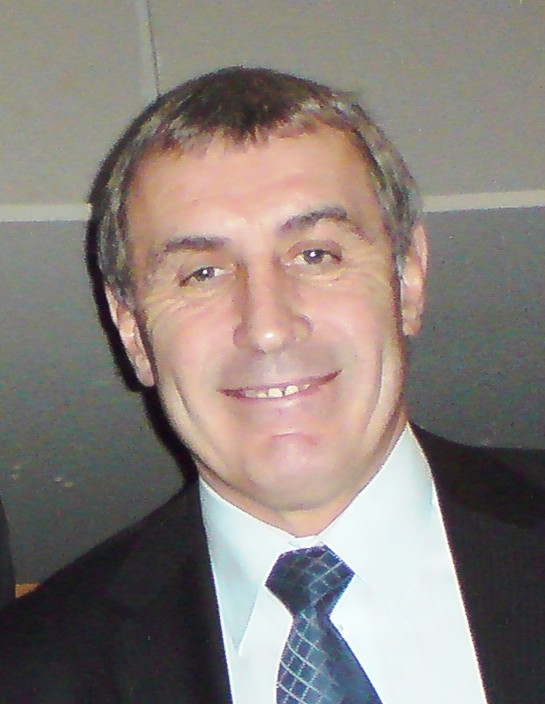
Shilton’s career spanned the muddy, physically permissive English game of the late 1960s and the faster, more regulated football of the 1990s. He relied on positioning, concentration and exceptionally repeatable technique. England’s 125 caps remain a useful measure of that durability, while his ten clean sheets in 17 World Cup appearances place him jointly at the top of the tournament’s historical list.
His peak club period came under Brian Clough at Nottingham Forest. The team defended collectively, but consecutive European Cups still required a goalkeeper who could remain alert through long stretches and then make the one necessary intervention. Shilton did. The case is weakened by moments when his relative lack of spring became visible, including his inability to reach Diego Maradona’s illegal first goal in 1986 and Andreas Brehme’s deflected free kick in 1990. Those images should not replace two decades of elite work, but they help explain why more dynamic or influential keepers occupy the higher positions.
Rank 22: František Plánička
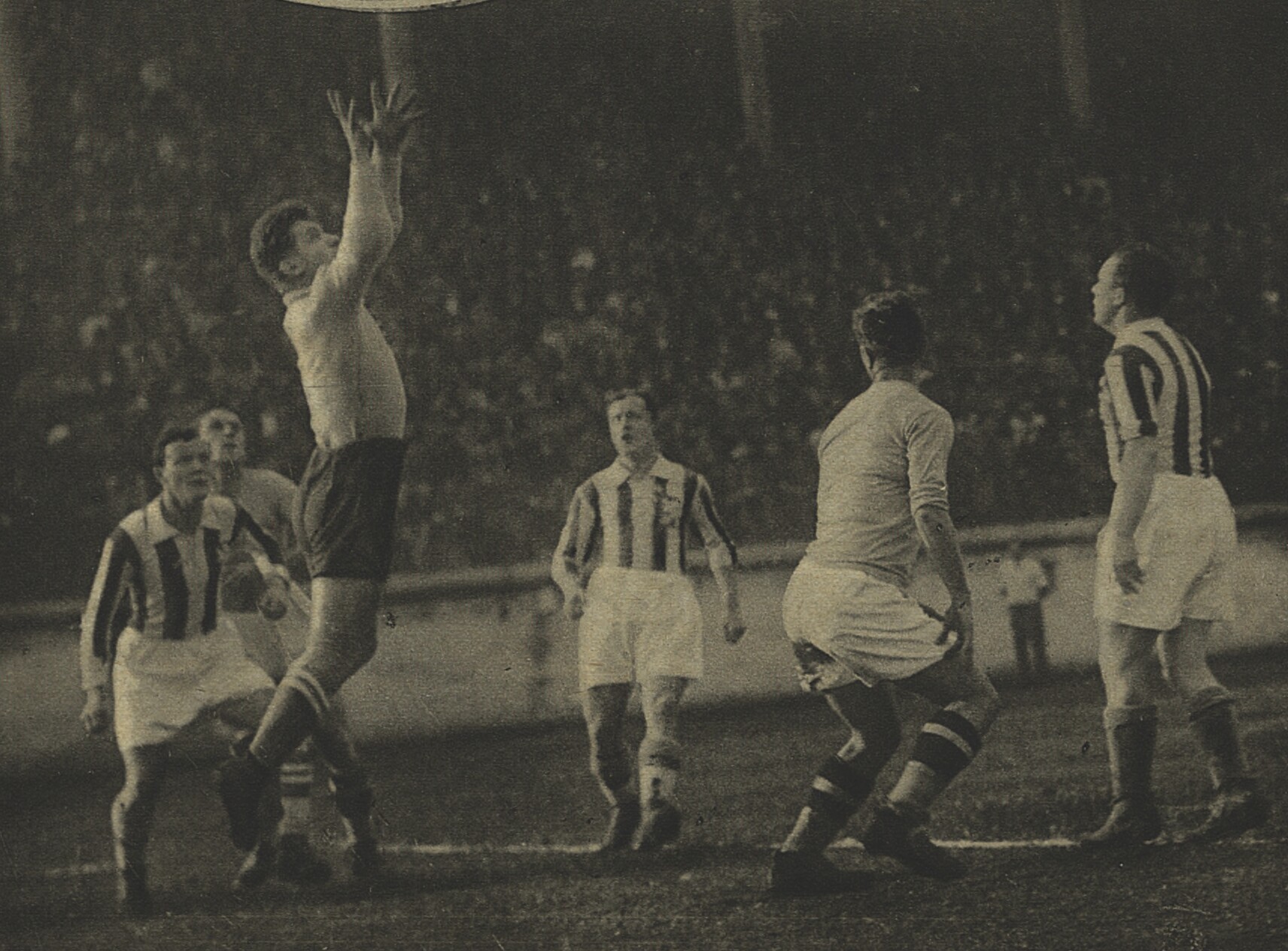
Plánička kept goal when forwards could charge the goalkeeper, the ball became treacherous in rain and protection from officials was limited. At barely 1.72 metres, he survived through judgement and courage rather than reach. His 73 appearances for Czechoslovakia were extraordinary for the inter-war period and included captaincy on the run to the 1934 World Cup final.
The 1938 quarter-final against Brazil supplies both evidence and myth. Plánička completed the match despite serious injury, often described as a broken arm, although contemporary accounts differ over the precise diagnosis. What is certain is that he played through severe damage in a violent contest that required a replay. His reputation was built on more than endurance. He read shots early, caught rather than parried when possible and gave a technically ambitious Czechoslovak side a stable base. Sparse film limits precise comparison with modern keepers, so evidence quality restrains the ranking without diminishing his historical importance.
Rank 21: Ladislao Mazurkiewicz
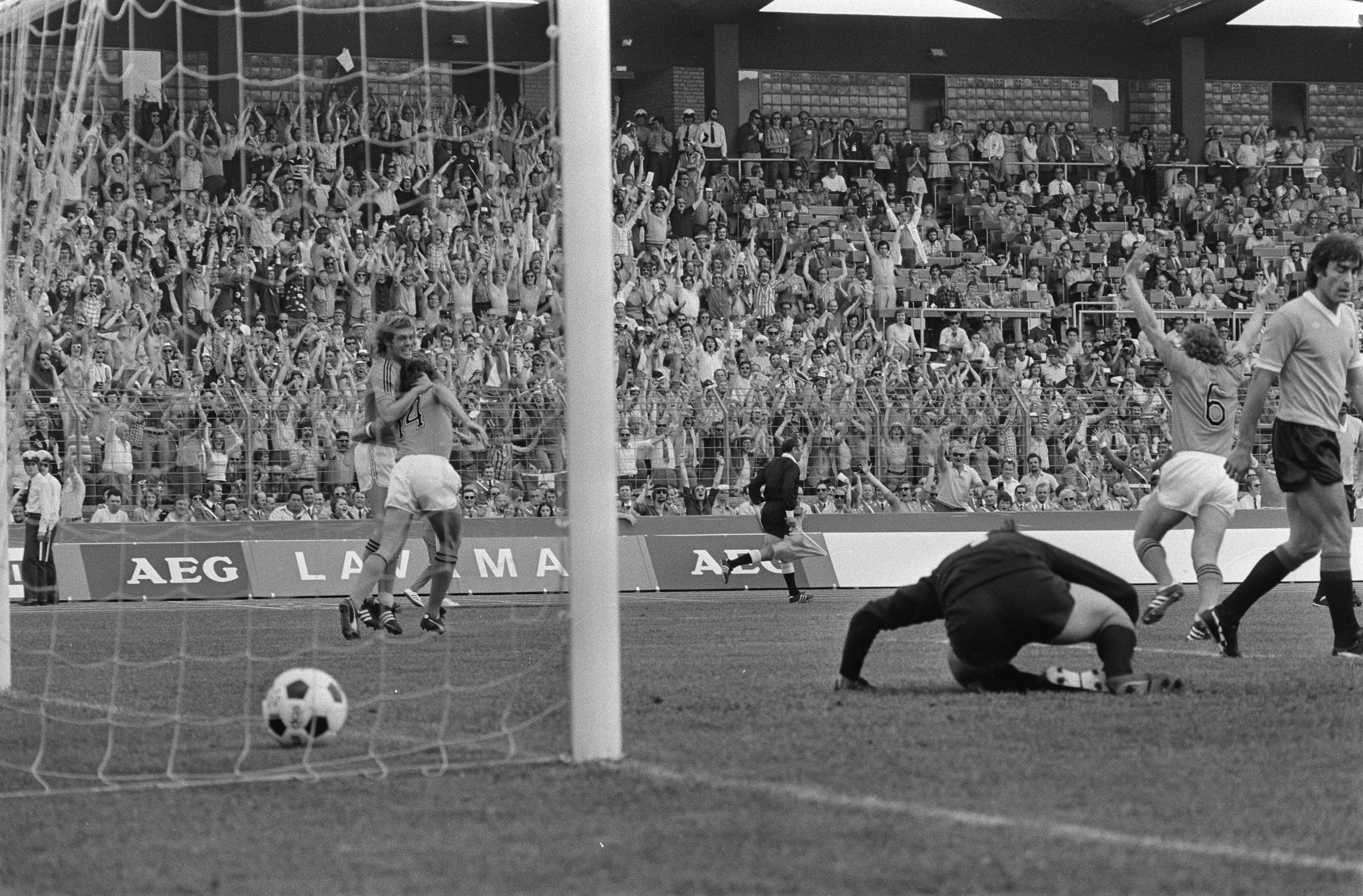
Mazurkiewicz’s goalkeeping was stripped of unnecessary movement. He held a narrow stance, read the striker’s touch and arrived early enough to make difficult saves appear routine. In 13 World Cup matches across 1966, 1970 and 1974, he faced attacks led by Beckenbauer, Müller, Pelé and Jairzinho. Uruguay’s fourth-place finish in 1970 depended heavily on his ability to keep matches within reach.
Pelé’s famous dummy in the 1970 semi-final is often shown as though the goalkeeper were humiliated. In fact, Mazurkiewicz did what the situation demanded: he left his line quickly and forced the greatest forward of the age to attempt an extraordinary solution. The shot went wide. At Peñarol he added Copa Libertadores and Intercontinental Cup success, performing behind a side comfortable with both possession and confrontation. He lacked the distributional influence of Carrizo or Grosics, but as a reader of space and a keeper for severe matches, he belongs above more statistically decorated contemporaries.
Rank 20: Pat Jennings
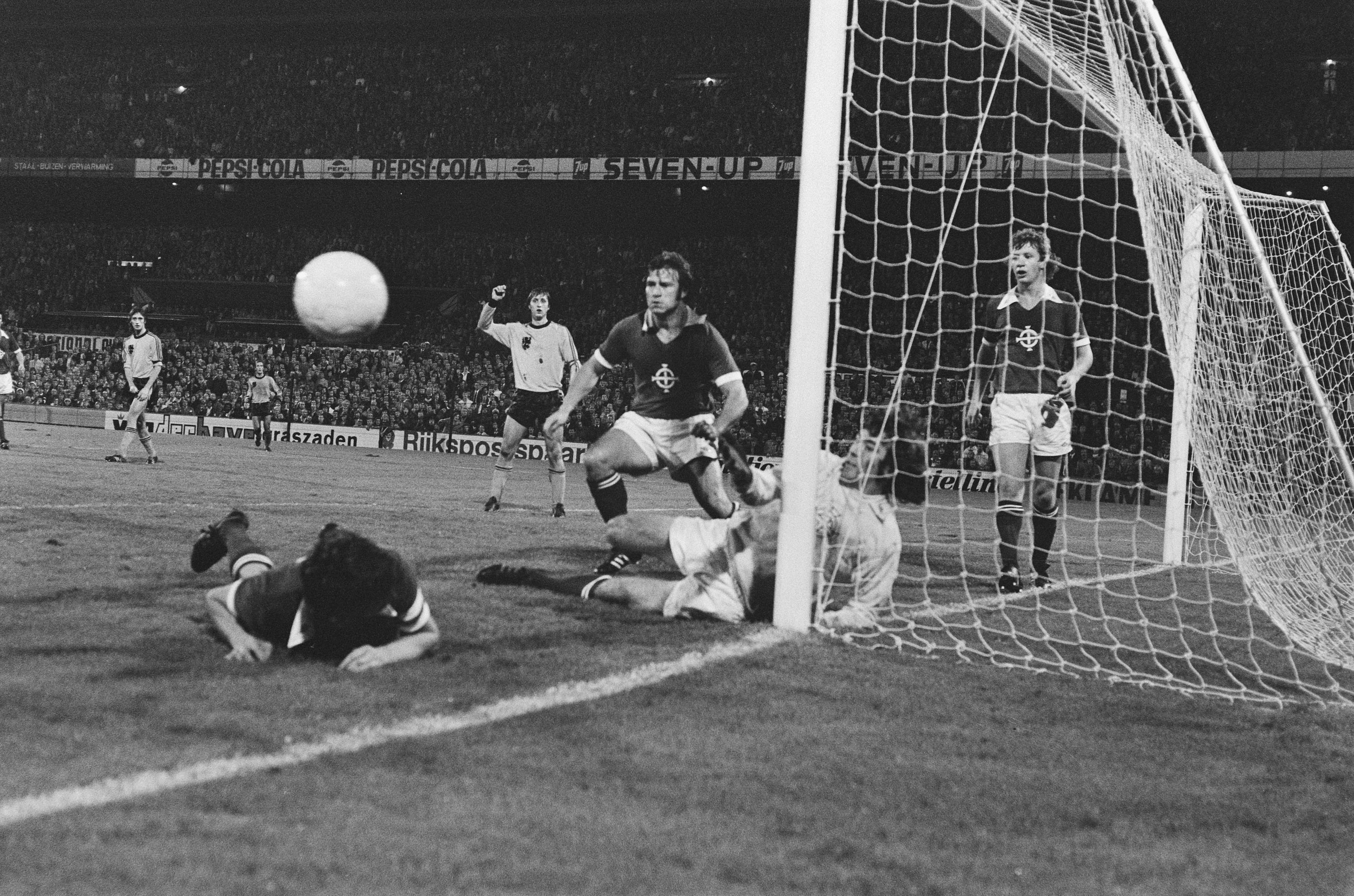
Jennings caught the ball with hands large and soft enough to make one-handed takes seem sensible. That security mattered in an era of crowded penalty areas and heavy crosses. His 119 Northern Ireland caps stretched across 22 years, culminating in World Cup appearances at the ages of 36 and 41. Longevity here was not ceremonial. He remained a starting goalkeeper against the best opposition available to his country.
At Tottenham and Arsenal, Jennings excelled for rival clubs without altering his restrained manner. He could roll or throw accurately to begin attacks, and his patience in one-on-ones anticipated later emphasis on staying upright. The honours list is modest beside the dynasty keepers above him, partly because neither club sustained dominance through his entire tenure. His position rests on the reliability of the evidence: thousands of high-level minutes, repeated contemporary acclaim and technical qualities that translated across major tactical changes. He was rarely the story, which for a goalkeeper can be the strongest compliment.
Rank 19: Ubaldo Fillol
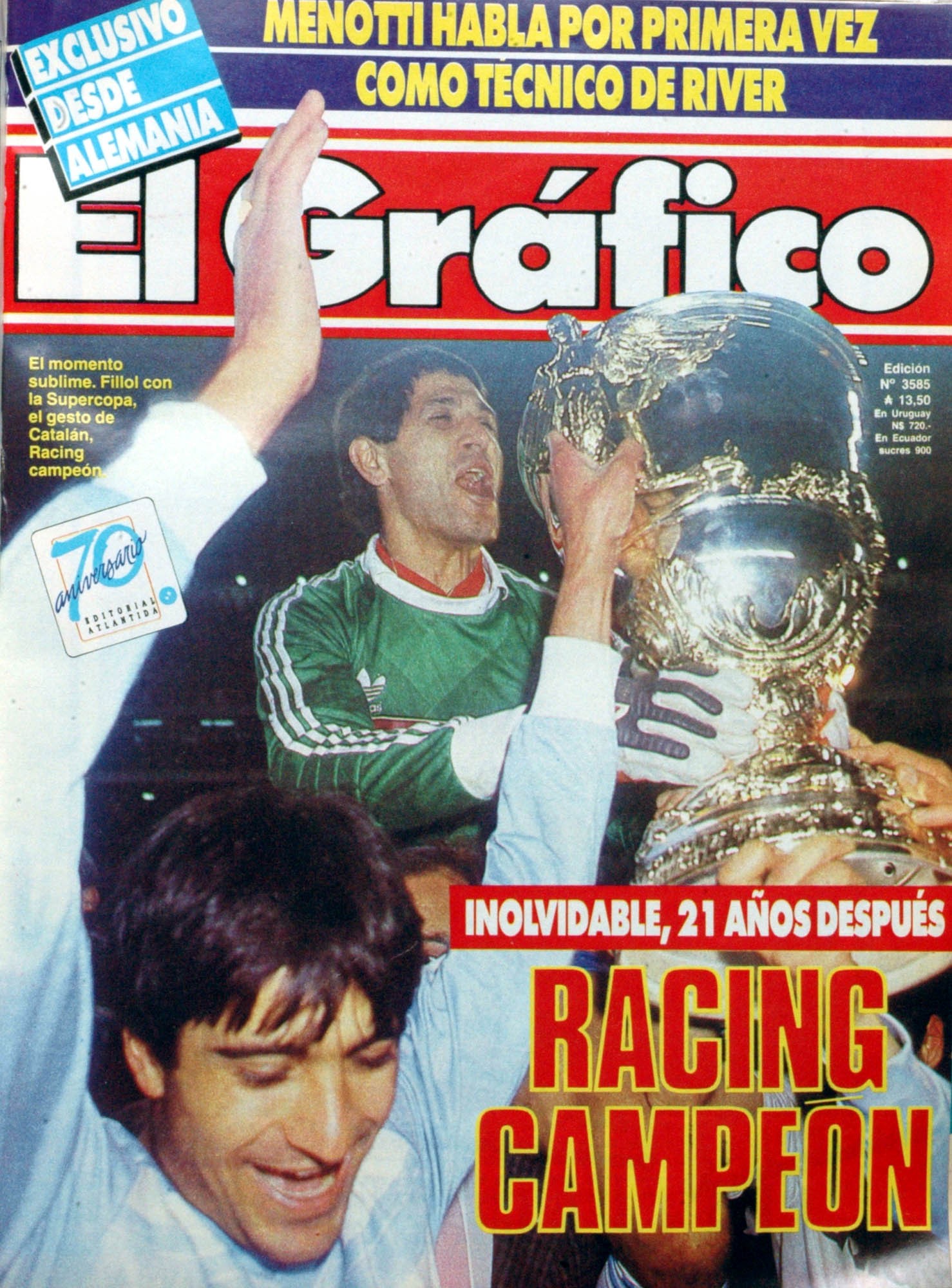
Fillol played as if the goal were a physical problem to be attacked. He launched himself with tremendous hip power, challenged forwards without hesitation and recovered quickly enough for second saves. Argentina’s 1978 World Cup win came with political baggage surrounding the tournament, but the goalkeeper’s contribution needs no euphemism. He conceded four goals in seven matches and was outstanding when the side’s control fractured.
Fifty-eight international appearances understate his national importance because selection and administration were often volatile. At River Plate he won repeated domestic titles while carrying an individual style that younger Argentine keepers copied: brave, elastic and emotionally engaged. His handling was less immaculate than Zoff’s and his starting positions could invite emergency work, but that emergency capacity decided major matches. Fillol ranks one place above Jennings because his peak had greater tournament consequence, while the Northern Irishman’s steadier technical record keeps the comparison close.
Rank 18: Walter Zenga
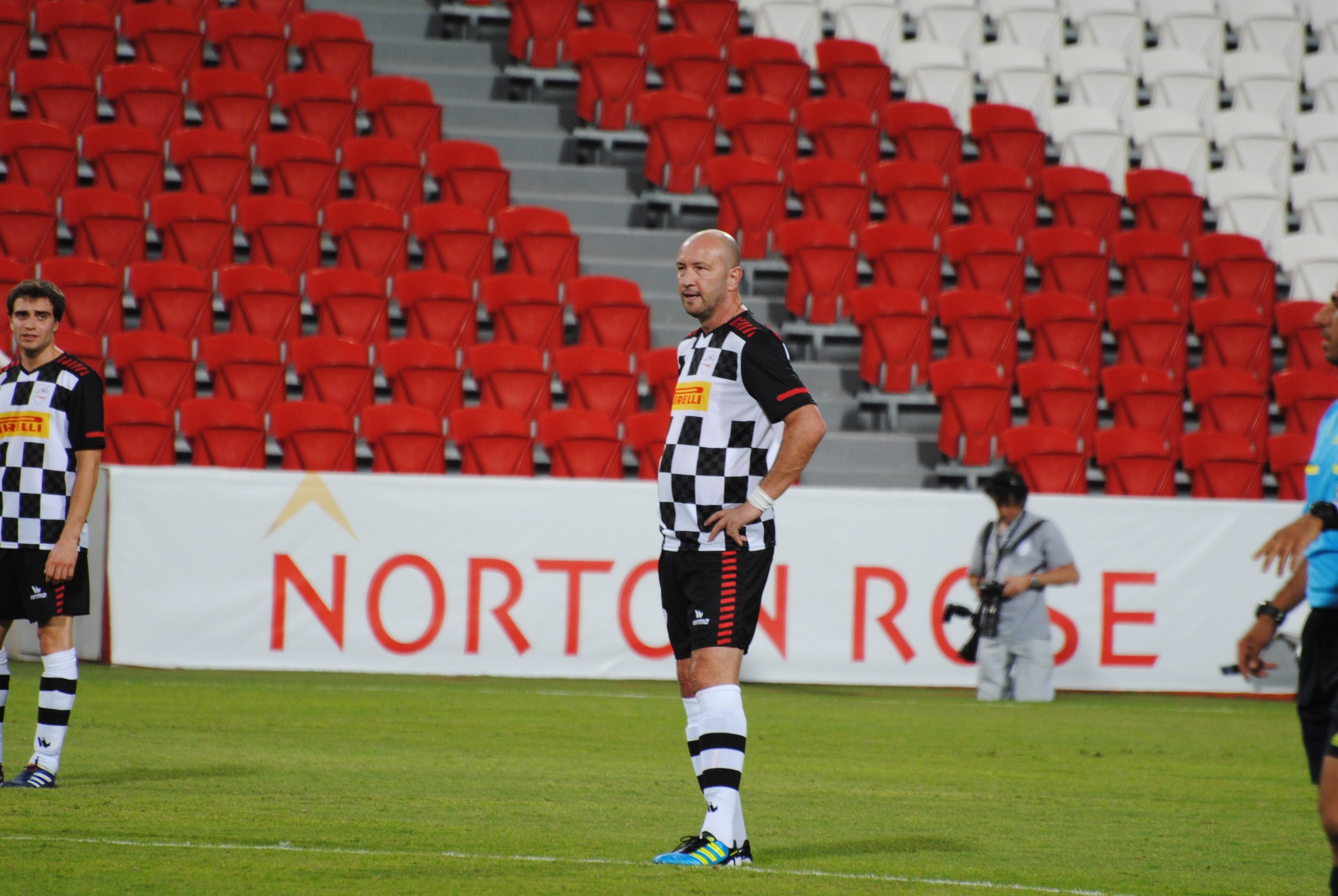
Zenga brought theatrical energy to a position that Italy often treated as a study in restraint. He was quick across his line, assertive when claiming through bodies and powerful enough to punch beyond immediate danger. At the 1990 World Cup he kept five consecutive clean sheets and went 517 minutes before Claudio Caniggia scored in the semi-final, a tournament record for an uninterrupted run without conceding.
The ending colours the memory. Zenga’s decision to attack the cross before Caniggia’s header left an empty goal and Italy were eliminated on penalties. One misjudgement does not cancel the preceding month or his years at Inter, where he won Serie A and two UEFA Cups. It does, however, illustrate the fine distinction at this level. The keepers above him generally paired an equal peak with either more complete command of aerial situations or longer evidence in the most decisive international matches. Zenga’s ceiling remains unmistakable.
Rank 17: Petr Čech
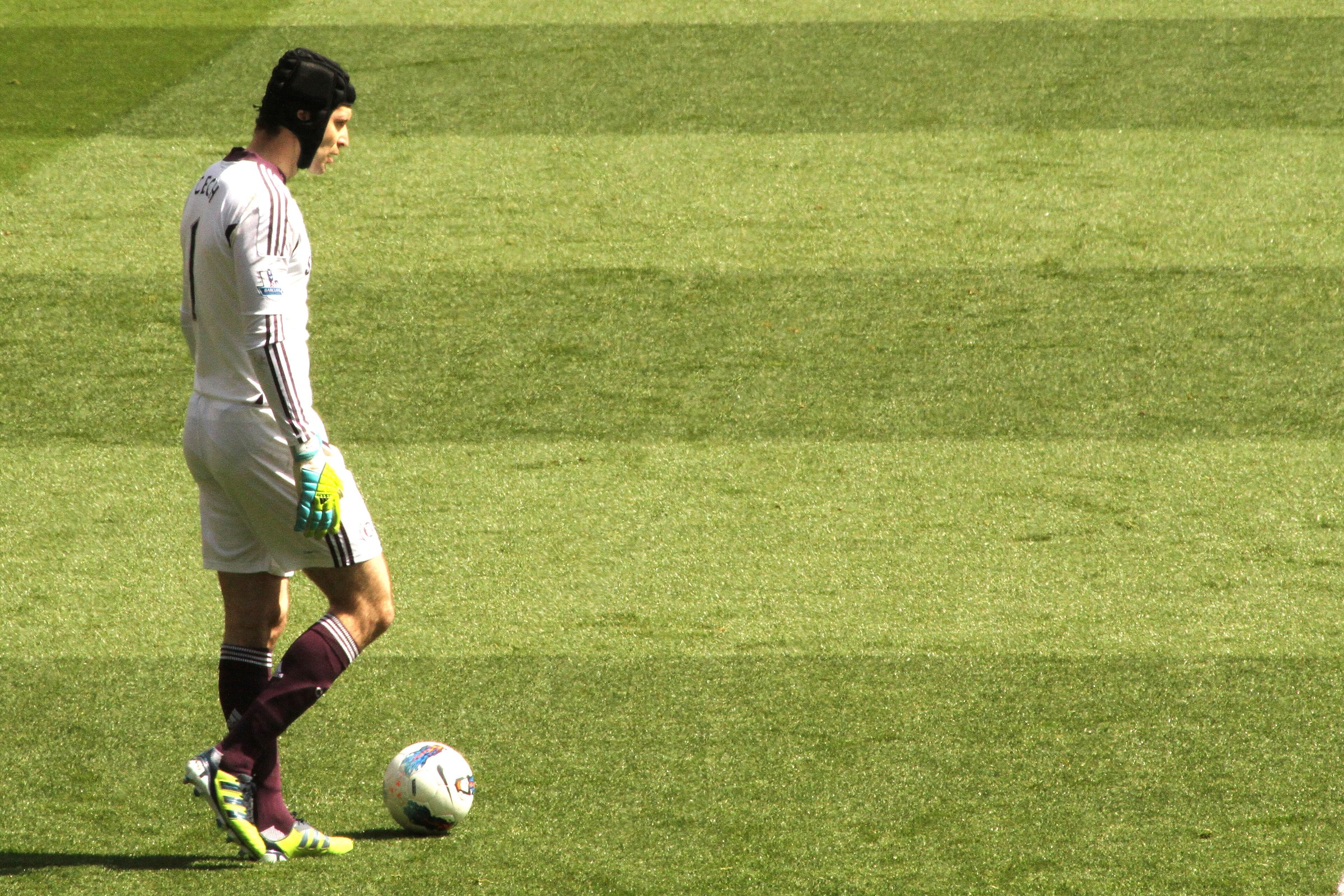
Čech joined Chelsea in 2004 and immediately turned an excellent defence into a statistical extreme. He kept 24 clean sheets in the 2004/05 Premier League season and eventually finished with a competition-record 202. The protective headguard worn after his 2006 skull fracture became visually defining, but his game was defined by preparation: measured footwork, strong hands and a detailed map of opponents’ finishing habits.
He could make his frame disappear towards the ball, getting down efficiently despite his height. In the 2012 Champions League final he saved Arjen Robben’s extra-time penalty and then denied Ivica Olić in the shoot-out, delivering the major European performance that a career of domestic consistency deserved. Distribution was sound rather than agenda-setting, and his later Arsenal years included decline. Čech ranks below Van der Sar because the Dutchman offered more in construction and sustained elite work later into his career, but no Premier League goalkeeper has assembled a stronger clean-sheet record.
Rank 16: Edwin van der Sar
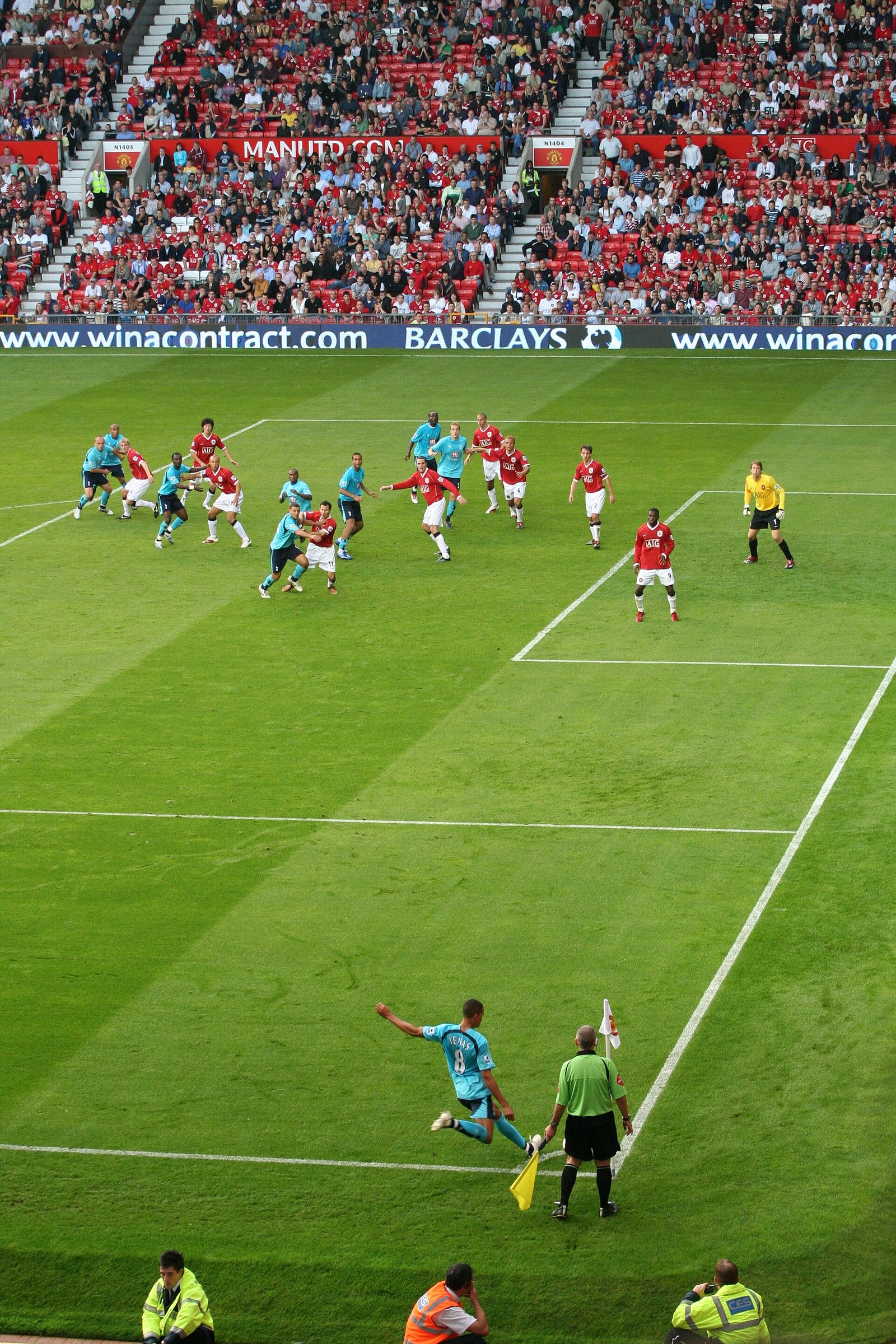
Van der Sar looked built for a later version of football. He received back-passes without alarm, used either foot to change the point of attack and offered defenders an available passing angle before pressing schemes made that behaviour compulsory. At Ajax he was part of the 1995 Champions League winners; at Manchester United he won the trophy again 13 years later, saving Nicolas Anelka’s penalty in the Moscow shoot-out.
His 2008/09 league run of 1,311 minutes without conceding covered 14 consecutive clean sheets, evidence of concentration as much as team defence. The intervening Juventus spell exposed discomfort in a different tactical environment, and his move to Fulham seemed at first like a retreat from elite football. Instead it became a bridge to a remarkable final phase. Van der Sar did not dominate the penalty area as Schmeichel had, but he gave United control, reach and calmer possession. That combination puts him narrowly above Čech.
Rank 15: Jean-Marie Pfaff
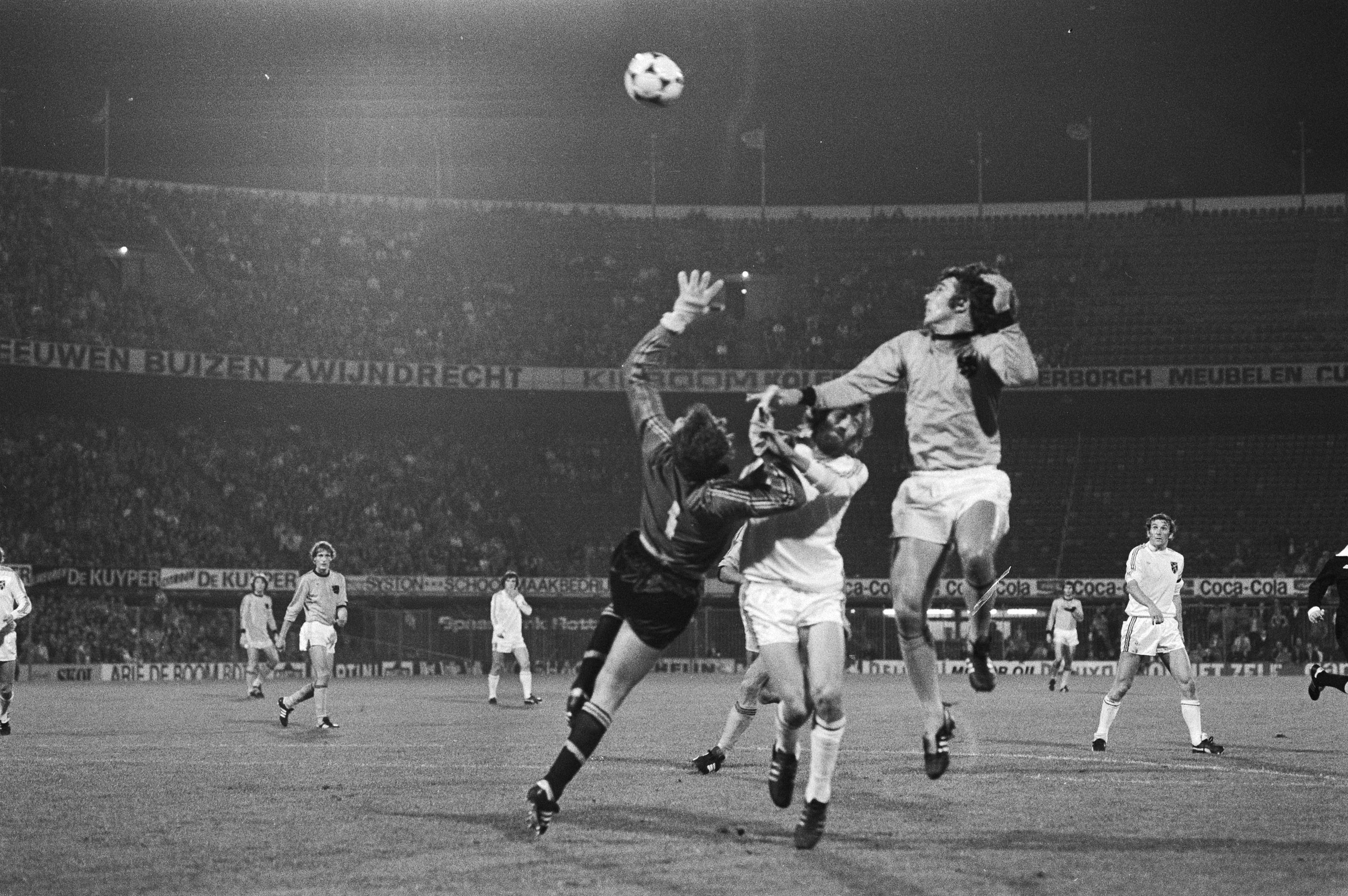
Pfaff was exuberant without being careless. He attacked the ball with acrobatic force, used sharp footwork to set for shots and communicated in a style that could animate an entire defence. Belgium’s 1986 World Cup run to the semi-finals required 120-minute survival against the Soviet Union and a penalty shoot-out against Spain. Pfaff’s presence gave an adventurous side permission to continue taking risks.
He earned 64 Belgium caps and was named IFFHS World’s Best Goalkeeper in 1987, the first year of that award. At Bayern Munich he won three Bundesliga titles and reached the 1987 European Cup final. His tendency to seek involvement sometimes created unnecessary danger, which separates him from the still more economical top group. It also made him unusually suited to Belgium’s open tournament football. Pfaff’s ranking rewards an international peak, a substantial club record and a distinctive capacity to change the confidence of those playing in front of him.
Rank 14: José Luis Chilavert
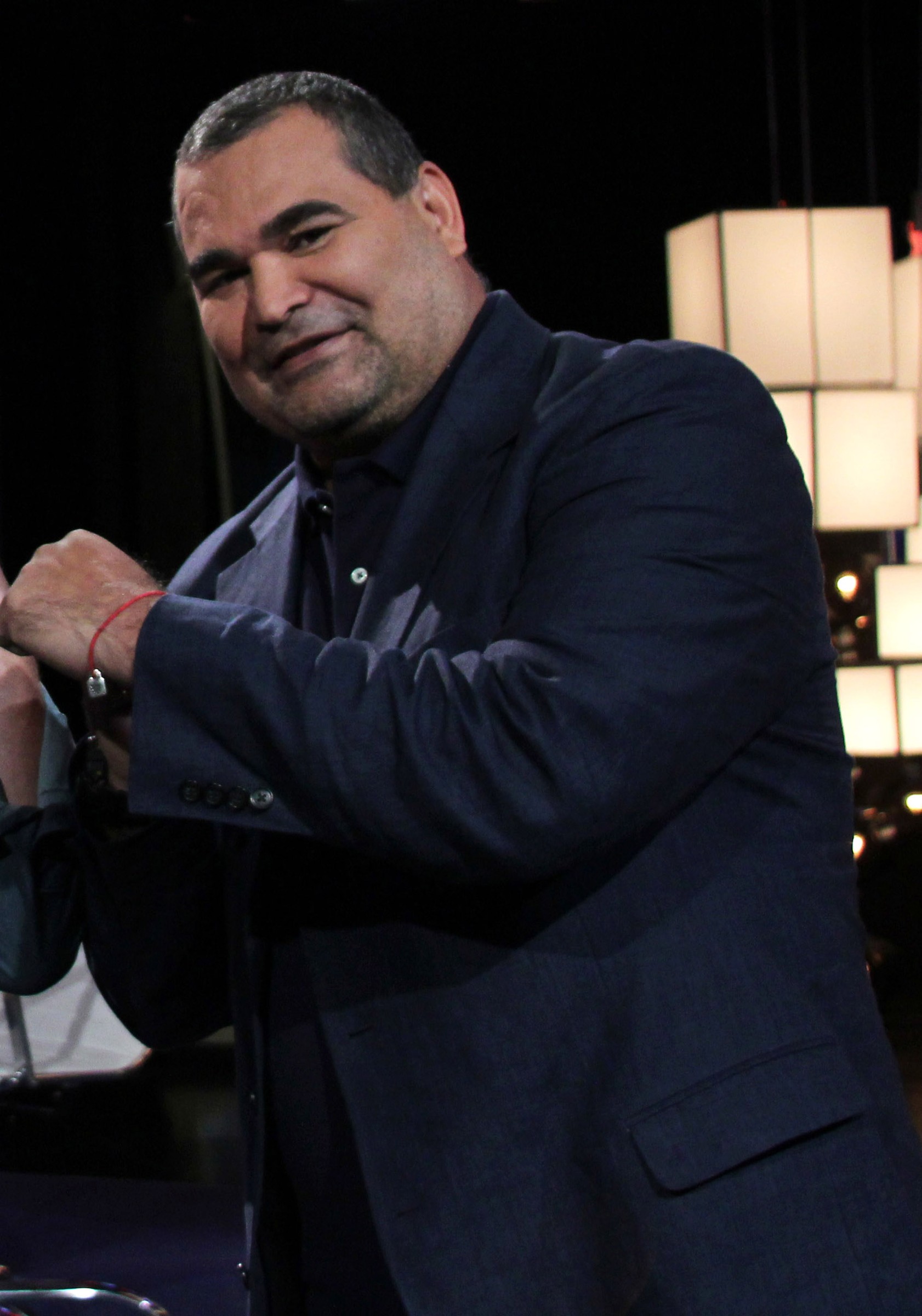
Chilavert enlarged the goalkeeper’s responsibilities in both practical and psychological ways. His left foot could start an attack from distance, take a free kick around a wall or punish a foul from the penalty spot. He scored eight times for Paraguay and 67 official career goals overall, but the numbers were not accumulated at the expense of his core job. He was an excellent shot-stopper with a powerful throw and the authority to organise a disciplined defensive block.
Paraguay conceded once in four matches at the 1998 World Cup before Laurent Blanc’s golden goal ended their campaign. Chilavert’s saves and confrontational leadership made that resistance possible. With Vélez Sarsfield he won the 1994 Copa Libertadores and Intercontinental Cup under Carlos Bianchi, proving himself at the centre of a champion rather than as an entertaining outlier. His aggression could become self-defeating, and he did not face Europe’s leading club competition over a long span. Still, no goalkeeper before him integrated set-piece production so fully into a serious elite career.
Rank 13: Amadeo Carrizo
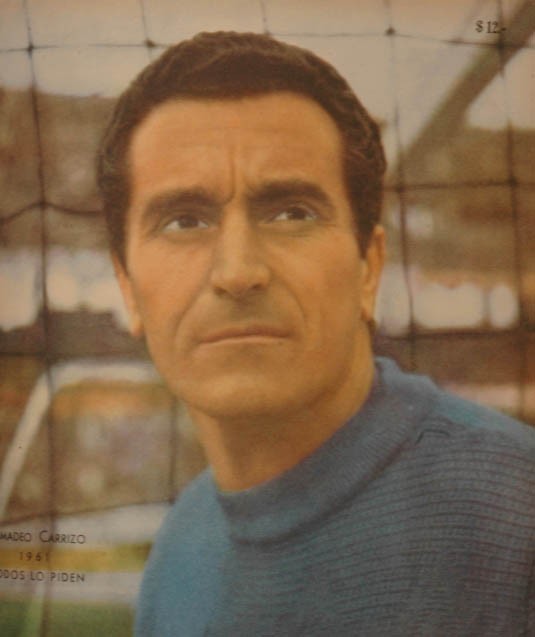
Carrizo challenged the instruction that a goalkeeper should remain invisible until a shot arrived. He left his area to intercept, used his feet to escape forwards and distributed towards team-mates rather than empty grass. Those choices were risky on uneven South American pitches and during a period when mistakes were treated as moral failings. River Plate trusted him through 521 first-team appearances, and his initiative helped make possession from the back conceivable.
The 1958 World Cup was a severe blemish. Argentina returned after a 24-year absence and lost 6-1 to Czechoslovakia, with Carrizo made a symbol of a wider institutional failure. His domestic career offers the necessary correction: seven Argentine league titles and a reputation that influenced keepers including Hugo Gatti and José Luis Chilavert. Film is fragmented, and the international sample is much thinner than that of Yashin or Zoff. Carrizo’s place therefore rests on a powerful combination of testimony, club evidence and technical innovation, not on an attempt to pretend every historical comparison can be measured equally.
Rank 12: Gyula Grosics
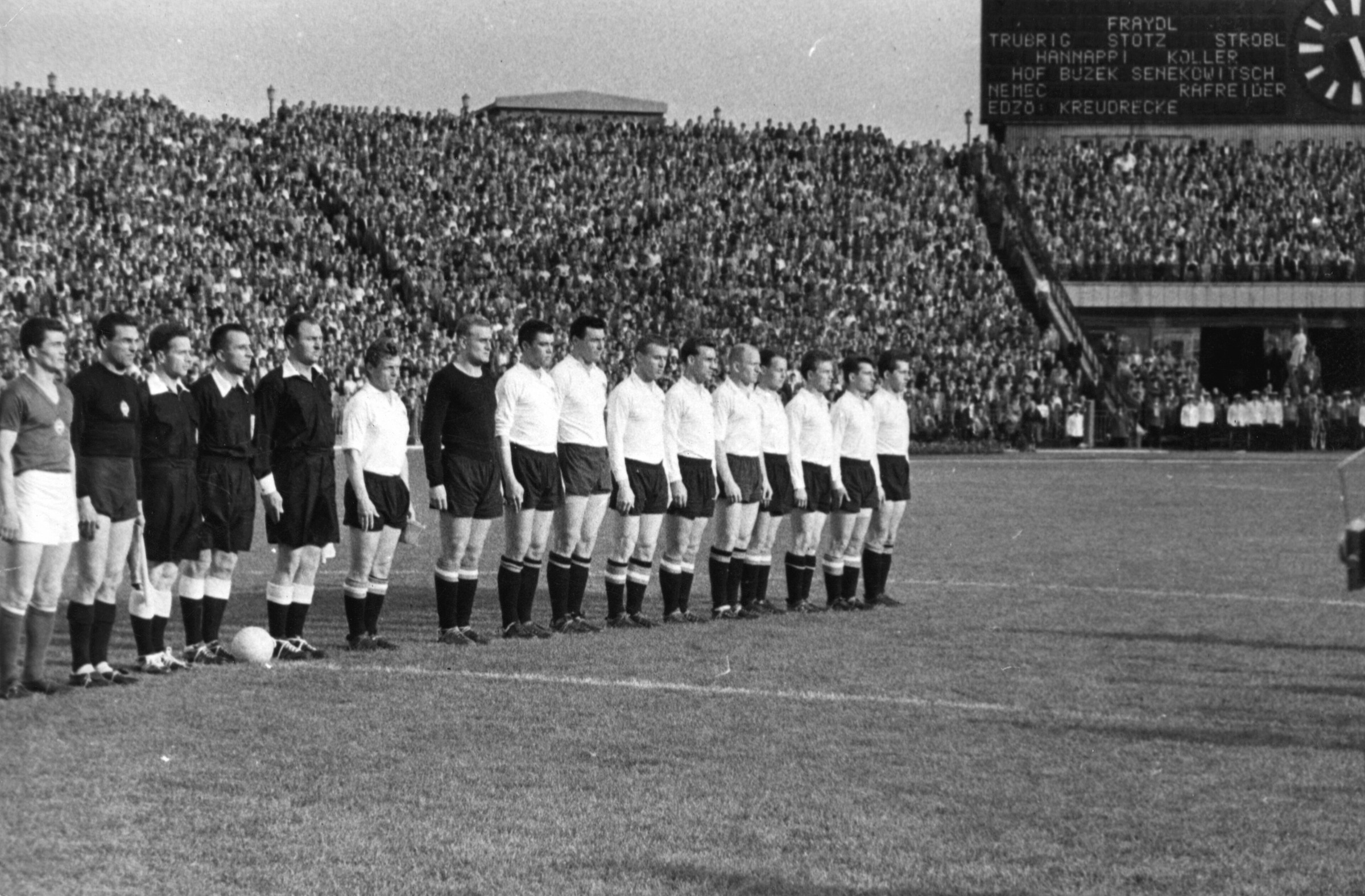
Hungary’s great 1950s side attacked with so many players because Grosics treated the space behind them as working territory. He advanced beyond his area, intercepted through balls and then supplied a team-mate quickly enough to sustain pressure. In an age when the goalkeeper was still commonly planted near his line, this was a structural contribution. His 86 caps included three World Cups and the 1954 final.
The political context was inseparable from his career. After the 1954 defeat he was investigated by Hungary’s security apparatus and later restricted in his preferred move to Ferencváros. Yet his level survived personal and institutional pressure. Grosics was quick rather than large, and high balls could expose the limits of his reach. His anticipation reduced those occasions, while his use of the ball provided an early model for the sweeper-keeper. Neuer developed the role within modern pressing and passing systems; Grosics imagined much of its logic when convention offered no support.
Rank 11: Oliver Kahn
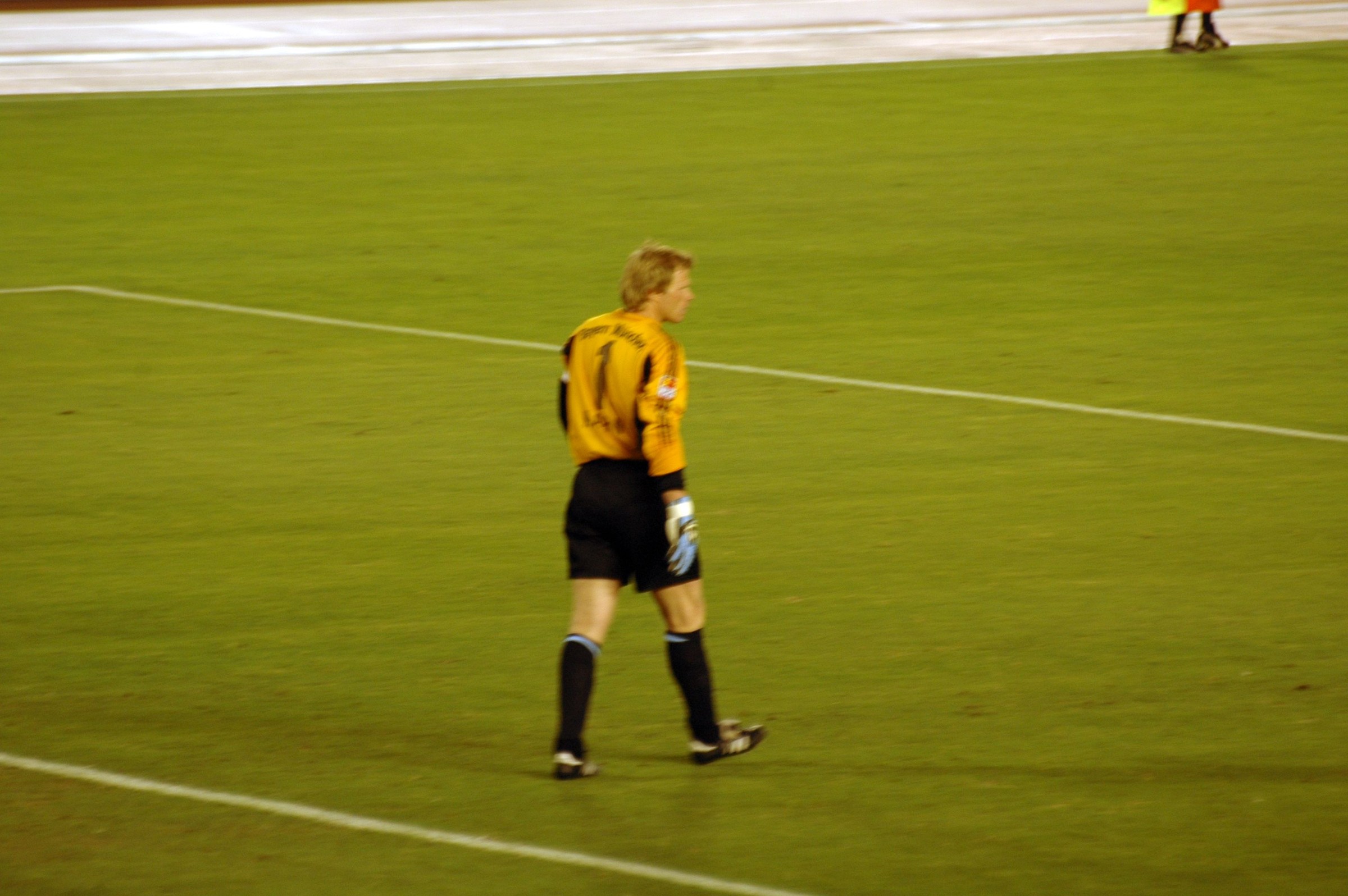
Kahn’s aggression had a technical foundation. He set early, generated remarkable force from short movements and attacked the second ball as if it were a personal contest. The 2002 World Cup made that approach decisive. Germany’s limited side reached the final after conceding one goal in six matches, and Kahn became the first goalkeeper to win the tournament’s Golden Ball.
His mistake for Ronaldo’s opening goal in the final remains part of the record. The ball spilled from Rivaldo’s shot after Kahn had injured a finger, and Brazil punished the one error his team could not absorb. At Bayern he supplied a broader answer, winning eight Bundesliga titles and the 2001 Champions League, when his saves in the shoot-out against Valencia completed a campaign full of high-pressure interventions. Kahn’s distribution was blunt and his emotional intensity occasionally disrupted judgement. At his best, though, that intensity created a competitive advantage visible in the behaviour of both team-mates and opponents.
Rank 10: Rinat Dasayev
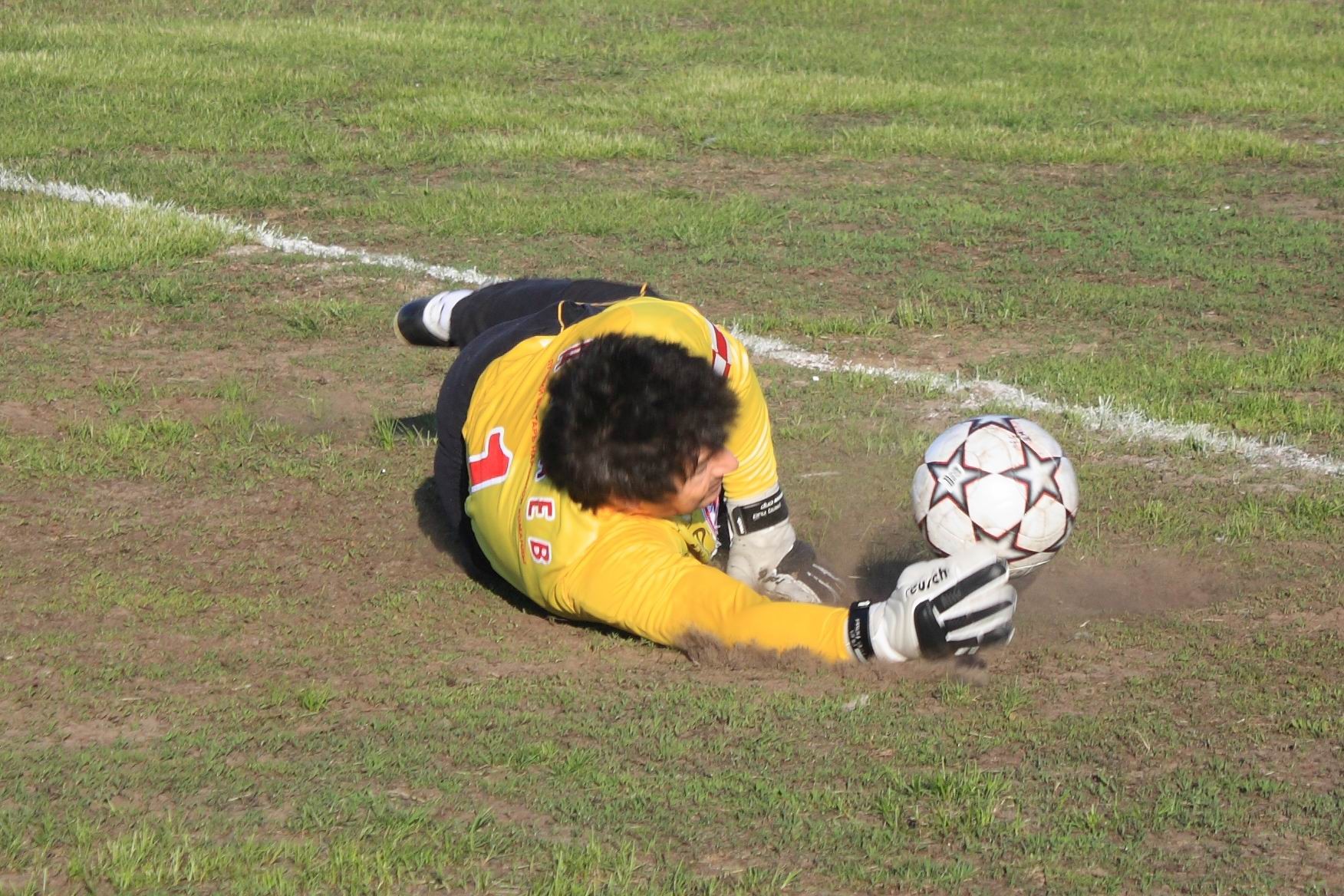
Dasayev’s movements were fast but beautifully ordered. He drove across goal from a narrow base, parried away from danger and could turn a low save into an immediate counterattack with an overarm throw. Ninety-one Soviet Union caps covered three World Cups and the run to the 1988 European Championship final. France Football named him European Goalkeeper of the Year six times, a useful indication of sustained continental regard.
The Soviet club system kept most of his prime outside the European Cup’s later rounds, making international football especially important to the evaluation. He excelled at Euro 1988 until Marco van Basten’s extraordinary final volley, a shot whose fame should not be mistaken for a goalkeeping error. His final spell at Sevilla was less commanding as injury and upheaval accumulated. Dasayev ranks above Kahn on fluency and a longer international body of work, but below Zamora and the top eight because his club career offered fewer decisive meetings with the strongest western European teams.
Rank 9: Ricardo Zamora
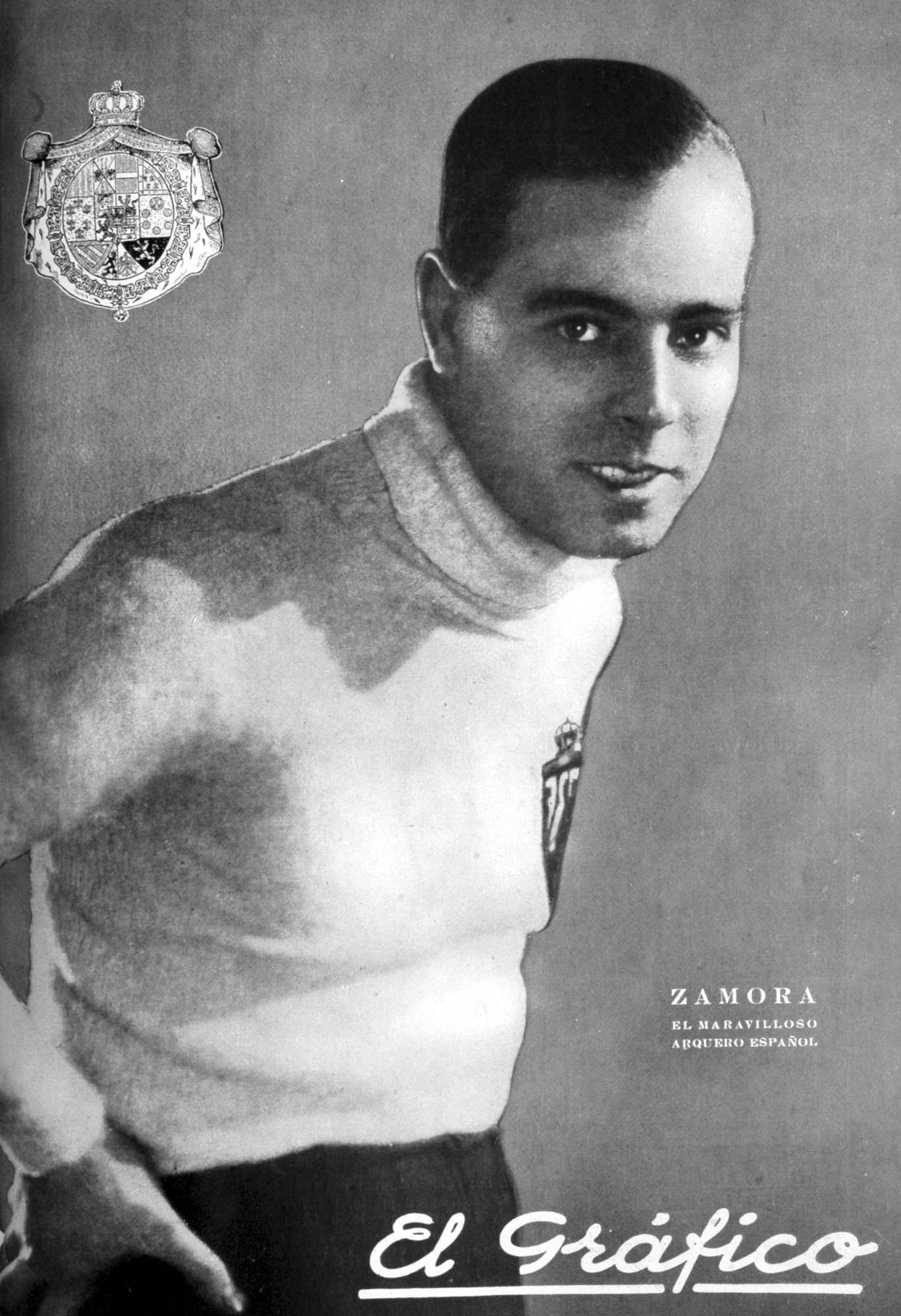
Zamora became famous when international football itself was still acquiring a public language. He wore a cloth cap, caught with large hands and used his body fearlessly at the forward’s feet. Spain gave him 46 caps between 1920 and 1936, a substantial total in an era with far fewer fixtures. His performance at the 1920 Olympics helped establish both the national side and the goalkeeper as objects of mass fascination.
He won league titles with Barcelona and Real Madrid, then supplied the defining save of the 1936 Copa del Rey final shortly before the Spanish Civil War fractured public life. Tactical film is scarce and contemporary prose often slides into legend, so care is required. Zamora was not simply a celebrity elevated by romantic memory. Match reports, longevity across rival clubs and the trophy now awarded to La Liga’s best goalkeeper all point to genuine authority. His position recognises the first keeper whose excellence travelled internationally as a distinct football identity.
Rank 8: Sepp Maier
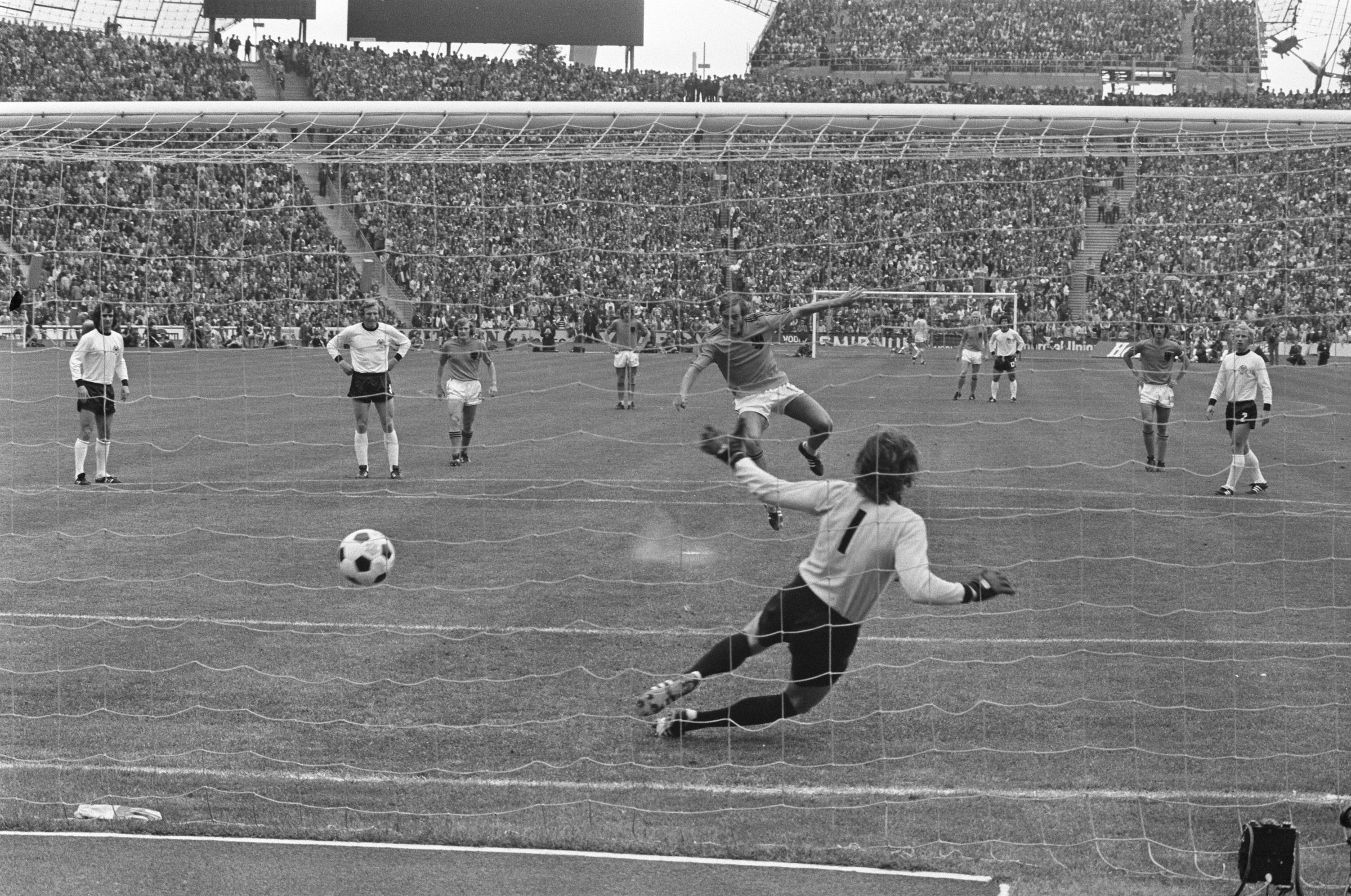
Maier was elastic, alert and technically cleaner than his comic public persona suggested. He played 442 consecutive Bundesliga matches for Bayern, a run that captures both durability and the trust of a side moving from regional promise to European dominance. Between 1974 and 1976 he kept goal for three successive European Cup wins; with West Germany he added the 1972 European Championship and 1974 World Cup.
The dynasty did not reduce him to a spectator. Bayern often attacked with numbers and depended on Maier’s recovery speed when possession was lost. His handling turned shots into catches, while quick releases helped Franz Beckenbauer and the midfield re-establish control. A car accident ended the career at 35, denying him the late years that strengthened Zoff and Buffon. Maier remains above Zamora because the surviving evidence shows elite execution against fully professional attacks over an unusually dense run of matches. His influence was less revolutionary than Neuer’s, but the German goalkeeping lineage passes directly through him.
Rank 7: Peter Schmeichel
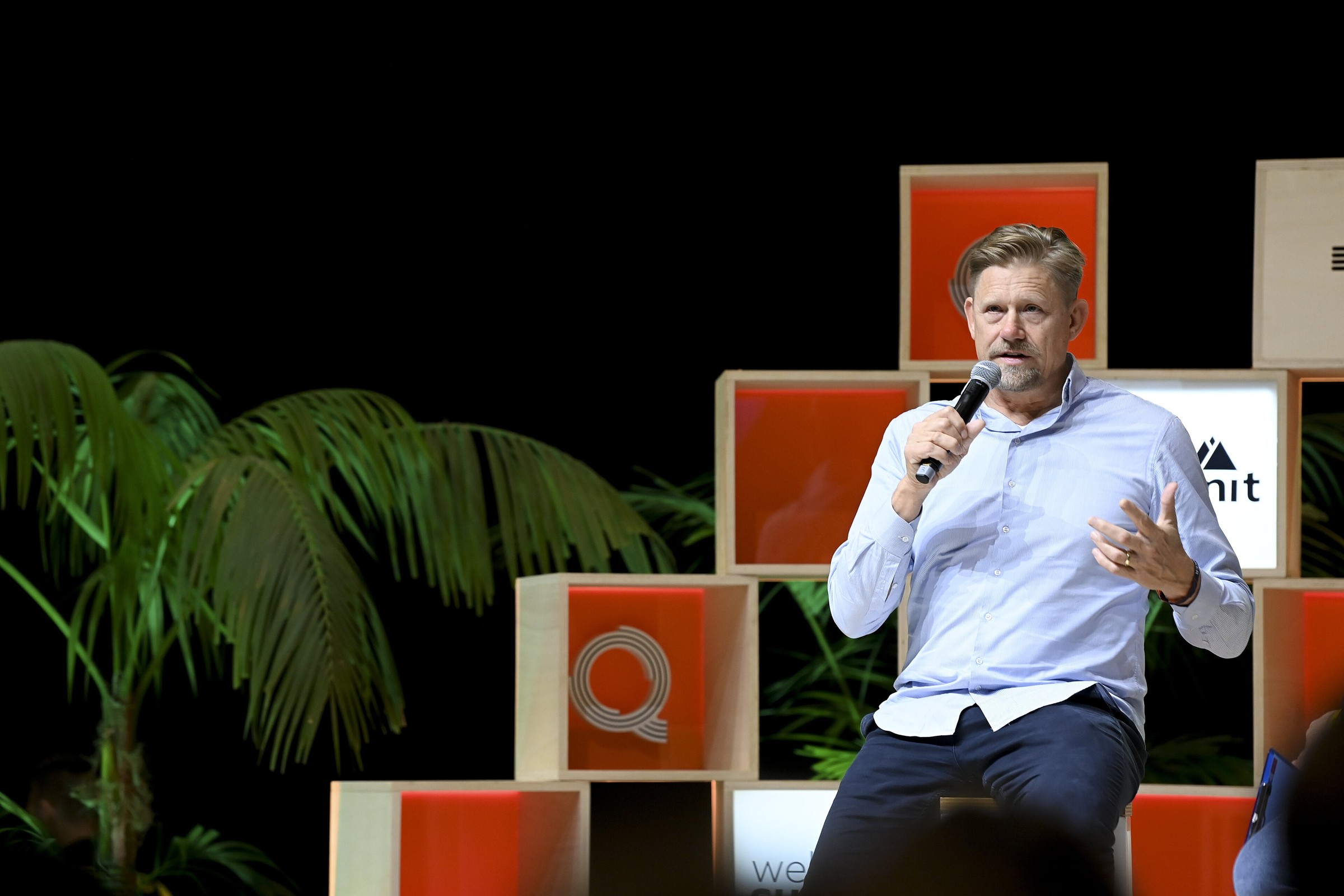
Schmeichel made the penalty area feel occupied before the ball entered it. His starting position, voice and willingness to collide with danger placed doubt in the attacker’s mind. The spread save, with arms and legs extended, borrowed from handball and became his signature in close situations. He finished with 129 Denmark caps and even scored once for the national team, a reminder that his impact was never confined quietly to the goal line.
Denmark’s 1992 European Championship victory gave him an international masterwork, including a semi-final shoot-out save from Marco van Basten. At Manchester United he won five league titles and captained the side during the final stages of the 1999 Champions League final. His long throws initiated attacks before fast goalkeeper distribution became an expected weapon. Schmeichel could overcommit and occasionally berated defenders after his own error, but the total package changed the physical and emotional standard of Premier League goalkeeping.
Rank 6: Iker Casillas
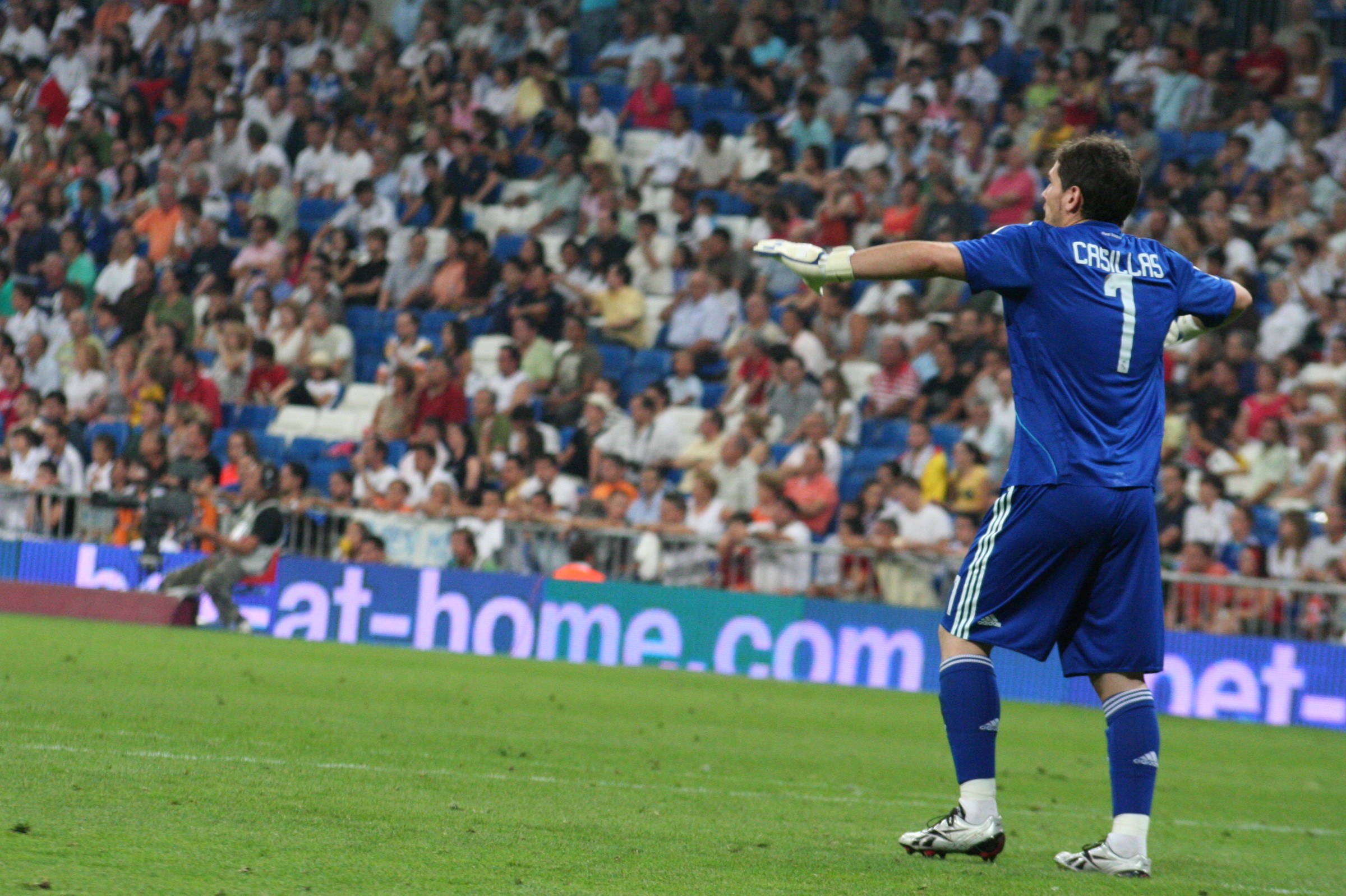
Casillas solved chances from distances at which technique becomes instinct. His hands arrived quickly, his feet could block without a preparatory step and he remained dangerous to a striker even when the defence had lost control. Spain’s sequence of Euro 2008, the 2010 World Cup and Euro 2012 placed him in an unusually low-scoring team, but the goalkeeper still had to settle decisive moments. His foot save from Arjen Robben in the 2010 final is the clearest example.
UEFA records 177 Champions League appearances for Casillas, more than any other goalkeeper. He won the competition three times with Real Madrid, beginning as a teenager and returning from the bench to protect the 2002 final. Crosses and distribution were less secure than his reflex work, particularly as pressing changed the demands of possession. That prevents a top-five place. Casillas nevertheless carried the technical burden of elite goalkeeping across club turmoil and Spain’s greatest period, with a temperament that often became calmer as the match became more severe.
Rank 5: Dino Zoff
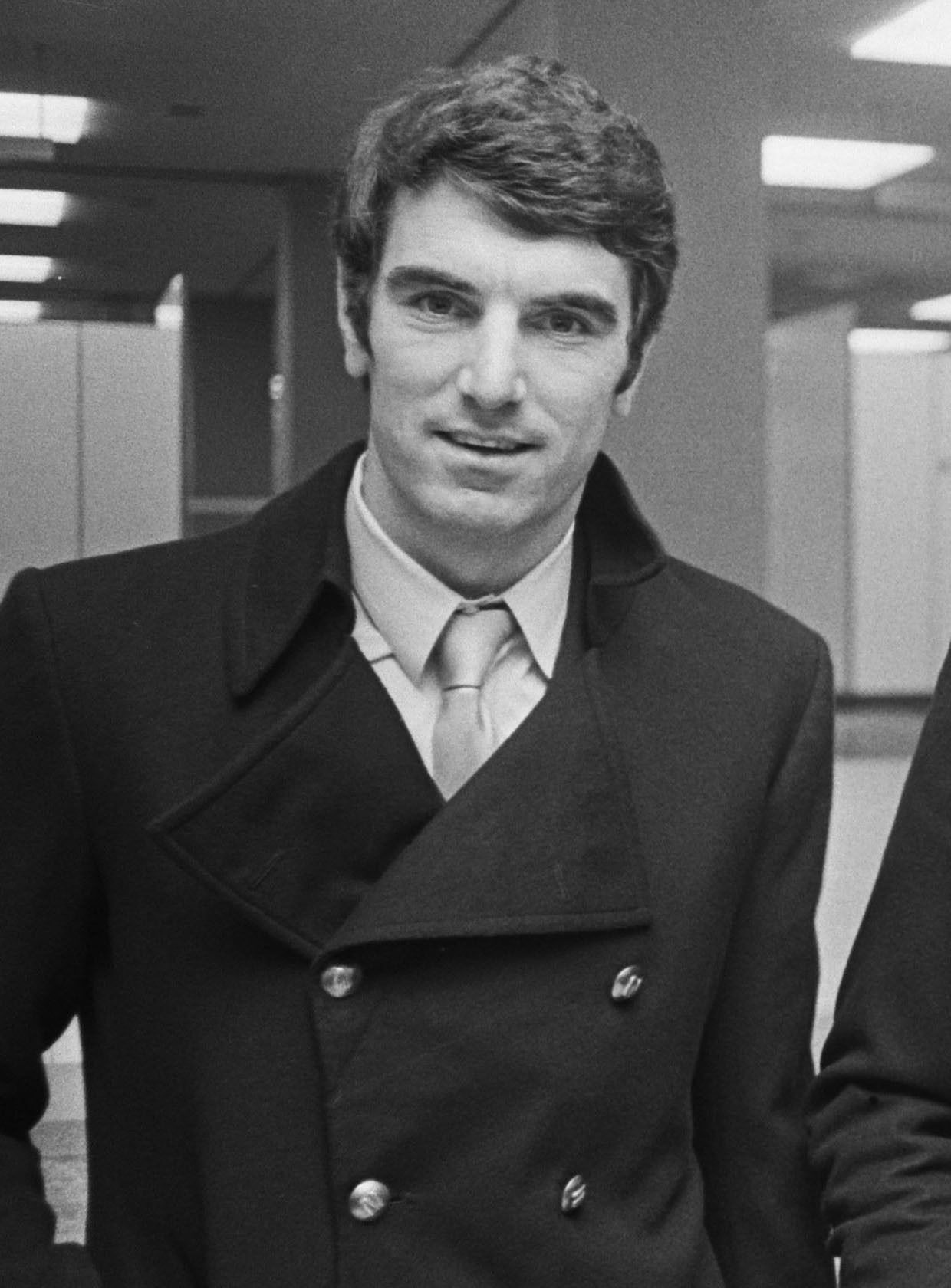
Zoff’s stillness was an active skill. He adjusted before the shot, positioned his hands early and avoided the theatrical movement that can disguise late reading. Between 1972 and 1974 he went 1,142 minutes without conceding for Italy, an international record built across changing opponents and match states. At 40 he captained the country to the 1982 World Cup, making a late goal-line save against Brazil that preserved the decisive 3-2 win.
Six Serie A titles with Juventus and 112 Italy caps give the career exceptional scale. Zoff was not an adventurous passer and rarely left the area in the manner of Carrizo or Grosics. His value lay in reducing variation: weather, pressure and age appeared to change little. The 1970 World Cup passed without him starting and Italy’s failure to qualify in 1974 interrupted the international story, yet his later response deepened it. Few goalkeepers have made concentration look so close to a repeatable craft.
Rank 4: Gordon Banks
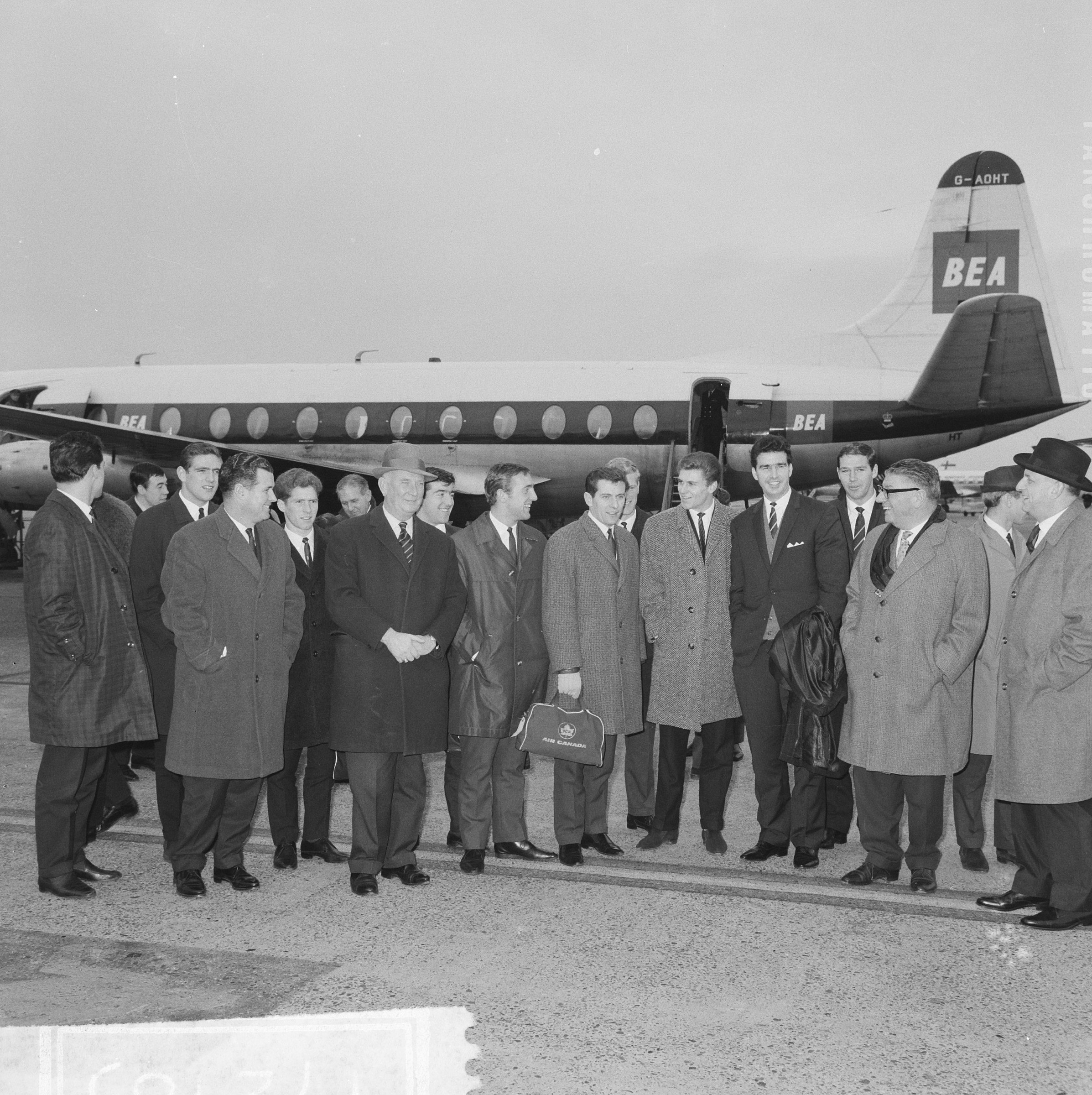
The save from Pelé in 1970 survives because every component was almost impossible: the downward header, the heat, the pace of the bounce and the distance Banks had to cover. It was not an isolated feat. Banks built his game on compact footwork, a strong lower hand and the ability to change direction after setting. He won 73 England caps and kept four clean sheets during the 1966 World Cup triumph.
His club honours were limited compared with those of Zoff or Buffon, although League Cup wins with Leicester and Stoke involved decisive performances. England’s wider defensive strength also requires acknowledgement. Banks stands fourth because observation from opponents, team-mates and surviving film converges so strongly on technical excellence. A car accident cost him the sight in one eye and ended his top-level English career at 34, shortening the statistical record. The available prime is sufficiently clear: against the best finishers, he repeatedly made correct positioning and extraordinary reaction look like parts of the same action.
Rank 3: Gianluigi Buffon
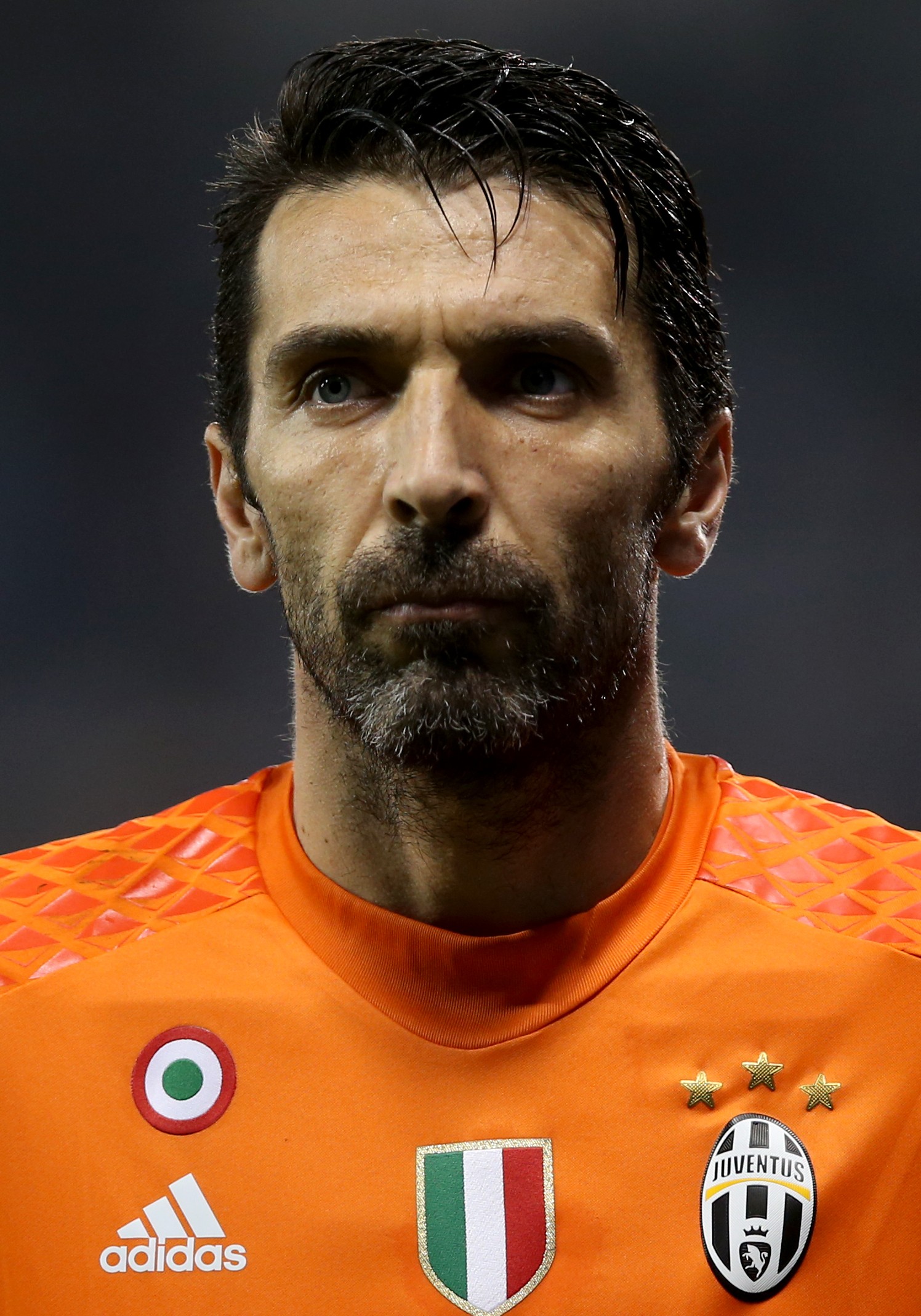
Buffon’s career is not merely long. The remarkable fact is how many versions of elite football it contains. He debuted in Serie A at 17, excelled behind Parma’s aggressive 1990s side, became the world’s most expensive goalkeeper and later adapted his positioning as pace and recovery inevitably declined. His 176 Italy caps remain the national record, and he conceded twice in seven matches during the 2006 World Cup win, neither goal scored by an opponent in open play.
Early Buffon could fly across goal and smother at a striker’s feet. The mature version moved less, organised earlier and protected central space. He won ten Serie A titles on the field with Juventus, stayed after relegation in 2006 and reached three Champions League finals without winning one. That missing European Cup is a real gap but not a verdict. Buffon ranks below Neuer because the German changed the tactical possibilities of the whole team, and below Yashin because the Soviet’s individual historical case remains singular. For sustained goalkeeping quality, Buffon’s record may be the strongest of all.
Rank 2: Manuel Neuer
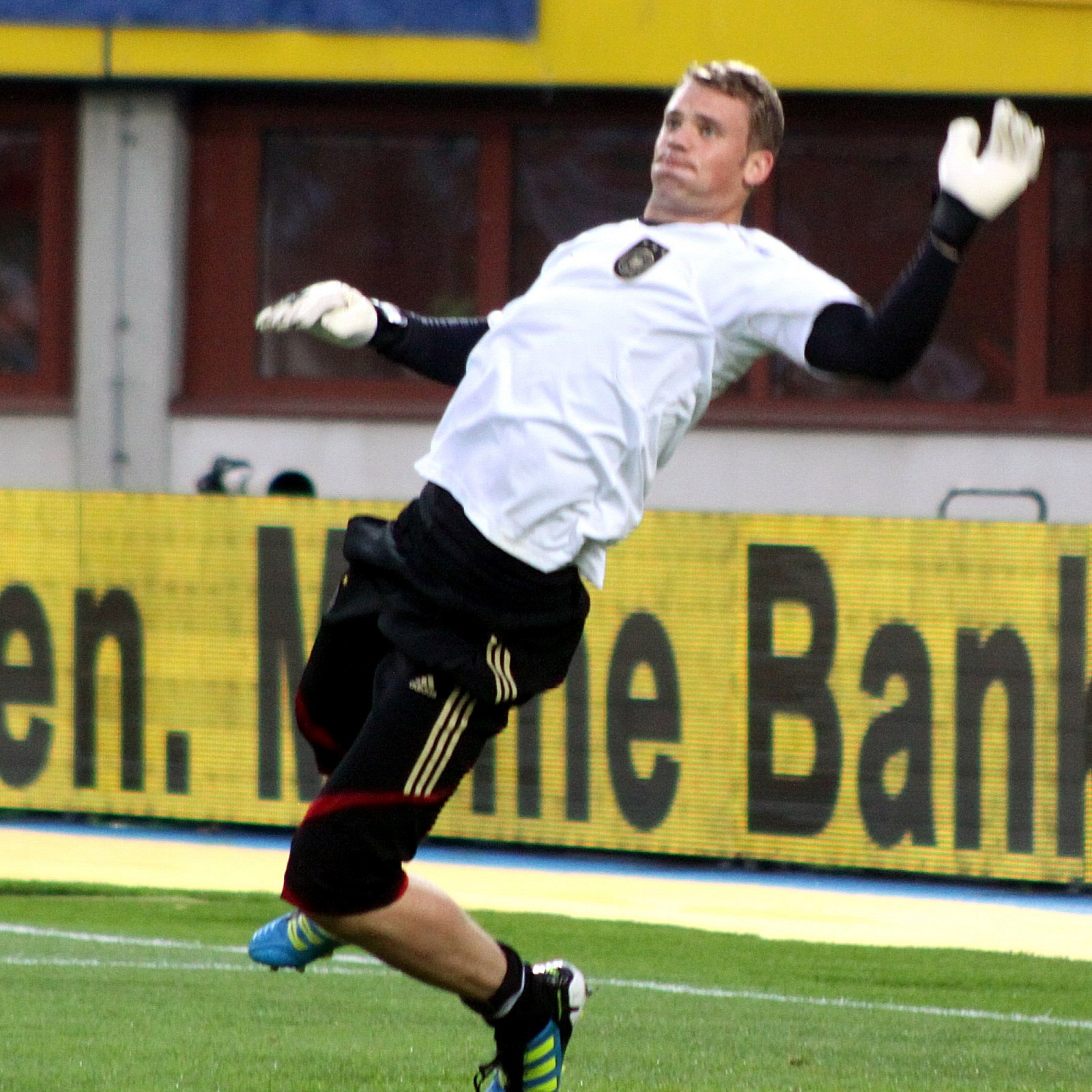
Neuer did not invent leaving the penalty area, but he made it a stable requirement for teams defending near halfway. His speed allowed Bayern and Germany to compress the pitch; his passing gave them an extra player during build-up; his conventional shot-stopping remained good enough that the tactical experiment carried little obvious sacrifice. The 2014 World Cup match against Algeria, with Neuer repeatedly intercepting outside his box, was not recklessness. It was the system surviving exactly as designed.
After returning to international football for the 2026 tournament, Neuer became the first goalkeeper to reach 21 World Cup appearances and ultimately finished with 23. That late chapter added to a career containing two Champions Leagues, a World Cup and repeated recovery from serious injury. Errors did occur, especially when timing declined, and Yashin’s penalty record and individual recognition remain beyond him. Neuer takes second because his influence can be seen in recruitment, academy coaching and tactical plans across the professional game. Modern elite teams now ask whether a keeper can perform his work, not whether that work belongs to goalkeeping.
Rank 1: Lev Yashin
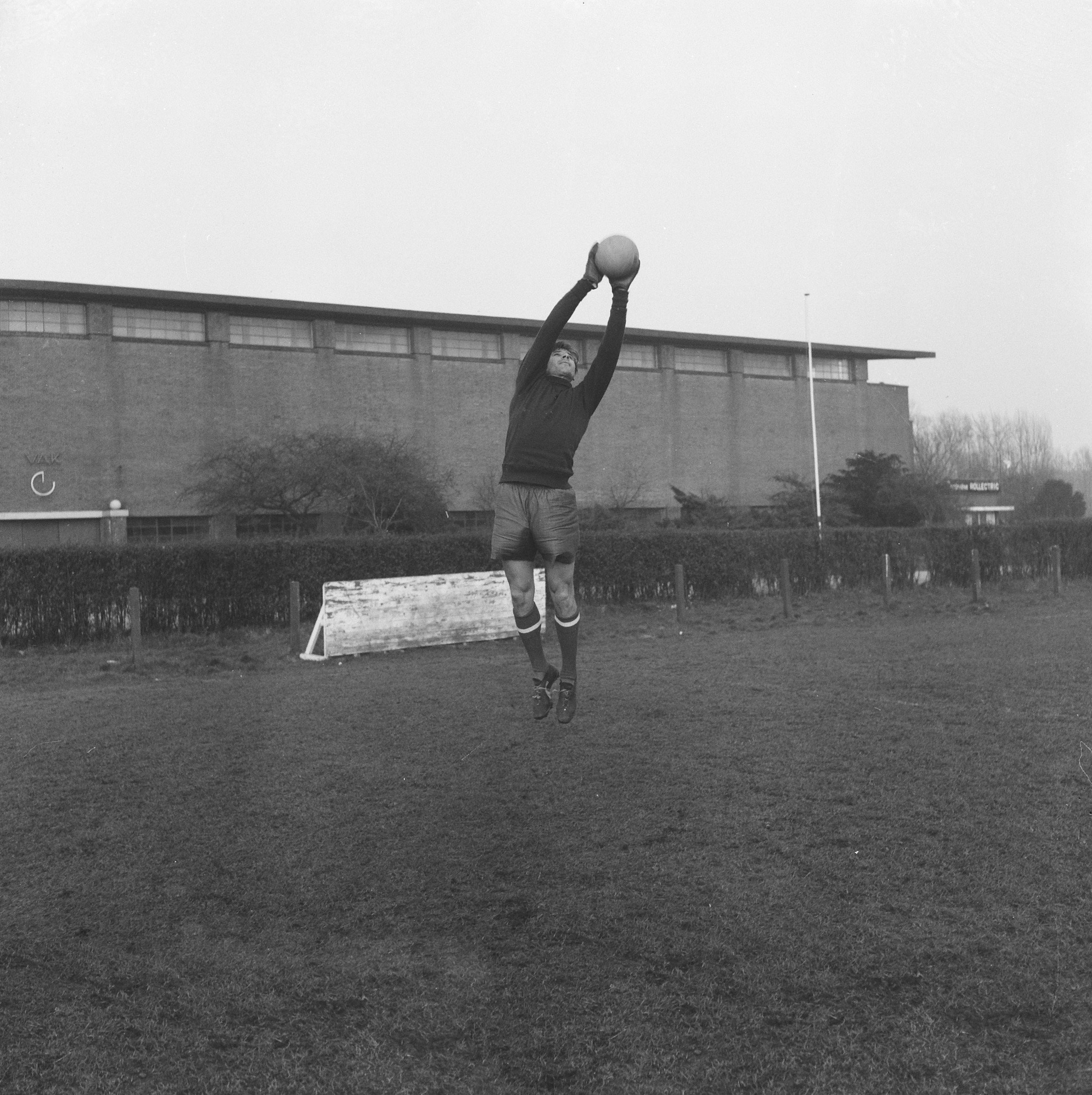
Yashin’s reputation has survived a shortage of complete match footage because the available forms of evidence reinforce one another. Contemporary opponents describe an intimidating penalty-area presence. Film shows an athletic goalkeeper willing to punch through traffic, direct defenders and launch attacks. FIFA credits him with about 275 clean sheets and more than 150 penalty saves across his career, figures whose historical definitions are necessarily less standardised than modern databases but whose scale remains astonishing.
He won Olympic gold in 1956, the inaugural European Championship in 1960 and five Soviet league titles with Dynamo Moscow. The 1962 World Cup brought severe criticism after an error-prone tournament; a year later he won the Ballon d’Or, still the only goalkeeper to receive the award. That recovery matters. Yashin was not preserved as a flawless monument but tested publicly and restored by performance. Neuer’s tactical influence is more visible to today’s reader, Buffon’s longevity more easily measured and Banks’s technique better captured on colour film. Yashin stays first because peak shot-stopping, command, penalty expertise, innovation and standing among his own contemporaries meet in one career more completely than in any rival.
Notable omissions
Jan Jongbloed, Gilmar, Ray Clemence, Jan Tomaszewski, Dida, Andoni Zubizarreta, Fabien Barthez, Hugo Lloris, Jan Oblak and Emiliano Martínez all have credible cases. The hardest exclusions were Gilmar, whose two World Cup wins came behind exceptional Brazil sides, and Clemence, whose club record was immense but whose international opportunity was divided with Shilton. Martínez remains active and already owns a great tournament case; a longer elite club peak could move him into a future edition.
How to read the order
The gaps are not equal. Yashin, Neuer and Buffon form a narrow leading group for different reasons. The middle of the list contains especially close comparisons between international peaks and longer club careers. A different weighting of innovation, shoot-out performance or peak team strength would move several names without invalidating the evidence. Our order is intended to make those choices visible, not to conceal them behind a total score.