
The 30 finest defenders in men’s football history, ranked
Defending has never been one job. It has meant surviving alone against a centre-forward on a churned pitch, commanding an offside line, covering a flying full-back, starting attacks from the edge of the penalty area and carrying the ball into midfield when an opponent refuses to press. The best defenders solved the problems of their own time. A few also changed what later generations thought the position could be.
The hardest judgement is how to compare different kinds of defensive authority. One candidate redefined the possibilities of the libero, another sustained world-class standards across left-back and centre-back, while another organised an aggressive line with extraordinary precision. The order is not reached by counting trophies or arranging players by reputation. Our countdown makes the case from role, performance, influence and evidence, leaving the final decision until the end.
The list contains centre-backs, sweepers, stoppers, full-backs and wing-backs from the 1920s to the present day. It is a subjective editorial ranking, built from defined criteria and source-led research. Its purpose is not to end the argument. It is to make a clear argument that can be examined, challenged and improved.
How we ranked the greatest defenders
Peak defensive performance carries the greatest weight. The first question is what a player could do at his best against elite opposition, especially when the match demanded judgement rather than routine dominance. Positioning, anticipation, one-against-one defending, aerial work, recovery, communication and control of space matter more here than goals or highlights. The exact test changes with the role. A libero is not judged as if he were a penalty-box stopper, and an attacking full-back must still make a defensible case for the defensive half of his job.
Longevity and consistency come next. A brilliant two-year peak can earn a place, but the highest positions require a larger body of elite work. We have considered how long each defender remained authoritative, how well his game survived tactical change and whether injuries or uneven form substantially reduced his case. Active players are eligible, although their place is naturally more provisional because the evidence is still growing.
Major matches matter, but tournament mythology does not replace a career. World Cups, continental championships, European club competitions and decisive domestic matches provide demanding evidence. They also create unequal opportunities. A defender from a less successful national team should not be treated as an inferior player simply because he had fewer knockout matches, while a decorated player does not receive automatic credit for every medal won by a dominant side.
Team importance, tactical influence and quality in possession help separate exceptional candidates. Some defenders made an existing system work; others allowed coaches to attempt something more ambitious. That influence can appear in the organisation of a back line, the freedom given to team-mates, the control of transitions or the ability to turn a regain into an attack. Passing is relevant because it changes what a defence can become, not because modern football has made neat distribution a substitute for defending.
Club and country are assessed together. There is no fixed numerical split, because careers offer different quantities and qualities of evidence. A long club career can reveal week-to-week consistency that a national-team career cannot. International tournaments can reveal adaptation, leadership and performance under compressed pressure. Neither arena is used as a universal tie-break.
Finally, every player receives historical context. Laws, pitches, boots, travel, medical care, tactical support, pressing demands and the availability of footage have all changed. Early defenders therefore carry a wider evidence range than recent ones. Contemporary reports, official archives and serious histories help, but they cannot make the 1930s as observable as the 2010s. Where the record is thinner, the ranking is slightly more cautious and the uncertainty is stated rather than hidden.
The order is not a mathematical score. It is the final editorial judgement after those criteria have been applied to the question being asked: who are the greatest defenders, rather than the most successful, most famous or most statistically productive defenders?
The 30 greatest defenders of all time
Rank 30: Armando Picchi
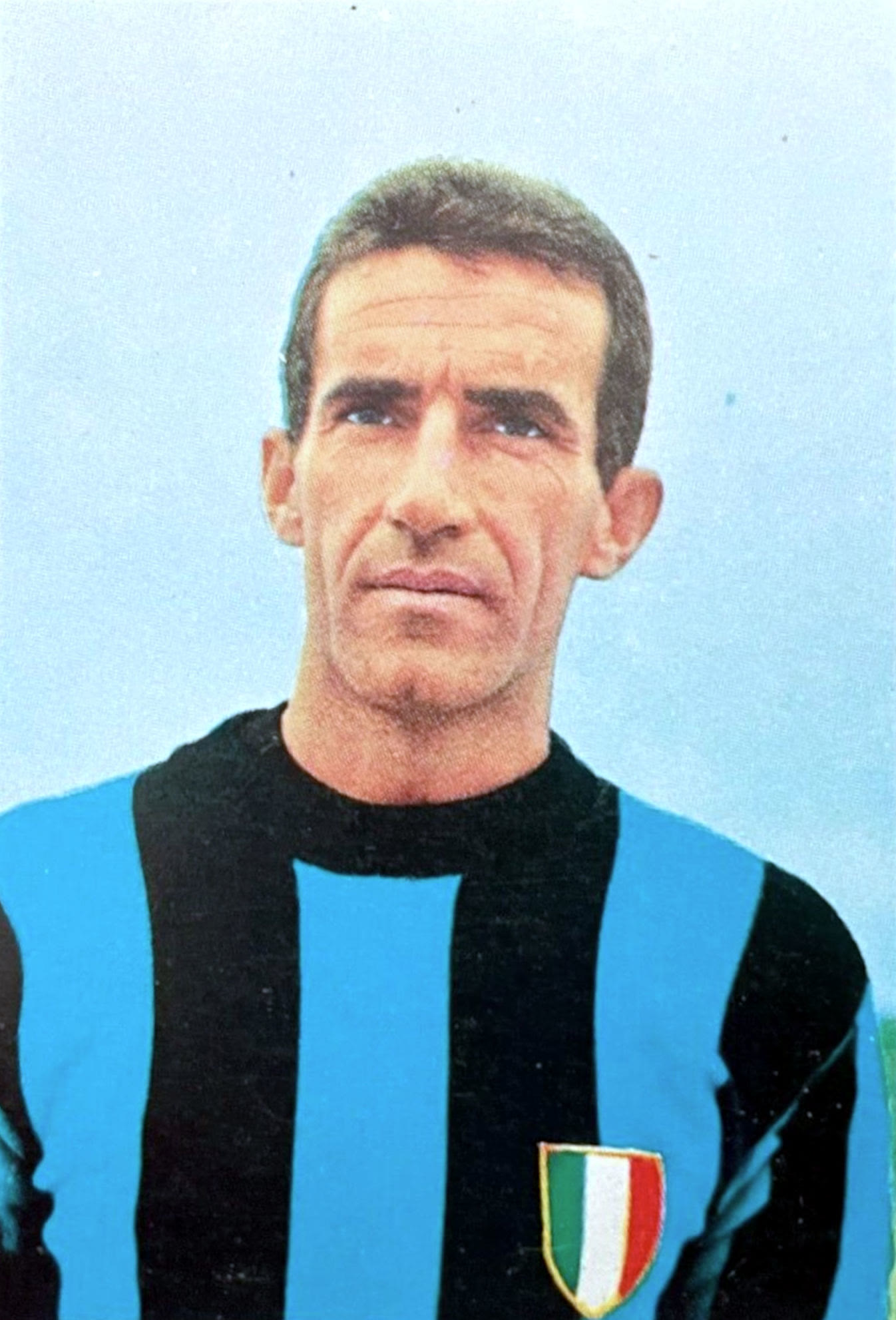
Armando Picchi was the defensive intelligence at the rear of Helenio Herrera’s Grande Inter. He arrived as a full-back and became the libero behind a fierce, disciplined unit, reading danger, controlling depth and giving the side its calmest first pass. The popular caricature of that Inter team as a massed retreat misses both Picchi’s football and the precision required by the system. The captain had to decide when to cover, when to step forward and when an apparently safe situation was about to turn.
Inter won successive European Cups in 1964 and 1965 with Picchi leading the side, and his importance extended beyond the medals. He represented the composed half of a famous defensive partnership: others could attack the duel because he protected the consequence. Inter’s retrospective and the Italian Football Federation’s Hall of Fame record support that status. Picchi opens the list because his tactical authority remains historically significant, although the depth and accessibility of surviving evidence are weaker than for most players above him.
Rank 29: Domingos da Guia
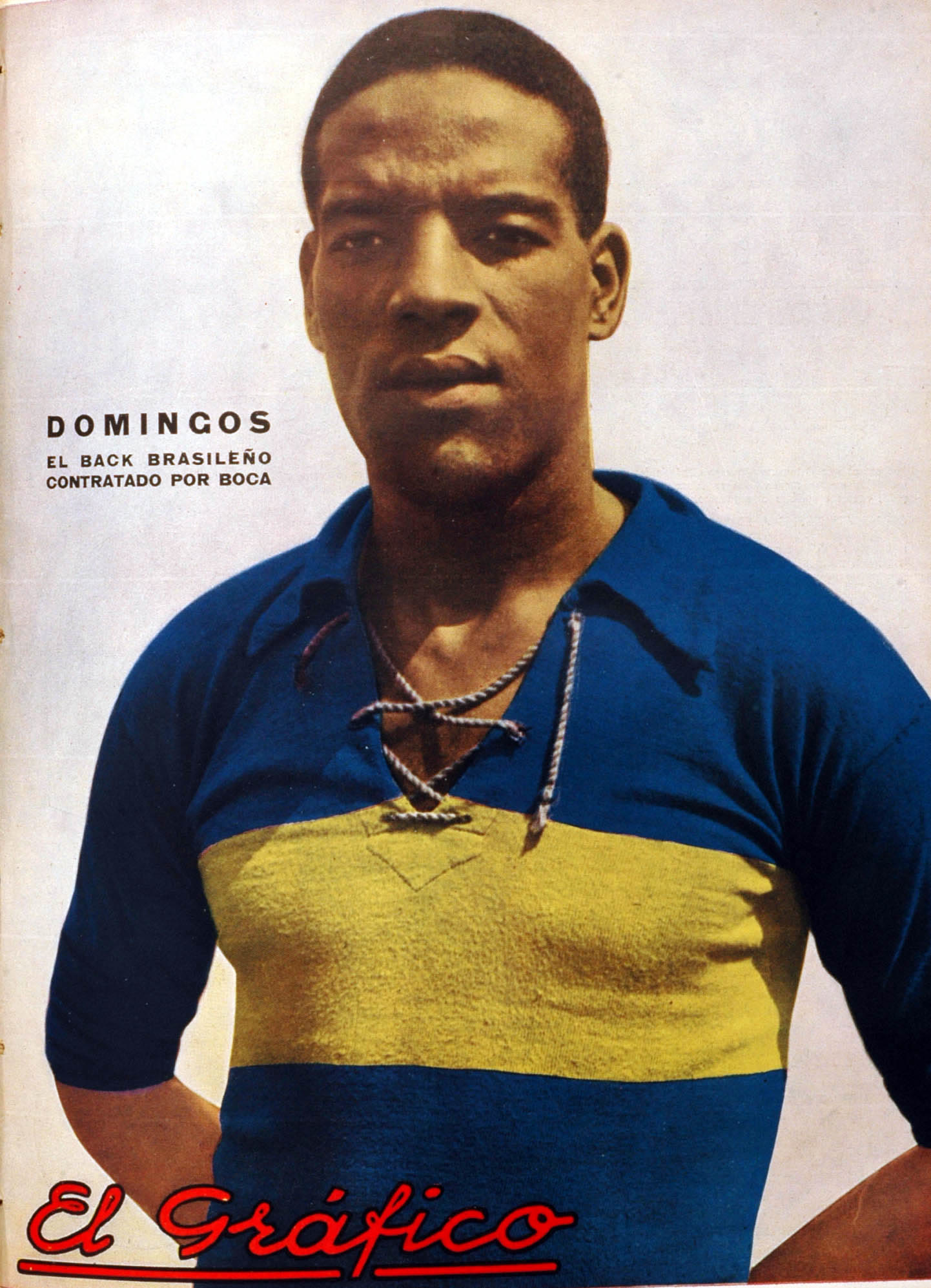
Domingos da Guia belongs in this ranking because the idea of a Brazilian defender combining composure, technique and individual escape did not begin with the television age. Known as the Divine Master, he was celebrated for controlling the ball under pressure and moving away from forwards when a hurried clearance would have been safer. That confidence could invite risk, yet it also gave his teams an unusual route out of defence. Contemporary reputation placed him among the leading South American players of his generation, not merely among its defenders.
His career crossed major clubs in Brazil, Uruguay and Argentina, and he was central to Brazil’s run to third place at the 1938 World Cup. Flamengo’s account of its great Black players places Domingos within a line of defining club figures. The surviving film is limited and later retellings can become romantic, so this position carries acknowledged uncertainty. Even after that discount, the testimony is too strong and too consistent to leave him out. Domingos ranks below defenders whose full elite body can be inspected more closely, but above many modern candidates whose influence was less original.
Rank 28: José Nasazzi
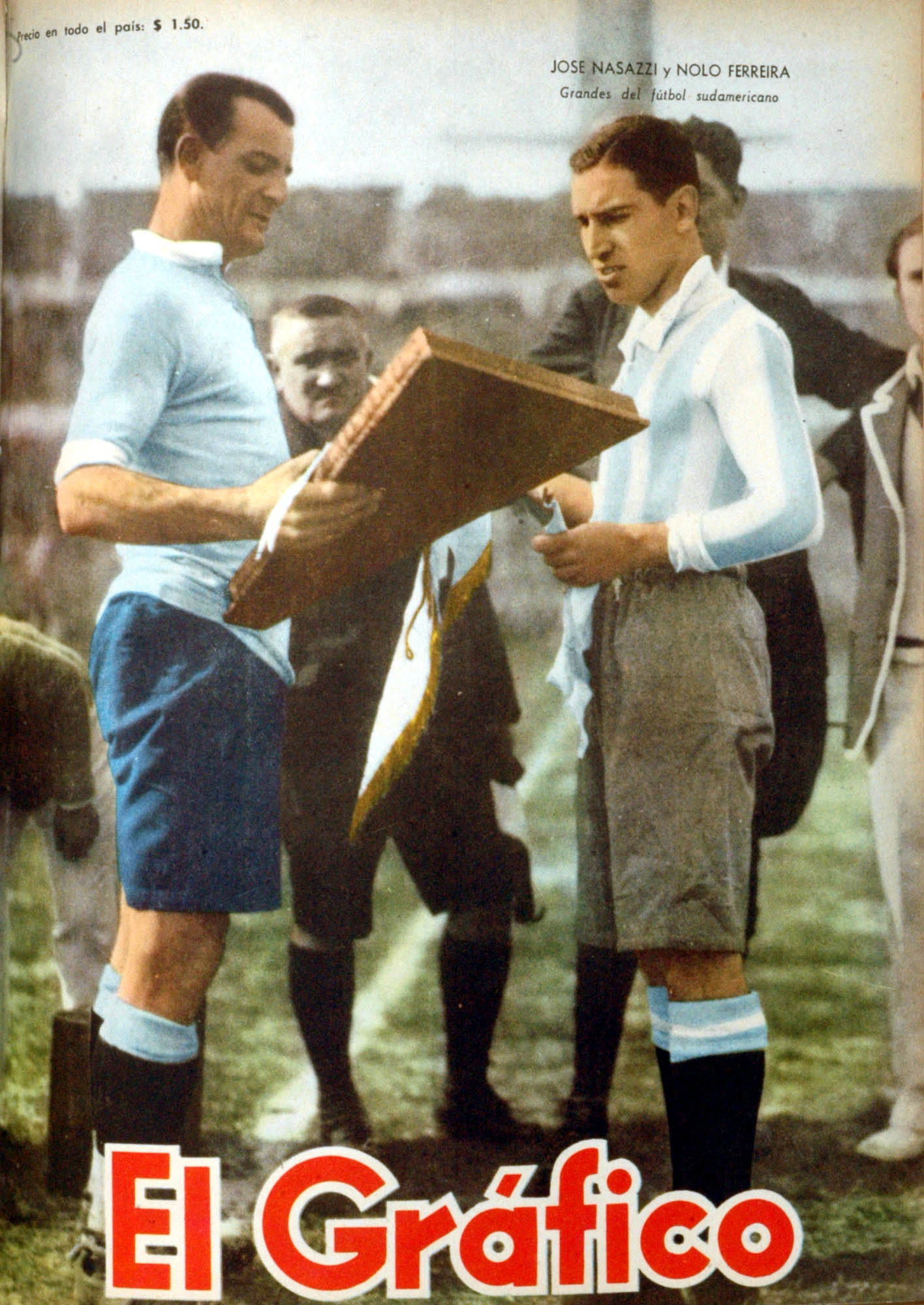
José Nasazzi was the captain at the centre of Uruguay’s first great age. He led the national side to Olympic gold in 1924 and 1928, when the Olympic tournament represented the game’s global summit, and then to victory at the inaugural World Cup in 1930. In the terminology of his time he was a full-back, but that meant operating as one of the two deepest outfield defenders, confronting forwards in spaces that a modern centre-back would recognise.
The Uruguayan Football Association’s profile presents Nasazzi as both leader and defensive reference point. His case is not simply that he lifted three major trophies. Reports describe authority, physical command and an ability to impose order on matches that could be far more direct and violent than modern footage suggests. The caution is obvious: very little complete film survives, and we cannot pretend to make a frame-by-frame comparison with Nesta or Van Dijk. Nasazzi is therefore ranked as the greatest clearly documented defensive leader of football’s first international dynasty.
Rank 27: José Santamaría
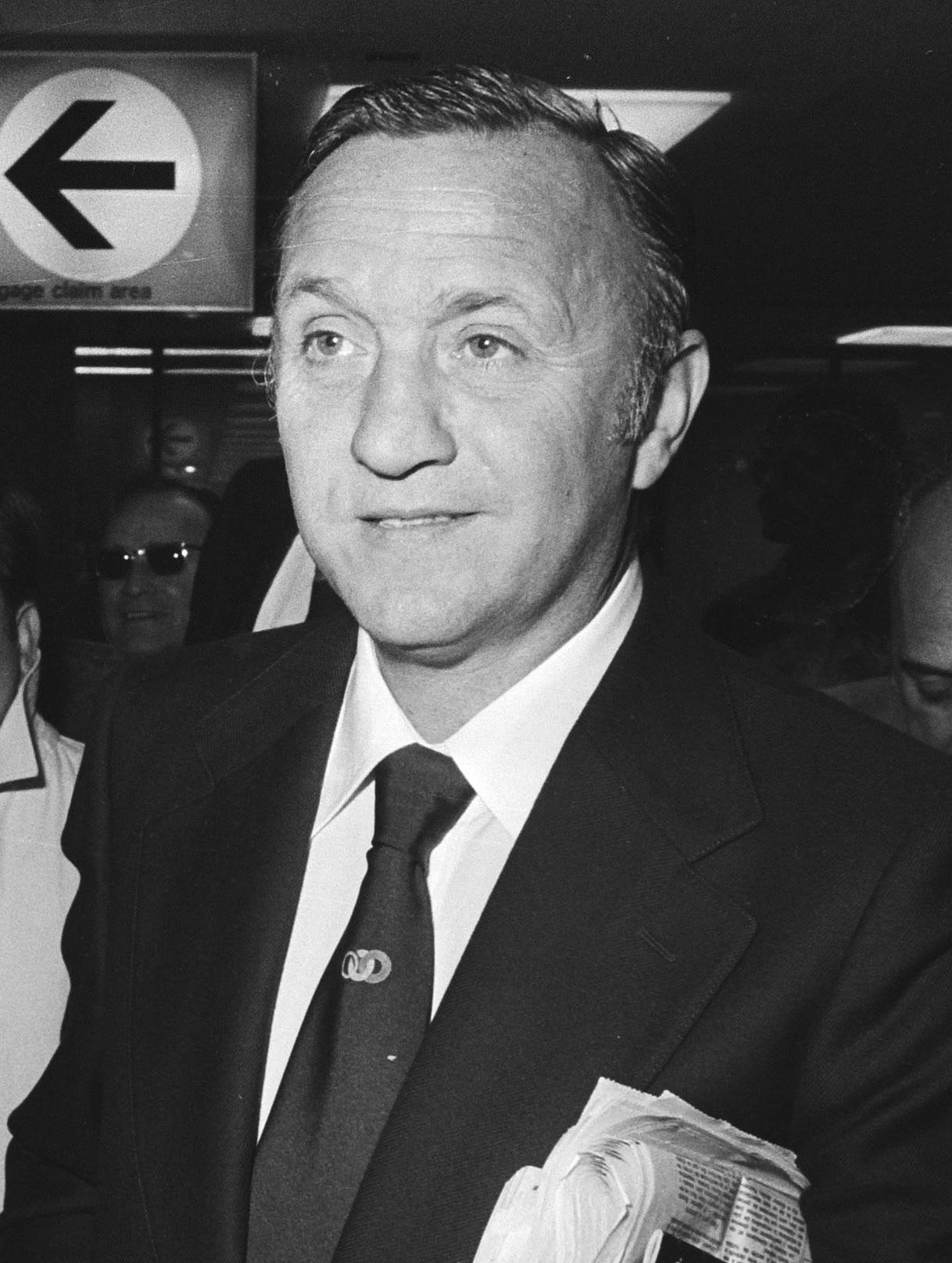
José Santamaría gave structure to one of football’s most celebrated attacking teams. Real Madrid’s forwards dominated the images, but the side still needed a centre-back who could win contact, judge the ball early and defend the large spaces left by its ambition. Santamaría supplied that security after arriving from Nacional. He was direct without being crude, powerful in the air and sufficiently assured to begin play rather than merely stop it.
His international career was unusual, spanning Uruguay and later Spain, while his club career placed him in Real Madrid teams that won four European Cups. The club’s official profile records his role across that era. Santamaría is sometimes reduced to the defender who supported Di Stéfano, Puskás and Gento. That underestimates the value of making an adventurous side stable. He sits 27th because the specialists above him either reached a still higher individual peak or expanded the possibilities of their position more radically, not because his contribution was peripheral.
Rank 26: Alan Hansen
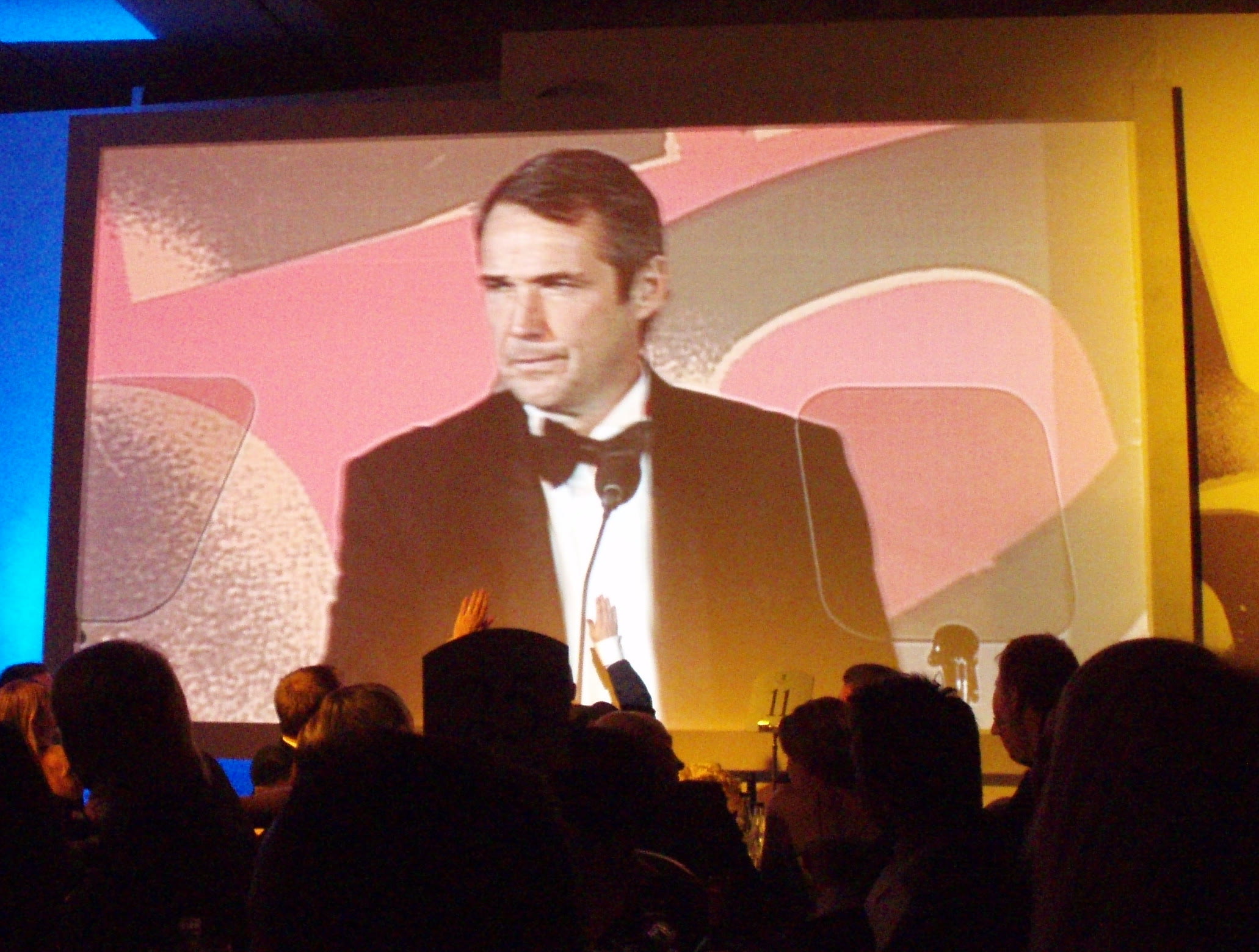
Alan Hansen defended by making the next action look inevitable. His first touch opened a passing lane, his movement drew a forward away from danger and his pace allowed Liverpool to defend higher than a slower centre-back would have permitted. He was not a defender who avoided physical contests. He was one who reduced how often a desperate contest became necessary. That distinction made him unusually valuable in a team expected to control domestic matches and survive Europe’s best counterattacks.
Hansen won eight league titles and three European Cups during a long Liverpool career, later captaining the club. The Liverpool profile supplies the career framework, but the ranking rests on role as well as honours. His carrying and distribution were elite tools, while his recovery speed protected the risks they created. Scotland never provided an international run equal to his club platform, and injuries affected the end of his career. Those limits keep him below the most complete all-context defenders, yet at his peak few British centre-backs made defending and construction look so naturally connected.
Rank 25: Virgil van Dijk
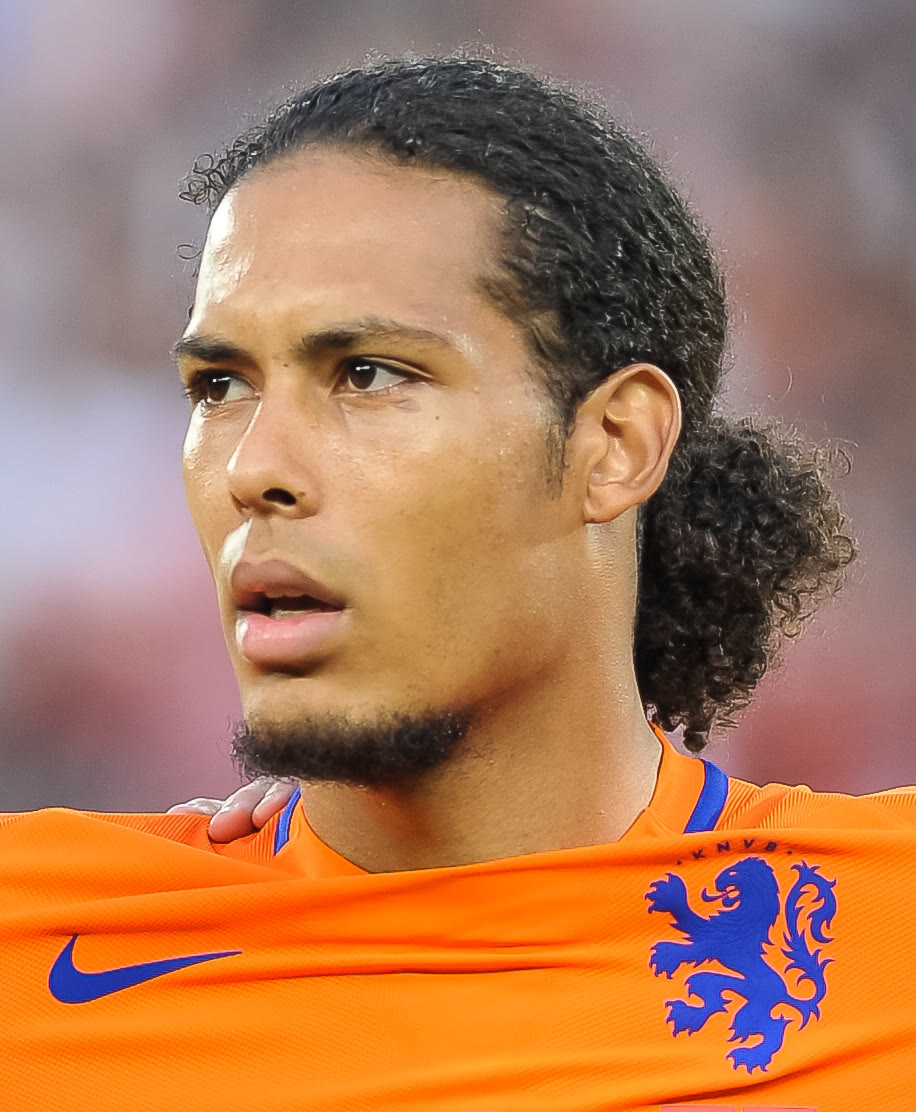
Virgil van Dijk’s best seasons offered a modern version of defensive control. Liverpool asked its full-backs to attack, pressed aggressively and left substantial ground behind the ball. Van Dijk protected that ground through speed, body position and patient one-against-one defending. He often delayed rather than lunged, steering an attacker away from the most dangerous route while the team recovered. In the air he was commanding; in possession he could switch play early enough to turn pressure into an attack.
He was central to Liverpool’s 2019 Champions League victory and 2019/20 league title, and the club’s current player record documents a career that remained active at this ranking’s cut-off. His peak belongs higher than 25th in a pure best-season list. The all-time question is less generous. A serious knee injury interrupted his prime, and he has not yet accumulated the same duration of elite international and club evidence as the defenders above. This is the most provisional position in the 30: further high-level seasons could move Van Dijk materially upward.
Rank 24: Carles Puyol
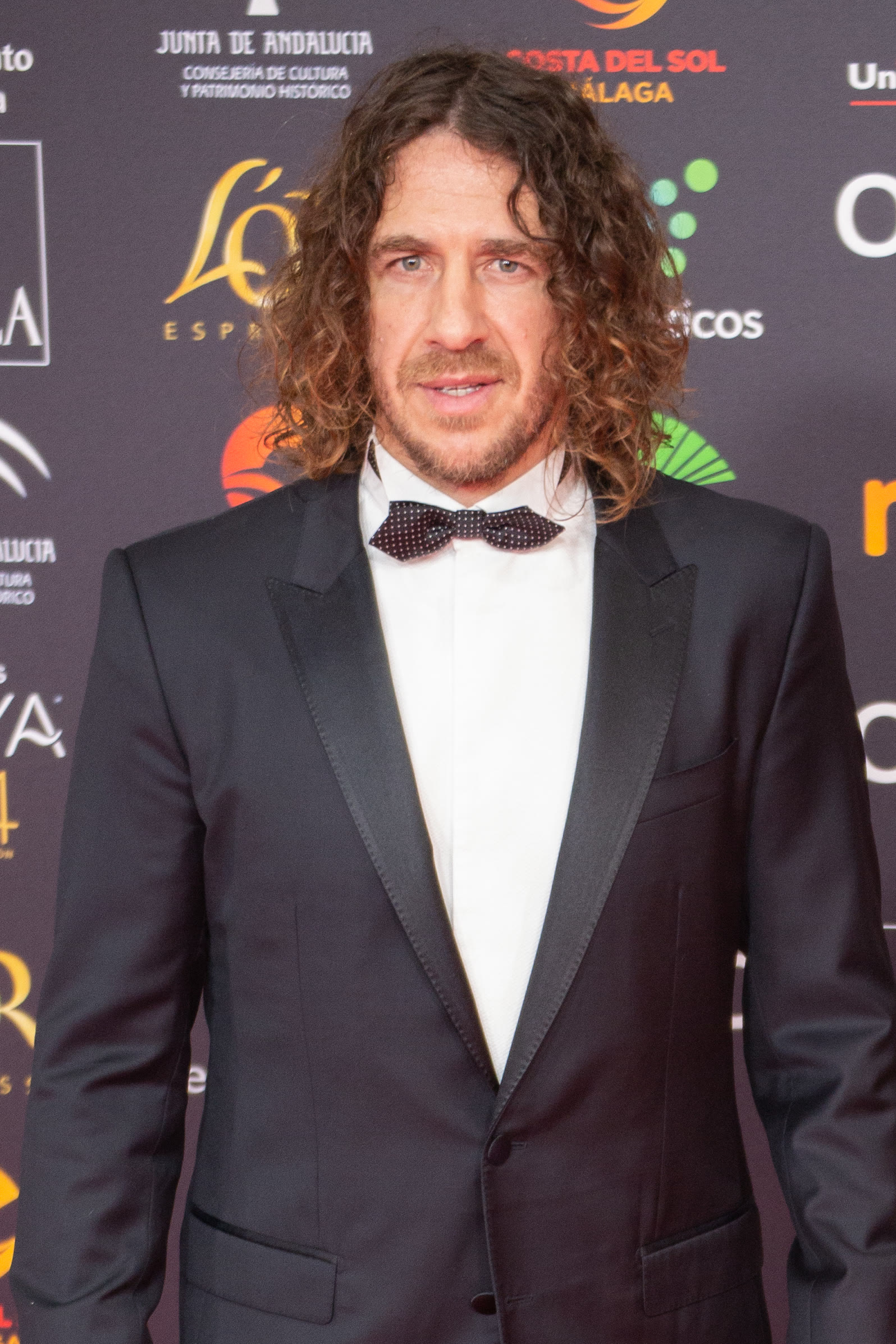
Carles Puyol was the corrective force inside teams remembered for the ball. Barcelona’s possession could leave defenders exposed when pressure failed, and Spain’s finest side still needed someone willing to defend the ugly second action. Puyol attacked those moments. He covered colleagues, competed ferociously in the air and treated a loose ball in his own area as a personal emergency. The style was dramatic, but the decisions beneath it were usually disciplined.
The Barcelona profile records a one-club senior career that included three Champions Leagues and six league titles. With Spain he won Euro 2008 and the 2010 World Cup, scoring the semi-final winner against Germany. His leadership and adaptability strengthen the case, as does his willingness to play at full-back when required. Puyol is outside the top 20 because his distribution was functional rather than transformative and injuries narrowed his later years. He remains one of the clearest examples of a defender whose individual qualities completed a team built around very different virtues.
Rank 23: Roberto Carlos
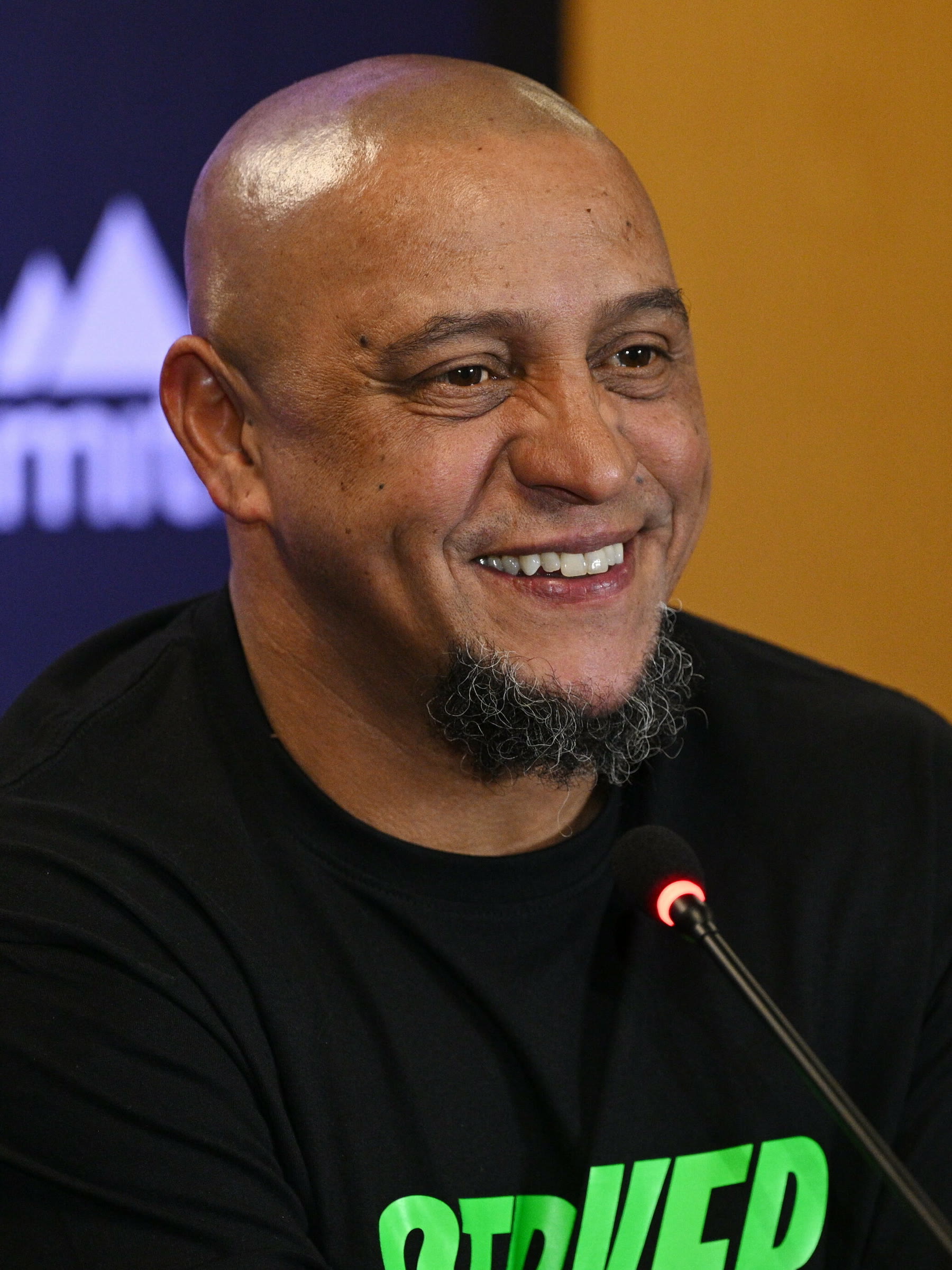
Roberto Carlos changed the geometry of the left flank. His acceleration forced opponents backwards, his repeated runs created width without a conventional winger and his shooting made dead balls and second phases dangerous from improbable distances. Those gifts can distract from his defensive work. At his best he recovered quickly, used a powerful low centre of gravity in contact and could survive the open-field duels created by his own positioning.
The Real Madrid career record places him within three European Cup or Champions League victories, while Brazil’s 2002 World Cup gave him the largest international prize. He was not as positionally immaculate as Maldini or as defensively complete as Djalma Santos. There were matches when the space behind him became the opponent’s route. Yet ranking a full-back only by how closely he resembles a conservative centre-back would misunderstand the position. Roberto Carlos sits 23rd because his attacking force changed what his entire team could attempt, while the defensive trade-offs stop him climbing further.
Rank 22: Marcel Desailly
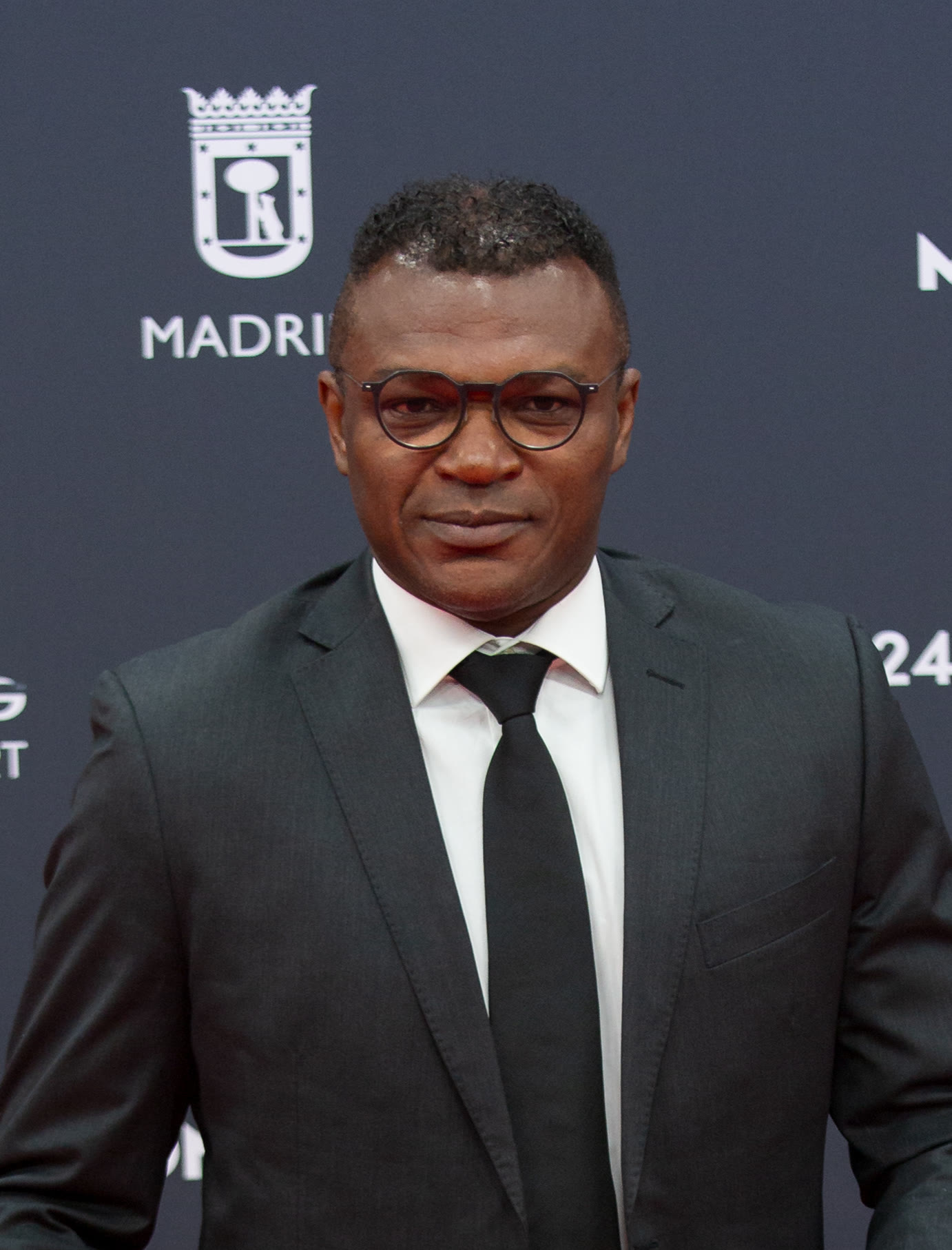
Marcel Desailly could dominate the penalty area as a centre-back and then step into midfield without losing his authority. That versatility mattered at Milan, where his power and defensive range complemented an already sophisticated unit. He was fast enough to cover space, strong enough to control elite forwards and comfortable enough on the ball to avoid turning every regain into another defensive phase.
Desailly won consecutive Champions Leagues with different clubs, Marseille in 1993 and Milan in 1994, then became a senior pillar of the France side that won the 1998 World Cup and Euro 2000. The French federation’s record establishes the international body. His red card in the 1998 final is a reminder that even a great tournament contained an error, not a reason to erase everything around it. He ranks below Thuram because his France team-mate supplied a slightly broader international case and below the finest organisers because Desailly’s greatness was more about individual command than remaking a whole defensive structure.
Rank 21: Ronald Koeman
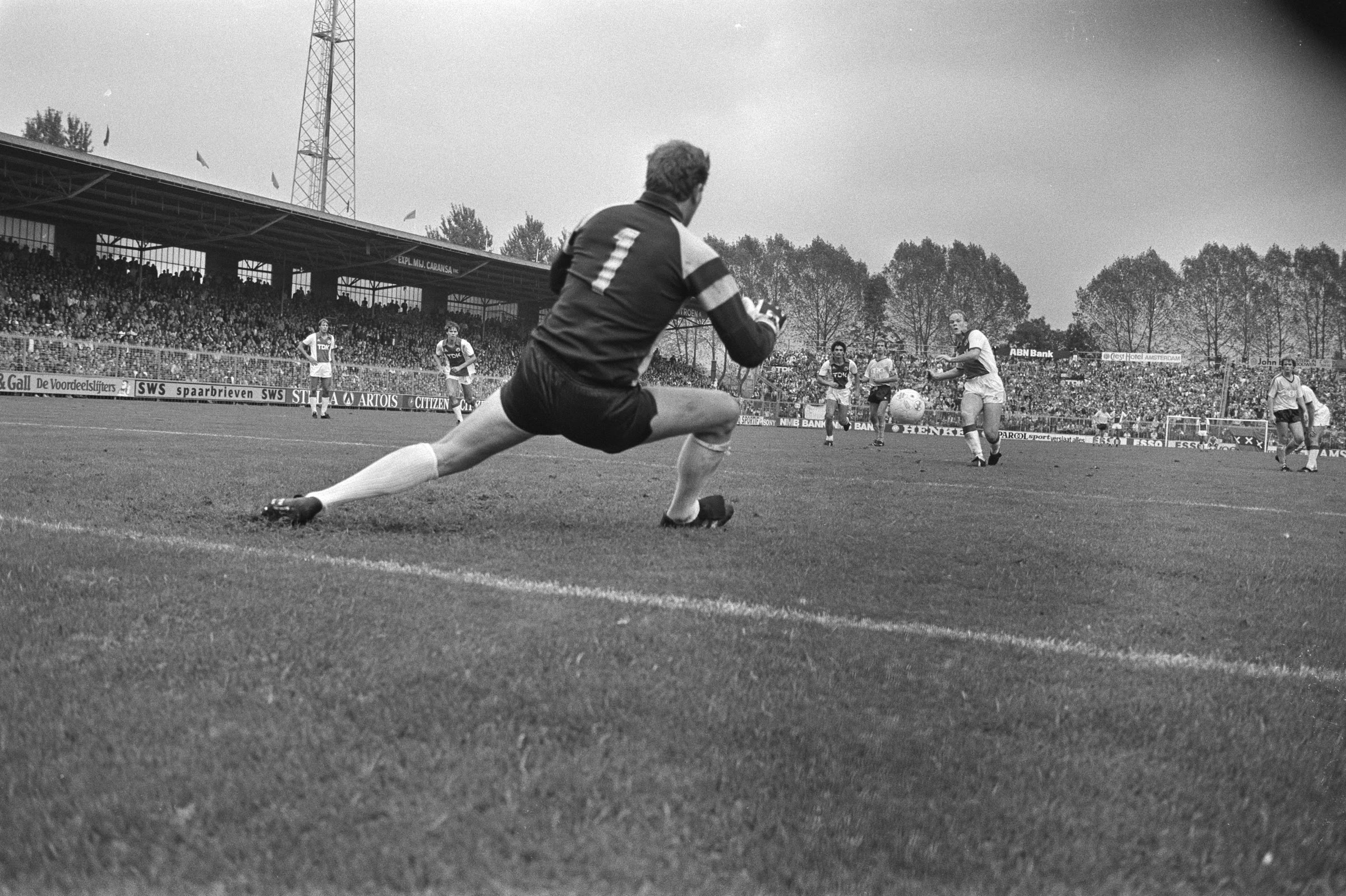
No defender on this list offered more direct attacking output than Ronald Koeman. He could break a line with a pass, carry into midfield, strike from distance and turn free-kicks or penalties into a major part of a team’s scoring. His goal at Wembley delivered Barcelona’s first European Cup in 1992, an event recorded in the club’s official profile. He had already won the competition with PSV and was an important figure in the Netherlands’ Euro 1988 triumph.
The goals do not earn him 21st on their own. Koeman belongs because his distribution gave a possession side its launch point and because he read enough danger to perform as the spare defender behind an aggressive structure. The limitation is speed. Opponents could expose him when the system failed and he had to defend a quick forward in too much space. That makes his case less complete than the sweepers above, particularly Baresi, Scirea and Beckenbauer. Koeman remains a landmark defender, but this ranking rewards the defensive cost of his attacking ambition as well as its spectacular return.
Rank 20: Lilian Thuram
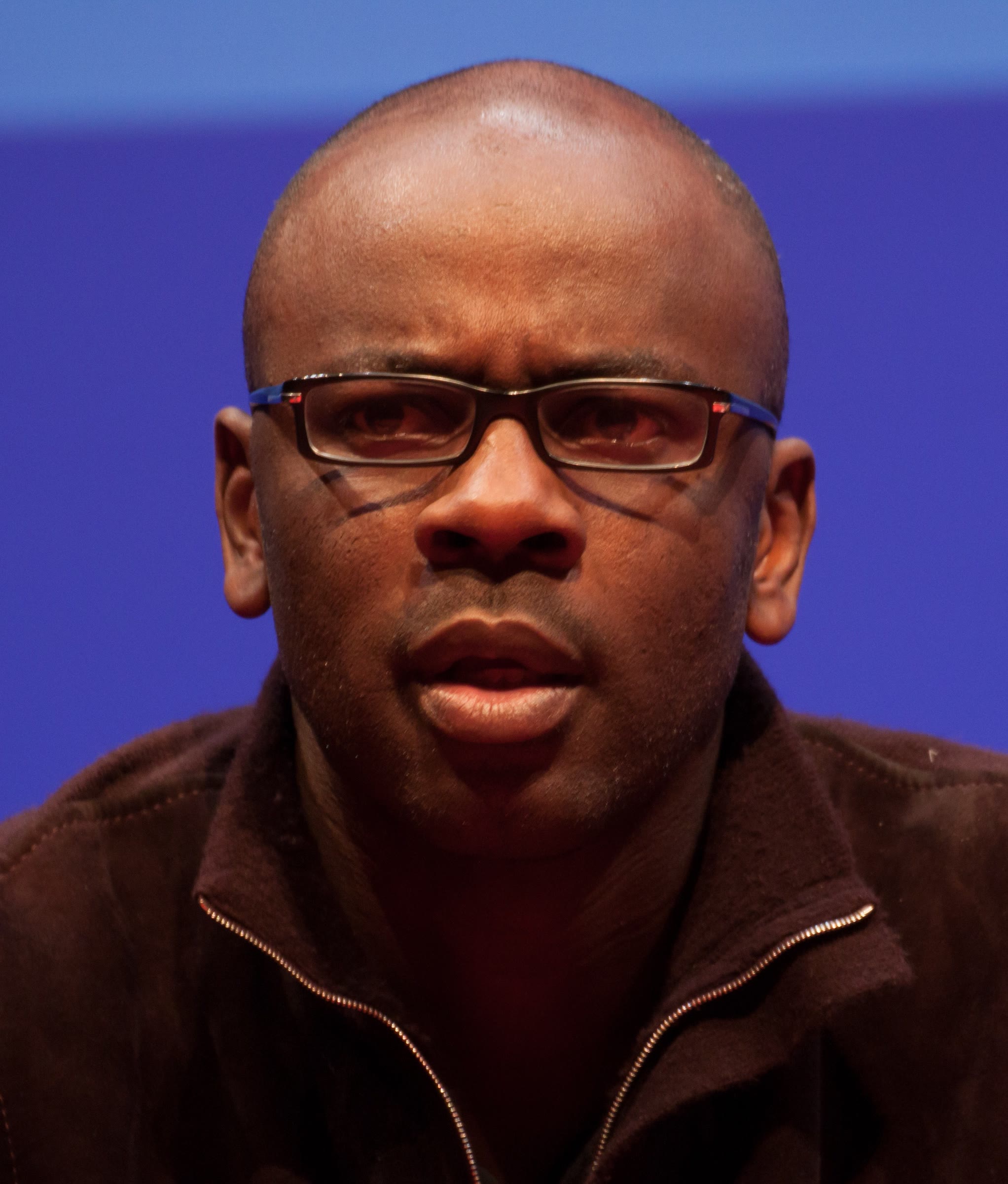
Lilian Thuram combined the recovery ability of an elite full-back with the strength and judgement of a centre-back. At right-back he could close the flank without constant protection. Centrally he understood the angles of a more compact game. His long stride sometimes made recovery look hurried, but he was usually correcting a team-mate’s problem rather than his own. He rarely needed attacking statistics to make his influence visible.
France used that security throughout the 1998 World Cup and Euro 2000. Thuram’s two goals against Croatia in the 1998 semi-final are famous precisely because they were his only international goals, but the French federation record shows the much larger career around them. He later became France’s most-capped male player before Hugo Lloris passed him. Thuram ranks 20th because he supplied elite performance in two defensive positions, across different club systems and international tournaments. He is below Vogts and Krol because their best work exerted a stronger tactical or man-marking influence, not because his all-round standard was lower.
Rank 19: Matthias Sammer
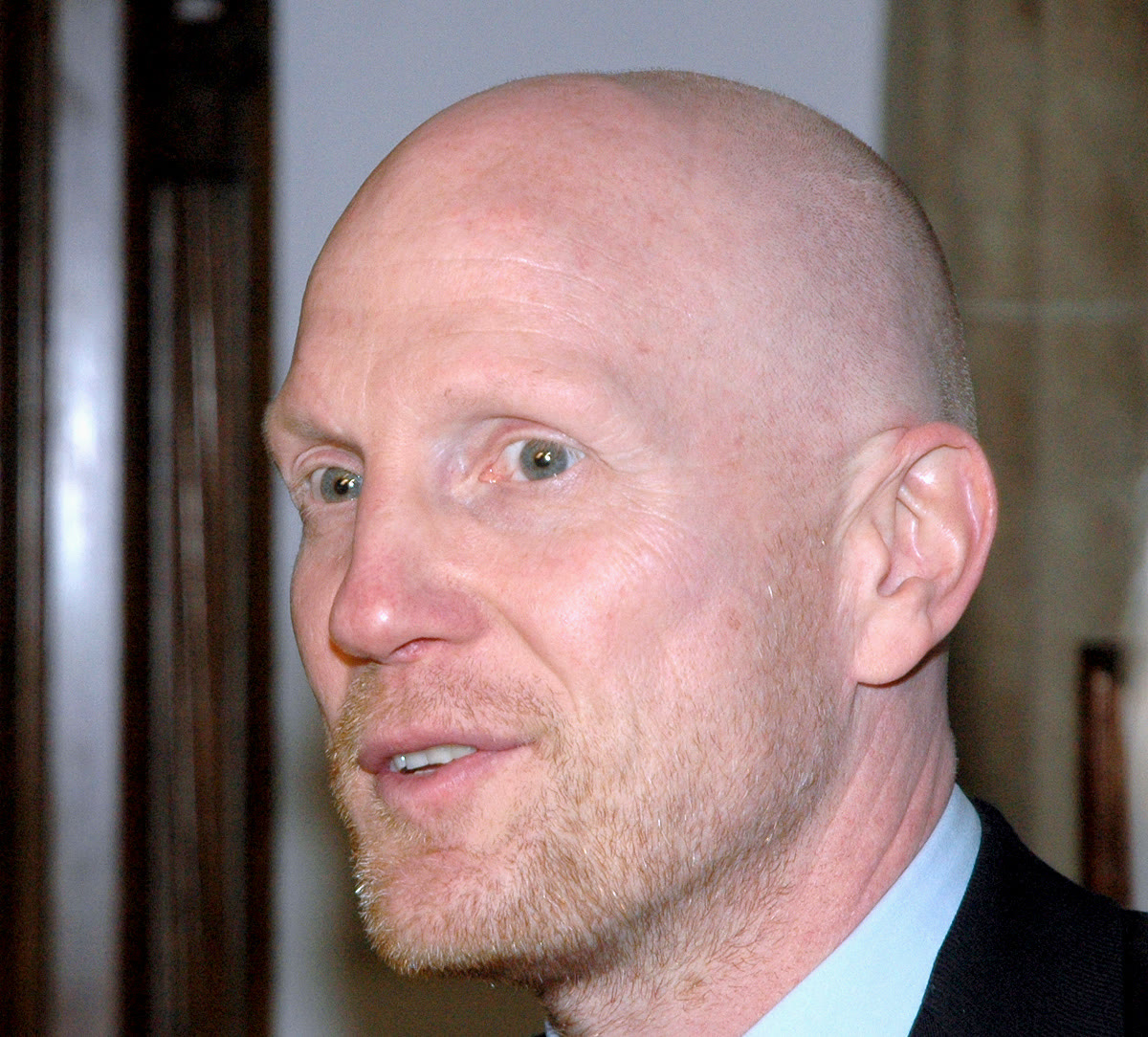
Matthias Sammer compressed an exceptional amount of influence into a relatively short defensive peak. Converted from midfield into a roaming libero, he did not wait passively behind the line. He stepped forward to intercept, drove into midfield and appeared around the opposition box, giving Borussia Dortmund an extra player in successive phases. The role demanded timing because every advance could uncover the defence. Sammer’s energy and reading made the gamble productive.
He was the defining defender of Germany’s Euro 1996 victory, won the Ballon d’Or that year and then helped Dortmund win the 1997 Champions League. The Bundesliga’s career assessment explains how the libero role concentrated his strengths. Knee problems ended his playing career early and prevent a higher all-time position. On peak alone he can be argued into the top 12. Across an entire career, the defenders above provide more years, more tactical settings or a deeper international body.
Rank 18: Ruud Krol
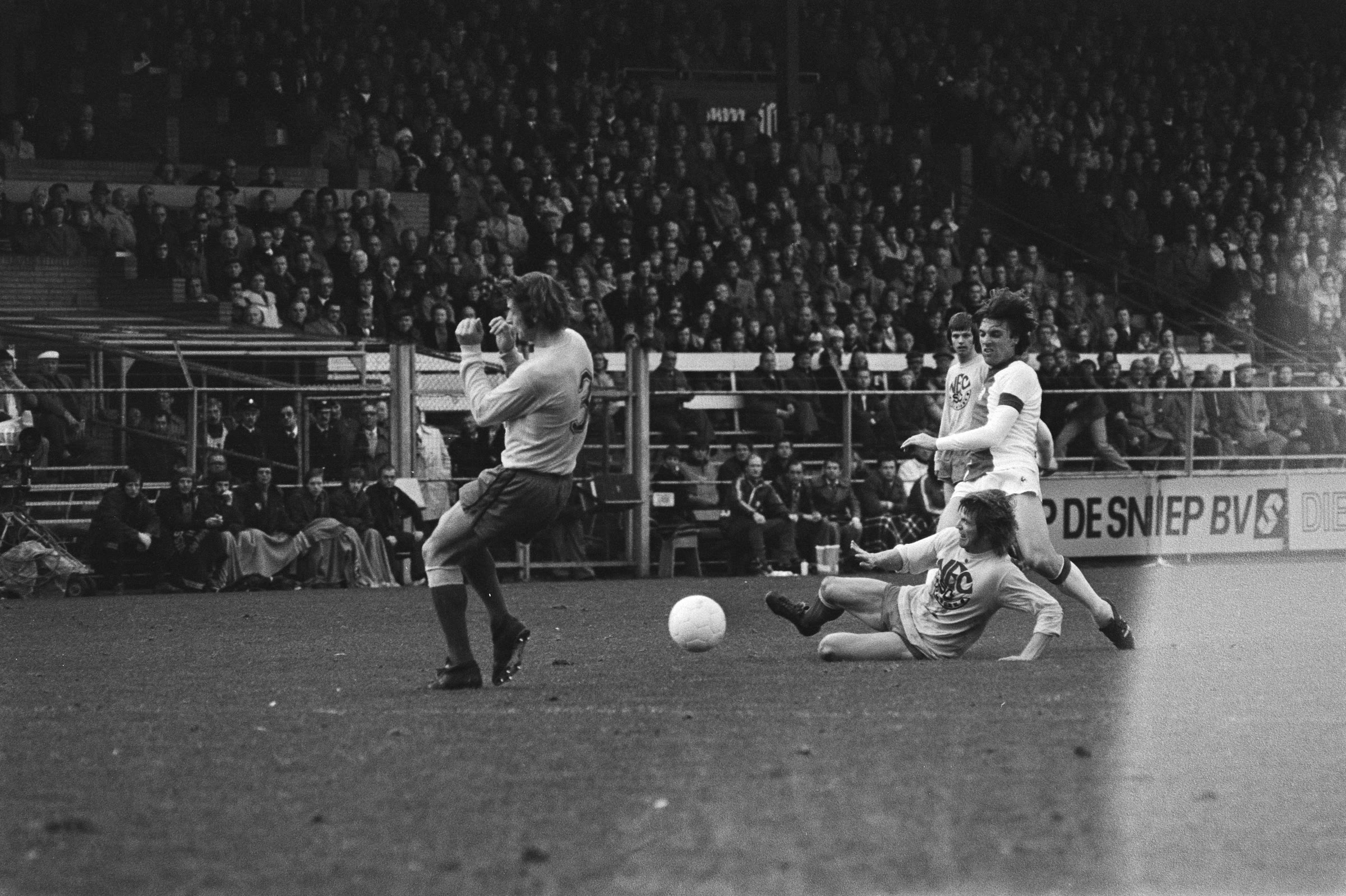
Ruud Krol was a defender for a system that refused to keep defenders in one place. He could start at left-back, move inside, carry forward and defend the open space left by Ajax’s rotations. Later he became a sweeper and captain, extending the same intelligence across the whole line. The variety was not cosmetic versatility. Krol understood how his position changed when a team-mate moved and how quickly he had to restore balance if possession disappeared.
He played in Ajax’s European Cup victories of 1972 and 1973 and in the Netherlands teams that reached the 1974 and 1978 World Cup finals. Ajax’s tribute emphasises class, elegance and leadership, while UEFA’s history of the 1971 to 1973 Ajax side supplies the tactical setting. Krol lacks the single iconic defensive tournament attached to Cannavaro or Moore, but his positional range was broader. He ranks 18th because he was both a product and an essential operator of Total Football.
Rank 17: Berti Vogts
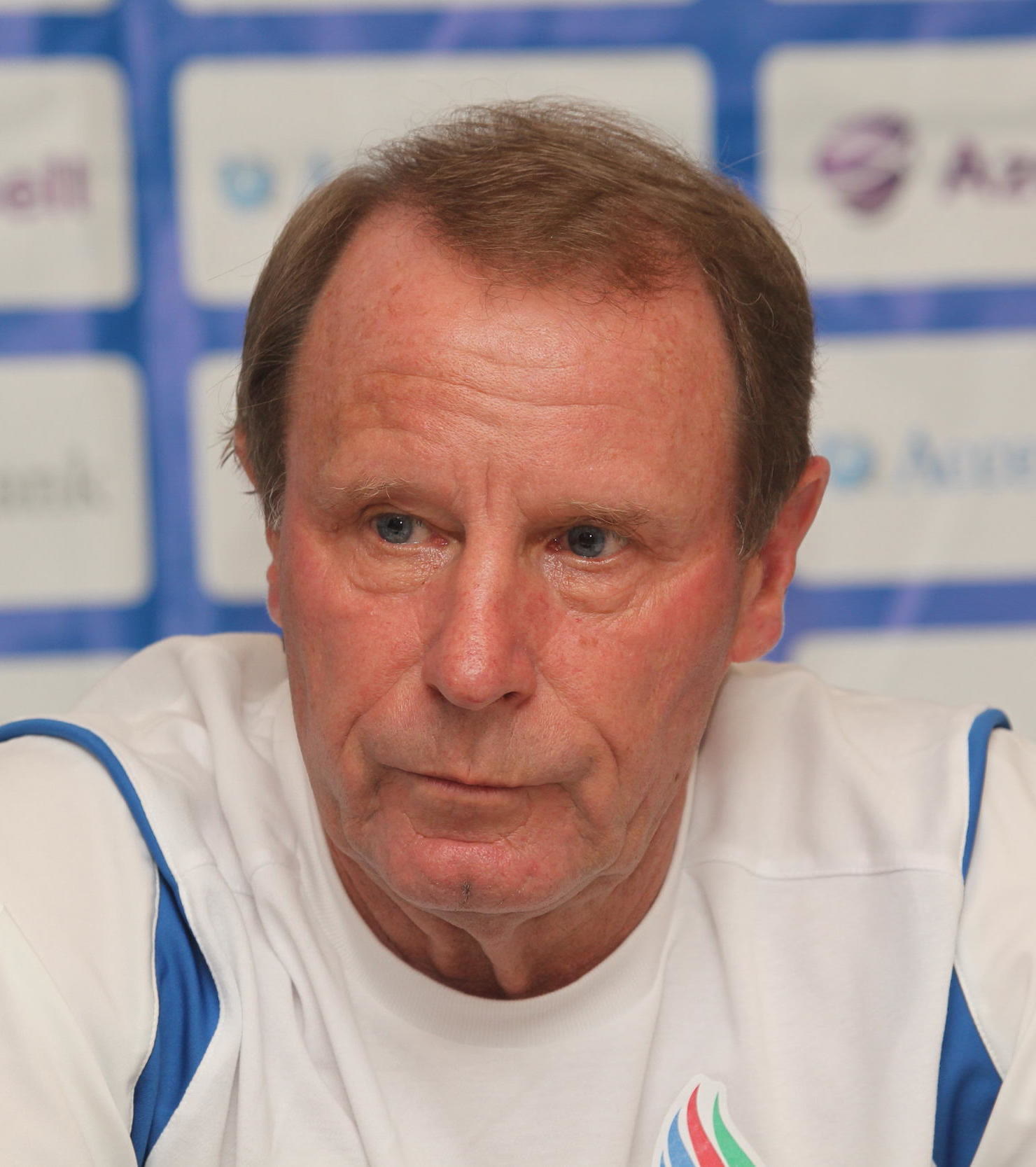
Berti Vogts made elite forwards play a match on his terms. Nicknamed the Terrier, he stayed close, contested relentlessly and recovered quickly enough to repeat the duel. The label can make him sound like effort without refinement. In reality, sustained man-marking against the best players required concentration, body positioning and an accurate sense of when contact would help rather than expose the defence.
His assignment against Johan Cruyff in the 1974 World Cup final remains the defining image, but Vogts’ case is much larger. He was part of West Germany’s Euro 1972 and World Cup 1974 victories and a central figure in the Borussia Mönchengladbach side that won five Bundesliga titles and two UEFA Cups. The Bundesliga profile sets out that club dominance, and the German federation record documents his international career. Full-backs above him offered more in possession, but very few could erase an opponent’s most dangerous individual as convincingly.
Rank 16: Sergio Ramos
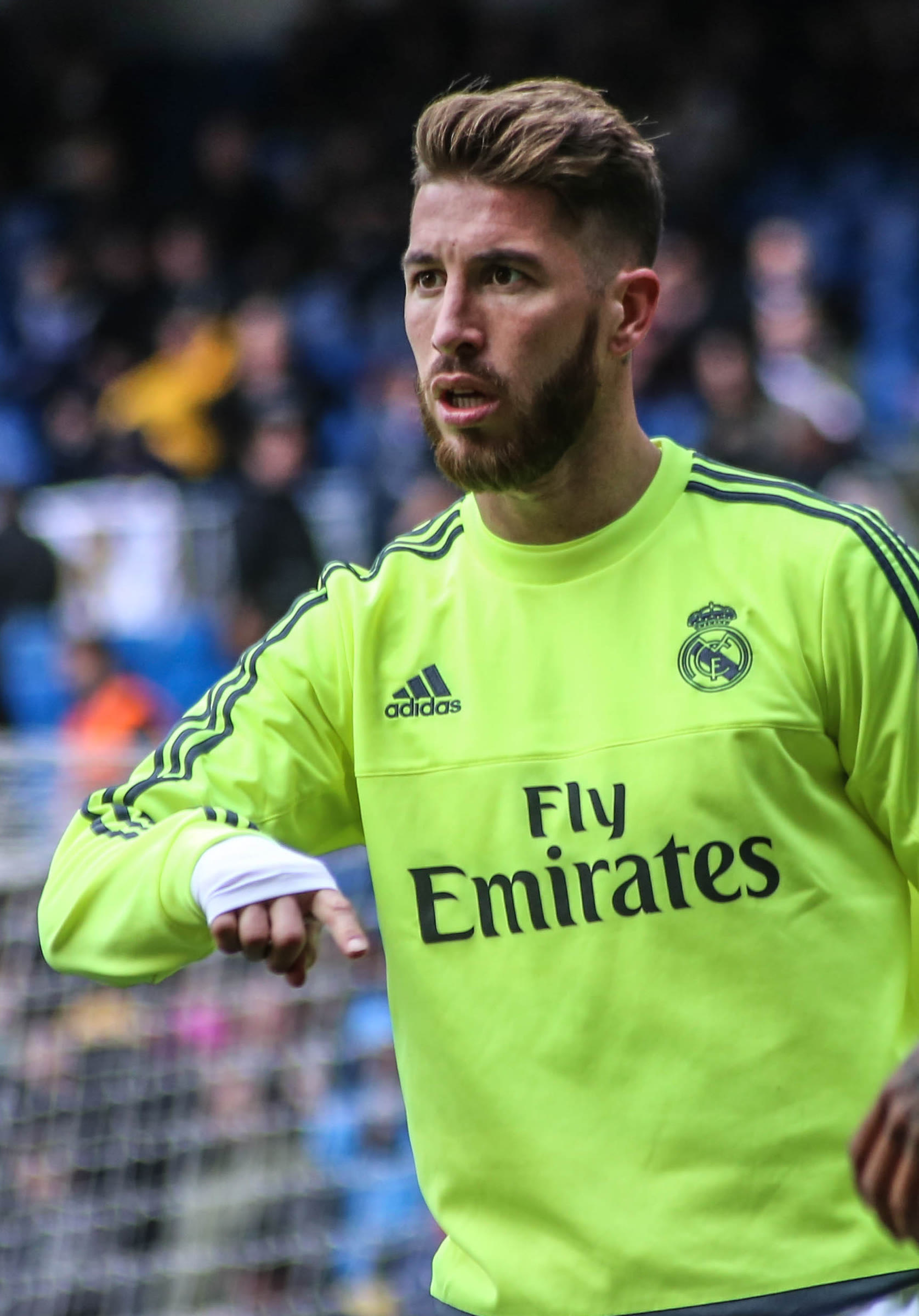
Sergio Ramos lived at the point where defensive aggression becomes either authority or risk. He could dominate aerial contests, defend large spaces, step into midfield and change a tie with a late goal. He also collected cards, overcommitted and occasionally made the difficult moment harder than it needed to be. A fair ranking has to hold both versions at once.
At Real Madrid he won four Champions Leagues, scoring the stoppage-time equaliser in the 2014 final and contributing important goals in later runs. The club’s official record covers a career that also included five league titles. With Spain he was part of the side that won Euro 2008, the 2010 World Cup and Euro 2012, adapting from right-back to centre-back as the dynasty developed. Ramos ranks 16th because his largest interventions were unusually valuable and his elite career unusually long. He does not enter the top 10 because the very best defenders combined comparable authority with greater control of avoidable risk.
Rank 15: Fabio Cannavaro
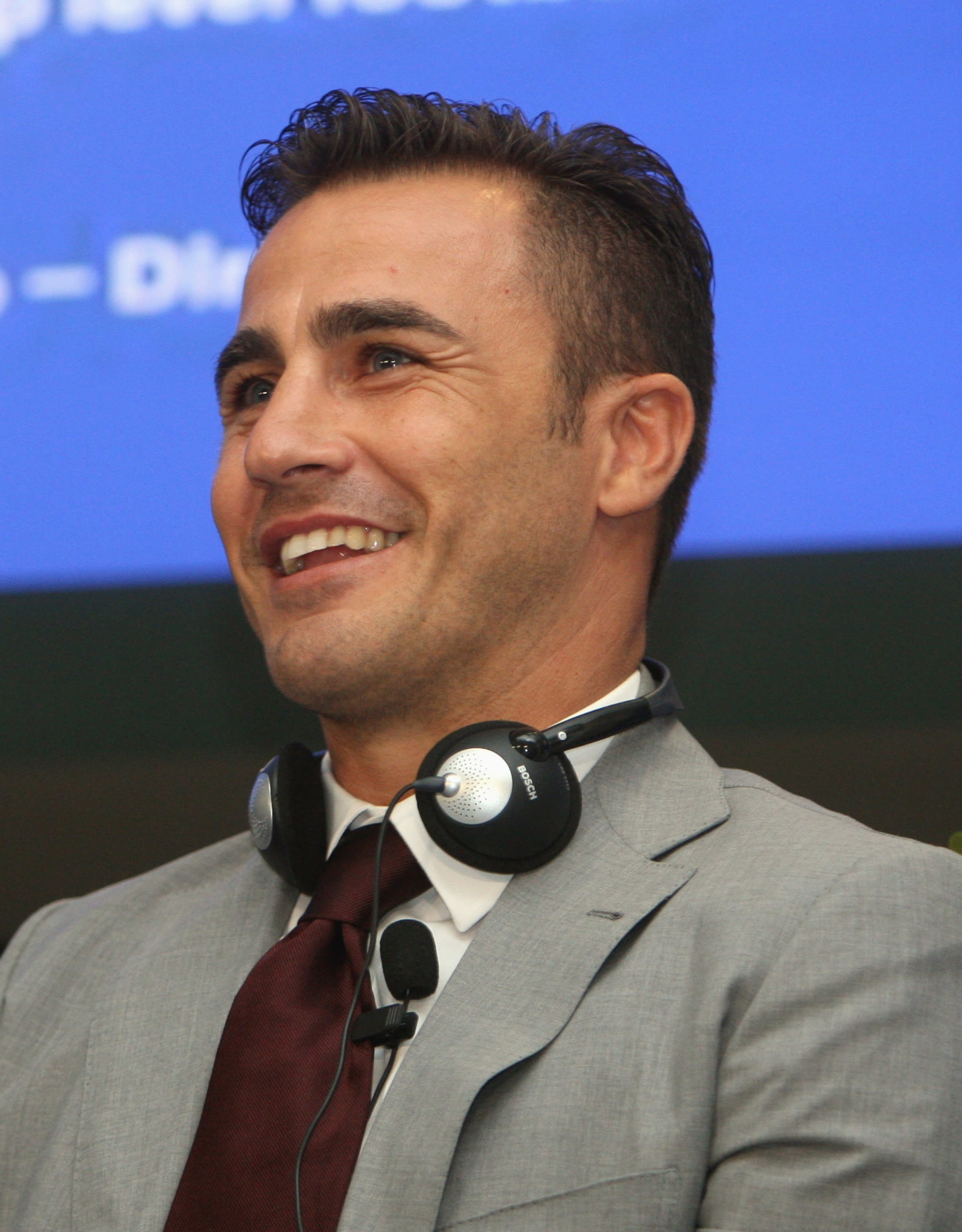
Fabio Cannavaro’s 2006 World Cup is one of the strongest tournament cases produced by any defender. Italy’s captain read the first ball, attacked the second and covered behind colleagues with extraordinary sharpness. His leap defeated taller forwards and his acceleration turned apparent danger into a clean interception. Winning both the Ballon d’Or and FIFA’s world player award that year reflected an unusual public recognition of defensive mastery.
The Italian federation profile places that peak within a long international career, while UEFA’s retrospective records the individual acclaim. Cannavaro was not always as immaculate at club level as he was in Germany, and his lack of a European Cup weakens the breadth of the highest-tier case without defining it. Fifteenth may look conservative for a World Cup-winning captain, but this is a career ranking. His tournament summit is higher than several players immediately above; their total body of defensive influence is broader.
Rank 14: Alessandro Nesta
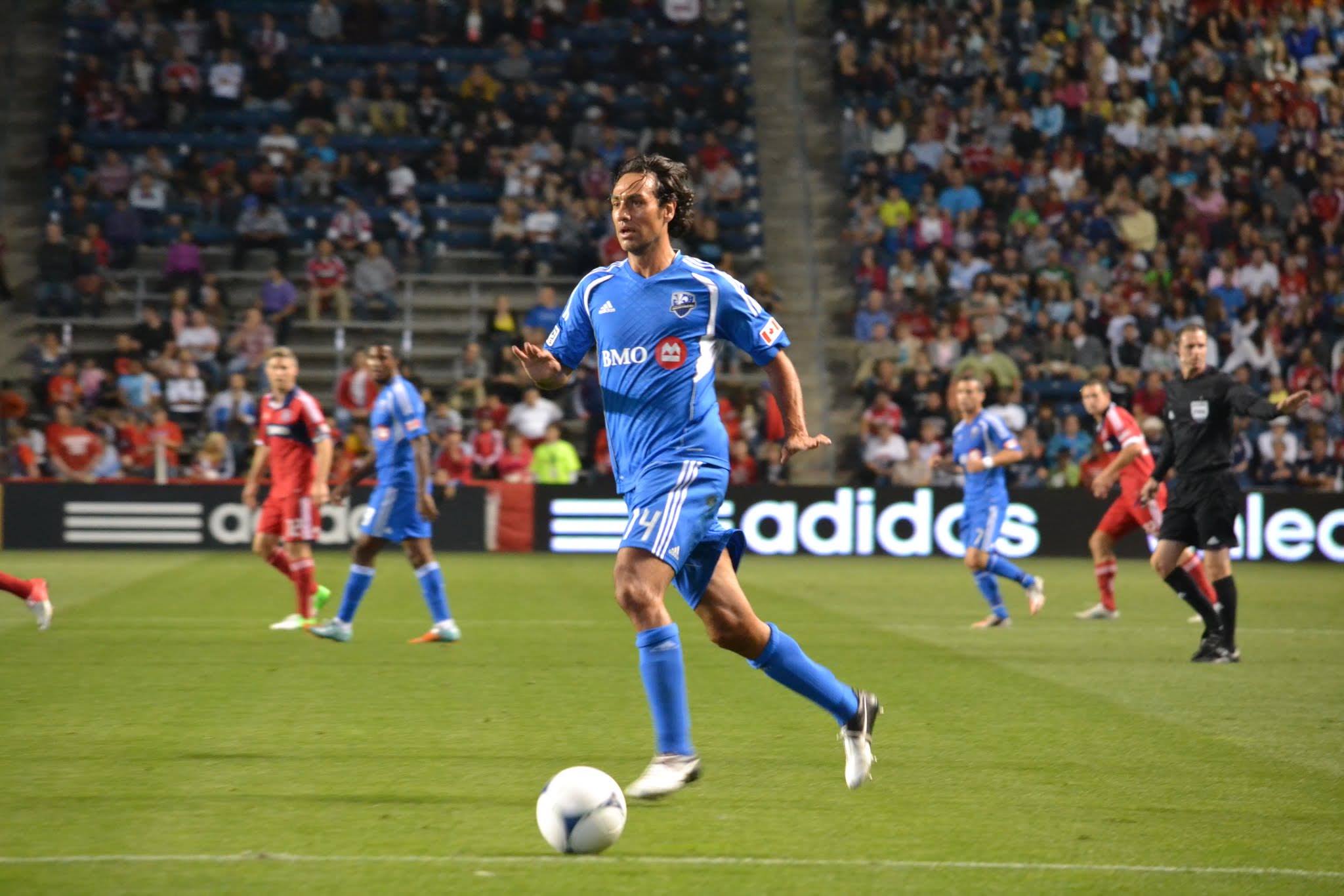
Alessandro Nesta is the defender coaches show when explaining that tackling begins before the tackle. He adjusted his feet early, matched the attacker’s route and waited until the ball was genuinely available. When he slid, the action often looked spectacular because the timing had made it safe. He could also carry or pass through the first line, although those qualities served his defensive control rather than becoming the headline.
Nesta captained Lazio to the league title and later won two Champions Leagues with Milan. The Italian federation Hall of Fame profile and Milan’s club record establish the career frame. Injuries repeatedly interrupted his international tournaments, including Italy’s victorious 2006 World Cup, and reduce the amount of major-match evidence available at his peak. On pure one-against-one technique he belongs in the top five conversation. Fourteenth reflects the difference between possessing an almost perfect defensive skill and sustaining the fullest possible all-time career.
Rank 13: Philipp Lahm
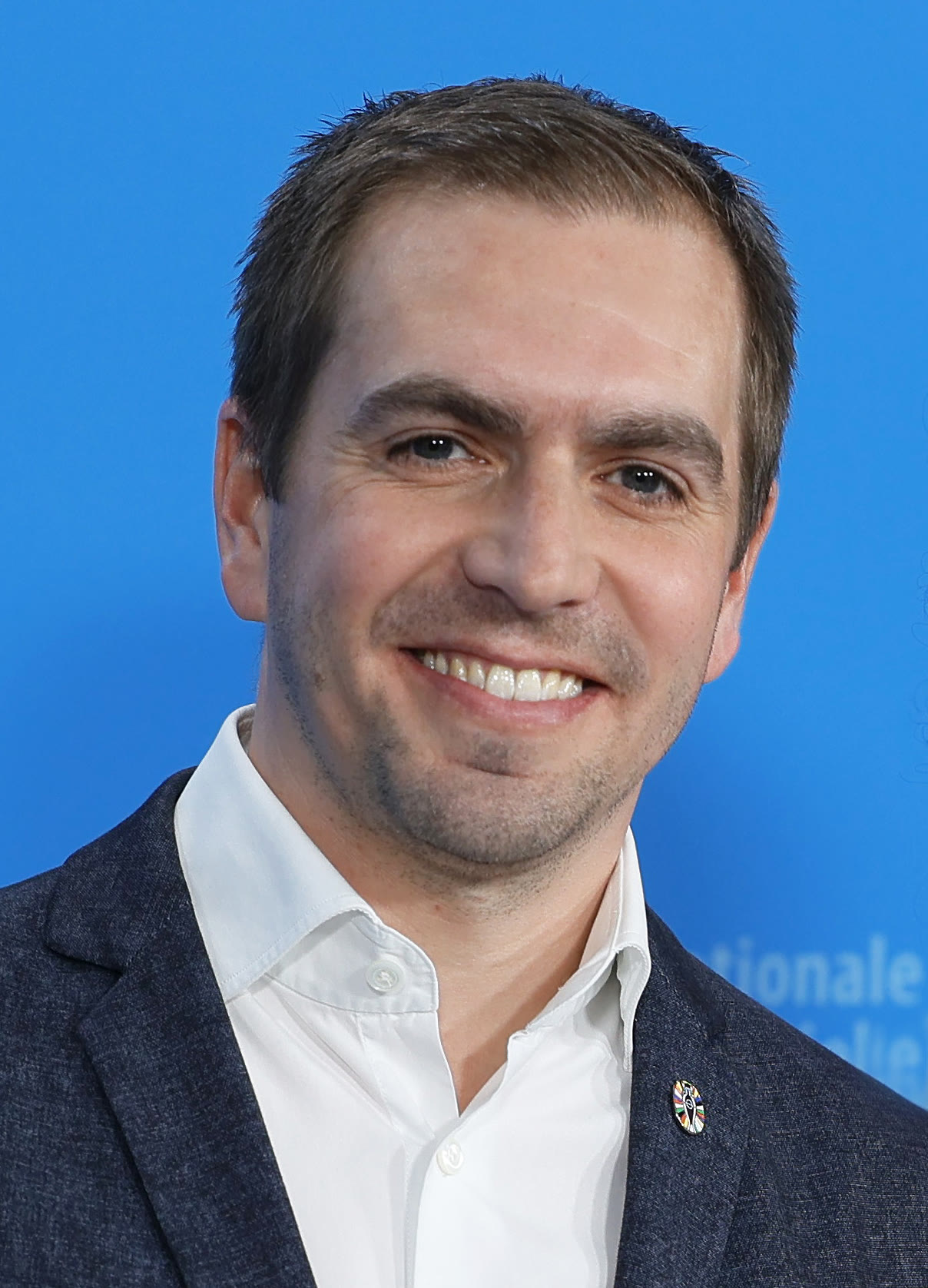
Philipp Lahm rarely appeared to rescue a situation because he had usually removed the danger one decision earlier. He scanned constantly, protected the inside lane and chose his moment to press with unusual accuracy. On either flank he could advance without disconnecting from the defensive structure. In midfield he showed that the same awareness could organise possession from a narrower starting point.
Lahm captained Bayern to the 2013 treble and Germany to the 2014 World Cup, a career summarised in Bayern’s Hall of Fame profile. His lack of size was a real constraint in certain aerial or back-post situations, but he solved far more physical problems than his frame should have allowed. He ranks above Nesta because of durability, positional range and the completeness of his club and international leadership. He stops just outside the top 12 because Passarella and Facchetti carried greater penalty-area or transformational force. Lahm’s greatness was quieter: an accumulation of correct choices that made ambitious teams safer.
Rank 12: Daniel Passarella
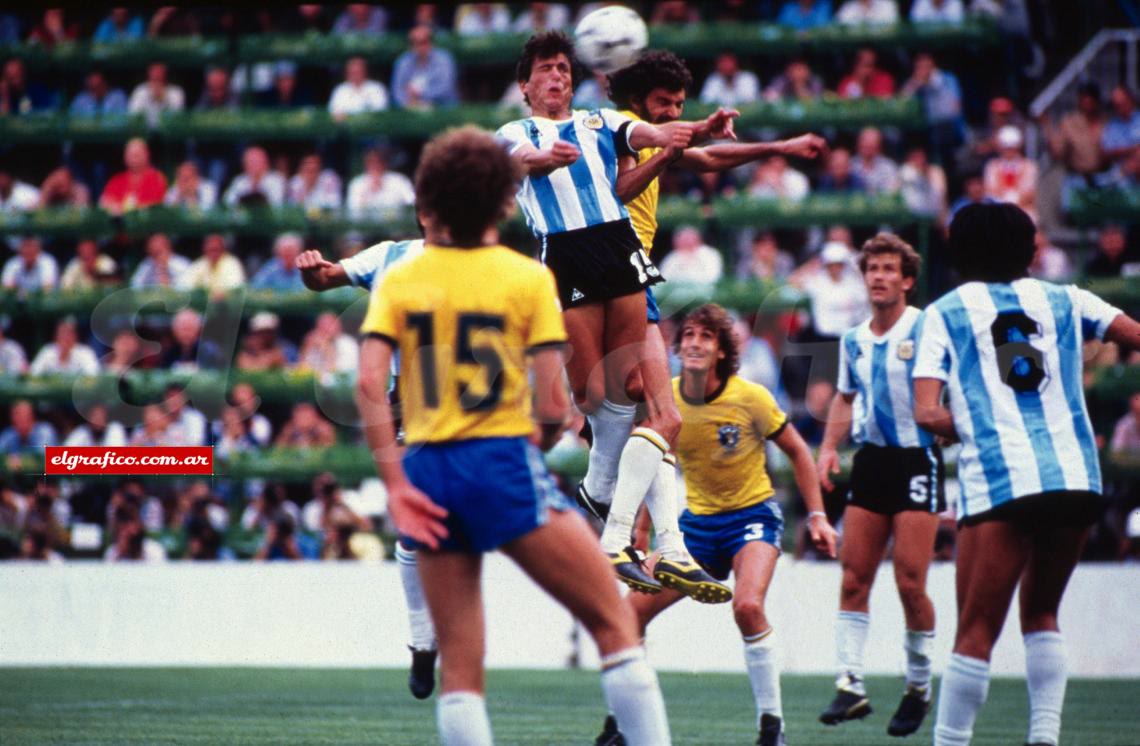
Daniel Passarella defended with command and attacked the match whenever an opening appeared. He was aggressive in the air despite modest height, forceful when stepping in front of a striker and unusually productive from set pieces and penalties. His left-footed distribution allowed him to begin play rather than wait for a midfielder, while his personality made him the obvious authority in a young Argentina side.
At 25 he captained Argentina to the 1978 World Cup. He was also in the 1986-winning squad, although illness prevented him from playing at the tournament, a distinction that matters when evaluating the achievement. River Plate’s institutional history places him among the defining figures of the club, and FIFA’s profile centres the captaincy that shaped his reputation. Passarella ranks 12th because he paired front-foot defending with leadership and genuine attacking value. He falls short of the top 10 because his aggression could create openings and because several defenders above supplied comparable peaks across a wider range of tactical demands.
Rank 11: Giacinto Facchetti
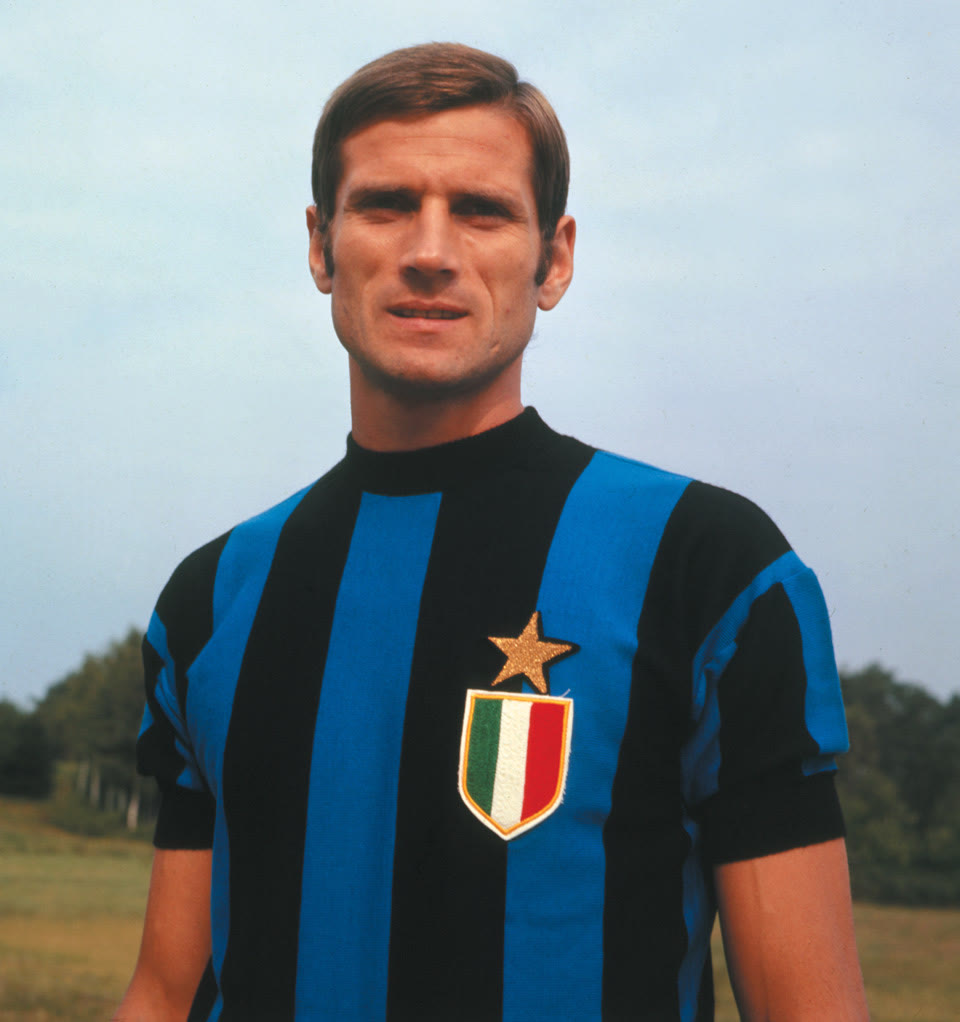
Giacinto Facchetti turned the full-back’s attacking run from an occasional surprise into a structural weapon. At Inter he travelled beyond midfield with the stride and timing of a wide attacker, yet recovered to defend within one of the era’s most exacting systems. This was not modern wing play dropped into the 1960s. It was a new solution developed under different offside laws, heavier pitches and far less routine positional interchange.
Facchetti won successive European Cups with Inter and captained Italy to the 1968 European Championship and the 1970 World Cup final. Inter’s Hall of Fame record and UEFA’s tribute support both the club body and his historical reach. He ranks narrowly below Djalma Santos because the Brazilian was the more complete pure defender and performed across four World Cup cycles. Facchetti’s influence may be greater. Eleventh is therefore not a demotion of the attacking full-back, but a judgement about the complete balance of defensive craft, longevity and innovation.
Rank 10: Djalma Santos
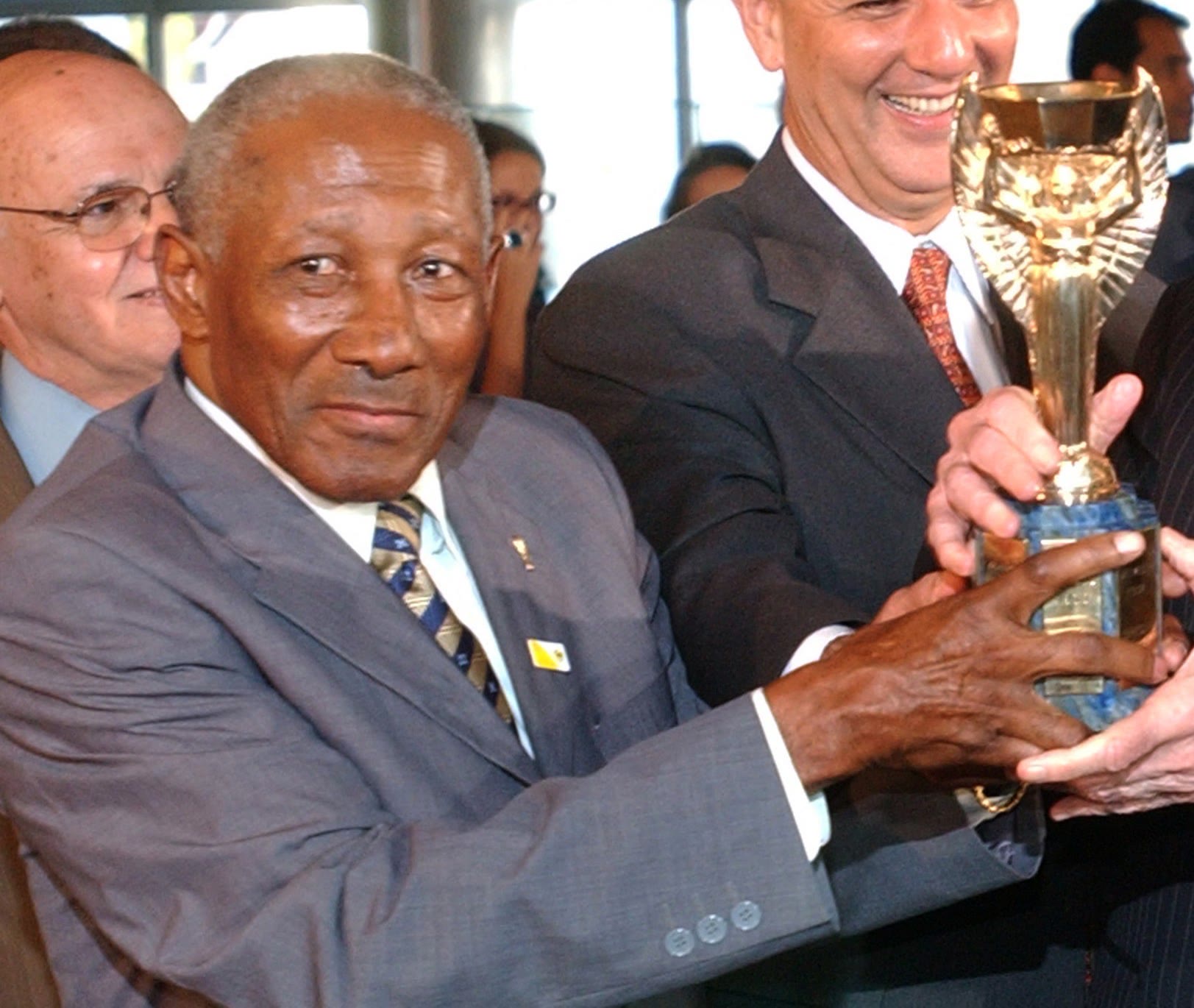
Djalma Santos gives this ranking its most complete defensive full-back. He was strong in the duel, composed under pressure and technically secure enough to support attacks without treating forward movement as the main measure of his worth. At four World Cups he faced different tactical problems and maintained an elite international standard across an era of rapid change.
Brazil won the World Cup in 1958 and 1962 with Djalma in the squad, and his selection for the 1958 final after spending most of the tournament outside the team became a remarkable demonstration of readiness. The Brazilian federation’s profile records his long national-team standing. He is less culturally dominant than Roberto Carlos and less closely tied to a single iconic side than Carlos Alberto, but his all-round defensive case is stronger than either. Djalma enters the top 10 because he offers almost no weak category: peak, longevity, major tournaments, role execution and adaptation all support him.
Rank 9: Cafu
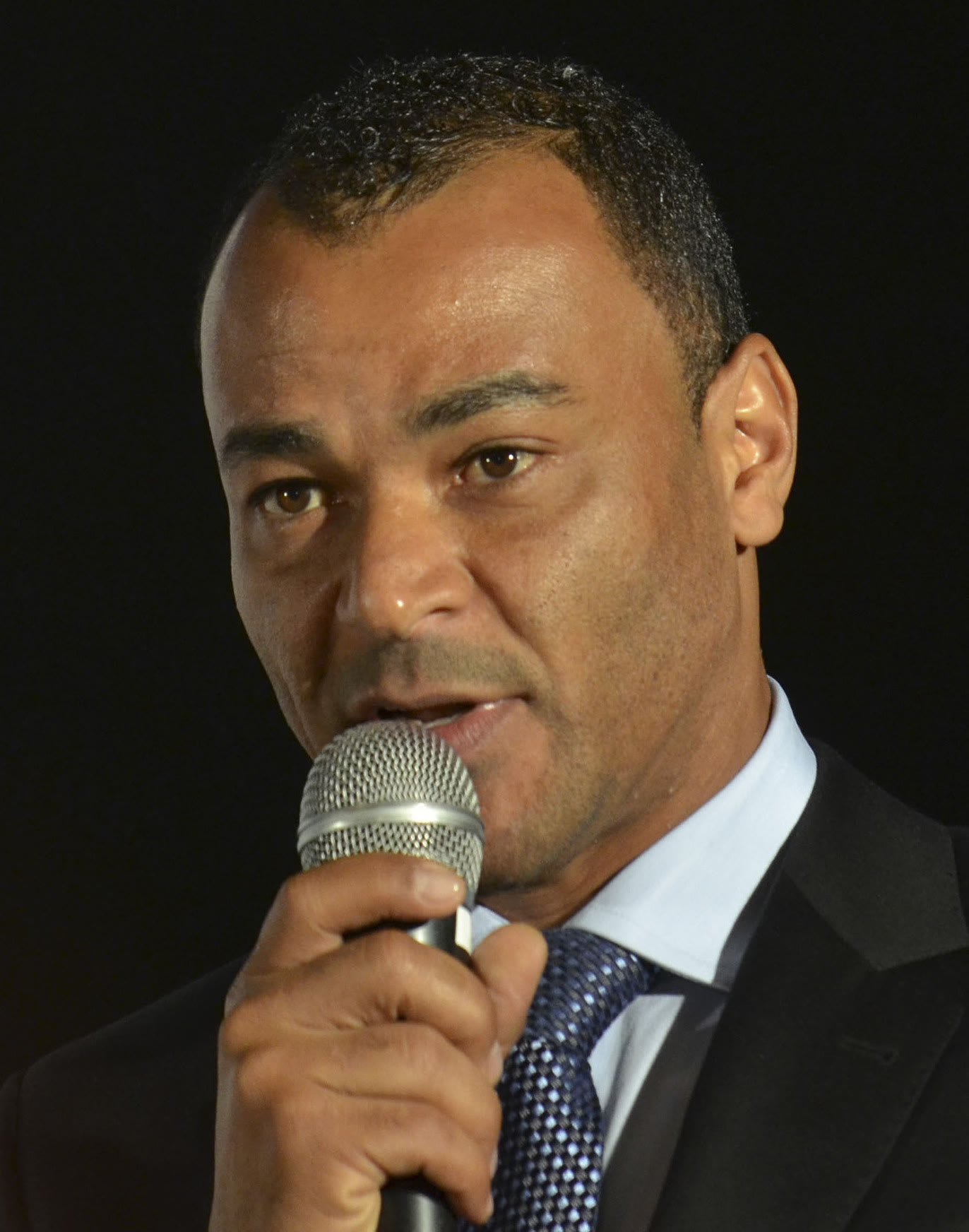
Cafu made repetition a form of domination. One overlapping run could be tracked; the fifth and sixth began to distort an opponent’s whole left side. He had the speed and stamina to advance again, but also the recovery sense to repair the spaces his team accepted. His defending was not based on the immaculate containment of Djalma Santos. It was based on making the entire flank operate at a tempo the opponent could not sustain.
He remains the only player to have appeared in three consecutive World Cup finals, in 1994, 1998 and 2002, captaining Brazil in the last of them. FIFA’s account of the record supports a distinction that combines longevity with the largest possible matches. Cafu also won major honours in South America and Europe, including the Champions League with Milan. He ranks ninth because his peak lasted, travelled and survived different systems. The attacking volume was historic, yet unlike more reckless interpretations of the role, it rarely made him a passenger when possession changed.
Rank 8: Elías Figueroa
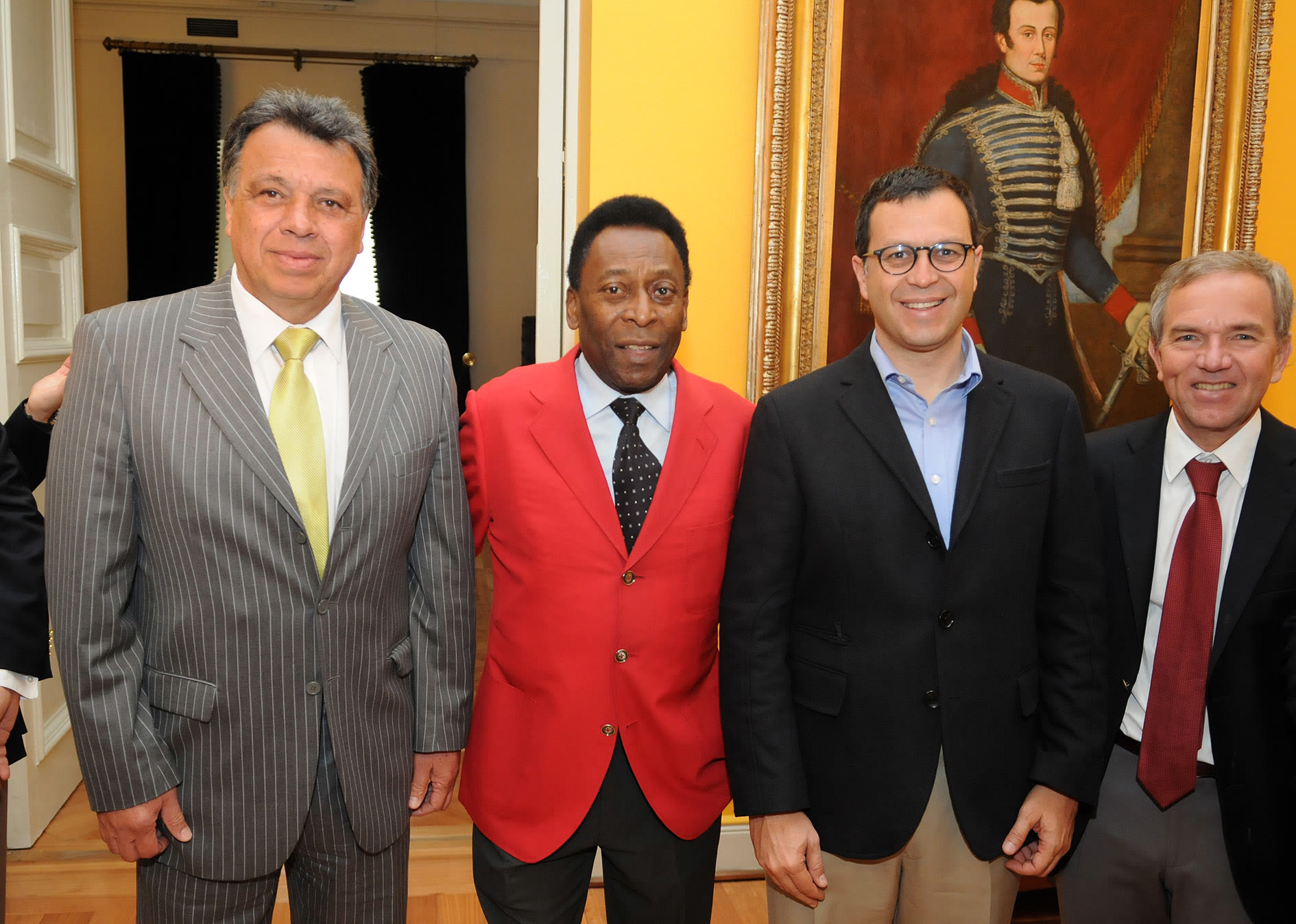
Elías Figueroa is the strongest test of whether an all-time list can look beyond European club football and World Cup winners. He dominated in Uruguay and Brazil, excelled for Chile across three World Cups and was named South American Footballer of the Year three times in succession. Contemporary recognition treated him as one of the continent’s finest players, full stop.
Figueroa defended with an upright calm that concealed how early he had understood the play. He was formidable in the air, clean in distribution and willing to carry responsibility for a line rather than chase the ball. The CONMEBOL historical symposium volume helps establish a reputation that can be underrepresented in English-language coverage. The evidence is less abundant than for European contemporaries, and Chile did not give him equivalent late-stage tournament opportunities. Even after accounting for both, eighth is justified. Figueroa’s individual standing, cross-border success and complete defensive technique outweigh the absence of a World Cup medal.
Rank 7: Carlos Alberto
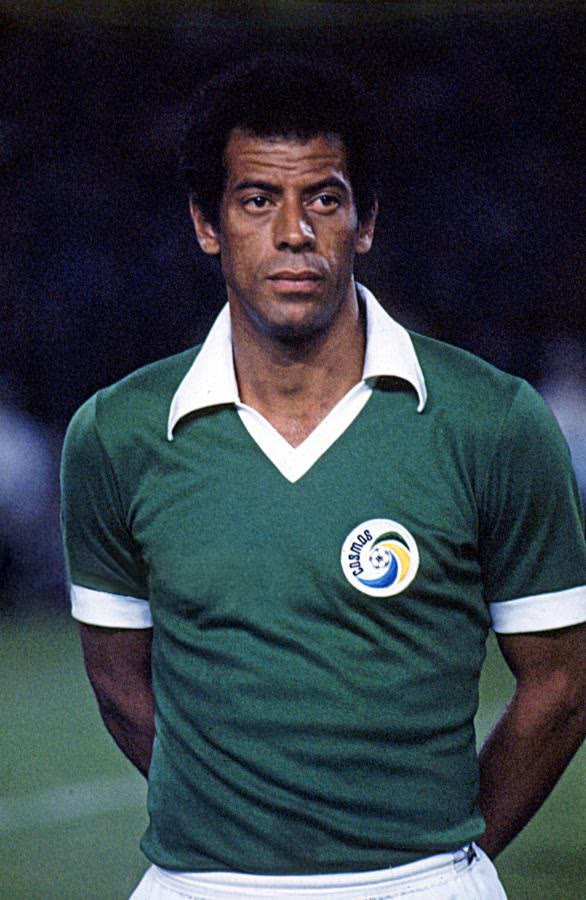
Carlos Alberto is remembered finishing the most famous team goal in World Cup history. The strike against Italy in 1970 matters, but not because one goal can place a defender seventh. It reveals the role he performed: captain and defensive organiser, then an extra attacker arriving with the timing to complete the move. He combined a midfielder’s passing and carrying with the strength to defend his flank.
As captain of Brazil’s 1970 champions, Carlos Alberto led a side whose attacking brilliance could obscure the work required behind it. He chose when to advance and when to narrow alongside the centre-backs, giving balance to a team full of players drawn towards the ball. FIFA’s tribute and Santos’ memorial trace that importance across country and club. His international peak was shorter than Cafu’s, but his best level was more commanding. Seventh reflects both the 1970 summit and the broader tactical authority behind the armband.
Rank 6: Nílton Santos
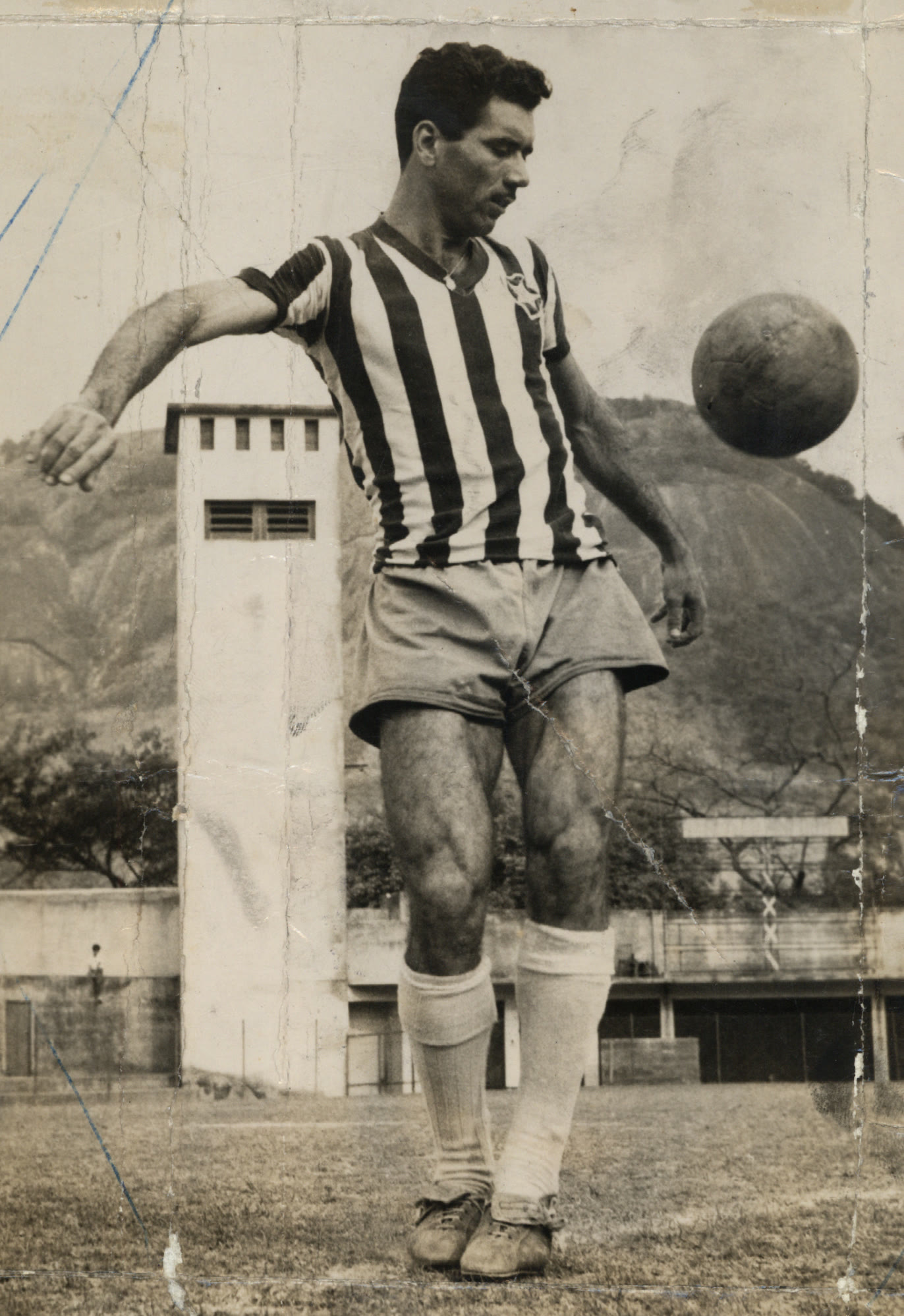
Nílton Santos expanded the full-back’s territory before regular attacking overlaps were part of the position’s accepted language. Known as the Encyclopaedia for his understanding of the game, he could leave the line, combine in midfield and still read danger as a defender. His intelligence mattered more than any single innovation. He knew when the forward run would improve the team and when the shape required restraint.
He represented Brazil at four World Cups and won in 1958 and 1962, forming part of the national side’s transformation from nearly men into football’s global reference point. The Brazilian federation’s centenary tribute records that standing. Nílton ranks above Carlos Alberto and Cafu because his influence on the role came earlier and because his defensive reading was at least as important as his forward contribution. He is sixth rather than in the top five because the defenders ahead either controlled the centre of the pitch, sustained a larger elite club body or defined the tactical identity of a dominant side more directly.
Rank 5: Gaetano Scirea
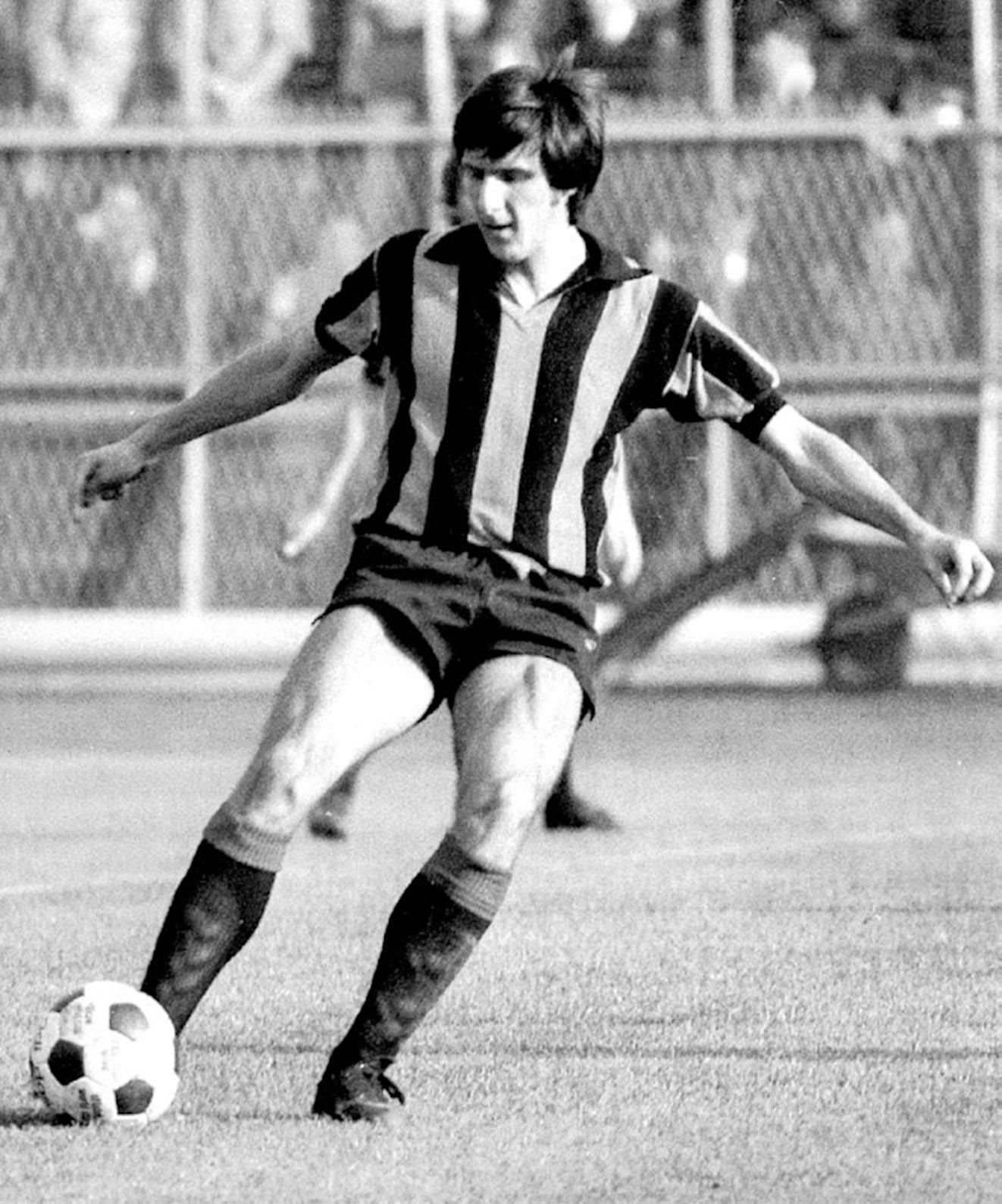
Gaetano Scirea made the spare defender look like the most constructive player on the pitch. He covered behind the marker, intercepted without panic and moved the ball forward with sufficient quality to change a defensive regain into controlled possession. His calm was not softness. It was a competitive advantage: the next decision arrived before the opponent could force a hurried one.
Scirea won the 1982 World Cup with Italy and every major UEFA club competition available to him with Juventus. The Juventus Hall of Fame profile and club tribute describe the leader and player without requiring inflated mythology. He ranks fifth because his technique, defensive judgement and team success formed a remarkably complete case. Baresi was the more aggressive organiser, Maldini the more adaptable defender and Beckenbauer the larger tactical force. Moore edges him through an international peak in which his individual control is unusually well documented. None of those distinctions makes Scirea a lesser model of the position.
Rank 4: Bobby Moore
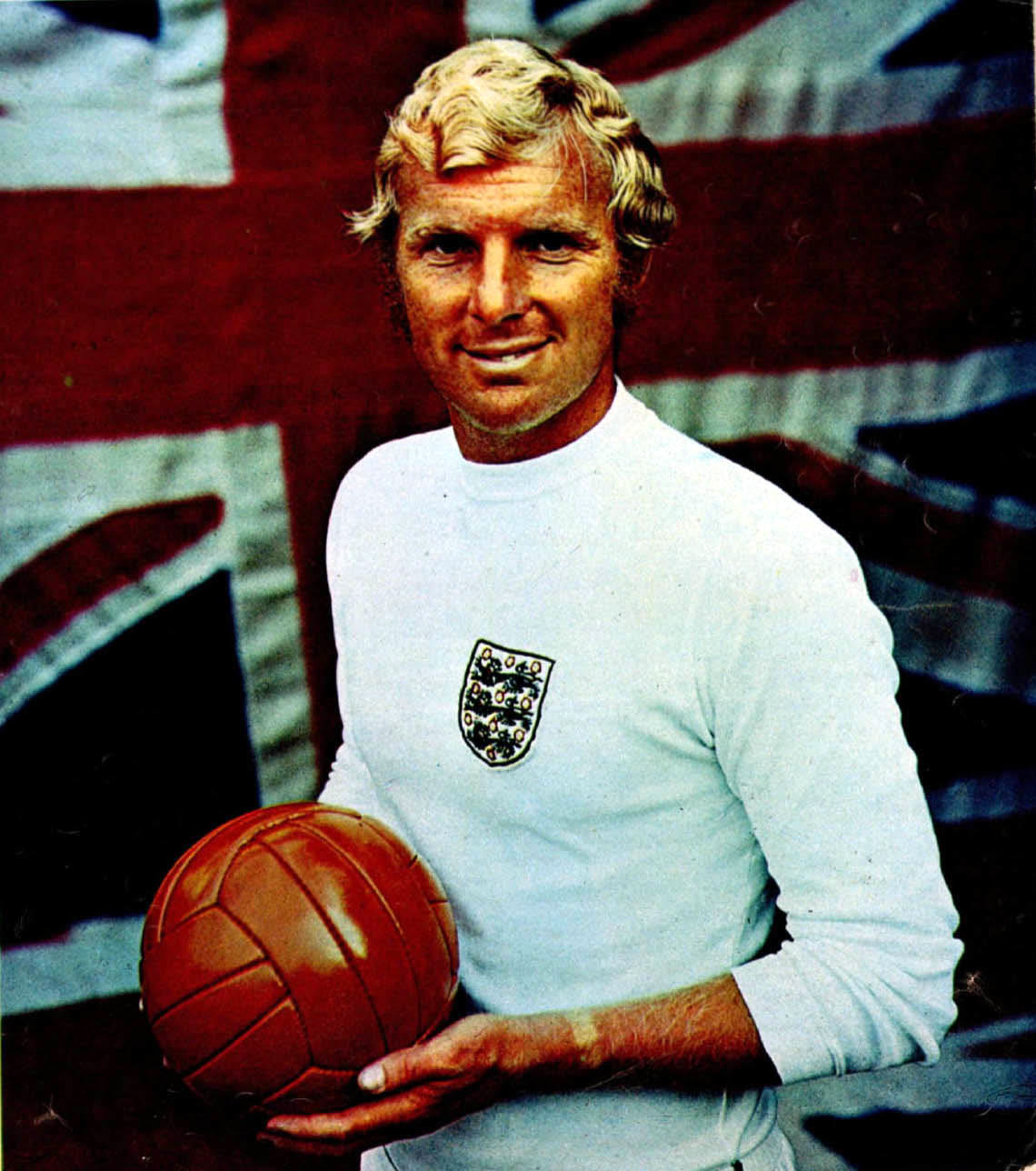
Bobby Moore’s greatest quality was time. He seemed to have more of it than the forward because his body position and reading had already narrowed the possible attack. He did not possess exceptional recovery pace, so he could not rely on correcting poor decisions. The precision had to come first. His tackling was clean, his passing from defence unusually calm and his authority powerful without constant display.
Moore captained England to the 1966 World Cup and produced another outstanding tournament in 1970. The famous tackle on Jairzinho is only one action, but it captures the sequence: track the run, wait for the touch, take the ball and emerge ready to pass. FIFA’s remembrance places the captaincy and international reputation in context. His club honours with West Ham were modest beside the dynasties represented above and below him, although the 1965 European Cup Winners’ Cup matters. Moore ranks fourth because the purpose of this list is to identify great defenders, not simply careers attached to the most trophies.
Rank 3: Franco Baresi
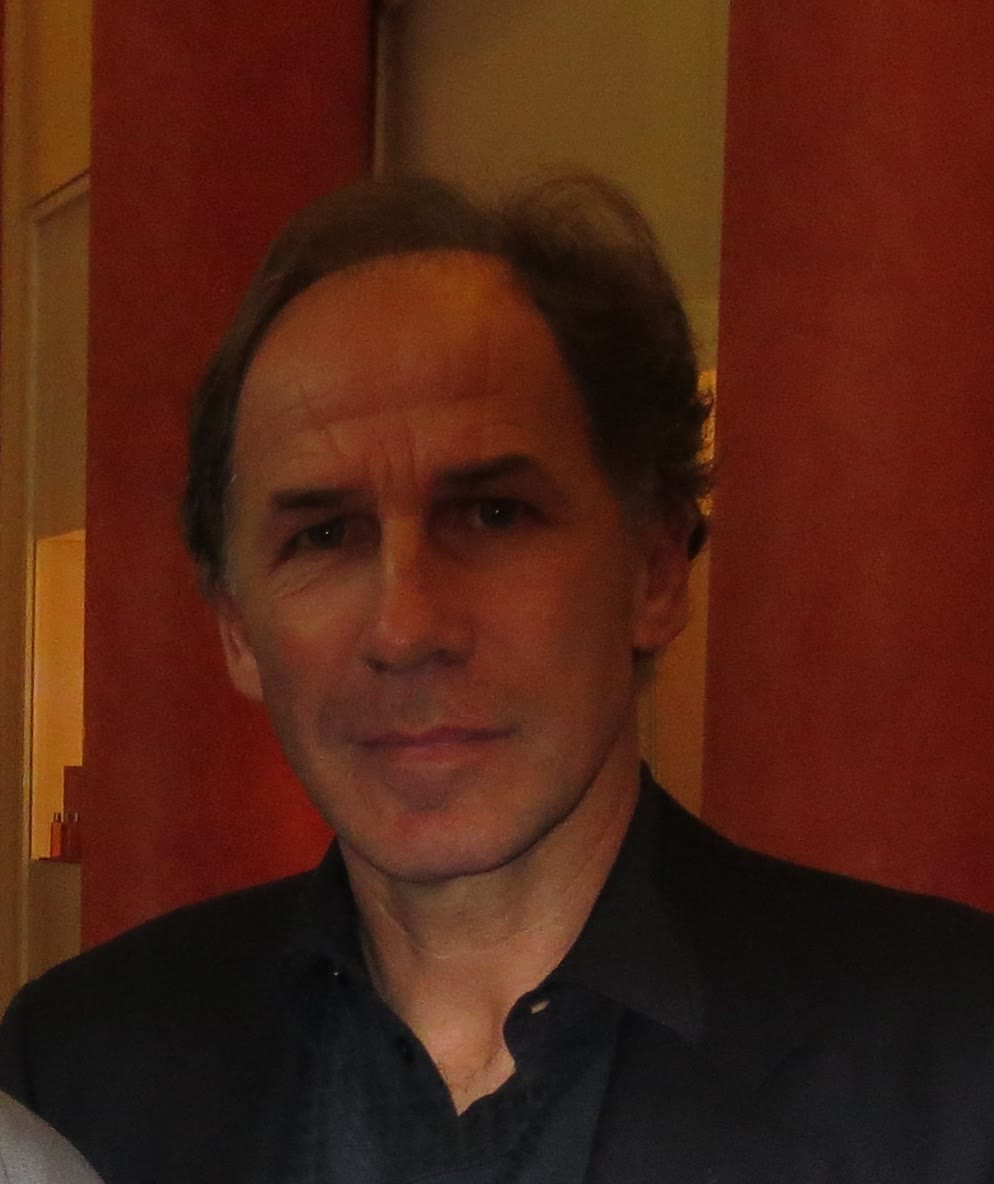
Franco Baresi did not merely play in a defensive line. He conducted it. At Milan he stepped forward to intercept, accelerated into midfield with the ball and triggered the collective movement that compressed the pitch. The raised arm associated with Milan’s offside trap was not theatre. It was a demand that four players interpret the same moment together, often with little space behind them.
Baresi combined that organisation with elite individual defence. He was quick over the first metres, strong in contact despite his size and sufficiently composed to escape pressure rather than clear blindly. Milan’s official legend profile records six league titles, three European Cups and a senior career spent at the club. With Italy he won the 1982 World Cup as a squad member and captained the side to the 1994 final, returning from knee surgery during the tournament to produce an immense performance in the final itself.
Why only third? Baresi’s case is almost complete, and a ranking focused on organising a high line could place him first. Maldini sustained elite performance for longer and mastered more defensive roles. Beckenbauer combined a comparable transformation of the libero with greater international leadership and individual recognition. The margins are narrow. Baresi is third because two careers provide slightly more range, not because either clearly surpassed his defensive peak.
Rank 2: Paolo Maldini
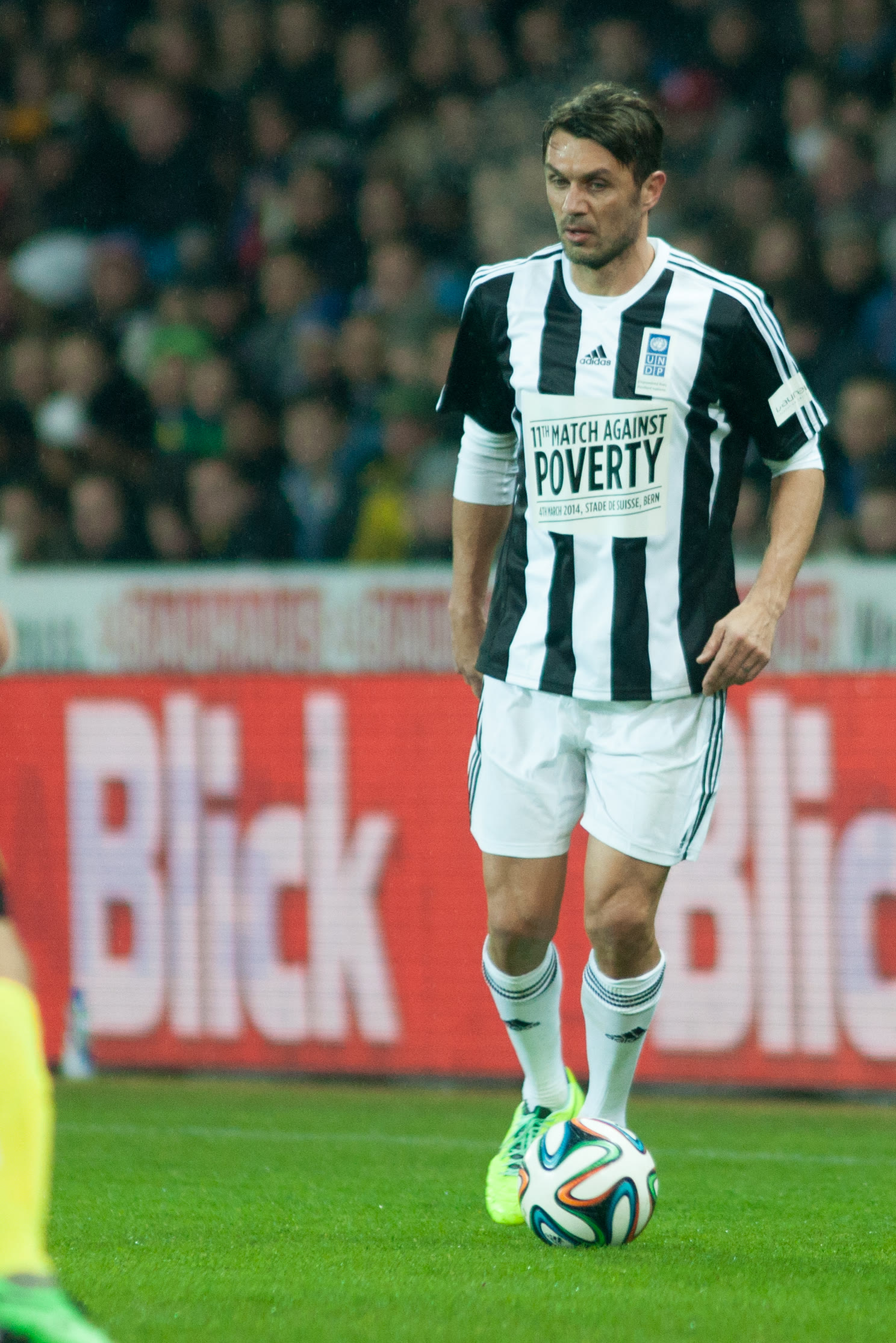
Paolo Maldini offers the strongest all-round career in this ranking. As a young left-back he had the speed and balance to control a winger in open space, then advance with the assurance of a natural wide player. As he aged he moved inside, where anticipation, aerial judgement and command replaced the need for repeated recovery runs. Very few defenders have been world class in two positions. Maldini was world class in both across different tactical eras.
He played 902 competitive matches for Milan, won seven Serie A titles and five European Cups or Champions Leagues. UEFA’s 100-club profile captures the scale of the European career, while the Italian federation record documents his long international service. Italy did not win a senior tournament during his career, but he reached the 1994 World Cup final and the Euro 2000 final and repeatedly performed deep into major competitions.
Maldini’s defensive economy can be misread as a lack of defining actions. He made fewer desperate interventions because his position removed the need. The case for first is simple: no other defender combines his longevity, role range, technique, elite opposition and major-match volume. He finishes second only because Beckenbauer’s best years carried a still larger tactical and leadership consequence. If the question were the safest defender to build a 20-year club project around, Maldini would be the answer.
Rank 1: Franz Beckenbauer
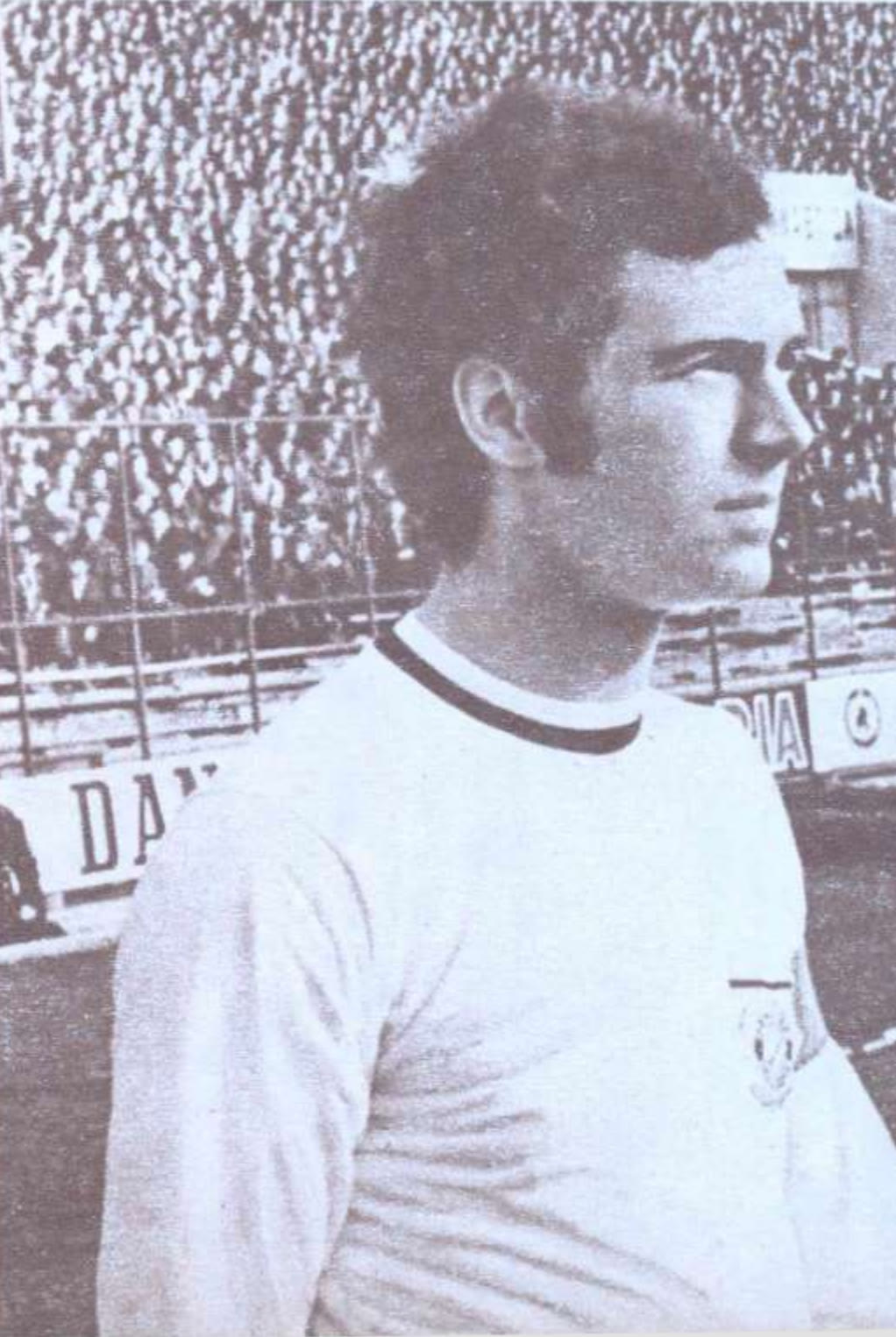
Franz Beckenbauer is first because he mastered defending and then altered the attack from the deepest outfield position. As a libero he did not simply collect loose balls behind a marker. He stepped through midfield, changed the angle of possession and forced opponents to decide whether a forward should abandon the defensive line to follow him. His carrying was elegant, but its value was tactical: it created an extra player where the opponent had planned for equality.
The individual level held in the largest matches. Beckenbauer captained West Germany to the 1974 World Cup, having already won Euro 1972, and led Bayern through three consecutive European Cup victories from 1974 to 1976. Bayern’s official profile records the club achievements, while FIFA’s tribute sets out his international reach. His Ballon d’Or victories in 1972 and 1976 were rare recognition for a defender and reflected influence rather than a burst of goals.
Beckenbauer was not the most relentless marker here and did not spend every phase as the last line. Those are not loopholes in the case. They are features of a role in which positioning, cover and possession reduced the number of emergencies his team faced. Maldini has the longevity argument. Baresi has the case for collective defensive organisation. Beckenbauer takes first because peak, major-match leadership, technique and tactical legacy meet more powerfully in his career than in any other defender’s.
The complete ranking at a glance
| Rank | Defender | Primary role | Central reason for position |
|---|---|---|---|
| 1 | Franz Beckenbauer | Libero | Tactical transformation allied to elite leadership and peak performance |
| 2 | Paolo Maldini | Left-back, centre-back | Unmatched longevity and role range at the highest level |
| 3 | Franco Baresi | Sweeper | Supreme organisation of an aggressive defensive line |
| 4 | Bobby Moore | Centre-back | Exceptional reading and major-tournament authority |
| 5 | Gaetano Scirea | Libero | Complete blend of cover, construction and calm leadership |
| 6 | Nílton Santos | Left-back | Early expansion of the full-back role with elite defensive intelligence |
| 7 | Carlos Alberto | Right-back | Captaincy, balance and a towering 1970 peak |
| 8 | Elías Figueroa | Centre-back | Continental dominance and complete technique across difficult settings |
| 9 | Cafu | Right-back | Historic endurance, width and repeated World Cup performance |
| 10 | Djalma Santos | Right-back | The most complete pure defensive full-back in the ranking |
| 11 | Giacinto Facchetti | Left-back | Transformational attacking influence without surrendering defensive duty |
| 12 | Daniel Passarella | Centre-back | Front-foot command, leadership and unusual attacking value |
| 13 | Philipp Lahm | Full-back | Positional intelligence, versatility and sustained correctness |
| 14 | Alessandro Nesta | Centre-back | Near-perfect duel technique, moderated by injury interruptions |
| 15 | Fabio Cannavaro | Centre-back | An extraordinary 2006 peak within a strong international career |
| 16 | Sergio Ramos | Centre-back | Decisive interventions and longevity, balanced against avoidable risk |
| 17 | Berti Vogts | Right-back | Elite man-marking and relentless role execution |
| 18 | Ruud Krol | Full-back, sweeper | Positional range inside Total Football |
| 19 | Matthias Sammer | Libero | Brief but exceptional peak as an advancing sweeper |
| 20 | Lilian Thuram | Full-back, centre-back | Defensive range, recovery and major-tournament reliability |
| 21 | Ronald Koeman | Libero | Game-changing construction and scoring with defensive trade-offs |
| 22 | Marcel Desailly | Centre-back | Power, versatility and authority across elite teams |
| 23 | Roberto Carlos | Left-back | Historic attacking force with a real defensive cost |
| 24 | Carles Puyol | Centre-back | Leadership and emergency defence for possession-heavy sides |
| 25 | Virgil van Dijk | Centre-back | Outstanding modern peak, with an active career still to settle |
| 26 | Alan Hansen | Centre-back | Anticipation and construction at the heart of a dominant club side |
| 27 | José Santamaría | Centre-back | Defensive platform for Real Madrid’s first European dynasty |
| 28 | José Nasazzi | Full-back | Foundational captain of Uruguay’s first international dynasty |
| 29 | Domingos da Guia | Centre-back | Pioneering composure and technique from an under-observed era |
| 30 | Armando Picchi | Libero | Tactical intelligence and captaincy behind Grande Inter |
Who just missed the top 30?
The hardest omissions begin with defenders who had a credible top-20 peak but lost out on total body or role balance. Thiago Silva combined recovery speed, aerial timing and elite longevity across Brazil, Italy, France and England. Javier Zanetti delivered even greater durability and positional range, although his case is divided between full-back, wing-back and midfield. Giuseppe Bergomi offered a more purely defensive Inter career and extraordinary World Cup bookends. Any of the three could enter without making the list unserious.
English centre-backs create a particularly crowded argument. Rio Ferdinand’s pace, distribution and composure made him the closest modern English parallel to Hansen, while John Terry’s penalty-area command and long-term leadership created a different but equally strong claim. Billy Wright’s historical captaincy matters, although the available evidence is less complete. Jaap Stam, Ricardo Carvalho and Fernando Hierro all had stretches of top-level centre-back play; their cases fall just short when peak, longevity and the full club-country balance are considered together.
Marius Trésor, Claudio Gentile, Karl-Heinz Schnellinger and Hong Myung-bo were seriously reviewed. Trésor’s athleticism and status in French football deserve wider recognition. Gentile’s 1982 World Cup showed elite destructive marking, but his complete game does not quite match Vogts. Schnellinger performed across positions and countries for an unusually long period. Hong remains Asia’s strongest candidate for this edition, driven by leadership, distribution and four World Cups, but the depth of his elite club opposition and available match evidence left him immediately outside.
Samuel Kuffour, Noureddine Naybet and Rigobert Song were included in the wider review to avoid treating European and South American history as the whole sport. Their careers add essential African context, but none displaced the final 30 under the agreed criteria. That conclusion should remain open to better archives, translated contemporary reporting and more systematic match study.
What the ranking says about defending
The top 10 contains four full-backs and six central or sweeping defenders. That balance is deliberate. Full-back is not treated as a secondary position, yet the central defender usually carries more responsibility for the entire line, aerial space and the consequence of a single error. The full-backs who rise highest did more than attack. Nílton Santos and Carlos Alberto changed the team’s possibilities while retaining positional command; Djalma Santos reached the top 10 by being an outstanding defender before anything else; Cafu turned endurance and width into a form of control.
The list also favours players who reduced disorder. Great defending can be a tackle, but the highest form is often preventing the opponent from creating the situation that requires one. Moore, Baresi, Maldini and Scirea achieved that in different ways. Beckenbauer went further by using possession to alter the opponent’s defensive problem. That is why passing and carrying appear throughout the ranking without replacing the central question of how well each player defended.
Trophies matter most when they provide evidence of performance, responsibility and repeated survival against elite opposition. They matter least when treated as an individual statistic. Figueroa ranks above many World Cup and European Cup winners because his personal standing and complete defensive game survive the absence of those team achievements. Cannavaro’s 2006 title helps because he was central to it. Passarella’s place in Argentina’s 1986 squad is recorded carefully because he did not play in the tournament. Context changes the value of the same medal.
No ranking across a century can eliminate uncertainty. Nasazzi and Domingos cannot be studied with the same completeness as Ramos or Van Dijk. Modern players, meanwhile, are watched in greater detail and criticised in real time, which can make their errors seem more numerous. The answer is not to exclude early football or to romanticise it. It is to use the best available sources, reduce confidence where the record is thin and remain willing to revise the order when better evidence appears.
Final judgement
Franz Beckenbauer is the greatest defender of all time in this edition because he joins elite defensive performance to a transformation of what the deepest player could do. Paolo Maldini is the more durable and versatile pure defender. Franco Baresi is the strongest organiser of a high line. Bobby Moore and Gaetano Scirea complete a top five in which anticipation and control matter more than spectacle.
The order will never be beyond dispute, and it should not be. A worthwhile ranking makes its assumptions visible. Change the question to the best defender at his absolute peak, the greatest stopper, the finest full-back or the most successful career, and the order changes. For the broad question of greatness, this 30 balances peak, longevity, responsibility, major matches, tactical influence and historical evidence as fairly as the record allows.
Sources and further reading
Our rankings were researched from official player and club profiles, governing-body archives, reliable historical records and specialist histories. The linked source markers beside the relevant claims provide a reader-facing route into the evidence, while the captions give the source and licence status of every photograph.
Useful starting points include the FIFA World Cup archive, UEFA Champions League history, France Football’s Ballon d’Or roll of honour, Jonathan Wilson’s Inverting the Pyramid and David Winner’s Brilliant Orange.


.jpg)
.jpg)

_(cropped).jpg)
.jpg)
_mist_een_penalty,_Bestanddeelnr_932-7188.jpg)


.JPG)
.jpg)


.jpg)

